
Reviewed · ULURU TOURS
Kata Tjuta: Small Group Sunrise Tour with Picnic Breakfast
Sunrise makes the desert feel brand new. This five-hour outing combines the changing colours of Kata Tjuṯa, a guided walk through Walpa Gorge, and an outback picnic breakfast in a group capped at 11 people. I especially like the small-group format, which gives you room to ask questions and receive help on the walk, and the way guides connect geology, plants, animals, history, and Anangu culture rather than simply pointing at rocks.
The breakfast is another strong point. It is more than a token snack, with muesli, toast, muffins, savoury and sweet choices, and plunger coffee reported as particular favourites. The main consideration is the early start and uneven gorge track. You need closed shoes, steady footing, and clothing that can handle either cold wind or the heat that follows sunrise.
- The 36 domes change colour as the sun rises, giving you a slower, more layered view than a quick photo stop.
- Walpa Gorge offers a close look at Kata Tjuṯa’s conglomerate rock, with a guide explaining how weathering and upheaval shaped it.
- Groups are limited to 11 people, making it easier to hear the guide and get individual help.
- Breakfast is prepared by the guide, with plentiful food and plunger coffee served near Kata Tjuṯa.
- Guides bring strong local and scientific knowledge, with past guides including Tess, Max, Ben, Andy, Jess, Shae, and Michael.
- The walk is short but uneven, with loose rock and some uphill sections that may challenge anyone who is not sure-footed.
In This Review
- Why Kata Tjuṯa Works So Well at Sunrise
- Watching the 36 Domes Catch the First Light
- A Picnic Breakfast Beside Kata Tjuṯa
- Walking Into Walpa Gorge
- Guides Make the Difference
- What the Small Group Changes
- Weather, Flies, and What to Pack
- Languages, Timing, and Physical Effort
- Is the $169 Price Worth It?
- Who Should Book This Kata Tjuṯa Morning?
- Should You Book It?
- FAQ
- How long is the Kata Tjuṯa sunrise tour?
- Where does pickup take place?
- What is included in the tour price?
- Is the national park entry fee included?
- How much is the national park entry fee?
- How large is the tour group?
- What languages are available?
- What should I bring?
- Is the Walpa Gorge walk difficult?
- Is a car seat required for infants?
Why Kata Tjuṯa Works So Well at Sunrise
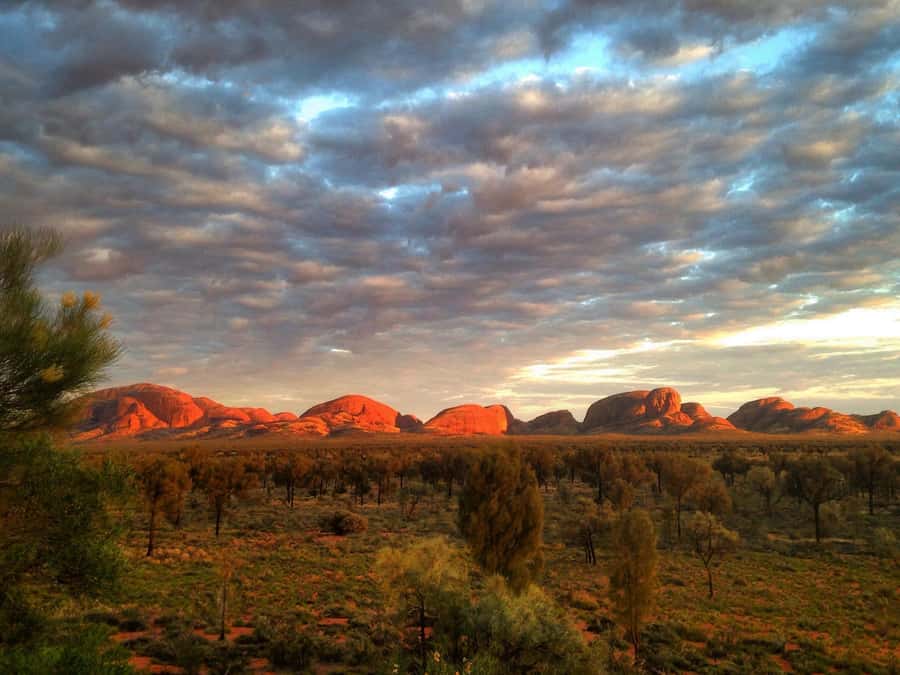
Uluru gets much of the attention around Ayers Rock Resort, but Kata Tjuṯa can feel just as powerful, and in some ways more surprising. Instead of one huge monolith, you see 36 rounded domes grouped together. Their surfaces shift from muted grey to warm red and orange as the morning light changes.
The tour begins before the desert has warmed up. That timing is useful, not just scenic. Several people have found the cooler morning comfortable for walking, especially in summer, though cold weather can be a real factor in winter or during strong winds. One June outing was affected by rain and bitter wind, showing why you should pack layers rather than assume a desert morning will be hot.
Your guide collects you at the entrance of your Ayers Rock Resort accommodation. From there, the vehicle travels to Uluru Kata Tjuṯa National Park, then continues about 40 kilometres through open desert to Kata Tjuṯa. The transfer gives your guide time to explain what you are seeing, so the drive is part of the experience rather than dead time.
The tour is rated 4.7 out of 5 from 113 reviews, with transport receiving an 88 percent perfect score. That fits the practical side of the outing: pickup and return are included, and the vehicle is intended to get you to the viewing area while the morning is still cool and quiet.
Watching the 36 Domes Catch the First Light
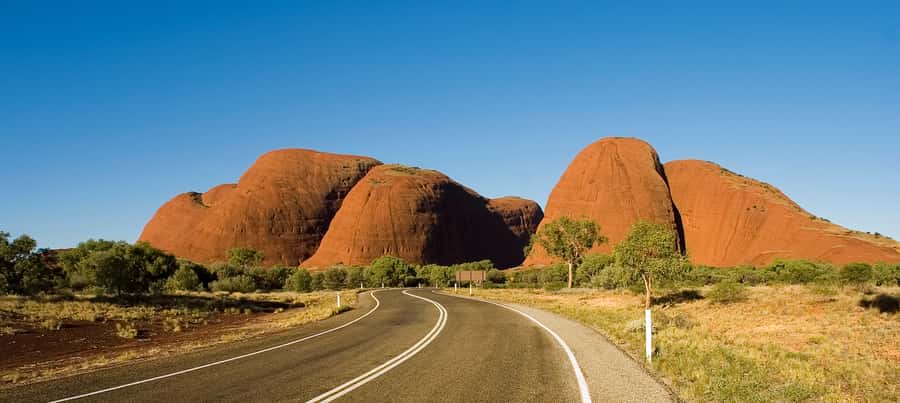
At the viewing area, you walk to a useful vantage point for seeing the whole group of domes. The best part is not one fixed moment. Keep watching for several minutes and you will see the colours and shadows change across the rock as the sun climbs.
The viewing area can become busy, so a little patience helps if you want a clear photograph. You may need to shift position or wait for a gap, but the small group helps your guide keep the stop organised. Guides have also offered to take photographs for people, a simple touch that saves you from choosing between being in the picture and taking it.
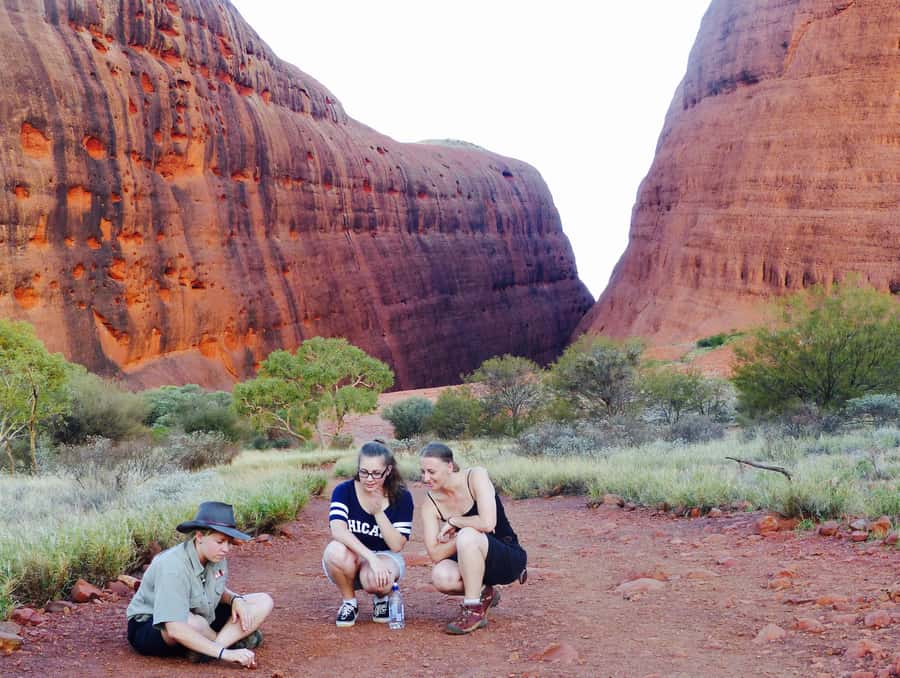
This is a good place to slow down. The guide may discuss the spiritual importance of Kata Tjuṯa, its formation, and the relationship between the domes and the surrounding country. Guides such as Max, who is a trained biologist, have also added useful detail about local plants and trees. Tess was praised for explaining geology, flora, fauna, history, and the Anangu people while keeping the pace relaxed.
The sunrise cannot be guaranteed. Clouds may soften or hide the colour changes, and poor weather can alter the mood of the stop. Even then, the domes and the silence of the setting still give you a worthwhile introduction to the national park.
A few more options to weigh up in Yulara
- Uluru: Field of Light Sunrise Tour with Hot Drinks
★ 4.6 · 572 reviews - Uluru 15-Minute Helicopter Experience
★ 4.9 · 548 reviews - Yulara: Uluru & Kata Tjuta 25-Minute Helicopter Experience
★ 4.8 · 536 reviews
A Picnic Breakfast Beside Kata Tjuṯa
After the sunrise stop, the group travels toward the western side of Kata Tjuṯa for breakfast. This is a practical pause before the gorge walk, but it also gives you time to look back at the domes without being hurried from one viewpoint to the next.
The meal has received unusually warm praise for a tour breakfast. Expect a selection that may include muesli, toast, muffins, and other sweet and savoury food, along with coffee prepared in a plunger. It is described as plentiful rather than merely adequate, which matters when you have started the day early and still have a walk ahead.
The food is suited to a mild morning, so weather can affect how enjoyable this stop feels. During a cold, wet outing, the breakfast felt less suitable for the conditions. The guide still had to organise the meal in difficult weather, and the gorge itself remained the main reward, but you should bring an extra layer if the forecast looks bleak.
Breakfast also gives you a chance to ask questions before the walking begins. In a large coach group, this kind of conversation can be difficult. Here, the maximum of 11 people makes it more realistic to ask about a plant, a rock formation, or the cultural meaning of a place without losing the guide’s attention.
Walking Into Walpa Gorge

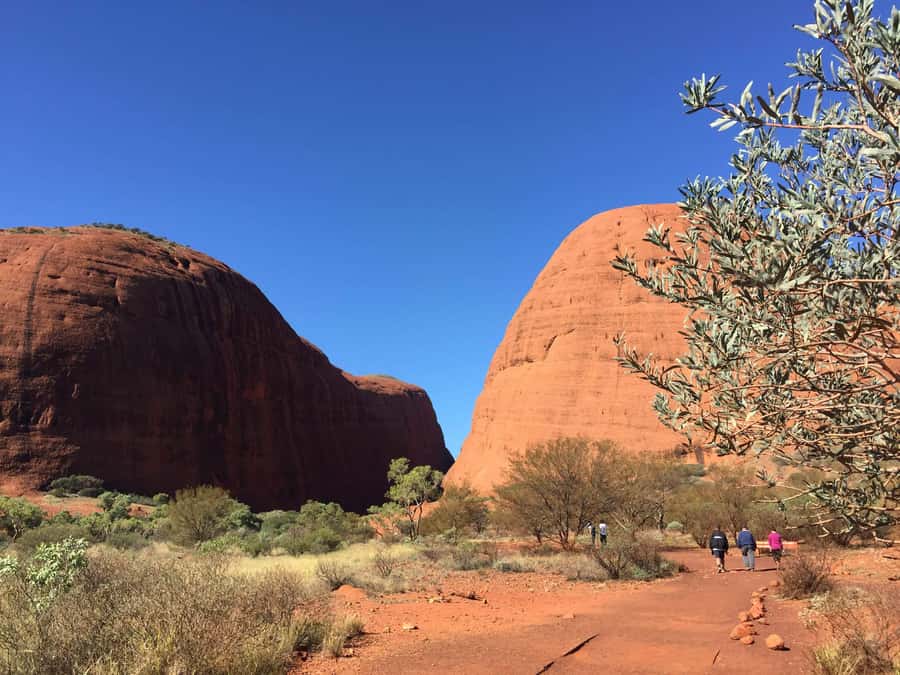
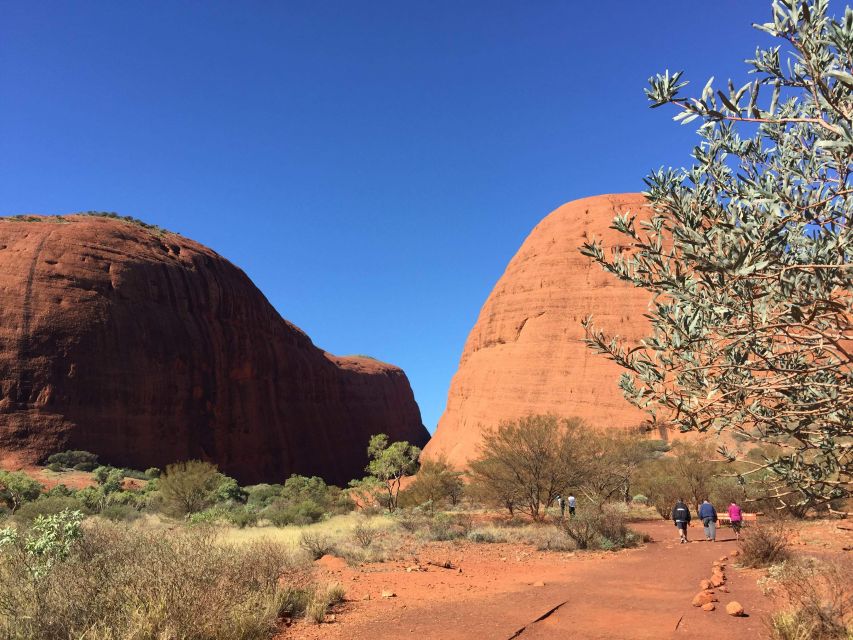
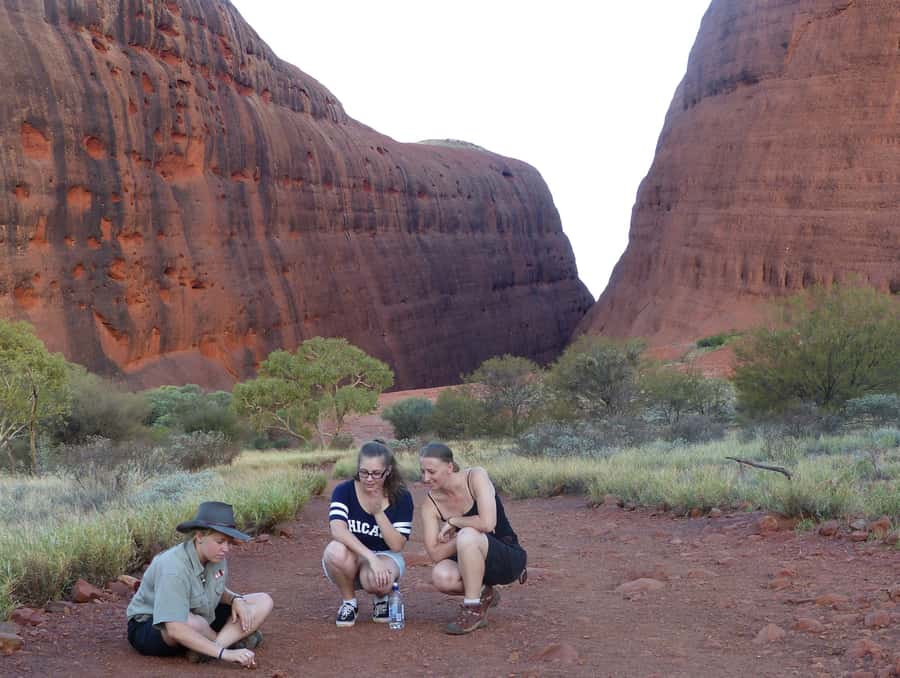
Walpa means wind, a fitting name for the passage between Kata Tjuṯa’s large domes. The gorge walk takes you between towering conglomerate walls, where the scale of the rocks becomes easier to understand than it is from a distant viewing platform.
Your guide explains that the domes were shaped by weathering and continuing geological upheaval over very long periods. You are not simply looking at red stone. You are seeing a distinct rock formation and learning how the surrounding environment developed over time.
The walk is often described as manageable and well paced, but it is not a smooth path. Expect an uneven hard surface, loose rocks, and some uphill sections. One account describes the walk as quite challenging, with steeper stretches, while another calls it easy. That difference probably reflects personal fitness, footwear, weather, and how far each person chose to walk.
Wear closed-toe shoes with a firm sole. Walking sticks may help with stability, and benches are available near the beginning and along the route for anyone who needs a pause. Guides have helped participants at different ability levels and have avoided rushing people, which is a real benefit in a small group.
You do not need to treat the walk as a race. The value comes from noticing the gorge walls, wind, plants, and changing light. If the full route feels too demanding, the available benches let you rest or shorten your effort while still taking in the setting.
Guides Make the Difference
The strongest praise is aimed at the guides. That is important because the rocks alone do not explain themselves. A good guide turns a scenic morning into a useful introduction to the national park.
Dan and Laura were praised for their understanding of places, people, plants, and animals. Andy was described as engaging and entertaining, while Jess was noted for setting a comfortable pace and making breakfast enjoyable. Alessia brought together culture, nature, and geology, and Lilly was warmly remembered for making the morning special.
Other guides have added their own strengths. Max brought a biologist’s eye to the plants and trees. Ben explained how Kata Tjuṯa and Uluru formed, while also checking that people were comfortable with the walk. Shae was praised for warmth, enthusiasm, and care with cultural matters.
That range matters because guide quality can shape the entire outing. The experience is not a fixed lecture delivered in exactly the same way each time. You may receive more detail about biology from one guide, more focus on culture from another, or more help with photographs and walking from someone else.
There has been at least one serious pickup problem in the past, when an original guide did not appear and Michael arrived with only five minutes’ notice to take over. He was praised for saving the day, but the incident is worth noting as a reminder that even well-regarded tours can have an occasional operational hiccup.
A completely different kind of day out:
- Yulara: Uluru Sunrise and Kata Tjuta Day Trip by Bus
★ 4.5 · 469 reviews - Uluru: Sacred Sites & Sunset Tour with Wine & Cheeseboard
★ 4.5 · 450 reviews - Uluru Base Segway Tour at Sunrise
★ 4.9 · 378 reviews - From Yulara: Uluru Tour and Sunset BBQ
★ 4.6 · 320 reviews
What the Small Group Changes
With no more than 11 people, you get a more personal morning than you would on a large coach tour. You can hear explanations without straining, ask follow-up questions, and receive help on uneven sections of the gorge.
The smaller vehicle also makes it easier for the guide to check practical needs. One guide asked whether anyone had a flight or another activity later that morning and made sure the timing worked for the group. That kind of attention is useful at Ayers Rock Resort, where many activities are tightly scheduled.
The tradeoff is price. At $169 per person, this is not the cheapest way to reach Kata Tjuṯa. You are paying for five hours of transport, a live guide, breakfast, water, a small group, and a planned route that connects sunrise with Walpa Gorge.
You must also pay the national park entry fee separately. It is $25 per person over age 15 and $12.50 for children aged 5 to 15. The ticket is valid for three consecutive days from the date of issue, which can improve the value if you plan other visits to Uluru Kata Tjuṯa National Park during that period.
For someone who wants only a quick photograph, the price may feel high. For you if you want transport, interpretation, breakfast, and a guided walk in one morning, the package is easier to justify.
Weather, Flies, and What to Pack
The desert can change quickly between dawn and later morning. Take a hat, water, a daypack, and closed-toe shoes as a minimum. The tour includes one bottle of water, but the packing advice still tells you to carry water of your own.
Bring layers for cold wind or rain. A sunny forecast does not guarantee a warm sunrise, and a cloudy morning may produce subdued colours rather than dramatic reds. The cold is easier to manage if you can add clothing before the viewing stop and remove it once the day warms.
Flies can also be a nuisance. One spring outing had few problems, while another experience described the insects as severe. A fly net for your face can be bought at the airport or Ayers Rock Resort, and it may be worth carrying one if you are sensitive to flies.
Cash is listed among the recommended items, though no specific cash purchase is identified. An infant car seat is mandatory in the Northern Territory and costs $75 when paid directly. The infant price includes touring and car seat hire, so check the exact arrangement when booking if you are travelling with a child aged four or under.
Languages, Timing, and Physical Effort
The live guide speaks English. An optional audio guide is available in French, German, Spanish, Italian, Russian, and Mandarin, which helps if you want extra language support during the drive or explanations.
The tour lasts five hours, but the exact start time changes with availability and sunrise conditions. You should keep the rest of your morning flexible, especially if you have a flight or another timed activity. Guides have been willing to confirm return requirements, but you should still tell them about any fixed plans at the start.
The physical effort is moderate but not trivial. This is not a flat stroll from a vehicle to a viewpoint. Loose rock, uneven ground, and uphill sections require balance and sensible shoes. People with a wide range of abilities have taken part, and guides have helped with pacing, but the route will not suit anyone who cannot comfortably manage rough ground.
The early start is part of the appeal and part of the cost. You may be sleepy during pickup, but you avoid the worst heat and see Kata Tjuṯa under its most changeable light. If you prefer slow mornings, this tour will ask you to make a trade.
Is the $169 Price Worth It?
I think the price is fair for the right kind of day. You receive hotel pickup and return at Ayers Rock Resort, five hours of transport and guiding, breakfast, water, a small group, and access to a carefully timed Kata Tjuṯa route. The separate park fee adds to the total, but the three-day validity may help if you are visiting the park again.
The strongest value comes from the guide. Without good explanations, you could see the domes and walk the gorge on your own, but you would miss much of the geology, plant life, cultural context, and practical help that gives the morning shape.
I would be less certain about the value if you already have a rental car, plan to visit the park independently, and do not want a guided walk. In that case, the included breakfast and small group may not offset the cost. For a first visit to the area, especially without your own transport, the convenience is much easier to appreciate.
Who Should Book This Kata Tjuṯa Morning?
I would choose this tour if you want a clear introduction to Kata Tjuṯa without spending a full day planning transport and food. It suits couples, families with older children, solo visitors, and anyone who prefers asking questions to a guide rather than following a large crowd.
It is also a good choice for anyone interested in more than photographs. The strongest parts are the explanations of geology, flora, fauna, Anangu culture, and the way the guide connects those subjects to what you see.
You should think twice if you dislike early starts, have difficulty on uneven ground, or need a guaranteed dramatic sunrise. Weather can soften the colours, and the gorge path demands more care than the word walk might suggest.
Should You Book It?
Yes, if you want Kata Tjuṯa to be more than a quick stop beside the road. The sunrise viewing, filling breakfast, and Walpa Gorge walk make good use of five hours, while the 11-person limit keeps the outing personal.
Pack layers, sturdy shoes, water, and a fly net if the season calls for it. Add the national park entry fee to your budget, and allow room in your schedule after the tour. For an informed, well-paced morning with strong guiding and genuine time among the domes, this is one of the better-value guided experiences based at Ayers Rock Resort.
FAQ
How long is the Kata Tjuṯa sunrise tour?
The tour lasts five hours, including pickup and return to accommodation at Ayers Rock Resort.
Where does pickup take place?
Your guide meets you at the entrance of your accommodation at Ayers Rock Resort.
What is included in the tour price?
The price includes a five-hour fully guided tour, pickup and return, an outback picnic breakfast, one bottle of water, and access to the optional audio guide languages.
Is the national park entry fee included?
No. Entry tickets to Uluru Kata Tjuṯa National Park must be purchased separately at the entry station.
How much is the national park entry fee?
Tickets cost $25 per person over age 15 and $12.50 for children aged 5 to 15. They are valid for three consecutive days from the date of issue.
How large is the tour group?
The group is limited to a maximum of 11 people.
What languages are available?
The live tour is conducted in English. An optional audio guide is available in French, German, Spanish, Italian, Russian, and Mandarin.
What should I bring?
Bring a hat, water, closed-toe shoes, cash, and a daypack. Layers and a fly net may also be useful depending on the weather and season.
Is the Walpa Gorge walk difficult?
The walk includes uneven ground, loose rocks, and some uphill sections. Benches are available, and guides can assist with pacing, but you should be comfortable walking on rough surfaces.
Is a car seat required for infants?
Yes. A car seat is mandatory in the Northern Territory for infants aged 0 to 4. Car seat hire costs $75 when paid directly, and the infant price includes touring and car seat hire.
Just added in Yulara
- Best of Uluru – Segway and Walking Tour★ 4.8 · 204 reviews
- King’s Canyon: 15-minute Scenic Helicopter Tour★ 4.9 · 78 reviews
- Yulara: Uluru and Kata Tjuta Sunset Helicopter Tour★ 4.9 · 148 reviews
- From Yulara: Uluru Tour and Sunset BBQ★ 4.6 · 320 reviews
- From Yulara: 3-Hour Small Group Kata Tjuta Afternoon Tour★ 4.7 · 101 reviews
- Uluru: Uluru Base Segway Tour★ 4.6 · 112 reviews
- Uluru Base Segway Tour at Sunrise★ 4.9 · 378 reviews
- Uluru: Sacred Sites & Sunset Tour with Wine & Cheeseboard★ 4.5 · 450 reviews
Uluru Tours, compared.
Ayers Rock Day Trip from Alice Springs Including BBQ Dinner
Read our review →
Uluru: Field of Light Sunrise Tour with Hot Drinks
Read our review →
Uluru & Kata Tjuta 25-Minute Helicopter Experience
Read our review →
Uluru: Sacred Sites & Sunset Tour with Wine & Cheeseboard
Read our review →
Browse the lists this tour appears in