
Reviewed · ULURU TOURS
Ayers Rock Day Trip from Alice Springs Including BBQ Dinner
Uluru is worth the long road. This 18-hour trip makes the huge distance from Alice Springs manageable with an air-conditioned coach, regular stops, and engaging commentary from guides such as Gary, Yad, John, and Sebastian. I especially like the Mala Walk and Mutitjulu Waterhole, where the rock becomes a place of living Anangu culture rather than just a famous photograph. I also like the sunset barbecue, a simple and sociable finish with sparkling wine and Uluru changing color behind you. The catch is clear: you spend about 10 hours on the road, so this is a very long day.
The tour works well if you have only one day for Uluru and do not want to arrange a car, park admission, meals, and local guiding yourself. The cultural explanations add real value, and hotel pickup and drop-off remove much of the hassle. Still, the coach ride back to Alice Springs happens in darkness, and you may arrive around midnight, so do not schedule an early start the next morning.
In This Review
- Key points to know before booking
- The real cost of seeing Uluru from Alice Springs
- An early Alice Springs pickup and a five-hour road story
- The Cultural Centre gives Uluru its proper context
- The Mala Walk reveals the rock up close
- Mutitjulu Waterhole and the Wanampi story
- Sunset, sparkling wine, and a practical barbecue
- The dark ride back to Alice Springs
- What the guides add to the experience
- Weather, flies, and the right time of year
- Who should book this Uluru day trip?
- Should you book it?
- FAQ
- How long does the Uluru day trip from Alice Springs last?
- Is hotel pickup and drop-off included?
- How long is the drive to Uluru?
- Is the Uluru-Kata Tjuta Cultural Centre included?
- What walks are included at Uluru?
- Is dinner included?
- Is the national park entrance fee included?
- What should I bring?
- Can I cancel for a refund?
Key points to know before booking
- About five hours each way: The long drive is the main cost in time, with rest stops and commentary to break it up.
- Two guided Uluru walks: The Mala Walk and Kuniya Walk reach rock art, sheer walls, and Mutitjulu Waterhole.
- Anangu culture is central: The Cultural Centre and guide commentary explain Pitjantjatjara traditions and Dreamtime stories.
- Sunset comes with dinner: You get sparkling wine or can bring beer, followed by a barbecue buffet.
- Comfort varies by coach: Many people praise the full-size motorcoach, but one report found an older bus noisy and uncomfortable.
- Plan for desert conditions: Bring strong walking shoes, a hat, sunscreen, sunglasses, and 1.5 liters of water. A fly net can be useful.
The real cost of seeing Uluru from Alice Springs
The price is $262.90 per person. That is not a small outlay, but the comparison is not simply between this tour and a cheap bus ticket. The fee covers transport from Alice Springs, an accredited guide, national park admission through March 31, 2026, guided walks, the cultural center, sunset drinks, a barbecue, and a late return to your accommodation.
I see this as a fair price for a one-day solution to a difficult route. Uluru is roughly five hours from Alice Springs by road, and going independently means handling fuel, driving fatigue, park entry, food, and navigation. You also lose the local commentary that gives the rock its cultural meaning.
From April 1, 2026, the Uluru-Kata Tjuta National Park pass is not included. You will need to bring a digital or printed pass, so check the date of your visit before you book. That extra cost changes the value slightly, but the transport and guiding remain the main reasons to choose this experience.
The tour can carry up to 52 people. That is a substantial group, not a private outing. On the positive side, a larger coach can be more comfortable than a small minibus, and several guides and drivers have received strong praise for keeping the day organized and informative. On the less sunny side, the group size can make the main viewing areas feel busy.
More Day Trips in Uluru:
- From Alice Springs: Day Trip to Uluru with BBQ Dinner
★ 4.6 · 761 reviews - Yulara: Uluru Sunrise and Kata Tjuta Day Trip by Bus
★ 4.5 · 469 reviews - Kings Canyon Day Trip from Ayers Rock (Uluru)
★ 4.5 · 380 reviews
An early Alice Springs pickup and a five-hour road story
Your day begins early, with pickup from many Alice Springs hotels. The exact pickup time depends on your accommodation and date, but you should expect a full day that runs close to 18 hours.
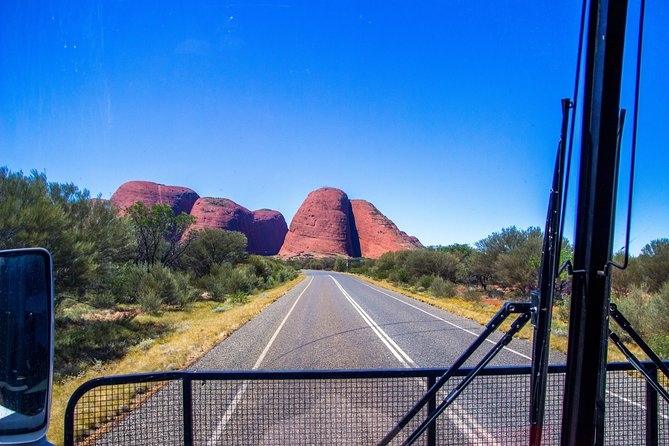
The coach travels through central Australia, with the West MacDonnell Ranges part of the early route. This is not a quick transfer. The changing red earth, scrub, distant ranges, and long straight road give you a useful sense of how vast the region is, but there are long stretches with little to see from the window.
The first planned stop is Erldunda Desert Oaks Resort, also known as Erldunda Roadhouse. You have about 20 minutes there and can buy breakfast. Take advantage of the toilets and stretch your legs. The stop is short, so you may prefer to bring breakfast from Alice Springs if you want to avoid waiting in line.
The trip includes rest breaks, with two toilet stops mentioned during the outward drive. A later stop at Ayers Rock Town Centre can take about 10 minutes if other passengers need collecting. You may also have time at the Ayers Rock Resort area for lunch, coffee, or souvenirs, though prices can be higher because choices are limited in this remote setting.
I recommend packing breakfast, lunch, and snacks if you want to save money and time. Bring something to read, download audio, or plan to sleep on the return trip. USB charging ports have been available on the coach, which is a useful detail for a long day of photography and navigation.
The Cultural Centre gives Uluru its proper context
The Uluru-Kata Tjuta Cultural Centre is the first major stop inside the national park. You have about an hour to look through the displays, learn about the Pitjantjatjara people, and browse souvenirs.
This stop matters because Uluru is not simply a geological curiosity. It is a sacred place for the Anangu, the traditional owners of the area. The center helps explain customs, country, and Aboriginal history before you walk at the base of the rock.
The building itself was made with about 90,000 mud bricks, a detail that gives the structure a strong connection to the desert setting. It is also a practical place to gather information and buy locally connected souvenirs.
I would keep expectations measured. One part of the center has dated videos, and a video has reportedly paused during a visit. The displays may feel less polished than a major city museum. The value comes from the cultural setting and the chance to prepare yourself for the walks, not from expecting a cutting-edge exhibition.
The Mala Walk reveals the rock up close
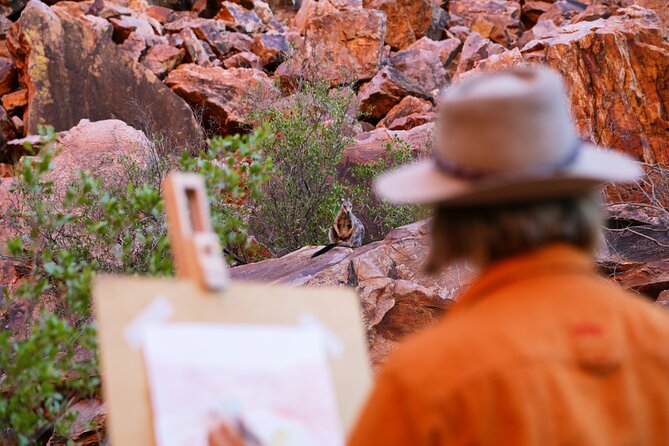
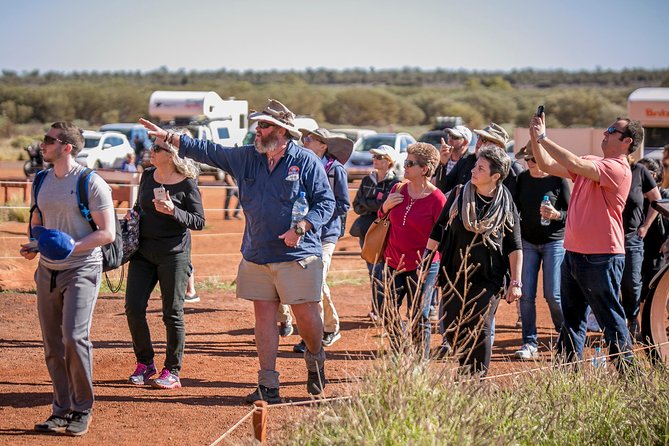
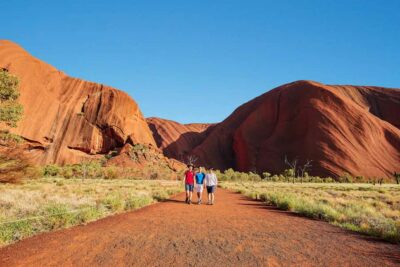
From the cultural center, the coach heads to the base of Uluru. The Mala Walk follows the northwest side of the rock and takes about 90 minutes with a guide.
This is one of the strongest parts of the tour. You see fine examples of Aboriginal rock art, tall rock walls, caves, and sites that matter to the Anangu. The route is not just a loop for photographs. Your guide explains the Dreamtime stories connected with the area and points out details you could easily miss alone.
Guides including Yad have been praised for bringing the rock to life with clear stories and a friendly manner. Drivers such as Gary have also provided commentary during the long road sections, so the guiding does not begin and end at the park entrance.
Wear strong, non-slip walking shoes. The walk is described as easy, but desert surfaces still call for sensible footwear. You should also carry water, especially in warm months. The supplied guidance asks you to bring a 1.5-liter bottle, and I would treat that as a minimum rather than an optional suggestion.
The tour does not include climbing Uluru, and the emphasis is firmly on respectful walks around the base. That is appropriate for learning about the site and its cultural importance.
A few more options to weigh up in Uluru
- Uluru (Ayers Rock) Sunset + Outback Barbecue Dinner & Star Talk
★ 4.0 · 426 reviews - Spirit of Melbourne Dinner Cruise on the Yarra River
★ 4.5 · 1,470 reviews - Sydney Harbour Sunset Dinner Cruise from Darling Harbour
★ 4.0 · 1,122 reviews - Pinnacles Desert Sunset Dinner and Stargazing Tour
★ 5.0 · 1,034 reviews
Mutitjulu Waterhole and the Wanampi story
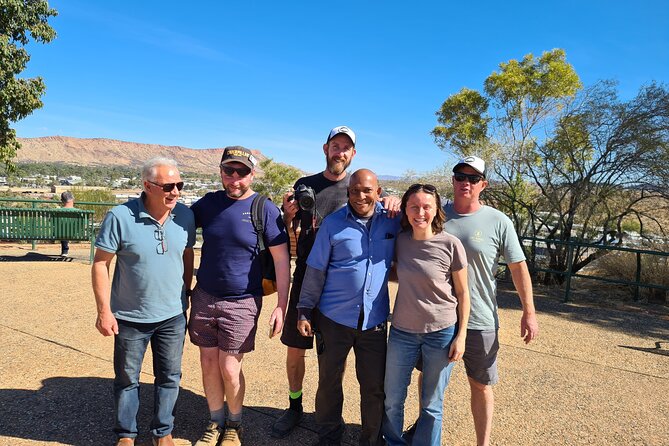
After the Mala Walk, you board the coach to reach the other side of Uluru for the short Kuniya Walk to Mutitjulu Waterhole.
The waterhole can look very different depending on recent rain. In wetter conditions, the water may shimmer against the red rock, adding another color and texture to the scene. Even when dry, the site remains important for its cultural story and setting.
Here, your guide explains the Anangu legend of Wanampi, an ancestral water snake. This is the sort of detail that gives the visit a sense of place and helps you understand that the rock contains many connected stories, not one single explanation.
The stop is shorter than the Mala Walk, but the change of viewpoint is valuable. Uluru is so large that seeing it from one base area does not tell the whole story. Moving around it lets you notice different walls, folds, shadows, and water channels.
Sunset, sparkling wine, and a practical barbecue
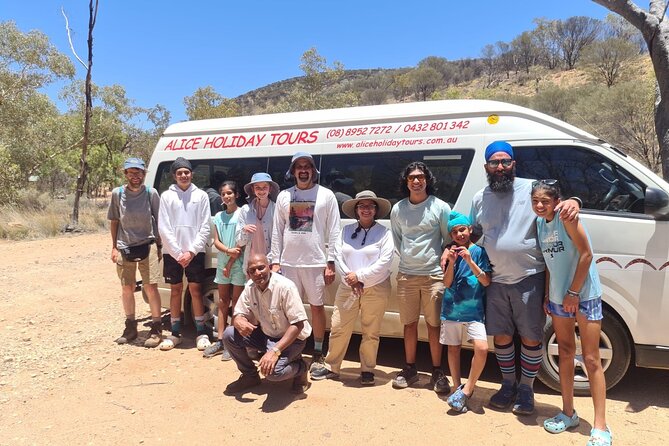
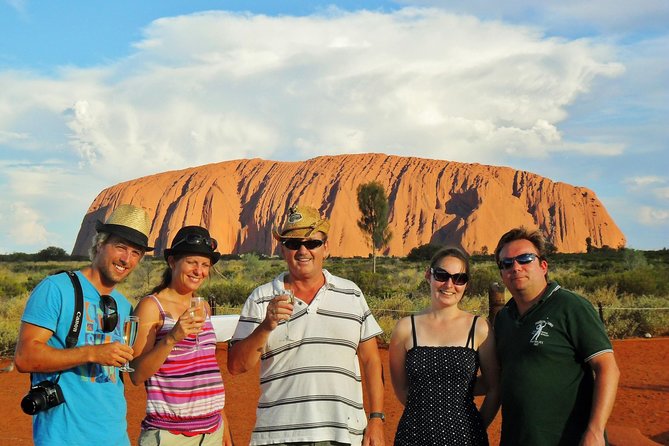
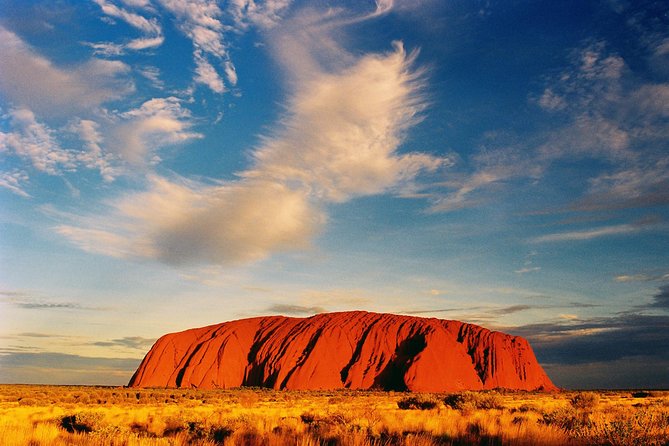
The final park highlight is the sunset viewing area. You watch the sun drop over Uluru while the rock shifts through shades of red, orange, purple, and brown. The colors depend on weather and cloud, so every evening has its own character.
You receive a glass of sparkling wine. If you prefer beer, the tour information says you may bring your own. The barbecue follows, with a buffet that has included steak, sausages, salads, pasta, and vegetarian choices.
The food has been one of the most praised parts of the day. It is not fine dining, nor should it be at a remote outdoor viewing area, but a hot and generous meal tastes especially good after walking and sitting on a coach since morning. The setting does much of the work, with Uluru providing a remarkable backdrop.
Bring a fly net if you have one. Flies can be a nuisance around Uluru, especially during stops and warm weather. Sunscreen, sunglasses, and a hat are essential during the day, but also bring a warm layer. The desert can feel cold at sunset, and one account found the evening particularly chilly.
The viewing area can include several hundred people. It may not feel private, but the space is large enough that the crowd does not necessarily ruin the moment. You still get the broad view and the unusual pleasure of eating dinner beside one of Australia’s best-known natural sights.
The dark ride back to Alice Springs
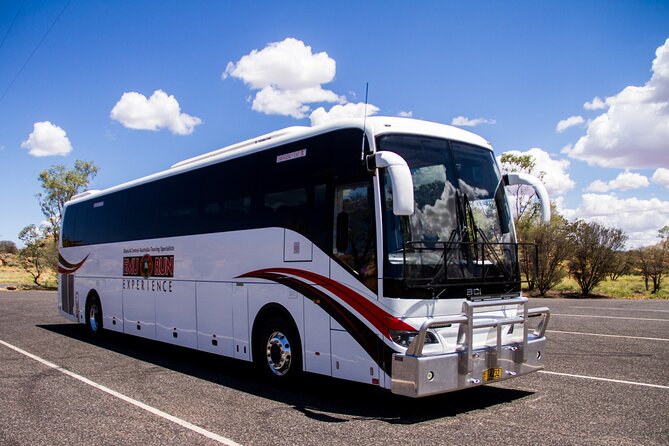
After sunset and dinner, you board the coach for the return drive. The road takes about five hours again, but now much of it is in darkness.
That changes the mood. You will not have the same views to watch, and fatigue catches up after an early start, walking, food, and a long day outside. I would use the ride to sleep, read, listen to music, or look for stars when the coach stops. Some people have seen the Milky Way during the return journey, though the main purpose of the ride is simply getting back safely.
The professional driving matters here. Gary, Sebastian, and other drivers have been praised for their road commentary and calm handling of the long route. Driving central Australian roads at night requires attention, and you should not compare this return trip with a short city transfer.
Drop-off is at the place where you joined the bus, usually late at night. Allow for an arrival around midnight based on the stated 18-hour duration and reported timings. Keep the following morning free if possible.
What the guides add to the experience
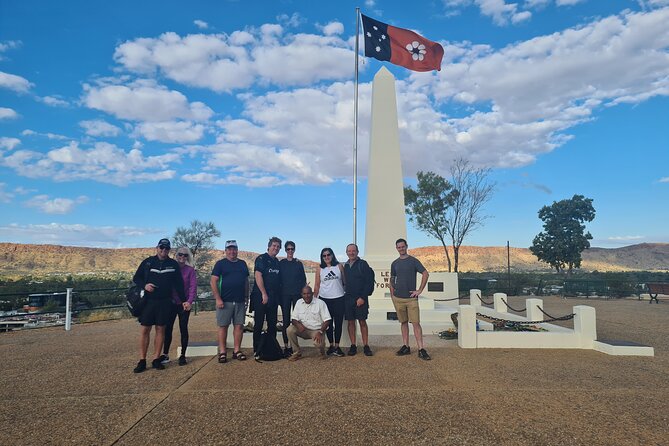
The strongest human element is the staff. Gary has been singled out for informative commentary during the Alice Springs to Uluru drive, while Yad has been praised for his explanations around the rock and for helping with the barbecue. John and Sebastian have also been associated with strong driving and guiding.
The operation may use two guides because of the length of the day. That can work in your favor. One person may handle the long-distance drive while another leads the walks and manages the meal at Uluru.
Small touches have included apples, cold towels during the walk, and attention to vegetarian food. These details are not guaranteed for every departure, but they show the kind of practical care that can make a punishing day feel easier.
There is one point to watch: the coach itself can vary. The experience is advertised with an air-conditioned vehicle, and many people have enjoyed a comfortable full-size coach. One account described an older, rattly bus with tight seat belts. If vehicle comfort is important to you, ask Emu Run Experience which coach is scheduled before departure.
Weather, flies, and the right time of year
Central Australia can be extremely hot. A January forecast mentioned temperatures around 43 degrees Celsius, although cloud, rain, and wind made that particular day more comfortable and even gave the group a rare view of wet Uluru.
You cannot control the sunset, but you can prepare for the conditions. Carry water, protect your skin, and wear a hat. A warm layer is just as useful as sun protection because sunset can feel cold after the heat of the day.
The tour requires good weather. If conditions force cancellation, you are offered another date or a full refund. A minimum number of participants is also required, with the same choice of another date, another experience, or a refund if the departure does not run.
Free cancellation is available up to 24 hours before the start time. Changes or cancellations inside that 24-hour window are not accepted for a refund.
Who should book this Uluru day trip?
I would choose this tour if you have limited time in Alice Springs, want to see Uluru, and do not want to drive 1,000 kilometers in a day yourself. It is also a good fit if you want cultural interpretation, a guided base walk, sunset, and dinner in one organized outing.
It suits reasonably active adults and families whose members can manage easy walks and a very long coach day. Most people can participate, but the early start, heat, walking, and late return deserve honest consideration.
I would not choose it if you dislike long bus journeys, need a relaxed schedule, or have an early flight or tour the next morning. If you can spare more time, staying near Uluru would give you a slower visit and more chances to see the park. This day trip is a solution for limited time, not the most restful way to experience the region.
Should you book it?
Book it if Uluru is a priority and your schedule is tight. The five-hour drive each way is the unavoidable weakness, but the tour makes good use of your time at the rock with the Cultural Centre, Mala Walk, Kuniya Walk, local stories, sunset, sparkling wine, and a satisfying barbecue.
At $262.90, the package offers solid value when you add transport, guiding, park entry through March 31, 2026, and dinner. Pack food for the road, carry water, bring a fly net and warm layer, and keep the next morning clear. If you accept the long ride, this is a practical and meaningful way to reach Uluru from Alice Springs.
FAQ
How long does the Uluru day trip from Alice Springs last?
The experience lasts approximately 18 hours, including the drive from Alice Springs to Uluru and the late-night return.
Is hotel pickup and drop-off included?
Yes. Pickup and drop-off are offered at many Alice Springs accommodations, with drop-off at the place where you joined the bus.
How long is the drive to Uluru?
The drive takes about five hours each way. Rest stops are included during the journey.
Is the Uluru-Kata Tjuta Cultural Centre included?
Yes. The visit lasts about one hour and includes time to learn about the Pitjantjatjara people and shop for souvenirs.
What walks are included at Uluru?
The tour includes the Mala Walk on the northwest side of Uluru and the short Kuniya Walk to Mutitjulu Waterhole.
Is dinner included?
Yes. A barbecue buffet is served at sunset, with sparkling wine. You may bring your own beer instead.
Is the national park entrance fee included?
The Uluru-Kata Tjuta National Park entrance fee is included through March 31, 2026. From April 1, 2026, you must bring your own park pass, and a digital copy is accepted.
What should I bring?
Bring strong non-slip walking shoes, a hat, sunglasses, sunscreen, and a 1.5-liter water bottle. A fly net and warm clothing for sunset are also practical additions.
Can I cancel for a refund?
You can cancel at least 24 hours before the start time for a full refund. Cancellations or changes made less than 24 hours before departure are not refunded or accepted.
More Dinner Experiences in Uluru
- Sunset 3-Hour Cruise from Darwin with Dinner and Sparkling Wine
★ 5.0 · 980 reviews - Gold Coast: Australian Outback Spectacular Dinner & Show
★ 4.6 · 974 reviews - Sydney: Harbour Dinner Cruise with 3, 4 or 6-Course Menu
★ 4.4 · 925 reviews - Charles Darwin Dinner Cruise
★ 4.5 · 820 reviews
Just added in Uluru
- Best of Uluru – Segway and Walking Tour★ 4.8 · 204 reviews
- King’s Canyon: 15-minute Scenic Helicopter Tour★ 4.9 · 78 reviews
- Kata Tjuta: Small Group Sunrise Tour with Picnic Breakfast★ 4.7 · 113 reviews
- Yulara: Uluru and Kata Tjuta Sunset Helicopter Tour★ 4.9 · 148 reviews
- From Yulara: Uluru Tour and Sunset BBQ★ 4.6 · 320 reviews
- From Yulara: 3-Hour Small Group Kata Tjuta Afternoon Tour★ 4.7 · 101 reviews
- Uluru: Uluru Base Segway Tour★ 4.6 · 112 reviews
- From Alice Springs/Yulara: 4-Day Red Centre 4WD Camping Tour★ 4.6 · 68 reviews
Uluru Tours, compared.

Uluru: Field of Light Sunrise Tour with Hot Drinks
Read our review →
Uluru & Kata Tjuta 25-Minute Helicopter Experience
Read our review →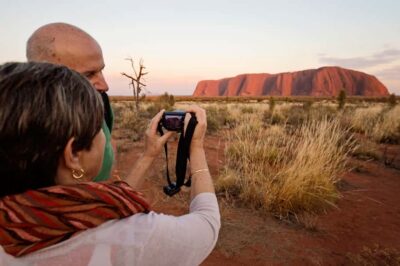
Uluru: Sacred Sites & Sunset Tour with Wine & Cheeseboard
Read our review →

Browse the lists this tour appears in