
Reviewed · ULURU TOURS
Uluru, Kata Tjuta and Kings Canyon Camping Safari from Alice Springs
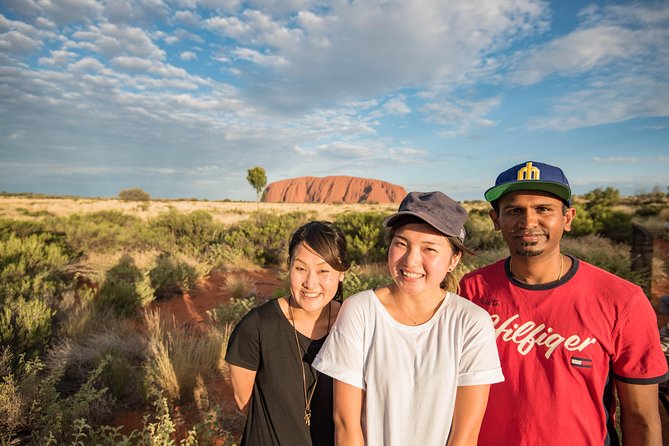
The Red Centre rewards an early alarm. This three-day safari gives you sunrise and sunset at Uluru, guided walks at all three major sights, and a practical way to reach places that are far apart. I especially like the strong mix of scenery and Aboriginal culture, including the Maruku Arts walk with an Aboriginal and Torres Strait Islander guide. I also like that meals, transport, park entries, and camping are included.
The main catch is the pace. You leave Alice Springs at 5:40 am, spend long hours on the road, and rise early again for the best walking conditions. Summer heat can be severe, and the camping is better described as basic glamping than luxury camping. If you need polished facilities or an easygoing schedule, think carefully before booking.
In This Review
- The essentials at a glance
- Why this three-day route works
- Day one: Kata Tjuta before Uluru sunset
- Day two: Uluru at sunrise and on foot
- The camp experience: useful comfort, not luxury
- Day three: why Kings Canyon earns the biggest praise
- Long drives, early starts, and group rhythm
- Is the $713.66 price good value?
- What to pack and how to prepare
- Who should book this safari?
- Should you book it?
- FAQ
- Where does the tour start?
- Does the tour return to Alice Springs?
- How long is the safari?
- Are meals and accommodation included?
- How physically demanding is the trip?
- What is the cancellation policy?
The essentials at a glance
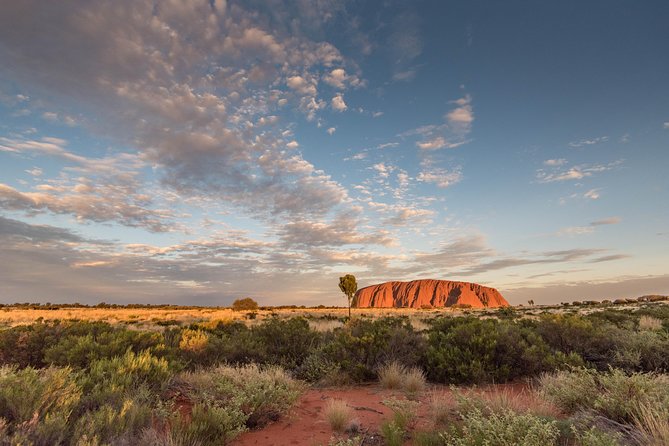
- Uluru at two key times: Watch the rock change colour at sunset, then return before dawn for sunrise and a base walk.
- Three substantial walks: The program includes Kata Tjuta, Uluru, and Kings Canyon, with the Kings Canyon Rim Walk the clear physical highlight for many people.
- Camping with a social side: Expect tent cabins or swags, shared meals, campfire time, and some group help with cooking and cleaning.
- Small coach group: The maximum group size is 23, which is more personal than a large sightseeing bus.
- A culture component: The Maruku Arts interpretive walk adds Aboriginal perspectives to the natural sights.
- A demanding schedule: Long drives, early starts, heat, and hiking make moderate fitness essential.
Why this three-day route works
Australia’s Red Centre is enormous. Uluru is more than 400 kilometres from Alice Springs, and Kata Tjuta and Kings Canyon are not quick side trips. By joining a three-day trip, you avoid arranging several remote transfers, park tickets, meals, and overnight stays yourself.
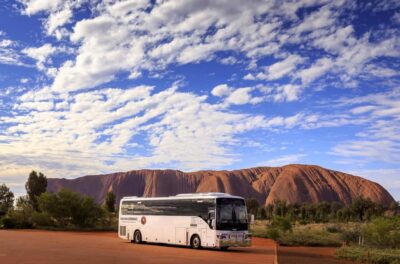
You also get the timing that matters. Uluru is not just a stop for a quick photograph from a coach window. At sunset, its surface shifts through orange, red, and purple tones. At sunrise, the experience is different. The first light reaches the surrounding country while Uluru begins to glow against a darker foreground.
The route is compact, but it is not gentle. You may spend several hours on the coach between walks. That can feel repetitive, especially on the third day, yet it also gives your legs a break. The long drives are part of the price of seeing three major Red Centre sites in one short trip.
A maximum of 23 people keeps the group manageable. The quality of the experience will still depend heavily on your guide. Guides named in the feedback include Lorrie, Ty, Asha, Mishka, Renée, Lachie, Ryan, Troy, Libbi, and Tye. The strongest praise goes to guides who kept people safe, explained Aboriginal culture and local plants, and kept the mood relaxed without making the group feel hurried.
A few more options to weigh up in Alice Springs
- From Alice Springs: Day Trip to Uluru with BBQ Dinner
★ 4.6 · 761 reviews - Ayers Rock Day Trip from Alice Springs Including BBQ Dinner
★ 4.5 · 639 reviews - Early Morning Ballooning in Alice Springs
★ 5.0 · 426 reviews
Day one: Kata Tjuta before Uluru sunset
The first major stop is Kata Tjuta, also called the Olgas. The name refers to the group of 36 rounded domes, which rise from the surrounding desert in a formation that feels very different from Uluru.
The afternoon walk lasts about two hours. This is a good opening hike because it lets you see the rock formations from close range rather than treating them as a distant viewpoint. The folds and gaps between the domes create changing angles as you walk, and your guide can add context about the area, plants, animals, and cultural meaning.
Heat is the key issue. An afternoon walk can be uncomfortable when temperatures climb into the low 40s Celsius. The schedule may change in response to conditions, but you should arrive prepared with sturdy shoes, a hat, water, and electrolytes. A moderate fitness level is required, and knees can make the uneven sections harder.
Uluru comes later, when the heat begins to ease. The sunset stop lasts about an hour and includes snacks. You watch the rock darken, glow, and change colour as the sun drops. It is a simple event, but it is one of the most memorable parts of the trip.
Do not expect a private viewing area or a champagne-style setup. The snack service is practical, and one complaint described the sunset refreshments as less generous than expected. The real value is the timing and the chance to watch Uluru in changing light, not a fancy drinks service.
Day two: Uluru at sunrise and on foot
Day two begins before dawn. You need to be comfortable getting out of a warm sleeping bag or tent while the air is still cold. That early start is tiring, but it keeps the main walk away from the worst midday heat.
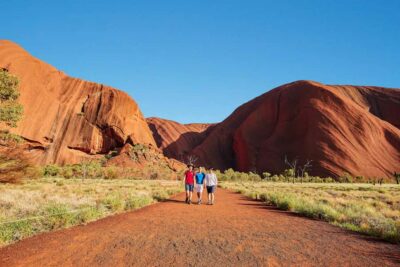
The base walk around Uluru is the day’s main activity and can take up to four hours. It gives you time to see the rock’s caves, markings, folds, and changing surfaces at close range. The experience is much more complete than simply viewing Uluru from a lookout.
The sunrise itself may surprise you. The sun does not rise directly in front of Uluru in the way many people expect. Instead, the light builds around you, and Uluru begins to glow as the wider country remains in shadow. A guide such as Lachie may position the group away from busier viewing areas, helping you enjoy a quieter start.
The walk also calls for respect. Uluru is a sacred place to the Anangu, the traditional owners, and climbing the rock is closed. The tour’s cultural approach is one of its strongest points, particularly when the guide explains why certain places should be treated with care.
After lunch, you visit the Uluru-Kata Tjuta Cultural Centre. The scheduled time is only about 30 minutes, which is not enough for a full visit. You may have time to browse Aboriginal art and craft, but you will need to move quickly. If learning about local culture matters to you, pay close attention during the guided portions of the trip and do not count on the Cultural Centre stop alone.
The Maruku Arts walk adds another layer. This 30-minute interpretive visit is led by an Aboriginal and Torres Strait Islander guide and focuses on First Peoples’ culture. One poor experience reported that this component did not take place, so the exact delivery may depend on conditions and operations. Still, its inclusion makes the itinerary more than a series of scenic walks.
The camp experience: useful comfort, not luxury
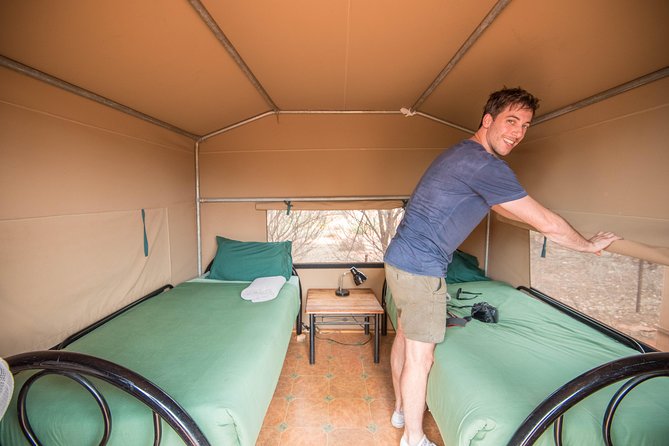
The accommodation is promoted as glamping-style, but you should set your expectations carefully. The better setup uses tent cabins with steel-frame beds, some room to move, a light, and in some cases a fan. That is more comfortable than sleeping directly on the ground.
The second night may be much more basic. Conditions described in the feedback include small tents, old-style cots, limited power, outdoor shower facilities, and rougher toilet areas. Another account described a camp with no electricity, no hot water, and limited privacy. These details can vary, but they show why this is not a resort stay.
You may have a choice between a tent cabin and a swag. A swag is an Australian outdoor bedroll used for sleeping close to the ground, often beneath the stars. The night sky can be spectacular, with one August stay offering clear views of the Milky Way. If you choose a swag, check carefully if a sleeping bag is required. The information has not always been clear, and the sleeping bag requirement depends on the accommodation type.
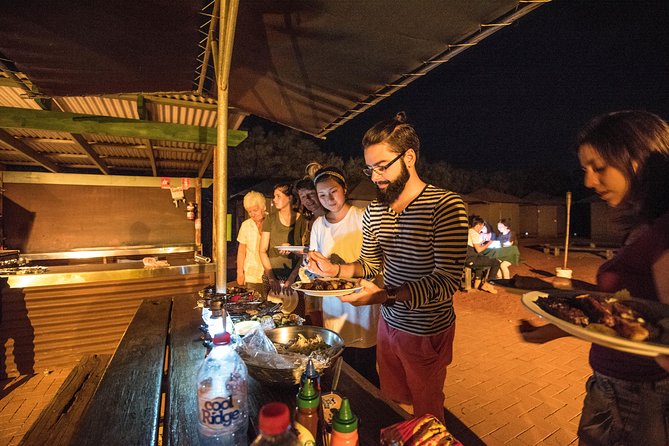
Camping is also part of the social appeal. Meals are cooked at camp, and the group may help chop food, serve dinner, clean up, or assist with tents. Some people find this creates instant camaraderie around the fire. Others may feel they are doing too much work after a long day of hiking and driving.
The food receives strong praise overall. Several accounts describe fresh, plentiful meals, with some saying the cooking exceeded expectations. One poor account reported small portions and simple food. I would treat the included meals as hearty camp food rather than restaurant dining, and bring any personal snacks you need within the tour’s rules.
A completely different kind of day out:
- Alice Springs Camel Tour
★ 4.5 · 404 reviews - West MacDonnell Ranges Day Trip from Alice Springs
★ 4.5 · 364 reviews - From Alice Springs: West MacDonnell Ranges Day Trip
★ 4.7 · 296 reviews - Alice Springs: Early Morning Hot Air Balloon Flight
★ 4.9 · 243 reviews
Day three: why Kings Canyon earns the biggest praise
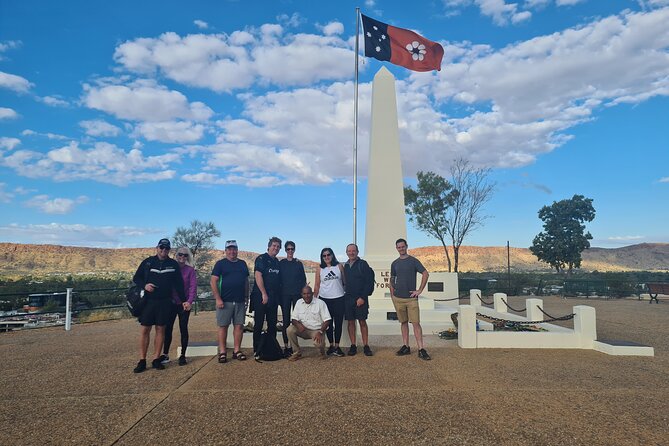
The final day takes you into Watarrka National Park for Kings Canyon. The canyon is enclosed by tall red rock walls and feels dramatically different from the open slopes around Uluru.
The main choice is the Kings Canyon Rim Walk, which can take about four hours and is physically demanding. The route rewards you with broad views over the canyon, unusual sandstone formations, and the Garden of Eden. The Garden of Eden is a particularly beautiful section, with water and plant life creating a welcome change from the dry country around it.
You should choose the Rim Walk if your fitness and the weather allow. It is repeatedly singled out as the trip’s best walk, but it is not a casual stroll. The route includes steep and uneven sections, and heat can make the effort harder. People with knee trouble or limited walking ability may find it challenging.
The schedule helps by placing the walk early, before the day becomes dangerously hot. Still, carry water, wear sturdy footwear, use sun protection, and take your guide’s instructions seriously. The tour information asks for moderate physical fitness, and that should be read as a real requirement rather than a polite suggestion.
Kings Canyon is also why I would not reduce this trip to an Uluru photo tour. Uluru is the icon, but Kings Canyon may be the place that surprises you most. Its scale, rock walls, and Garden of Eden give the final day a strong finish.
Long drives, early starts, and group rhythm
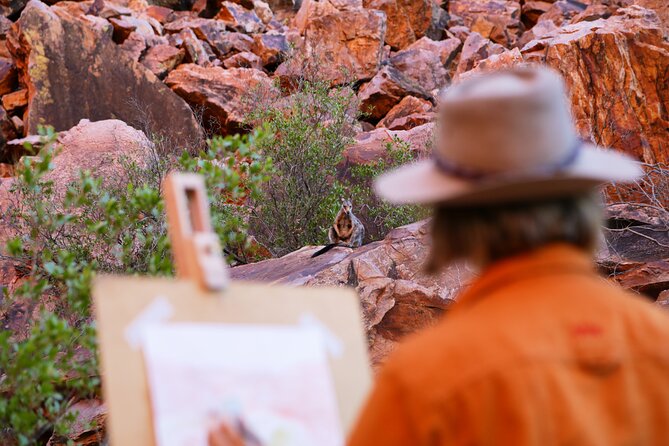
This trip involves a lot of coach time. You drive between Alice Springs, Uluru, Kata Tjuta, Kings Canyon, and the camps, often after waking before sunrise. That makes the safari efficient, but it can leave you tired by the end of each day.
The schedule may run from an early breakfast through a morning hike, a drive, lunch, another stop, sunset, and a late return to camp. One account described bedtimes around 10:30 or 11 pm followed by a 5 am wake-up. You need to enjoy active holidays and accept that comfort comes from having someone else drive and organize the route, not from having lots of free time.
Guides are central to the experience. The best ones handle driving, food, safety, timing, camp tasks, and commentary, which is a large workload for one person. Ty was praised for combining guiding, cooking, and driving, while Mishka was noted for staying cheerful and looking after the group. Ryan was praised for storytelling and personal attention, and Troy for explaining the natural and cultural background.
Camp organization may feel less polished than the walking portions. You may need to pitch in, and instructions may not always be perfectly clear. A helpful attitude improves the experience for everyone, especially when the group is preparing dinner after a hot day.
Is the $713.66 price good value?
At $713.66 per person, this is not a budget bus outing. But the price covers three days of transport from Alice Springs, park admissions, guided walks, camping, meals, and access to remote sites that are costly and difficult to connect independently.
I think the value is strongest if you want to see all three major places in a short time. You are paying for coordination as much as for sightseeing. The guide handles the long route, the early starts, meal planning, camp arrangements, and timing at the parks.
The value is weaker if you expect luxury accommodation, generous private facilities, or a relaxed timetable. The word glamping may create an image of plush tents and hotel-style bathrooms. The reality can include proper beds and fans at one camp, but rougher facilities at another.
The 96 percent recommendation rate and 4.8 rating from 162 reviews point to a strong overall experience, but they do not erase the practical warnings. Extreme heat has caused some older participants to stop after the first day, and one 71-year-old participant described the schedule and camping as too hard. Age alone is not the issue, but heat tolerance, walking ability, and comfort with basic camping matter a great deal.
What to pack and how to prepare
Pack for a trip where the weather can change your whole day.
- Sturdy walking shoes are essential for Kata Tjuta, the Uluru base walk, and Kings Canyon.
- Bring a broad-brimmed hat, sunscreen, and a refillable insulated water bottle.
- Pack electrolytes, especially if you are visiting during hot weather.
- Take a small torch or battery light for moving around camp at night. Lights may be available, but having your own is useful.
- Confirm whether your accommodation is a tent cabin or swag, and check if you need a sleeping bag.
- Expect early mornings, long coach rides, shared camp duties, and basic bathrooms.
- Keep important personal items easy to reach during transfers, since you will move between walks, meals, camps, and the coach.
The tour starts at Stay at Alice Springs Hotel, 11 Leichhardt Terrace, at 5:40 am, and returns to the same meeting point. Confirmation is sent within 48 hours of booking, subject to availability. Pickup is offered, and the activity has a maximum of 23 people.
Who should book this safari?
I would book this tour if you want the Red Centre’s main sights without renting a car or building a complicated route. It suits hikers, first-time visitors to central Australia, solo people who enjoy meeting an international group, and anyone who values cultural interpretation alongside scenery.
I would also choose it if Kings Canyon is high on your list. The Rim Walk is the trip’s strongest physical and visual reward, and the chance to see it alongside Uluru and Kata Tjuta makes the three-day format efficient.
I would hesitate if you need air conditioning at camp, private bathrooms, soft beds every night, or a slow schedule. Older walkers and anyone with knee problems should consider the length of the walks and the heat before paying. If you are unsure, choose a time of year with milder conditions and ask clear questions about the sleeping setup before departure.
Should you book it?
Yes, if you want a real outback adventure and accept that real includes dust, early alarms, long drives, shared chores, and uneven facilities. The sunrise at Uluru, the cultural walk, the domes of Kata Tjuta, and especially the Kings Canyon Rim Walk make this a powerful introduction to central Australia.
No, if the word glamping makes you expect hotel comfort. At this price, the experience is worthwhile because of the places, guides, transport, meals, and access to the remote Red Centre, not because the camps are luxurious. Bring patience, water, good shoes, and a sense of humour, and the trip has a very good chance of becoming one of your Australia highlights.
FAQ
Where does the tour start?
The tour starts at Stay at Alice Springs Hotel, 11 Leichhardt Terrace, Alice Springs, at 5:40 am.
Does the tour return to Alice Springs?
Yes. The activity ends back at the meeting point in Alice Springs.
How long is the safari?
The safari lasts approximately three days.
Are meals and accommodation included?
Yes. Camping-style accommodation and meals are included in the tour.
How physically demanding is the trip?
A moderate level of physical fitness is required. The itinerary includes a Kata Tjuta hike, a long Uluru base walk, and the Kings Canyon Rim Walk, which can be challenging.
What is the cancellation policy?
You can receive a full refund if you cancel at least six full days before the start time. Cancellations made two to six full days before departure receive a 50 percent refund, while cancellations less than two full days before departure are not refunded.
Just added in Alice Springs
- From Alice Springs: West MacDonnell Ranges Half Day Trip★ 4.4 · 44 reviews
- From Alice Springs: West MacDonnell Ranges Day Trip★ 4.7 · 296 reviews
- Uluru: 4-Day Rock to Rock Adventure Tour★ 4.9 · 141 reviews
- Alice Springs to Uluru (Ayers Rock) Coach Transfer★ 4.5 · 39 reviews
- West MacDonnell Ranges & Standley Chasm Day Trip from Alice Springs★ 5.0 · 67 reviews
- West MacDonnell Ranges Day Trip from Alice Springs★ 4.5 · 364 reviews
- 1 Day Alice Explorer★ 4.5 · 80 reviews
- Alice Springs Desert Park Nocturnal Tour★ 5.0 · 45 reviews
Uluru Tours, compared.
Ayers Rock Day Trip from Alice Springs Including BBQ Dinner
Read our review →
Uluru: Field of Light Sunrise Tour with Hot Drinks
Read our review →
Uluru & Kata Tjuta 25-Minute Helicopter Experience
Read our review →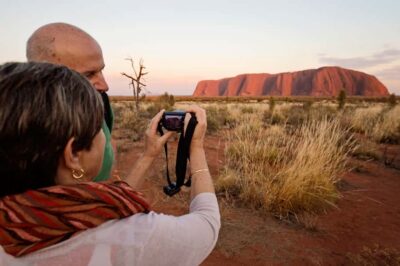
Uluru: Sacred Sites & Sunset Tour with Wine & Cheeseboard
Read our review →
Browse the lists this tour appears in