
Reviewed · ULURU TOURS
Uluru: Guided Trek of Uluru’s Base in a Small Group
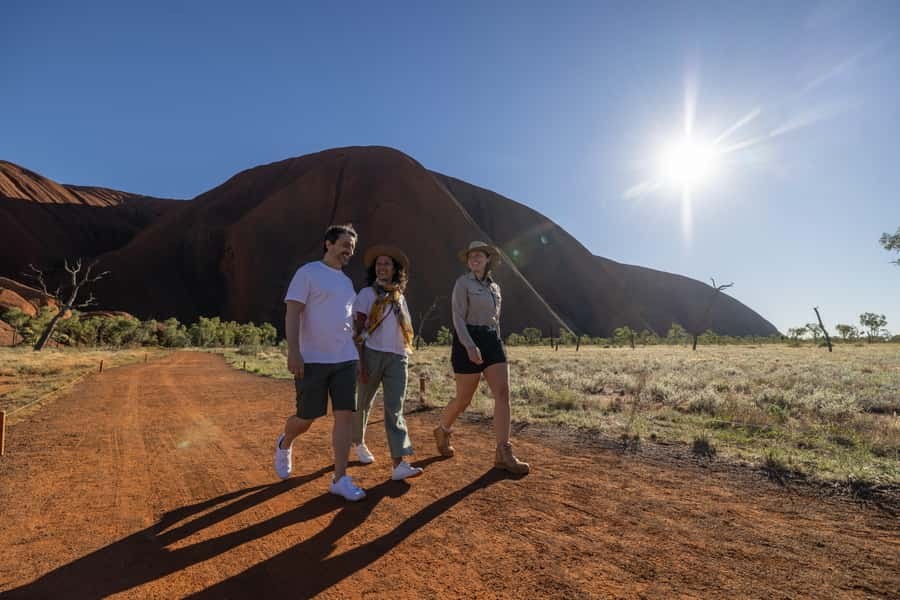
Uluru rewards slow walking. This six-hour sunrise tour gives you time to see the monolith from every side, hear Anangu creation stories, and pause at places you could easily miss alone. I especially like the small group of up to 11 people, which makes it easier to hear the guide and ask questions, and the way the full base walk connects geology, wildlife, Aboriginal culture, and survival skills. The one catch is the distance: at roughly 10.5 kilometers, this is a long morning on foot, and the light breakfast may not satisfy everyone.
You will be collected from your Ayers Rock Resort hotel about an hour before sunrise in an air-conditioned vehicle. Guides such as Lucia, Michael, Lily, Rachel, and Dimitri have earned strong praise for their warmth, care, and ability to explain Uluru without turning the walk into a dry lecture. The early start can be cold, hot, or both before the morning ends, so sensible shoes, water, sun protection, and an extra layer matter.
In This Review
- Key things to know before you book
- Why the sunrise start is worth the alarm
- The full base walk gives you Uluru’s many faces
- Sunrise, rock art, and the meaning of place
- Kuniya Walk and Mutitjulu Waterhole
- Mala Walk and Kantju Gorge
- Breakfast is practical, but keep expectations modest
- Water, heat, flies, and what to carry
- Transport and hotel pickup details
- Language options for international visitors
- Is $169 good value?
- Who should book this Uluru walk?
- Should you book it?
- FAQ
- How long is the Uluru base walk?
- How long does the full tour last?
- What time does pickup happen?
- Where is hotel pickup provided?
- Where do guests at Emu Walk Apartments meet the vehicle?
- Where do guests at The Lost Camel meet the vehicle?
- Is breakfast included?
- Is the national park entry ticket included?
- What languages are available?
- How many people are in the group?
- What should I bring?
Key things to know before you book
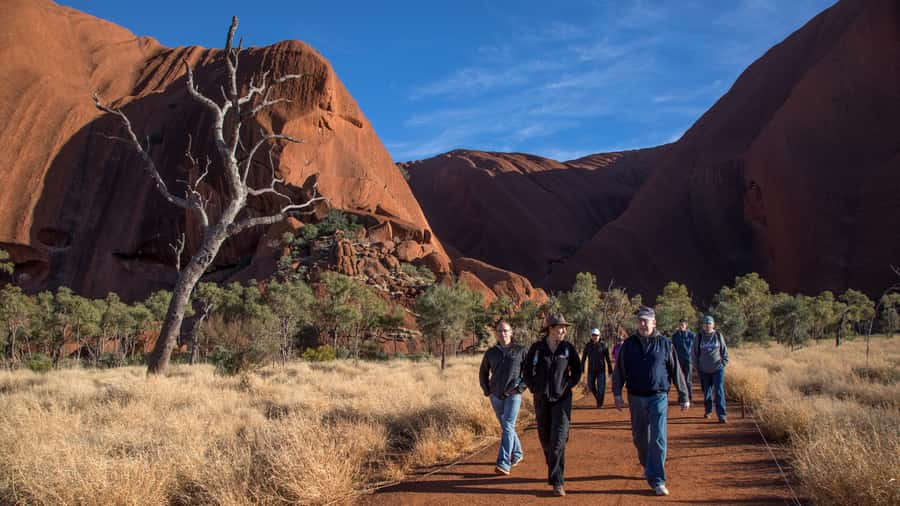
- The full base walk takes about 10.5 kilometers: The trail is mainly flat and made of gravel, but the distance still calls for reasonable fitness.
- Sunrise is part of the experience: You begin before dawn and stop at a good viewing point as the first light changes Uluru’s color.
- Mutitjulu Waterhole and Kantju Gorge bring the stories to life: These are not just scenic stops. Your guide explains their cultural meaning through Tjukurpa stories.
- The group is capped at 11 people: That small size helps you stay connected to the guide and avoid the feel of a large coach outing.
- Breakfast is carried in a pack: Tea, coffee, and a light outback picnic are included, but you may want extra food if you eat a large breakfast.
- The park entry fee is extra: Your ticket is valid for three consecutive days, so it can also cover other visits to Uluru-Kata Tjuta National Park during that period.
Why the sunrise start is worth the alarm
The day begins early, with pickup approximately one hour before sunrise. That may mean meeting the vehicle outside your hotel reception around 5am in warmer months, depending on the day’s sunrise time. The exact pickup time changes, so check the schedule when booking and be ready at the front of your hotel.
The drive into Uluru-Kata Tjuta National Park sets the tone. As dawn approaches, Uluru rises ahead of you as a huge, dark shape. Then the first light begins to reach the rock. This quiet shift is one of the strongest parts of the tour because you are not simply arriving at a photo stop. You are watching the rock change before the walking begins.
The early hour also helps with heat. In November, one participant praised the decision to start before the warmth built up. In cooler months, the same timing means you may want a pullover or warmer clothing at the start. The morning can change quickly, so pack for both ends of the temperature range.
A few more options to weigh up in Yulara
- Blue Mountains Hiking Glow worms Cave Wildlife Spotlighting Night Adventure
★ 5.0 · 165 reviews - Small-Group Grampians Great Wildlife Escape Day Trip with Hiking
★ 5.0 · 160 reviews - 4 Day Wild Tasmania Tour / Wildlife, Nature, Hiking / Inc. Accom
★ 5.0 · 126 reviews
The full base walk gives you Uluru’s many faces
A quick stop near Uluru shows you one angle. The base walk shows you a much more varied place. The rock changes shape as you move around it, with sheer walls, caves, markings, waterholes, and shaded areas appearing in different sections.
The route is described as approximately 10.5 kilometers, though one walker recorded more than 14 kilometers and another described it as closer to 12. The difference may come from the precise route, walking around at stops, or personal tracking devices. I would plan for a full day’s walking distance rather than treating the number as a short stroll.
The path is mainly flat, with gravel underfoot. Several people found it easy at a steady pace, and guides build in breaks for water and rest. Still, flat does not mean effortless. You remain outdoors for several hours, carry your own water and breakfast, and walk through changing temperatures. If you are reasonably fit, the route should feel manageable. If long walks are difficult for you, this tour may be too demanding.
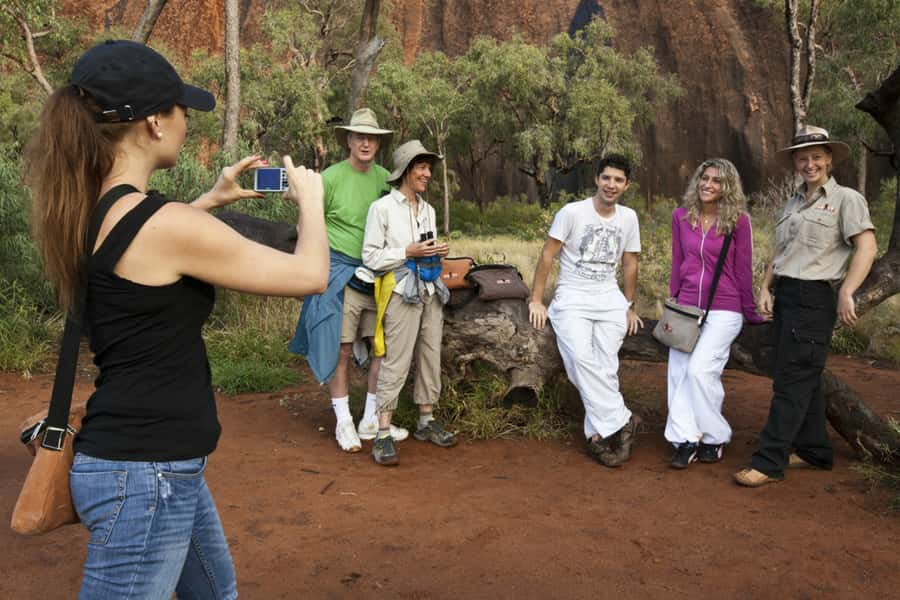
The small group helps here. Guides can keep an eye on the pace, explain what you are seeing, and allow time for photographs. Past groups have ranged from around eight people to the full 11, creating a more personal outing than a large bus tour.
Sunrise, rock art, and the meaning of place
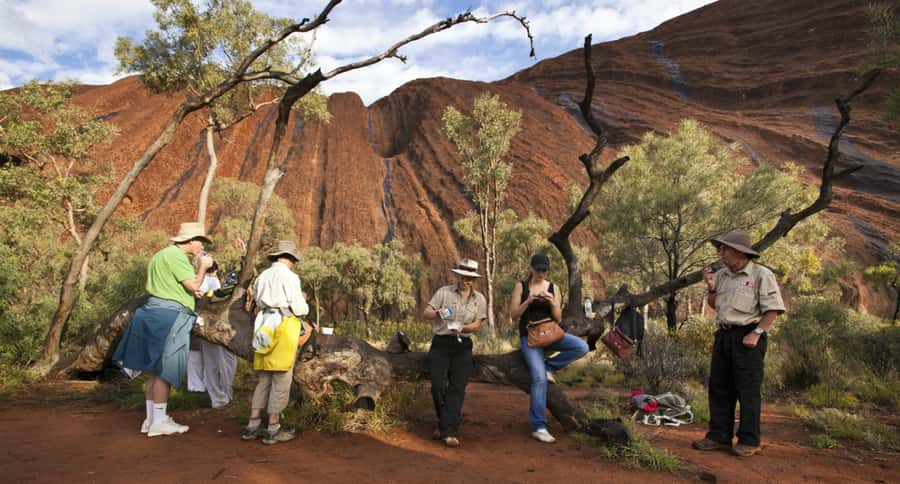
As you walk, your guide explains the geology of Uluru along with the plants, animals, and survival knowledge connected to the area. The rock itself is only part of the story. The surrounding country and the ways people read, use, and care for it are central to the experience.
You will see ancient rock art sites and markings on the rock. These are not presented as random decorations. Your guide explains their cultural importance and helps you understand why certain parts of Uluru are treated with care and respect.
The tour also introduces you to Tjukurpa, the body of creation stories and law central to Anangu culture. These stories connect people, animals, places, and responsibilities. Hearing them at the locations they concern gives the walk more meaning than simply looking at a rock face and taking photographs.
The quality of the guide matters greatly here. Lucia was praised for explaining Uluru’s importance within Indigenous life. Tim was noted for his explanations of sacred sites and Dreamtime stories. Michael was described as passionate and generous with his knowledge, while Lily was praised for making the walk comfortable and memorable. Individual guides differ, but the format gives them room to do more than point out landmarks.
Kuniya Walk and Mutitjulu Waterhole
One of the most important sections follows the Kuniya Walk toward Mutitjulu Waterhole. This is a quieter and more enclosed part of Uluru, and the change in scenery makes it a welcome break from the open track.
Here, your guide tells the Tjukurpa story of Liru and Kuniya. The story is tied to the place, not added as a general cultural talk. That connection helps you understand why the waterhole matters to the Anangu people and why Uluru cannot be treated simply as a scenic object.
Mutitjulu Waterhole is also a useful reminder of survival in the outback. Water has shaped how people move through and understand this country. Your guide may also discuss the plants and animals found around the area, along with the ways people have lived with limited water and intense conditions.
This stop gives you time to look carefully. Uluru is easy to rush because its scale is so dramatic. At the waterhole, the smaller details become more noticeable: the forms of the rock, the shelter of the area, and the marks left by water and time.
A completely different kind of day out:
- Uluru: Field of Light Sunrise Tour with Hot Drinks
★ 4.6 · 572 reviews - Uluru 15-Minute Helicopter Experience
★ 4.9 · 548 reviews - Yulara: Uluru & Kata Tjuta 25-Minute Helicopter Experience
★ 4.8 · 536 reviews - Yulara: Uluru Sunrise and Kata Tjuta Day Trip by Bus
★ 4.5 · 469 reviews
Mala Walk and Kantju Gorge
Later, the route takes you along the Mala Walk toward Kantju Gorge. The story here concerns the Mala people, adding another strand to the cultural account of Uluru.
Kantju Gorge is especially striking because the towering rock walls create a more sheltered, enclosed setting. It offers a different view from the broad sunrise outlook and open stretches of the base track. The gorge also shows how varied Uluru can feel from one section to the next.
Your guide’s commentary is most useful when it links the physical setting with the stories associated with it. You are not merely collecting place names. You are learning why this section has meaning, how its features are understood, and how the rock’s forms relate to the wider cultural story.
The direction of the walk can affect comfort. One guide took a group counterclockwise so the second half had more shade as the day warmed. That is a sensible approach, though conditions and route choices may vary. Ask your guide about the planned direction if heat is a concern.
Breakfast is practical, but keep expectations modest
The included breakfast comes as an outback picnic in a carry pack, with tea and coffee. It is designed to be portable, so you eat along the route rather than sitting down to a full café meal.
That arrangement works well for this walk. You can stop partway around the base, eat in the open air, and continue without losing much time. Several participants found the breakfast sufficient, and one described the food pack as well planned.
It is also fair to call it light. One person wanted something more filling. If you normally need a substantial breakfast, bring an approved extra snack if possible, or eat something before pickup. Do not assume the included pack is a full meal.
The guide may also provide water support. Michael was praised for carrying supplies and handing out cold lemongrass towels, but that should be treated as a pleasant example of guide care rather than a guaranteed inclusion. The confirmed inclusions are breakfast, tea, coffee, hotel pickup, and a professional driver-guide.
Water, heat, flies, and what to carry
You need to bring a water bottle. The tour information recommends appropriate walking gear, a hat, sunscreen, and warmer clothing in cooler months.
Water planning deserves serious attention. One experienced walker carried four liters and drank it all, while also using two refill points along the way. Those taps contain filtered rainwater, which may taste earthy or metallic and may not be cold. The right amount depends on the season, your needs, and your guide’s instructions, but do not start the walk with too little.
A light, breathable shirt can help in warm weather, while a pullover is useful before sunrise in winter and spring. Sunglasses and shoulder-covering clothing are also sensible. One participant recommended a fly net for the face, especially in warmer conditions. It may look a little comical, but outback flies are not known for respecting personal space.
Wear proper walking shoes. The route is generally easy underfoot, but sandals or poor footwear become uncomfortable over many hours. You will carry your own breakfast and water, so a practical day pack is useful if the operator permits it.
Transport and hotel pickup details
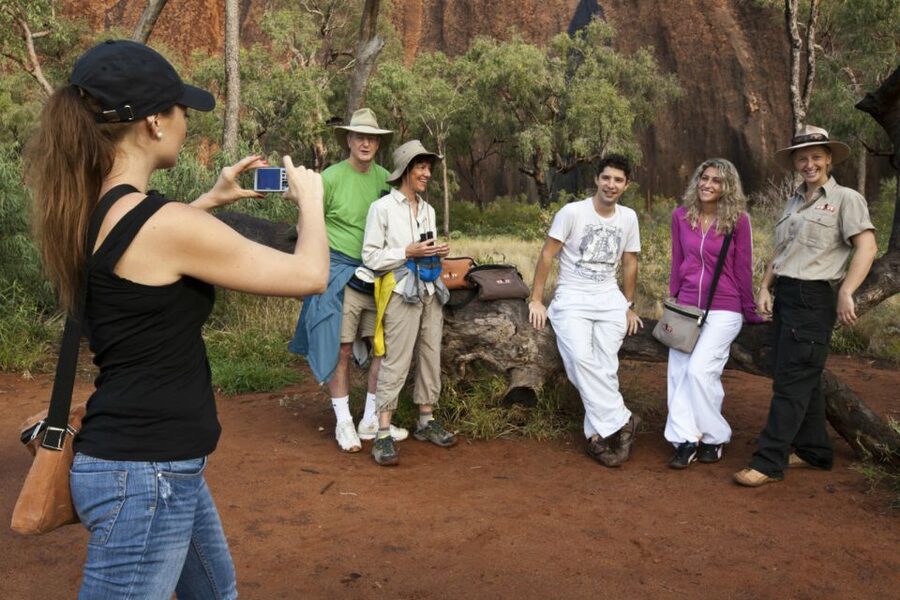
Pickup is included from all Ayers Rock Resort hotels. You meet outside the front of hotel reception, not inside your room or at a general bus terminal.
There are a few location details to remember. If you stay at Emu Walk Apartments, pickup is at Desert Gardens Hotel next door. If you stay at The Lost Camel, pickup is at Sails in the Desert next door. These arrangements are simple, but they matter when you are standing outside before dawn.
The vehicle holds a maximum of 11 participants. Air-conditioned transport is a welcome feature after several hours outside, and one participant singled it out as a strong part of the experience. The vehicle also keeps the transfer personal and avoids the sluggish feel of moving a large crowd.
The guide is both driver and walking leader. That means the person who brings you into the park is also the person explaining the rock, the stories, and the route. Guides have been praised for being friendly, careful, and attentive, including making sure the group returned safely and felt welcome.
Language options for international visitors
The live guide speaks English. Optional audio guides are available in Spanish, Chinese, French, German, Italian, and Russian. The main guide still leads the outing in English, so the audio option is most useful if you want cultural and practical explanations in your own language as you walk.
Bring suitable headphones or check the booking instructions for how the device is supplied. The audio option is a helpful addition, but it does not replace the small-group contact with the guide. You will still benefit from the guide’s pacing, answers, and observations along the route.
Is $169 good value?
At $169 per person, this is not a cheap sightseeing bus ride. You are paying for about six hours, hotel pickup, park transport, a professional guide, a full base walk, breakfast, tea, coffee, and a small group limited to 11.
The value is strongest if you want context. You could walk parts of Uluru independently, but this tour gives you a guide who explains the Anangu stories, rock art, geology, flora, fauna, and survival knowledge as you reach the relevant places. That changes the experience from a long walk with views into a more meaningful visit.
The park entry ticket is not included. You buy it at the entry station, and it remains valid for three consecutive days from the date of issue. If you plan to return to Uluru or visit Kata Tjuta during that period, the ticket becomes easier to justify.
I would choose this tour if Uluru is a major reason for your visit and you want to see the whole base without organizing transport, food, timing, and interpretation yourself. I would look elsewhere if you want a short photo stop, a late start, or a full cooked breakfast.
Who should book this Uluru walk?
This tour suits you if you:
- Want to walk around the entire base rather than see only one section
- Value Aboriginal cultural explanation alongside scenery
- Prefer a small group to a large coach
- Can manage roughly 10.5 kilometers on mostly flat gravel
- Are willing to start before sunrise
- Want hotel pickup and a guide to handle the park logistics
- Need an optional audio guide in Spanish, Chinese, French, German, Italian, or Russian
It may not suit you if you have trouble with long walks, dislike early mornings, or want a relaxed half-day with little physical effort. The route is not described as technically difficult, but its length and the desert conditions are real.
Should you book it?
I would book this experience if you have one full morning for Uluru and want the place explained rather than simply photographed. The strongest reasons are the complete base route, the small group, the sunrise timing, and the guides’ clear care for both the group and the cultural setting.
Go prepared. Carry enough water, wear sturdy shoes, bring a warm layer, and expect breakfast to be a light picnic rather than a feast. If you can handle the distance and the early alarm, $169 buys a well-organized introduction to Uluru that combines memorable views with a respectful account of why this place matters.
FAQ
How long is the Uluru base walk?
The walk is approximately 10.5 kilometers. Some participants recorded a longer distance, including roughly 12 to 14 kilometers, depending on their route and tracking.
How long does the full tour last?
The experience lasts six hours, including pickup, transport, the sunrise viewing, the guided walk, breakfast, and the return to your Ayers Rock Resort accommodation.
What time does pickup happen?
Pickup is approximately one hour before sunrise. The exact starting time changes, so check availability for the date you want.
Where is hotel pickup provided?
Pickup is available from all Ayers Rock Resort hotels. You meet outside hotel reception.
Where do guests at Emu Walk Apartments meet the vehicle?
Pickup for Emu Walk Apartments is at Desert Gardens Hotel, which is next door.
Where do guests at The Lost Camel meet the vehicle?
Pickup for The Lost Camel is at Sails in the Desert, located next door.
Is breakfast included?
Yes. The tour includes an outback picnic breakfast in a carry pack, along with tea and coffee.
Is the national park entry ticket included?
No. The Uluru-Kata Tjuta National Park entry ticket is purchased separately at the entry station and is valid for three consecutive days from the date of issue.
What languages are available?
The live guide speaks English. Optional audio guides are available in Spanish, Chinese, French, German, Italian, and Russian.
How many people are in the group?
The vehicle and tour group are limited to a maximum of 11 participants.
What should I bring?
Bring a water bottle, sensible walking shoes, a hat, sunscreen, appropriate walking clothing, and warmer clothing during cooler months. A fly net may also be useful in warm conditions.
Just added in Yulara
- Uluru: Sunset, Sparkling Wine, Cheeseboard & Gourmet BBQ★ 4.4 · 193 reviews
- Uluru: Small Group Sunset Tour with Sparkling Wine★ 4.5 · 82 reviews
- Uluru: Guided Walking Tour at Sunrise with Light Breakfast★ 4.6 · 256 reviews
- Uluru: Small Group Guided Tour with Sunset Refreshments★ 4.8 · 190 reviews
- Uluru Highlights Small Group Morning Tour + Picnic Breakfast★ 4.8 · 212 reviews
- Uluru, Kata Tjuta & Kings Canyon Camping Tour★ 4.8 · 228 reviews
- Uluru: National Park Astronomy Tour with Telescope and Photo★ 4.4 · 357 reviews
- Uluru 1.5-Hour Sunset Tour with Sparkling Wine & Cheeseboard★ 4.3 · 226 reviews
Uluru Tours, compared.
Ayers Rock Day Trip from Alice Springs Including BBQ Dinner
Read our review →
Uluru: Field of Light Sunrise Tour with Hot Drinks
Read our review →
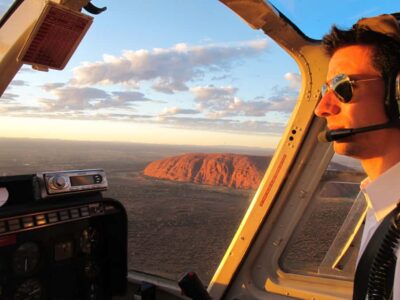
Uluru & Kata Tjuta 25-Minute Helicopter Experience
Read our review →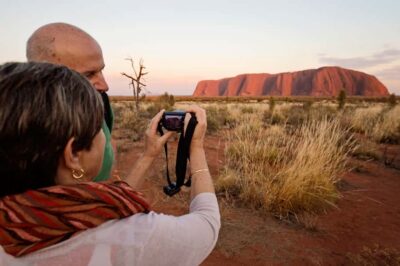
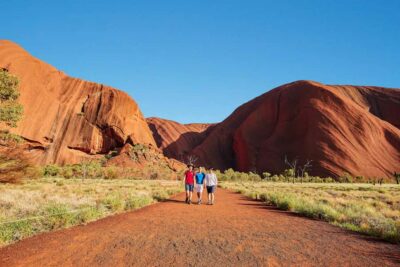
Uluru: Sacred Sites & Sunset Tour with Wine & Cheeseboard
Read our review →
Browse the lists this tour appears in