
Reviewed · ULURU TOURS
Uluru: National Park Astronomy Tour with Telescope and Photo
The outback sky does the heavy lifting. This 150-minute evening with Uluru Astro Tours takes you away from resort lights for clear southern stars, telescope views, Indigenous sky stories, and a professional photo with Uluru behind you. I especially like the way guides such as Neil, Lucy, Zack, Olina, and Ollie mix practical science with ancient stories. I also like that pickup, equipment, blankets, and a digital photograph are included.
The main caution is group size. Some departures use two full buses and only three telescopes, which can mean waiting. Moonlight can also wash out faint stars, so a bright moon may soften the very spectacle you came to see.
In This Review
- Key things to know before booking
- Leaving the resort for a darker sky
- The first look at the southern sky
- Telescopes, planets, and faraway objects
- A professional photo beneath Uluru
- Bring your own camera, but protect it from the dark
- Cold weather, blankets, and basic comfort
- How the moon and weather change the experience
- Is $91 good value?
- Who should book this night out?
- Final verdict: book it for the setting and the story
- FAQ
- How long does the Uluru astronomy tour last?
- What is included in the price?
- Is hotel pickup included?
- Do I need a National Park Pass?
- What should I wear?
- Can I bring my own camera?
- Which languages are available?
- Can I cancel the booking?
Key things to know before booking
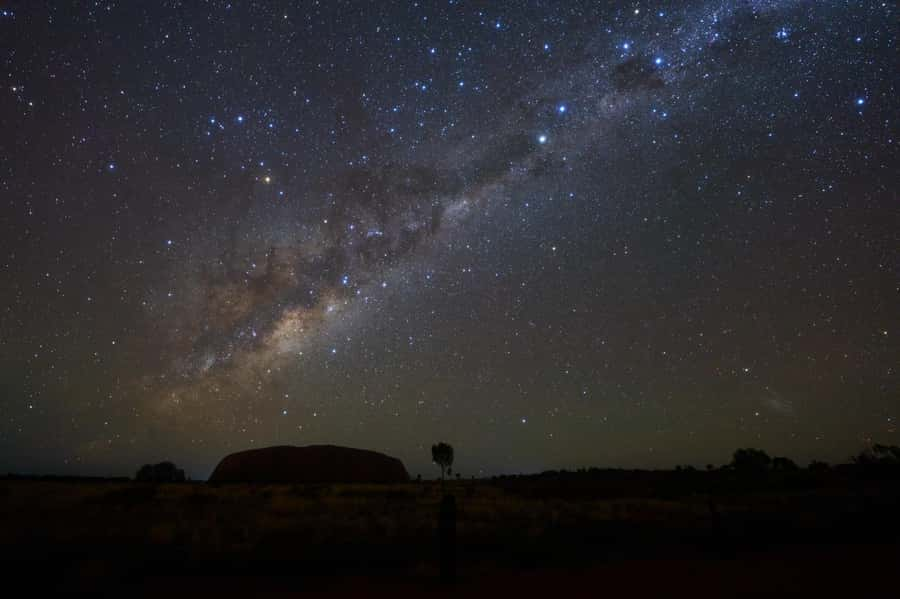
- The Milky Way depends on timing: A dark, moonless night gives you the best chance of seeing the brightest star fields and galactic detail.
- You look through real telescopes: The equipment can reveal planets, nebulae, star clusters, Saturn’s rings, and other objects hidden to the naked eye.
- Uluru appears in the included photo: Your digital long-exposure portrait places you under the stars with Uluru as the backdrop.
- The tour leaves resort light behind: The stargazing site is reached by bus and sits away from artificial light in the national park.
- Cold is a real possibility: Bring warm layers, even if the afternoon felt hot. Blankets are also provided.
- The experience suits beginners: Guides explain the sky in plain language, while more experienced amateur astronomers can bring a camera and tripod.
Leaving the resort for a darker sky
Your evening begins with pickup from your accommodation. Look for the bus marked Atrip, and check your email on the day for the confirmed pickup schedule. The drive to the stargazing site is part of the experience, since the point is to get away from the lights around the resort.
The journey is reported to take about 20 minutes from the resort to a darker location in the park. That short ride matters. Even a small amount of artificial light can make faint stars and the Milky Way harder to see, so paying for a dedicated astronomy outing rather than simply looking up from your hotel can make a real difference.
You do not need to bring your own National Park Pass for this tour. Pickup and drop-off are included, which makes the evening easier to fit around a full day at Uluru or Kata Tjuta.
The bus is described as comfortable, but the size of the group can vary. On a quieter departure, the outing may feel relaxed and personal. On a busy night, two full buses can arrive together, creating queues for telescopes and photography.
More national park trips in Yulara:
- Litchfield National Park and Jumping Crocodile Cruise
★ 5.0 · 2,119 reviews - Grampians National Park Small-Group Eco Tour from Melbourne
★ 5.0 · 761 reviews - From Port Arthur: Tasman Island Wilderness Cruise
★ 4.9 · 704 reviews
The first look at the southern sky
Once you reach the site, the change is immediate. You leave the artificial glow behind and look up into a much darker sky. On a clear night, the Milky Way can be obvious to the naked eye, and the stars appear far more numerous than they do from a town or city.
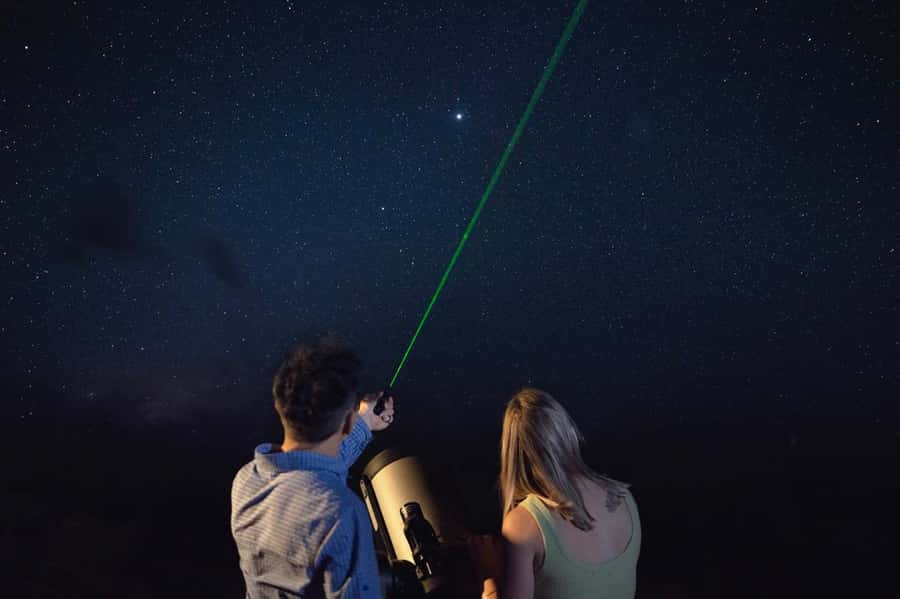
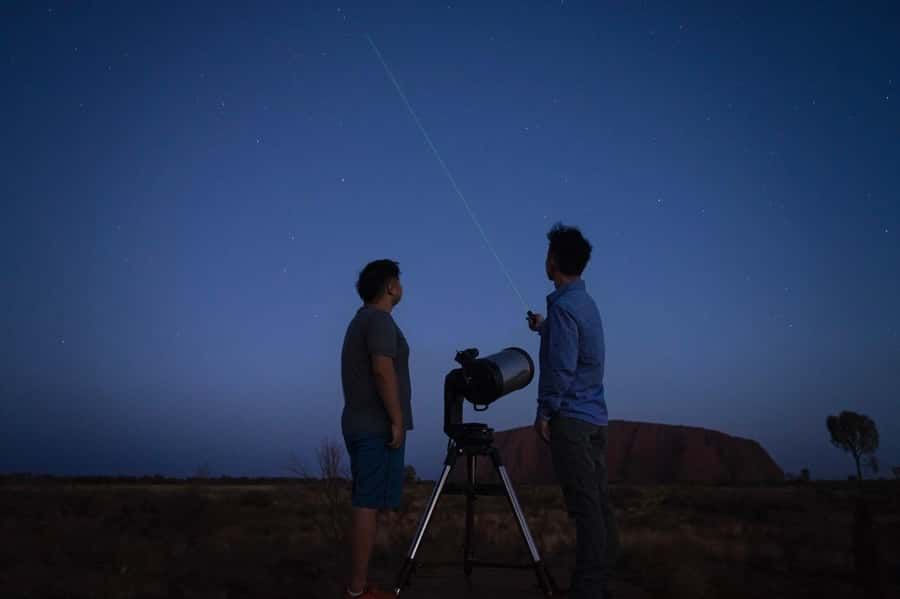
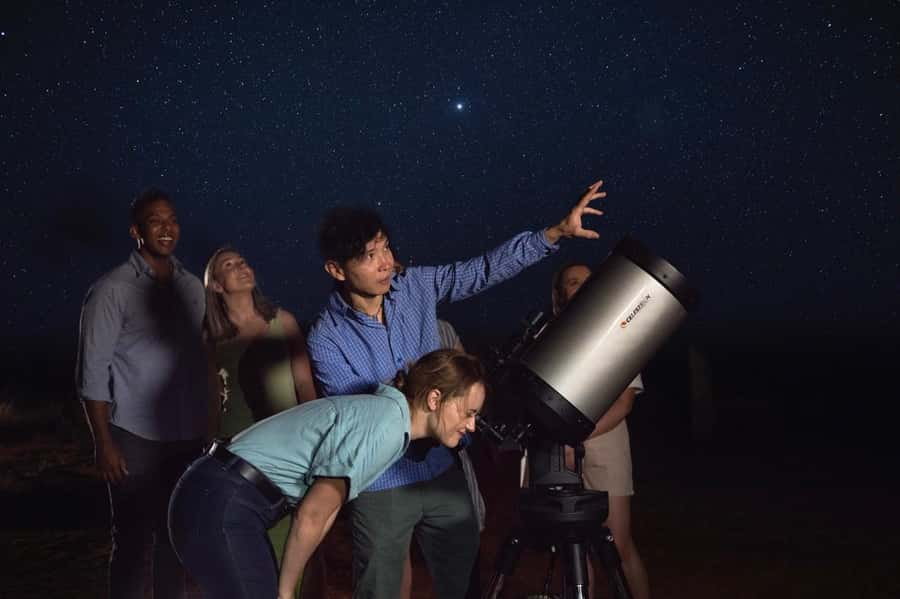
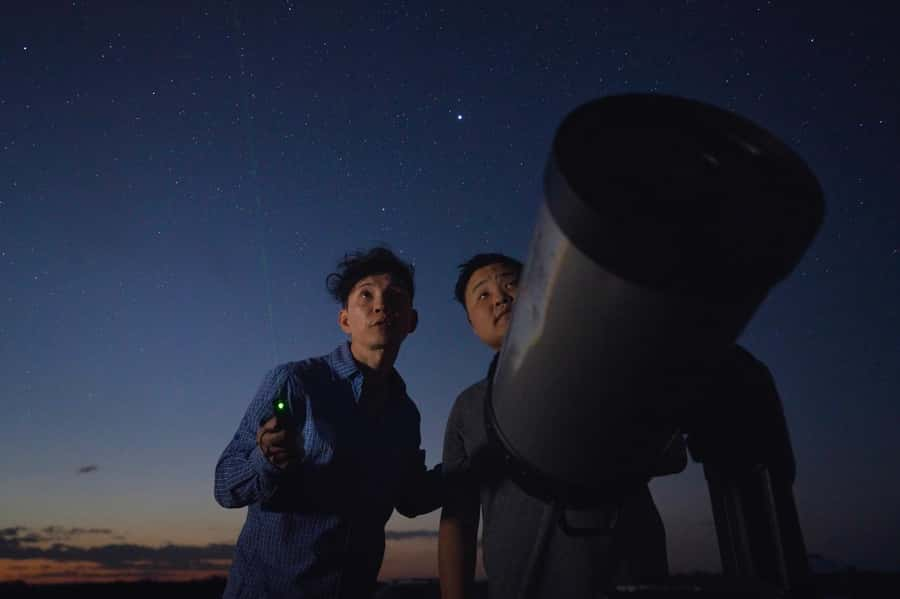
The guides use lasers to point out stars and constellations. This is a useful touch because the sky can look like a huge jumble at first. A laser gives you a fixed point to follow, helping you connect the explanation with what you are actually seeing overhead.
The talks mix astronomy with Indigenous stories and the traditional uses of the night sky. That combination gives the evening more depth than a simple list of planets. You hear about the science of stars and galaxies, while also learning how the sky has been read and used in Aboriginal cultures.
The balance will not suit everyone perfectly. Several people wanted more scientific detail, while others found the astronomy explanations a little over their heads. For a beginner, this is mostly a strength. You can ask questions, and guides such as Neil and Lucy are praised for making difficult subjects clear and entertaining.
You should also expect some talking and movement around the group. One person suggested a small microphone because conversations within a large audience can make parts of the explanation harder to hear. Staying near the guide is sensible, especially when the group is large.
Telescopes, planets, and faraway objects
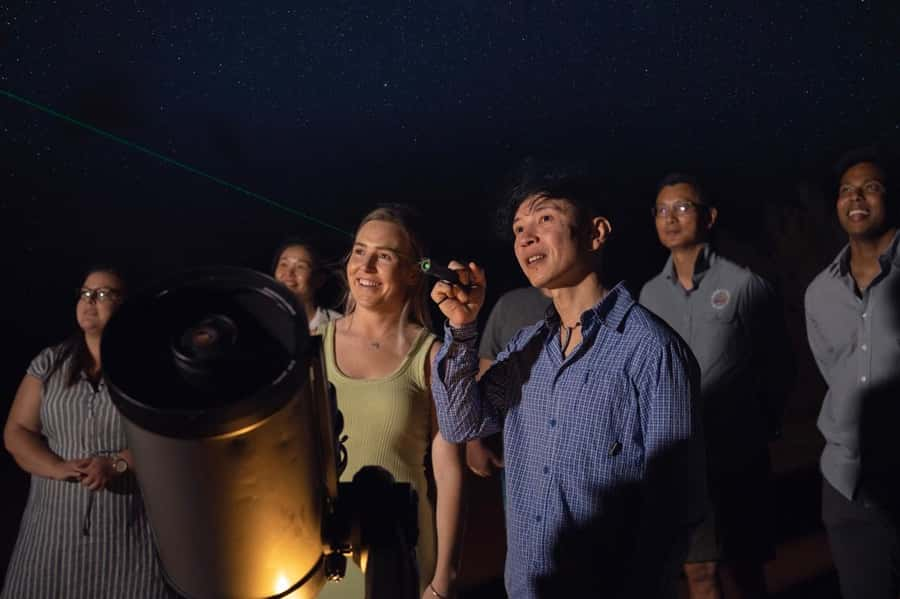
The telescopes are the technical centre of the evening. You take turns looking through high-strength telescopes and binoculars at objects that cannot be properly seen with the naked eye.
Depending on the date and conditions, the equipment may show planets, nebulae, clusters, the Moon, and other distant objects. Saturn’s rings have been a highlight, and people have also reported seeing the Seven Sisters, Alpha Centauri, Pluto, and shooting stars during their outings. What you see depends on the season, the position of the object, cloud cover, and the moon phase, so the exact viewing list is not fixed.
This is important: a telescope cannot guarantee a perfect view of every object on every night. A bright Moon can reduce the visibility of faint stars, even though the Moon itself may look excellent through the equipment. Cloud at the start of the evening can also limit what is visible.
The biggest practical issue is waiting. With only three telescopes serving two full buses, queues can form. One account described a 45 to 60 minute wait for the photo, and another wished there had been an additional telescope. If the sky is your main reason for booking, a large departure may feel less satisfying than a smaller one.
Still, the telescope sessions add something you cannot get from simply sitting outside your hotel. Seeing Saturn’s rings or a bright star cluster through a scope gives you a direct connection with the subject. You are not just hearing about the object. You are looking at it.
A professional photo beneath Uluru
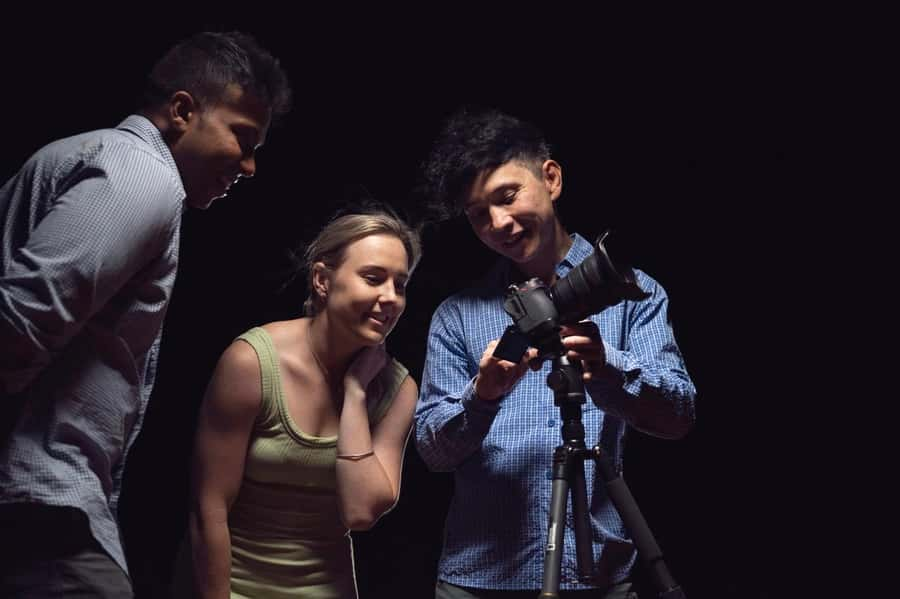
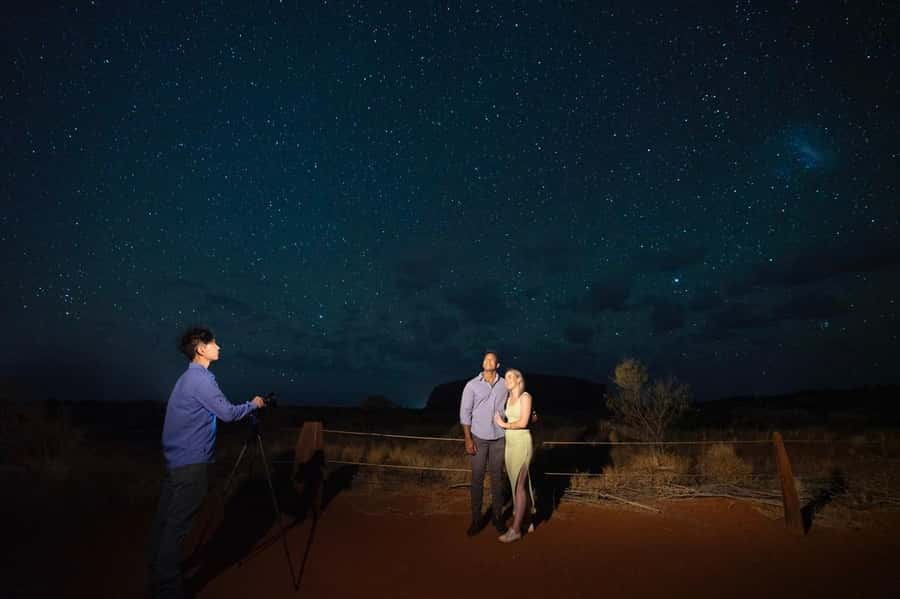
The included digital photograph is one of the tour’s best practical extras. Each person has a professional photograph taken with Uluru and the starry sky behind them, usually using a long exposure to capture the darkness and stars.
This is not just a quick snapshot taken on a phone. The finished image can become a strong souvenir of the evening, especially because it places you in the Uluru setting rather than showing only an anonymous star field. Several people were surprised by how good the image turned out, and some planned to print or frame it.
Photography takes time, particularly when every person or small group wants a carefully arranged portrait. You may need to wait while others decide who will be included. For that reason, the photo is a welcome inclusion but also one reason the evening can feel slow during a busy departure.
If you are travelling with family or friends, decide before the photo queue whether you want an individual image, a couple’s portrait, or a group shot. That small bit of planning helps keep the line moving.
The digital file is included, although delivery may not always be immediate. One person was still waiting several days after the tour, so keep that in mind if you hope to share the image before leaving the area.
A few more options to weigh up in Yulara
- Uluru: Field of Light Sunrise Tour with Hot Drinks
★ 4.6 · 572 reviews - Uluru 15-Minute Helicopter Experience
★ 4.9 · 548 reviews - Yulara: Uluru & Kata Tjuta 25-Minute Helicopter Experience
★ 4.8 · 536 reviews - Yulara: Uluru Sunrise and Kata Tjuta Day Trip by Bus
★ 4.5 · 469 reviews
Bring your own camera, but protect it from the dark
You may bring your own camera and tripod for astrophotography. That is useful if you already enjoy night photography and understand your camera’s manual settings.
The tour team also helps with phone photography. Guides have shown people how to adjust their phones for better night-sky images, which is valuable because automatic camera modes often produce a black screen or a blurry mess in very low light.
You should not expect the included professional portrait and your own camera work to be the same thing. The staff photograph is designed as a finished keepsake. Your personal camera gives you the freedom to experiment with the sky, Uluru’s silhouette, and the surrounding darkness.
Bring only what you will use. A tripod can be worthwhile for serious night photography, but extra bags and equipment may become a nuisance while you move between the seating area, telescopes, and photo setup.
Cold weather, blankets, and basic comfort
The desert can turn cold after sunset. This catches people off guard, particularly in autumn and winter. Reports from May describe temperatures feeling close to 10 degrees Celsius, and several people appreciated the blankets provided by the tour team.
Wear warm layers rather than relying on one heavy item. A jacket, fleece, and warm trousers are more useful than a light outfit that suited the daytime. Closed-toe shoes are required in the recommended packing list and make sense for moving around outdoors at night.
The tour provides folding benches or small stools, along with blankets. That makes the storytelling section more comfortable than standing for the entire evening. You should still bring a reusable water bottle, since the outing lasts two and a half hours including transport and time outside.
Walking from the bus to the viewing area can be very dark. One person suggested better lighting along that path. Use care when walking, keep your phone light ready if needed, and listen to the guide’s directions.
How the moon and weather change the experience
The quality of the sky is partly outside the operator’s control. A new moon gives you the darkest conditions and the best chance of seeing faint stars and the Milky Way. A bright or first-quarter moon creates a different experience, with excellent lunar viewing but less contrast in the rest of the sky.
That tradeoff explains why two people can attend the same type of tour and have noticeably different nights. One evening may reveal a spectacular Milky Way and several shooting stars. Another may offer Saturn and the Moon but fewer visible stars.
Cloud is another factor. The guides can explain the sky and use the available equipment, but clouds may block some objects. If astronomy is your central interest, check the forecast and moon phase before booking when possible. The flexible cancellation policy allows cancellation up to 24 hours in advance for a full refund, which is helpful when plans change.
The tour operates in English and Chinese. That language choice may make the explanations easier to follow for more people, though the supplied details do not specify whether every departure is bilingual.
Is $91 good value?
At $91 per person, this is not the cheapest way to look at the stars. You are paying for more than a dark field: return transport, a live guide, telescope access, seating, blankets, and a professional digital photograph are included.
I think the price is reasonable if you want a structured evening and do not have your own transport or astronomy equipment. The drive to a darker location is important, and the professional photo has real value for a first visit to Uluru.
The value is weaker if you already have a good camera, know the southern sky, and can reach a dark viewing spot independently. A serious amateur astronomer may also find the telescope queue frustrating, particularly on a full departure.
For families, couples, and first-time stargazers, the package makes sense. You get education, equipment, cultural storytelling, and a souvenir in one outing. Teenagers have particularly enjoyed the mix of science, strange distant objects, and the sheer scale of the sky.
Who should book this night out?
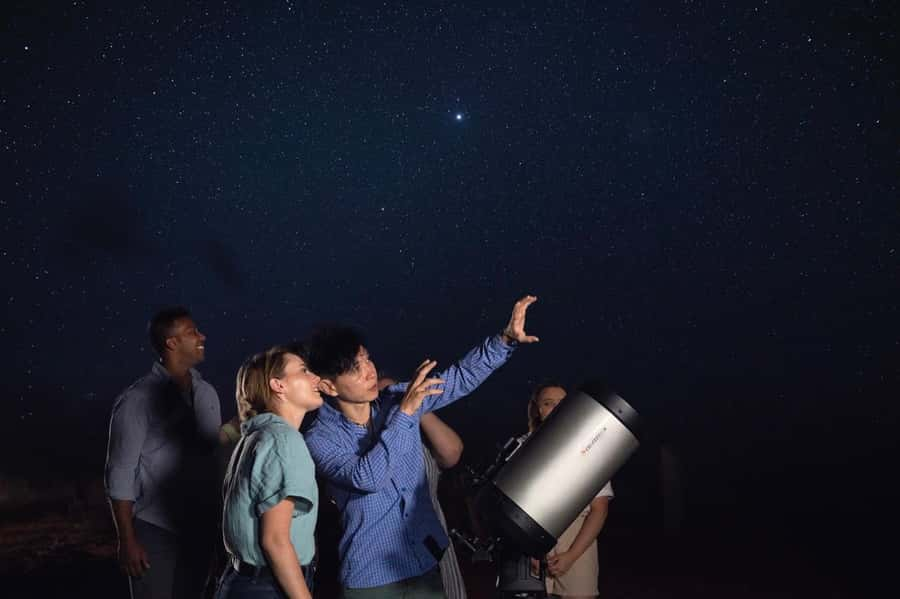
I would choose this tour if you want an easy introduction to astronomy without needing to prepare anything beyond warm clothes. The guides make the subject approachable, and the laser pointers, stories, telescopes, and photo give the evening a clear rhythm.
It is also a strong choice for families. Children may not follow every explanation about galaxies or stellar distance, but the telescope views and dramatic setting give them something concrete to enjoy. The experience has been praised by families with teenagers and by a parent travelling with a 10-year-old.
You may want to think twice if you dislike group activities or long waits. A busy night can mean queues, background chatter, and less time at each telescope. The experience is also not ideal if your only goal is a perfectly dark sky, since moonlight and clouds can change the view.
Guides including Neil, Lucy, Zack, Olina, Ollie, and Michaela have been singled out for warmth, humour, clear explanations, and strong astronomy knowledge. The quality of the evening depends partly on the guide, but the repeated praise for the team is encouraging.
Final verdict: book it for the setting and the story
I recommend the Uluru National Park Astronomy Tour for most first-time visitors to Uluru. The strongest parts are the dark outback setting, the chance to see planets and clusters through telescopes, the Indigenous astronomy stories, and the excellent photo with Uluru behind you.
Book with realistic expectations. Pick a night near the new moon if the Milky Way is your priority, bring more warm clothing than you think you need, and be ready for a wait if buses are full. If you can accept those limits, $91 buys a memorable and well-organised evening that adds a completely different side to your Uluru visit.
FAQ
How long does the Uluru astronomy tour last?
The tour lasts 150 minutes, including the evening stargazing experience and transport arrangements.
What is included in the price?
The price includes the guided tour, pickup and drop-off, use of telescopes, and one digital professional photograph.
Is hotel pickup included?
Yes. Pickup and drop-off are included. Look for the bus marked Atrip, and check your email on the day for the confirmed pickup schedule.
Do I need a National Park Pass?
No. You do not need to bring your own National Park Pass for this tour.
What should I wear?
Bring warm clothing and closed-toe shoes. Desert temperatures can drop sharply after sunset, and blankets are provided during the evening.
Can I bring my own camera?
Yes. You can bring your own camera and tripod if you want to try astrophotography.
Which languages are available?
The tour offers live guides in English and Chinese.
Can I cancel the booking?
You can cancel up to 24 hours in advance for a full refund. A reserve now and pay later option is also available.
Just added in Yulara
- Uluru: Sunset, Sparkling Wine, Cheeseboard & Gourmet BBQ★ 4.4 · 193 reviews
- Uluru: Small Group Sunset Tour with Sparkling Wine★ 4.5 · 82 reviews
- Uluru: Guided Walking Tour at Sunrise with Light Breakfast★ 4.6 · 256 reviews
- Uluru: Small Group Guided Tour with Sunset Refreshments★ 4.8 · 190 reviews
- Uluru Highlights Small Group Morning Tour + Picnic Breakfast★ 4.8 · 212 reviews
- Uluru, Kata Tjuta & Kings Canyon Camping Tour★ 4.8 · 228 reviews
- Uluru: Guided Trek of Uluru’s Base in a Small Group★ 4.8 · 182 reviews
- Uluru 1.5-Hour Sunset Tour with Sparkling Wine & Cheeseboard★ 4.3 · 226 reviews
Uluru Tours, compared.
Ayers Rock Day Trip from Alice Springs Including BBQ Dinner
Read our review →
Uluru: Field of Light Sunrise Tour with Hot Drinks
Read our review →
Uluru & Kata Tjuta 25-Minute Helicopter Experience
Read our review →
Uluru: Sacred Sites & Sunset Tour with Wine & Cheeseboard
Read our review →
Browse the lists this tour appears in