
Reviewed · ULURU TOURS
Uluru: Guided Walking Tour at Sunrise with Light Breakfast
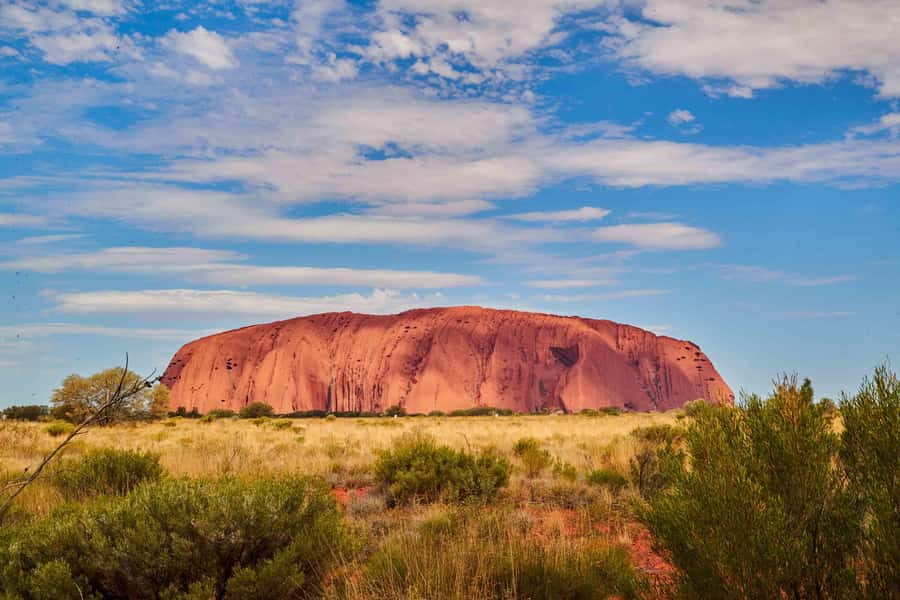
Wake before dawn for the best kind of desert morning. This 10.5-kilometer base walk gives you a close view of Uluru from every angle, while an accredited local guide explains its geology, wildlife, Aboriginal traditions, and European past. You travel by air-conditioned coach, begin near Kuniya Piti, and finish with a certificate to mark the achievement.
I like the way the walk turns a famous photograph into a full morning of seeing and listening. I also like the guides’ strong respect for Anangu culture, with names such as Michelle, Hayley, Glen, Jesse, and Alex praised for making the stories clear and engaging. The main consideration is pace: this is a long walk, and some groups have found it brisk rather than leisurely.
At $140 per person, the tour is good value if you want transport, breakfast, a local guide, and cultural context in one booking. You still need to buy your Uluru-Kata Tjuta National Park entry ticket online before you go, and the early finish can be awkward if you have an airport transfer that day.
In This Review
- Key points to know before you book
- Why the full base walk is worth the effort
- Starting before sunrise at Kuniya Piti
- Following the Mala Walk and hearing Tjukurpa
- Kantju Gorge and the desert waterfall story
- Lungkata Walk, rock art, and the Blue Tongue Lizard story
- Breakfast arrives when you need it
- What the pace and distance feel like
- The final stretch and certificate at Kuniya Piti
- Is $140 good value?
- How to prepare for this Uluru sunrise tour
- Who should book this base walk?
- Should you book it?
- FAQ
- How long is the Uluru sunrise walking tour?
- What time does the tour start?
- Does the tour include sunrise?
- Is breakfast included?
- Do I need to buy a national park ticket?
- How much water should I bring?
- Is the walk difficult?
- What should I wear?
- Is the tour wheelchair accessible?
- Can I take the tour on the day of my flight?
Key points to know before you book
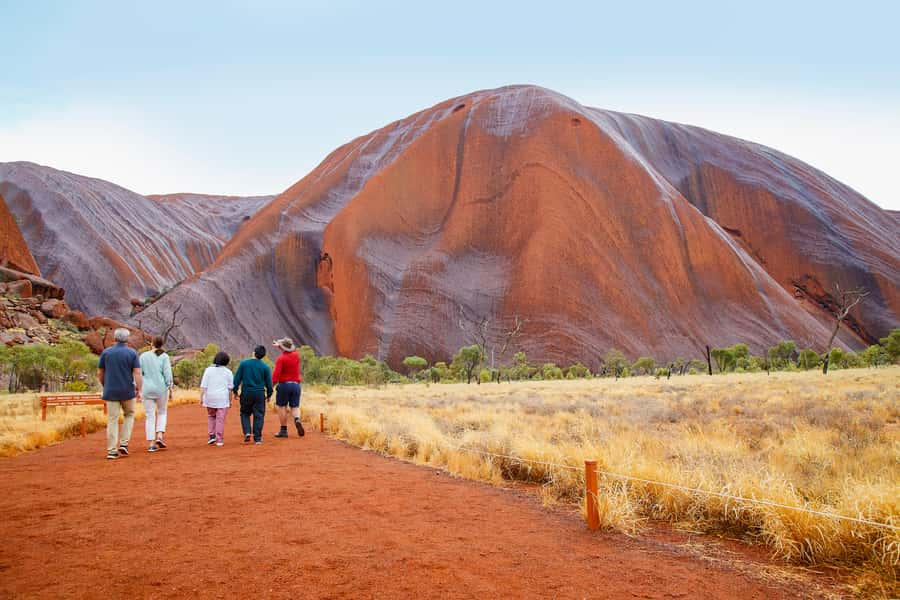
- The full base walk covers 10.5 kilometers: The ground is mostly flat and gentle, but the distance and morning pace require moderate fitness.
- Sunrise is part of the timing, not a guaranteed postcard view: You reach Uluru around dawn, but being close to the rock can mean the sun rises beside or beyond your viewing position rather than directly behind it.
- The cultural storytelling is the heart of the tour: Guides explain Tjukurpa, sacred places, animals, geology, rock art, and the connection between Anangu people and Country.
- Breakfast is simple but useful: Expect light picnic-style food such as cereal, muesli bars, fruit, and hot tea or coffee.
- Carry at least two liters of water: You will want a backpack or rucksack, comfortable walking shoes, sun protection, and a fly net.
- Allow the full 5.5 hours: The tour may end around 1:00 PM, and returning to Ayers Rock Resort in time for an airport transfer may not be possible.
Why the full base walk is worth the effort
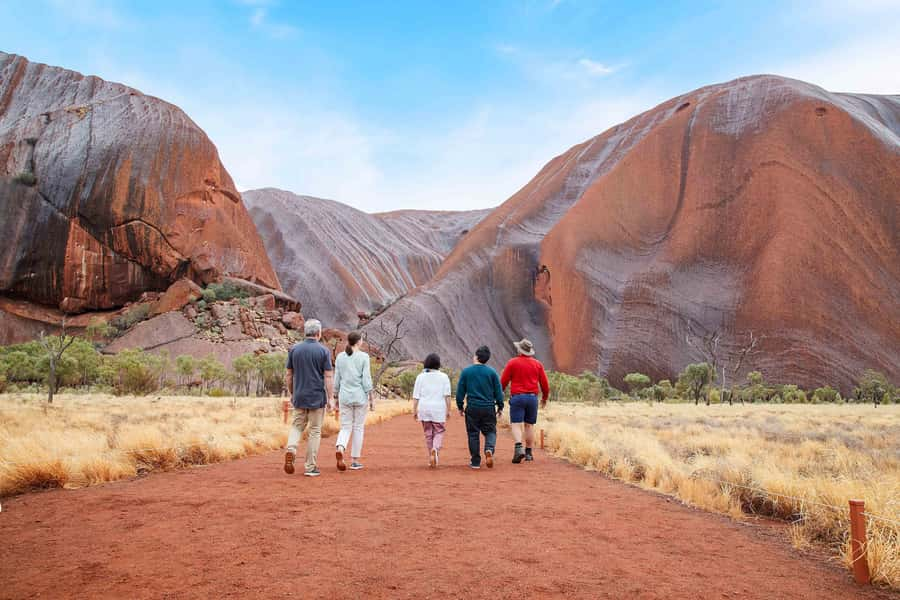
Uluru changes as you move around it. From a distance, it can look like one smooth red block. Up close, you see folds, gullies, caves, waterholes, rock surfaces, dark streaks, and shaded sections that give the monolith a more complex character.
That is why I prefer the base walk to a quick lookout stop. You are not simply collecting a view. You are following the shape of Uluru on foot and noticing how its appearance shifts with the light.
The route is long, but it is not a mountain hike. The ground is described as flat and manageable, with stops along the way. The challenge comes from the distance, the early start, and possible heat rather than steep climbs.
You should still take the fitness warning seriously. A few people found the pace fast, especially when the guide was trying to keep the group together or move through culturally sensitive areas. If you walk slowly, need frequent rests, or are carrying a small child, you may find the schedule demanding.
More Walking Tours in Yulara:
- Best of Uluru – Segway and Walking Tour
★ 4.8 · 204 reviews - Sydney Opera House Official Guided Walking Tour
★ 4.5 · 3,770 reviews - Sydney The Rocks Guided Walking Tour
★ 5.0 · 1,546 reviews
Starting before sunrise at Kuniya Piti
The coach leaves about one hour before sunrise, with pickup times changing through the year. You need to confirm your exact pickup time and arrive at the meeting point 10 minutes early.
The air-conditioned coach matters here. You are leaving very early, and the drive to Uluru gives you a chance to sit quietly before the walking begins. The driver guide provides commentary on the Tjukurpa, the body of stories and law that explains relationships between people, places, animals, and ancestral beings.
The tour begins at Kuniya Piti, a culturally important area. Your guide will ask you to pay attention to the meaning of the place, not just its appearance. This is one of the strongest reasons to choose a guided walk instead of setting off alone.
One practical point is worth noting. The opening section can feel quick. That may be deliberate, since some parts of the area are sensitive and the group is not meant to linger wherever it wishes. You should expect the guide to balance storytelling with respectful movement through the site.
The first view of Uluru in the early light is impressive, but do not book this tour solely for the classic image of the sun appearing behind the rock. Because you are close to Uluru, your sunrise view may be more about the changing color on the rock and the surrounding desert than a clear sun disk rising behind the monolith.
Following the Mala Walk and hearing Tjukurpa
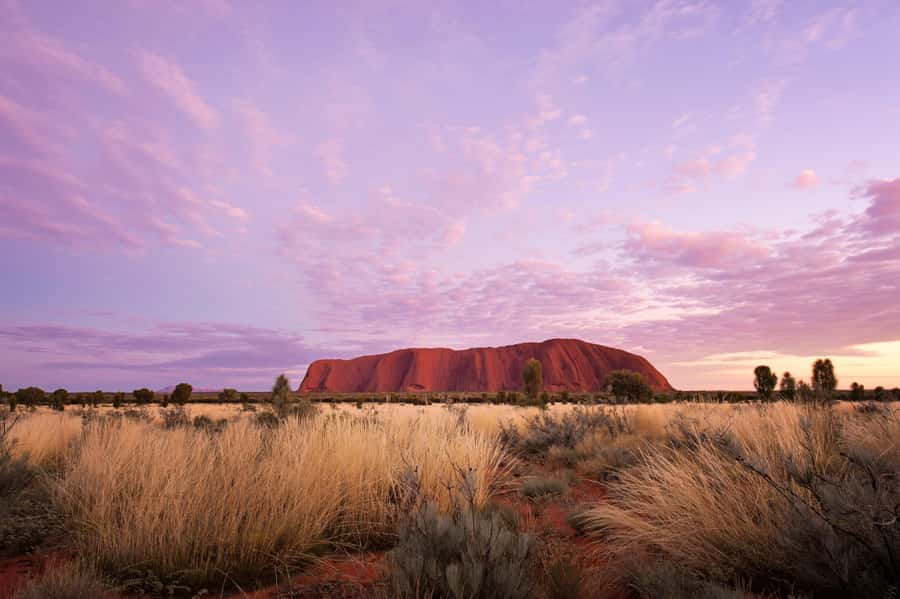
The Mala Walk introduces some of the cultural weight of Uluru. Your guide explains places connected with the Mala Tjukurpa, the story of the hare-wallaby people, along with areas linked to ceremony and community life.
This part of the route helps you understand why walking quietly and following the guide’s instructions matters. Uluru is not an attraction in the ordinary sense. It is a sacred place with living cultural meaning.
Guides make a real difference here. Alex was praised for telling cultural, historical, and mythological material through stories. Michelle was appreciated for explaining sacred places, animals, geology, and local history. Glen was described as a warm storyteller, while Hayley was praised for being enthusiastic, funny, and respectful.
The quality of the commentary can vary slightly by guide, as it would on any group tour, but the strongest pattern is clear: the guides are the main reason this experience feels like more than a long walk.
You can ask questions as you go. The best guides do not recite facts and hurry on. They connect the stories to what you can see in the rock, the vegetation, and the dry creek areas around you.
Kantju Gorge and the desert waterfall story
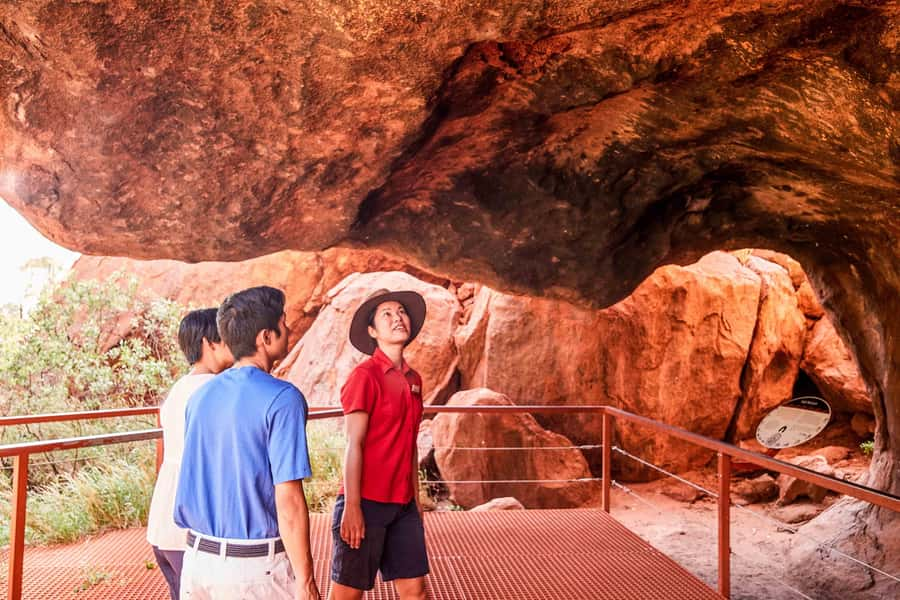
Kantju Gorge gives the walk one of its most striking natural sections. Here you see a narrow formation in the red rock and hear about the vision of a waterfall in the desert.
The word vision is important. This is a place where water, rock, and story come together. Even when the gorge is dry, its shape helps you picture how rare rain can transform Uluru. The contrast between the red stone and the idea of falling water is part of what makes the stop memorable.
The exact amount of water you see depends on conditions, so you should not expect a flowing waterfall on every visit. The value of the stop is the setting and the explanation, not a promise of a permanent cascade.
This is also a good point to notice the scale of Uluru. The rock is not just a backdrop. The gorge, shadows, grooves, and overhangs show how weather has shaped it over a long period.
A few more options to weigh up in Yulara
- Uluru: Field of Light Sunrise Tour with Hot Drinks
★ 4.6 · 572 reviews - Uluru 15-Minute Helicopter Experience
★ 4.9 · 548 reviews - Yulara: Uluru & Kata Tjuta 25-Minute Helicopter Experience
★ 4.8 · 536 reviews - Yulara: Uluru Sunrise and Kata Tjuta Day Trip by Bus
★ 4.5 · 469 reviews
Lungkata Walk, rock art, and the Blue Tongue Lizard story
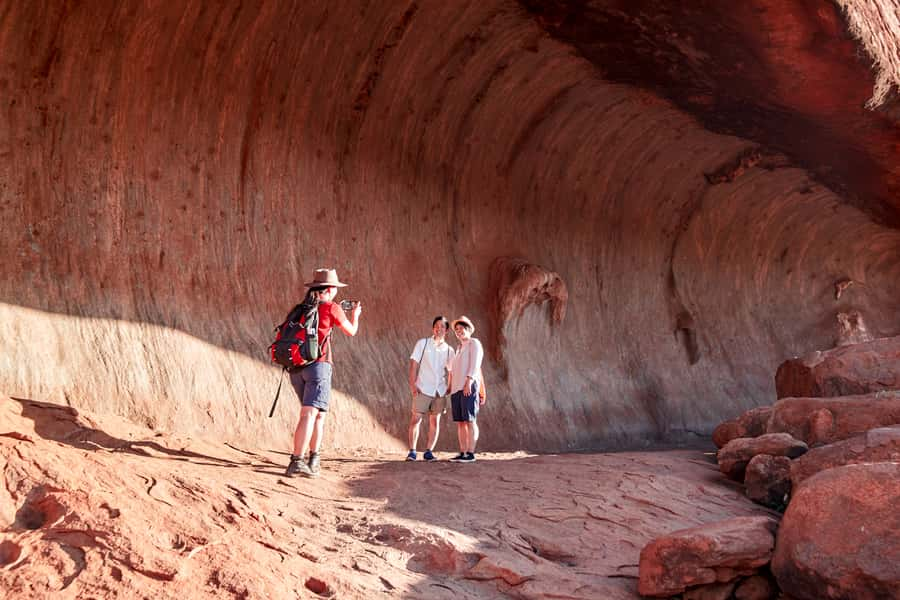
The route continues along the Lungkata Walk, where the guide shares the Tjukurpa story of a cheeky Blue Tongue Lizard. Storytelling gives the walk rhythm. Ten and a half kilometers is a lot of ground, and a well-told story gives you something to think about while your feet keep moving.
This section also includes Aboriginal rock paintings. They are a direct link to the people who used the caves and sheltered spaces around Uluru. Your guide explains the art within its Indigenous setting, rather than treating it as a loose collection of ancient marks on a wall.
You will also hear about Indigenous and European history. That wider context matters. A visit to Uluru can feel incomplete if it presents only scenic beauty while leaving out the damage caused by outside control and the long struggle to protect Anangu authority and culture.
The tour’s strongest cultural quality is its tone. Guides such as Trent, Hermann, Nerida, and Jesse were praised for explaining the connection to Country with care and clarity. That makes the walk feel respectful rather than rushed through as a sightseeing checklist.
Breakfast arrives when you need it
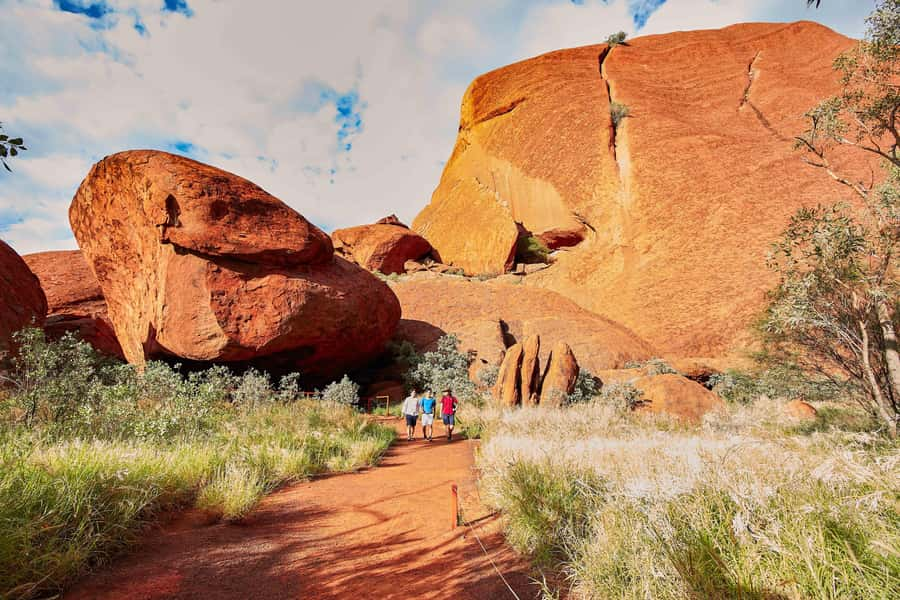
The light breakfast is not a full cooked meal, but it serves its purpose. Food has included cereal, muesli bars, apples, picnic snacks, and hot tea or coffee.
One useful detail is the timing. A past group had breakfast about an hour and a half into the walk, which made sense after the early start and initial walking. Exact timing can vary, but you should expect a simple break rather than a restaurant-style breakfast.
I see this as a small but worthwhile inclusion. You are waking before sunrise, walking for hours, and spending time in a dry climate. A hot drink and something easy to eat can make the whole morning more comfortable.
Bring your own water regardless. The instruction is a minimum of two liters, and I would use a proper backpack rather than carry bottles in your hands. Put on sunscreen before pickup, wear comfortable walking shoes, and consider a fly net. One person specifically called the fly net essential, and the desert has a way of making small flying insects very interested in your face.
What the pace and distance feel like
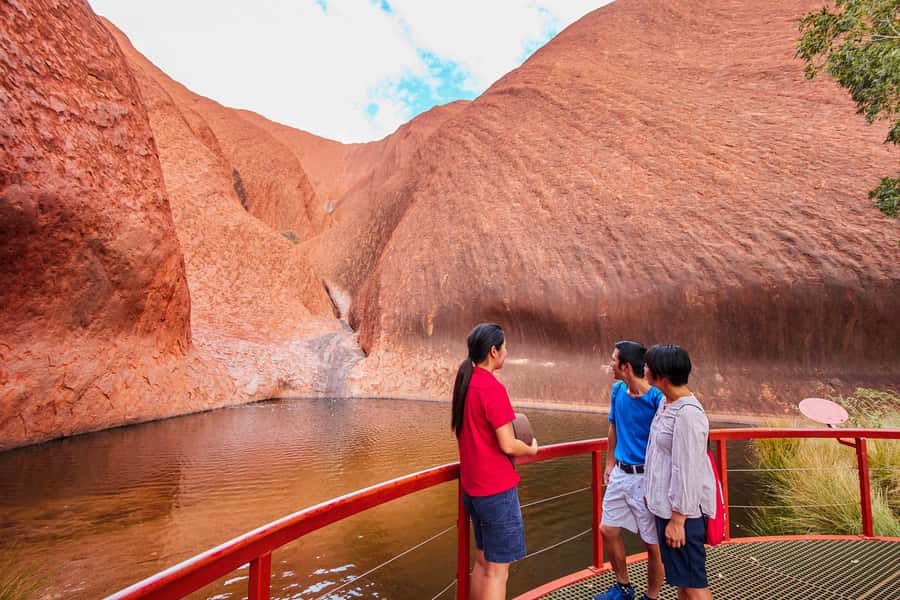
The path is mostly flat, and several people found the walk achievable. The issue is not technical hiking. It is keeping up for the full distance while listening, stopping, starting, and dealing with changing temperatures.
The cool morning is a major advantage. In warmer months, the walk may begin pleasantly but become hot by the finish. Hermann was praised for adjusting the pace to suit the group and planning around the heat, but you should not assume every section will move slowly.
If you are a fast or average walker, the distance should be manageable with preparation. If you are a slow walker, have reduced stamina, or want to stop often for private photographs, this may not be the right format.
A toddler can take part, but you may need to carry the child. One family managed the walk with a 15-month-old child, though a pram or carrying option was needed. The tour is not wheelchair accessible.
Toilets are available during the route, according to one detailed account, though the facilities at the start may be basic drop toilets. Use the bathroom at your accommodation before leaving if that is more comfortable.
The final stretch and certificate at Kuniya Piti
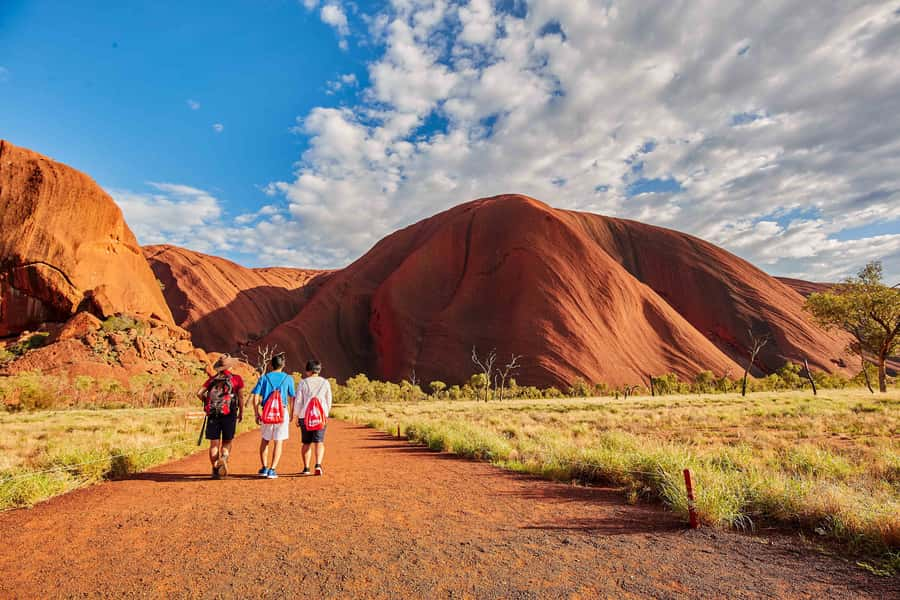
The walk ends back at Kuniya Piti, where you receive a souvenir certificate. It is a modest touch, but after 10.5 kilometers it gives the morning a clear finish.
You should allow the stated 330 minutes, or 5.5 hours, rather than planning another activity immediately afterward. The tour generally ends around 1:00 PM, though the precise schedule shifts with sunrise and seasonal conditions.
This timing is important for anyone flying out of Ayers Rock Resort. The tour information warns that you may not return in time for an airport transfer on the same day. I would not book this walk on departure day unless your transport plans leave plenty of room.
The return coach is another practical benefit. After a long walk, you do not need to arrange your own way back from the national park.
Is $140 good value?
At $140, this is not a cheap morning outing. You also pay separately for entry to Uluru-Kata Tjuta National Park, which must be purchased online in advance.
Still, I think the price is reasonable for the package. You get return transport, an accredited local driver guide, English commentary, breakfast, and the chance to complete the full base walk without managing the route on your own.
The cultural explanation is where the value rises. You could walk around Uluru independently, but you would miss much of the meaning behind Kuniya Piti, the Mala area, Lungkata, Kantju Gorge, the rock art, and the Tjukurpa stories.
This is not the best choice if you want a quiet private experience or a slow photographic walk. It is a better fit if you want the major cultural and natural points explained as you go, with someone else handling transport and timing.
Transport received a perfect score from 88 percent of the published ratings, and the overall score is 4.6 from 256 ratings. The pattern suggests a dependable operation, with guide quality and walking pace the main things to consider.
How to prepare for this Uluru sunrise tour
Pack lightly, but pack well. You will be carrying your supplies for much of the morning.
- Carry at least two liters of water in a backpack or rucksack.
- Wear comfortable, closed walking shoes.
- Use sun protection, including a hat and sunscreen.
- Bring a fly net if you are sensitive to insects.
- Dress for a cool early start and warmer conditions later.
- Eat something before pickup if you need more than a light breakfast.
- Buy your national park ticket online before the tour.
- Confirm the seasonal pickup time.
- Avoid scheduling an airport transfer too close to the end of the tour.
The park ticket is not included, so budget for that separately. The tour offers free cancellation up to 24 hours before departure and a reserve-now, pay-later option, which can help if your schedule is still changing.
Who should book this base walk?
I would choose this tour for a first visit to Uluru, especially if you want the place explained rather than simply photographed. It suits people who enjoy a full morning outdoors, can walk 10.5 kilometers, and want Aboriginal stories and cultural context treated as a central part of the visit.
It is also a good choice if you are staying at Ayers Rock Resort and do not have your own transport. The coach removes much of the planning work.
You may want another option if you need wheelchair access, walk slowly, dislike early starts, or want a guaranteed view of the sun rising directly behind Uluru. The sunrise wording can create an expectation that the tour does not always meet, since you are often positioned close to the rock.
Should you book it?
Book it if your priority is a complete, guided circuit of Uluru with cultural stories, transport, breakfast, and a manageable route under your own feet. The guides are the strongest part of the experience, and the best ones make the long walk feel purposeful.
Skip it if you want a relaxed stroll, a short lookout visit, or a classic sunrise photograph above all else. For most reasonably fit visitors, though, this is one of the most useful ways to understand Uluru beyond its famous silhouette.
FAQ
How long is the Uluru sunrise walking tour?
The tour lasts 330 minutes, or 5.5 hours, and includes the 10.5-kilometer walk around Uluru’s base.
What time does the tour start?
The tour departs about one hour before sunrise. Pickup and return times change during the year, so confirm your seasonal pickup time before departure.
Does the tour include sunrise?
Sunrise is part of the tour timing, but you may not see the sun rising directly behind Uluru. Because the walk begins close to the rock, the view may focus on the changing light across Uluru and the surrounding desert.
Is breakfast included?
Yes. A light breakfast with hot tea or coffee is included. Food has included cereal, muesli bars, apples, and picnic-style snacks.
Do I need to buy a national park ticket?
Yes. Entry to Uluru-Kata Tjuta National Park is not included and must be purchased online in advance.
How much water should I bring?
You should bring a minimum of two liters of water for the walk.
Is the walk difficult?
The route is mostly flat and gentle, but the distance is long and the pace can be brisk. The tour requires a moderate level of fitness.
What should I wear?
Comfortable walking shoes are required. You should also bring suitable clothing, sun protection, and a backpack or rucksack for your water and personal items.
Is the tour wheelchair accessible?
No. The tour is not suitable for wheelchair users.
Can I take the tour on the day of my flight?
You should be cautious. The tour may end around 1:00 PM, and it may not be possible to return to Ayers Rock Resort in time for an airport transfer on the same day.
Just added in Yulara
- Uluru: Sunset, Sparkling Wine, Cheeseboard & Gourmet BBQ★ 4.4 · 193 reviews
- Uluru: Small Group Sunset Tour with Sparkling Wine★ 4.5 · 82 reviews
- Uluru: Small Group Guided Tour with Sunset Refreshments★ 4.8 · 190 reviews
- Uluru Highlights Small Group Morning Tour + Picnic Breakfast★ 4.8 · 212 reviews
- Uluru, Kata Tjuta & Kings Canyon Camping Tour★ 4.8 · 228 reviews
- Uluru: National Park Astronomy Tour with Telescope and Photo★ 4.4 · 357 reviews
- Uluru: Guided Trek of Uluru’s Base in a Small Group★ 4.8 · 182 reviews
- Uluru 1.5-Hour Sunset Tour with Sparkling Wine & Cheeseboard★ 4.3 · 226 reviews
Uluru Tours, compared.
Ayers Rock Day Trip from Alice Springs Including BBQ Dinner
Read our review →
Uluru: Field of Light Sunrise Tour with Hot Drinks
Read our review →
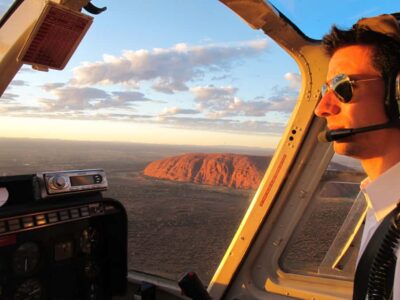
Uluru & Kata Tjuta 25-Minute Helicopter Experience
Read our review →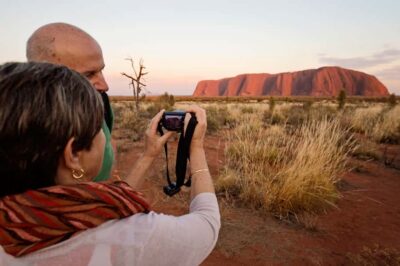
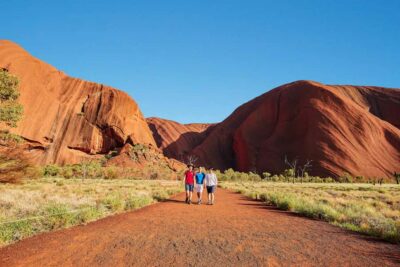
Uluru: Sacred Sites & Sunset Tour with Wine & Cheeseboard
Read our review →
Browse the lists this tour appears in