
Reviewed · ULURU TOURS
Uluru Highlights Small Group Morning Tour + Picnic Breakfast
Wake early, and Uluru rewards you. This three-hour morning trip packs sunrise views, a light breakfast, the Mutitjulu Waterhole, ancient rock art, and a drive around the base into a small group of no more than 11 people. I like the personal scale, which gives you room to ask questions, and I like the way the guide connects plants, animals, geology, and Anangu culture rather than treating Uluru as just a giant photo stop. The main drawback is the breakfast: it is convenient and welcome at dawn, but some people will find banana bread, muesli, fruit, and a hot drink less than a full picnic for $126.
You are collected from your Ayers Rock resort hotel in the cool early hours and returned after the tour. Guides such as Andy, Max, Lucy, Graham, and Rachel have earned praise for their warmth, storytelling, and care with families. Bring warm layers in winter, a hat and water in warmer months, and consider a fly net, because the outback insects can be relentless.
In This Review
- Key points at a glance
- Why the three-hour morning format works
- Dawn views from the red centre
- Mutitjulu Waterhole and the Kuniya story
- Around Uluru’s base with a local guide
- The guides make the difference
- Transport, pickup, and the small-group advantage
- Is $126 a fair price?
- Weather, clothing, and the little practical details
- Who should book this Uluru morning tour?
- Should you book it?
- FAQ
- How long does the Uluru Highlights Morning Tour last?
- What time does the tour start?
- Is hotel pickup included?
- Where do Emu Walk apartment participants meet?
- Where is pickup for The Lost Camel?
- Where is pickup for Ayers Rock campground?
- What food is included at breakfast?
- Is the national park entry ticket included?
- What languages are available?
- Can I cancel the tour?
Key points at a glance
- Sunrise before the heat: See Uluru in the early dawn light, then finish before the harshest part of the day.
- Small vehicle, maximum 11 people: The compact group makes it easier to hear the guide and ask questions.
- Mutitjulu Waterhole walk: Take the short Kuniya Walk to a significant waterhole, with stories of Kuniya the python and Liru the poisonous snake.
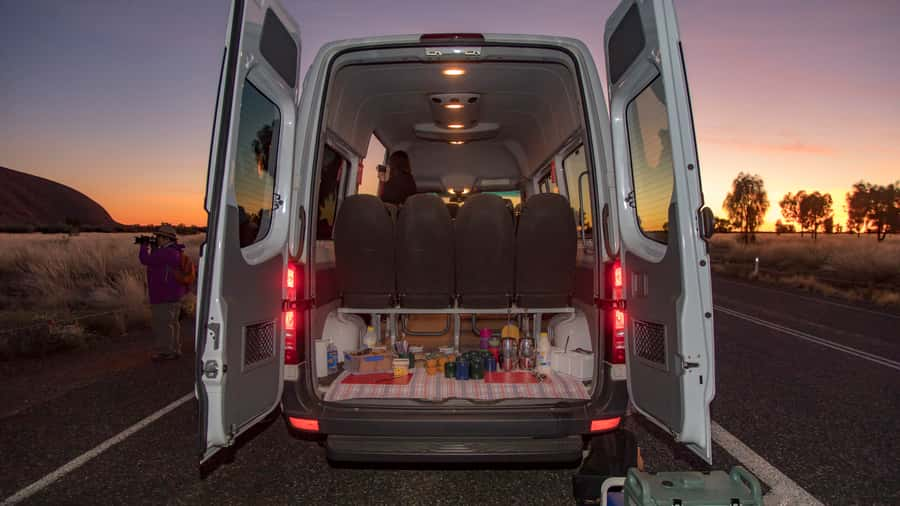
- Breakfast with a view: Expect hot tea, coffee, or hot chocolate, plus banana bread, muesli or granola, and fruit.
- Useful cultural context: Your English-speaking guide explains Anangu stories, the Mala people, local wildlife, plants, and geology.
- Good coverage in three hours: You see several major Uluru highlights without committing to a long base walk.
Why the three-hour morning format works
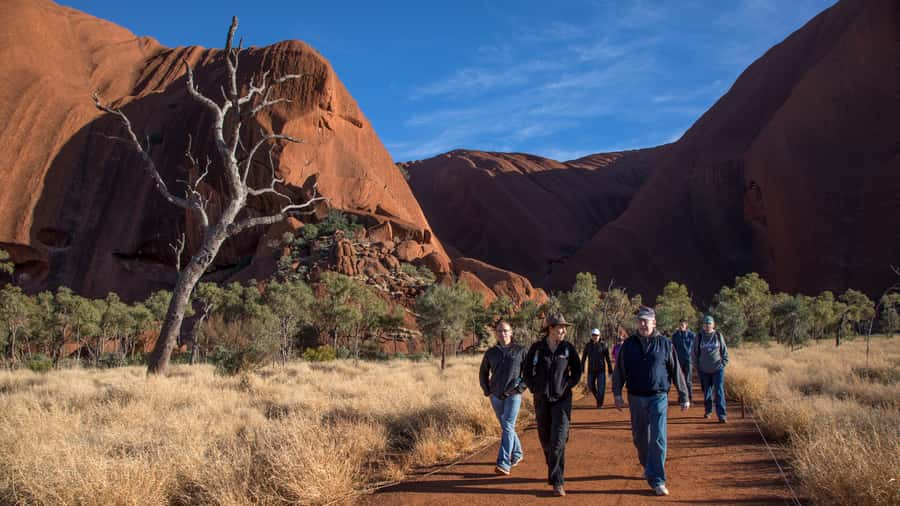
Uluru can be punishing once the sun climbs. This tour gets you moving before the heat has gathered, which is not just pleasant, it makes a short walk and outdoor storytelling much easier. You also return to your hotel with much of the day still free.
The timing suits a first visit. In three hours, you get the broad shape of the experience: sunrise, a close look at the rock, a short walk to water, and a circuit around the base. You will not see every trail or spend hours on foot, but you get enough context to understand what you are looking at.
I especially like the balance between stops. The sunrise provides the big visual moment, while Mutitjulu Waterhole slows things down and gives the guide space to explain place and culture. The base drive fills in the gaps, showing you features that would be easy to miss from a single lookout.
The compromise is depth. If you want a long walk around Uluru or extended time at one rock-art site, this is not the right outing on its own. Several people who enjoyed the tour still wished for more walking and less time standing or driving. Think of it as a well-planned introduction, not a complete exploration of the national park.
A few more options to weigh up in Yulara
- Uluru: Field of Light Sunrise Tour with Hot Drinks
★ 4.6 · 572 reviews - Uluru 15-Minute Helicopter Experience
★ 4.9 · 548 reviews - Yulara: Uluru & Kata Tjuta 25-Minute Helicopter Experience
★ 4.8 · 536 reviews
Dawn views from the red centre
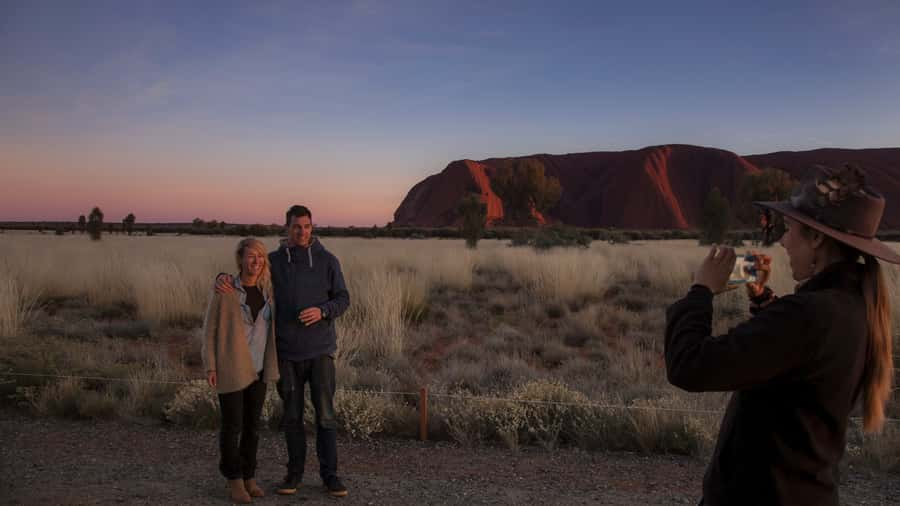
The approach to Uluru is part of the show. As the vehicle moves across the sand dunes in the early light, the monolith gradually takes shape. At first it can seem distant and muted, then the changing sun brings out different reds and oranges.
The exact sunrise location is selected to give a clear view of Uluru. You will have time for photos before and during breakfast, and guides often help take pictures for the group. That small touch matters when you are travelling without a second person to operate the camera.
Sunrise also gives you a more thoughtful first look at the rock. In the softer light, its curves, folds, and vertical faces become easier to read. Your guide can point out details that look like random shadows from a distance but carry geological or cultural meaning.
Set your expectations correctly. This is not a lavish breakfast event with a long table of hot food. The usual spread includes freshly brewed tea and coffee, sometimes hot chocolate, banana bread, muesli or granola, and fresh fruit. It is enough to wake you up and keep you going, but the term picnic breakfast may suggest more than is provided.
Dietary needs have been handled well for some participants, including gluten-free and vegan options, but you should confirm your own requirements when booking. If breakfast is a major reason for choosing the tour, I would treat the food as a useful extra rather than the main attraction.
Mutitjulu Waterhole and the Kuniya story
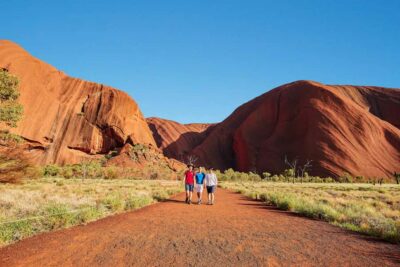
The short walk to Mutitjulu Waterhole is the most meaningful part of the outing for many people. The route follows the Kuniya Walk, leading you toward a sheltered water source at the base of Uluru.
Water in this dry country carries obvious practical value, but Mutitjulu is also tied to Anangu culture and creation stories. Your guide explains the story of Kuniya, the python, and Liru, the poisonous snake. These are not decorative tales added to a sightseeing script. They help you understand how the rock, water, animals, and people are connected through traditional knowledge.
The walk is short, making it a good choice for families and anyone who does not want a demanding hike. A parent described the tour as suitable for a young child with short legs, and that is a fair reading of the itinerary. You still get a close encounter with Uluru without committing to a long distance on foot.
The tradeoff is that you only reach one waterhole and one short walking area. If your priority is rock art, there is time to see ancient examples, but this should not be confused with a specialist art tour. The guide adds value by explaining what you are seeing and why it matters.
Listen carefully here. The best part of the stop is not simply the waterhole itself. It is the way the guide uses the setting to explain Anangu culture with respect. Several guides have been praised for treating these stories thoughtfully and for avoiding a rushed, jokey presentation.
Around Uluru’s base with a local guide
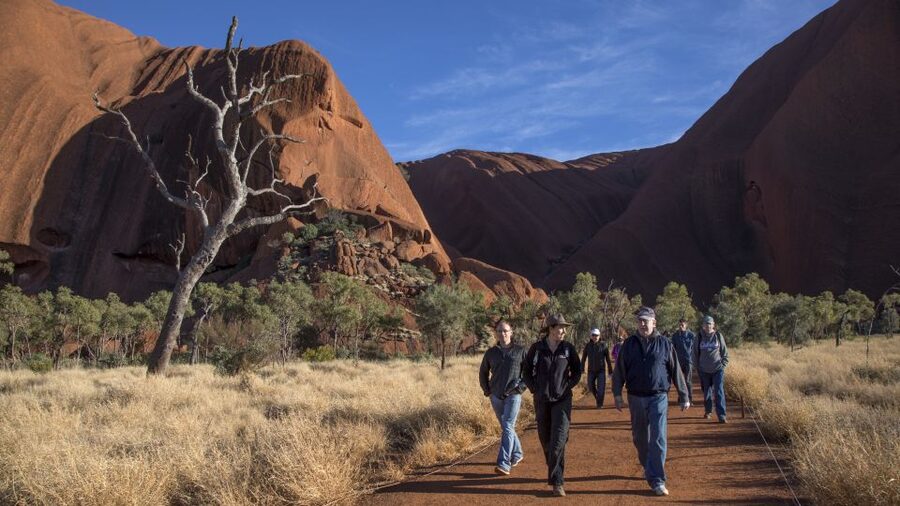
After the walk, the vehicle drives around Uluru’s base. This gives you changing angles on the rock and a chance to see features that are difficult to appreciate from the main sunrise area.
The guide explains the Mala people, traditional owners of this country, along with the plants, animals, geology, and history of Uluru. The most effective guides make the information practical. They point out a plant beside the road, identify an animal sign, or explain how a feature in the rock connects with a story.
Names such as Andy, Max, Graham, Lucy, Dimitri, Rachel, Michael, and Annelies appear repeatedly in the praise for this experience. The common thread is not a single personality or script. It is a guide who can answer questions, keep the pace comfortable, and speak with genuine care about the place.
That makes the small group important. With a maximum of 11 participants, you can hear without fighting a crowd. You can also ask about a plant, a story, or a cultural detail while it is still in your mind. In a large coach, those small questions often disappear.
The base drive does mean you spend some time seated. One fair criticism is that some people would prefer more time walking and less time standing at stops. If you want an active morning, pair this trip with another walk or visit later in your stay. If you value comfort and coverage, the vehicle is an advantage.
A completely different kind of day out:
- Yulara: Uluru Sunrise and Kata Tjuta Day Trip by Bus
★ 4.5 · 469 reviews - Uluru: Sacred Sites & Sunset Tour with Wine & Cheeseboard
★ 4.5 · 450 reviews - Uluru Base Segway Tour at Sunrise
★ 4.9 · 378 reviews - Uluru: National Park Astronomy Tour with Telescope and Photo
★ 4.4 · 357 reviews
The guides make the difference
The guide is the heart of this experience. The vehicle gets you there, but the interpretation determines whether Uluru feels like a large red rock or a living cultural place.
Andy has been praised for being informative, and Graham for mixing humor with a steady stream of stories. Max has impressed people with his care for nature and the region, while Lucy has been singled out for her warmth and clear explanations. Dimitri has helped identify plants and animals that many people would overlook.
Family groups have also had good experiences. Guides have involved children, answered questions patiently, and adjusted their approach for younger participants. That makes this a sensible choice if you want cultural information without a lecture that loses the attention of the whole family.
The English commentary is live. Optional audio guides are available in Spanish, Chinese or Mandarin, French, German, Italian, and Russian. If you specifically require a non-English audio guide, confirm availability before departure. One German-speaking participant enjoyed being able to ask questions in German, while another found that the tour itself was not conducted in German as expected.
That distinction matters. An audio guide can help with language, but it is not the same as having a live guide speak your language throughout the morning. The main tour guide is English-speaking.
Transport, pickup, and the small-group advantage
Hotel pickup and return are included from Ayers Rock resort hotels. Pickup is outside hotel reception, with a few useful exceptions:
- Emu Walk apartment participants meet at Desert Gardens Hotel next door.
- The Lost Camel pickup is at Sails in the Desert Hotel next door.
- Ayers Rock campground pickup is at the campground bus stop.
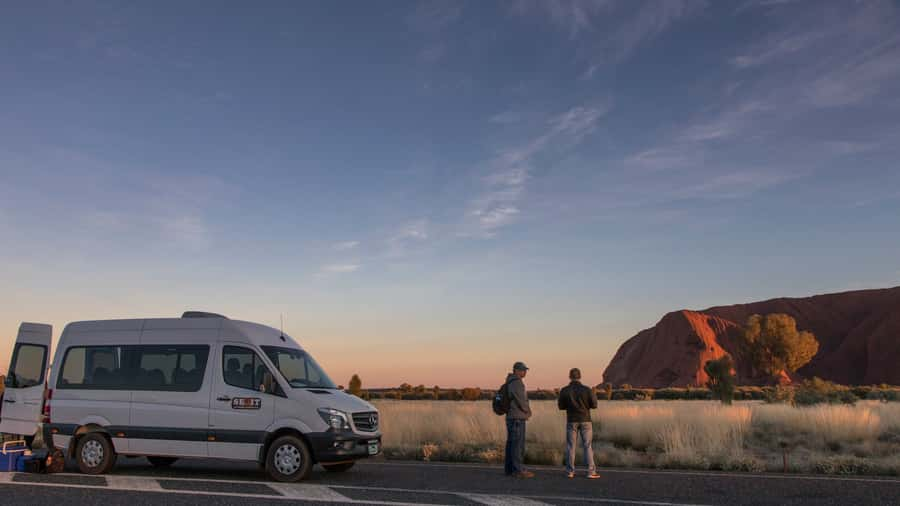
The vehicle seats a maximum of 11 participants. That is a strong point if you do not have a rental car, since reaching Uluru, the waterhole, and the base independently can be difficult without transport.
The compact vehicle also keeps the outing from feeling like a mass departure. You will still be sharing the morning with other people, but the group is small enough for a more direct exchange with the guide. This is particularly useful at sunrise, when you want clear instructions and quick movement between viewpoints.
The transport score has been especially strong, with 85 percent of ratings giving it a perfect mark. That matches the practical value: pickup is handled, the roads and stops are organized, and you can focus on the views instead of navigation.
Is $126 a fair price?
At $126 per person, this is not a bargain breakfast run. Uluru is an expensive destination, and one person described the price as a little high, while another called the overall cost typical for local experiences.
I think the value depends on what you need. If you have no car and only a short stay, the tour gives you transport, a guide, sunrise access, a short walk, cultural interpretation, and a base drive in one morning. That is a useful bundle.
The guide is the main reason the price can make sense. You are not paying only for a seat and a viewpoint. You are paying for someone who can explain Anangu stories respectfully, identify local plants and animals, describe the geology, and answer questions in a small group.
The breakfast is less persuasive as a value point. Tea, coffee, or hot chocolate, banana bread, muesli, and fruit provide a sensible early snack, but they do not amount to a gourmet meal. If you are expecting pastries, cheese, cold meats, or a wide selection of fresh food, you may feel shortchanged.
National Park entry is not included. You need to buy the Uluru-Kata Tjuta National Park entry ticket directly at the entry station. Add that cost to your budget before deciding.
Free cancellation up to 24 hours before departure and the option to reserve now and pay later make the booking less risky. Those policies are useful when your Red Centre plans may change, but they do not alter the basic price calculation.
Weather, clothing, and the little practical details
Winter mornings can be cold. A July departure may require more clothing than you expect, especially while waiting for sunrise. Bring layers rather than relying on the daytime forecast.
Summer and warmer months bring a different issue: flies. They have been described as bad enough to make the experience feel shorter than planned. A fly net is a small, inexpensive way to protect your face and keep your attention on the guide.
Rain can transform the view. After wet weather, water may run down Uluru and create temporary waterfalls. That can be spectacular, though rain can also affect lighting conditions and the look of sunrise. The tour still operates as an outdoor experience, so bring suitable protection and accept that the sky may not deliver the color you hoped for.
Wear sensible walking shoes for the Kuniya Walk. The distance is short, but you will be outside at a natural site rather than on a polished path. Water and sun protection remain important even on a cool morning.
Infant pricing includes touring and car-seat hire. That makes the tour more workable for families with babies, though the limited walking and early start are still worth considering for your child.
Who should book this Uluru morning tour?
I would choose this tour if you want an efficient first look at Uluru, especially without a rental car. It suits solo visitors, couples, families, and small groups who want clear explanations and a gentle pace.
It is also a good fit if cultural context matters to you. The stories of Kuniya, Liru, and the Mala people give the morning more meaning than a series of photo stops. The strongest guides are careful, approachable, and happy to answer questions.
Families should find the short walk and comfortable vehicle manageable. The early start may test very young children, but the breakfast, hot drinks, and limited walking help.
I would look elsewhere if you want a substantial meal, a long hike, a full base walk, or a tour delivered entirely in a language other than English. The audio guide options help, but they do not replace live commentary in your preferred language.
Should you book it?
Book the Uluru Highlights Small Group Morning Tour if you want maximum coverage in three hours and value a well-informed guide more than a large breakfast. Sunrise, Mutitjulu Waterhole, the Kuniya story, ancient rock art, and the base drive make this a strong introduction to Uluru.
Go in expecting a light picnic breakfast, not a catered feast. Budget separately for the national park entry ticket, dress for the season, and carry a fly net if visiting during a buggy period. If you have extra time, add a longer walk or another park visit later. As a compact first morning, this is an easy recommendation.
FAQ
How long does the Uluru Highlights Morning Tour last?
The tour lasts three hours.
What time does the tour start?
Starting times vary by date. You need to check availability for the exact departure time.
Is hotel pickup included?
Yes. Pickup and drop-off are included from Ayers Rock resort hotels.
Where do Emu Walk apartment participants meet?
Pickup for Emu Walk apartment participants is at Desert Gardens Hotel, located next door.
Where is pickup for The Lost Camel?
Participants staying at The Lost Camel meet at Sails in the Desert Hotel, located next door.
Where is pickup for Ayers Rock campground?
Pickup is from the campground bus stop outside the campground.
What food is included at breakfast?
The outback picnic breakfast includes freshly brewed coffee and tea. The food generally includes banana bread, muesli or granola, and fruit, with hot chocolate also available on some departures.
Is the national park entry ticket included?
No. The Uluru-Kata Tjuta National Park entry ticket is not included and can be purchased directly at the entry station.
What languages are available?
The live tour guide speaks English. Optional audio guides are available in Spanish, Chinese or Mandarin, French, German, Italian, and Russian.
Can I cancel the tour?
Yes. You can cancel up to 24 hours in advance for a full refund. You can also reserve your place and pay later.
Just added in Yulara
- Uluru: Sunset, Sparkling Wine, Cheeseboard & Gourmet BBQ★ 4.4 · 193 reviews
- Uluru: Small Group Sunset Tour with Sparkling Wine★ 4.5 · 82 reviews
- Uluru: Guided Walking Tour at Sunrise with Light Breakfast★ 4.6 · 256 reviews
- Uluru: Small Group Guided Tour with Sunset Refreshments★ 4.8 · 190 reviews
- Uluru, Kata Tjuta & Kings Canyon Camping Tour★ 4.8 · 228 reviews
- Uluru: National Park Astronomy Tour with Telescope and Photo★ 4.4 · 357 reviews
- Uluru: Guided Trek of Uluru’s Base in a Small Group★ 4.8 · 182 reviews
- Uluru 1.5-Hour Sunset Tour with Sparkling Wine & Cheeseboard★ 4.3 · 226 reviews
Uluru Tours, compared.
Ayers Rock Day Trip from Alice Springs Including BBQ Dinner
Read our review →
Uluru: Field of Light Sunrise Tour with Hot Drinks
Read our review →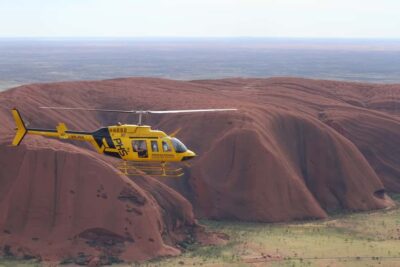
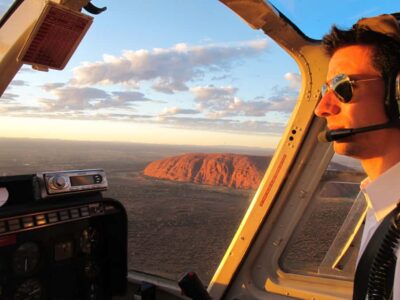
Uluru & Kata Tjuta 25-Minute Helicopter Experience
Read our review →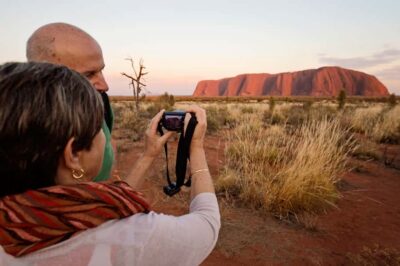
Uluru: Sacred Sites & Sunset Tour with Wine & Cheeseboard
Read our review →
Browse the lists this tour appears in