
Reviewed · ULURU TOURS
Alice Springs Desert Park General Entry Ticket
Desert life is far more varied than it looks. Alice Springs Desert Park brings central Australia’s plants, animals, and people together in a thoughtful self-guided visit, with three habitat zones, rare nocturnal creatures, and daily talks. I especially like the naturalized enclosures, which let you pause beside animals in settings that feel tied to the surrounding country. The free-flying bird show is another clear highlight. The main drawback is that you need to make your own way there, and the park can take anywhere from three hours to most of a day.
This is not a ride-by sightseeing stop. You walk at your own pace, follow a map, and choose which talks and displays deserve your time. I also value the focus on Arrernte traditions and Dreamtime stories, shared during staff presentations. Since the $16 admission does not include food, drinks, electric scooter hire, or extra animal encounters, your final cost can rise if you add extras.
In This Review
- Key points to know before you go
- Why Alice Springs Desert Park works so well
- Starting with the woodland, sand, and river habitats
- The Nocturnal House and its rare desert animals
- The free-flying bird show is a genuine highlight
- Arrernte stories and practical desert knowledge
- Planning your route for three to eight hours
- What the $16 ticket includes
- Practical details before your visit
- Who should book Alice Springs Desert Park?
- Should you book this $16 desert park ticket?
- FAQ
- How much does Alice Springs Desert Park admission cost?
- How long should I allow for the visit?
- Is the experience guided?
- What habitats can I see?
- Can I see animals that are active at night?
- Is there a bird show?
- Are food and drinks included?
- Does the ticket include electric scooter hire?
- Can I cancel or change the booking?
Key points to know before you go
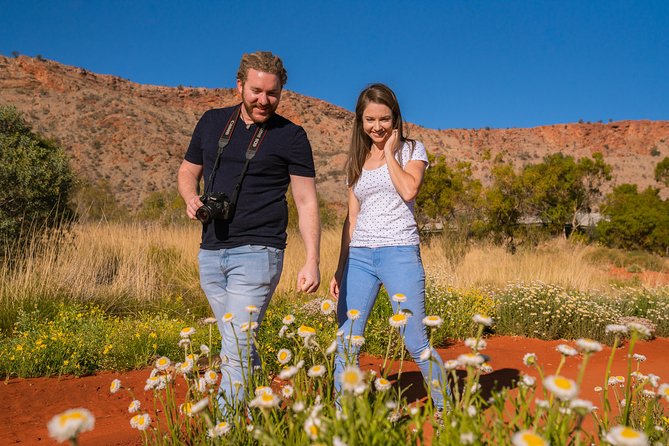
- Three desert environments in one walking trail: Move through woodland, sand country, and desert rivers, each with its own plants and animals.
- Free-flying bird show: The outdoor amphitheater gives you a close look at birds of prey in action.
- Nocturnal House: See rare animals such as ghost bats and bilbies, species that are active after dark in the wild.
- Arrernte knowledge is part of the visit: Talks connect plants, animals, people, medicine, food, tools, and Dreamtime stories.
- Flexible visit length: Allow at least three hours, but plan on up to eight if you want the talks, exhibits, café, and picnic area.
- Strong value at $16: Admission covers the park and its presentations, with optional paid add-ons available.
Why Alice Springs Desert Park works so well
Alice Springs Desert Park is a useful first stop in Central Australia because it gives you a clear introduction to the region before you head farther afield. You do not simply look at animals behind standard zoo fencing. The park presents them within carefully recreated desert habitats, helping you understand how woodland, sand, and river country support different forms of life.
That difference matters. Central Australia can seem empty at first glance, especially if you arrive expecting thick forests or busy waterways. The park shows you where to look. A waterhole may contain fish, turtles, burrowing frogs, and yabbies. A quiet patch of scrub may hide an animal that only appears after sunset.
The visit is self-guided, but it is not without explanation. At arrival, you receive a park map and the daily program. Use both. The map helps you choose a sensible route, while the program lets you plan around the bird show, nocturnal house presentation, and other talks.
The duration is flexible. Three hours is enough for a brisk visit with a few major stops. If you want to read the interpretive displays, attend several talks, linger at enclosures, and take a break at the café or picnic area, allow much longer. The park quotes roughly three to eight hours, which is a fair range.
More entry tickets in Alice Springs:
- From Brisbane: Australia Zoo Transfer and Entry Ticket
★ 4.9 · 1,539 reviews - Brisbane: Moreton Island Return Ferry & Adventure Day Pass
★ 4.3 · 1,195 reviews - SEA LIFE Sydney Aquarium Entry Ticket
★ 4.3 · 1,025 reviews
Starting with the woodland, sand, and river habitats
The walking route leads through three main desert environments: woodland, sand, and river. Each zone gives the dry interior a different character, and the change from one area to the next keeps the visit from becoming a long series of similar exhibits.
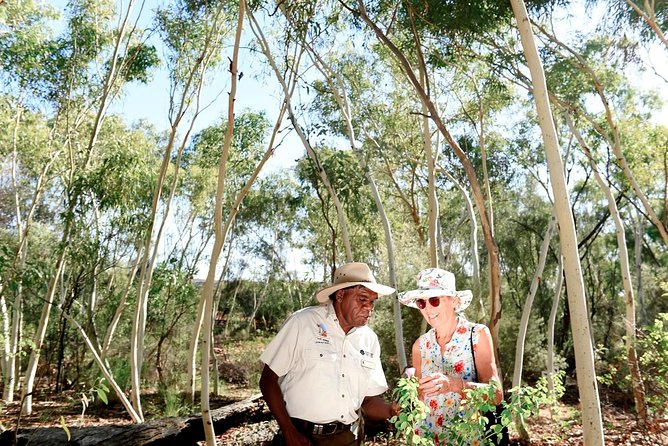
In the woodland area, you can focus on the plants and animals that make use of scattered trees and shaded ground. The botanical displays help explain why even tough-looking desert plants matter. They provide food, shelter, and practical materials, and they show that the central Australian desert is not simply bare soil and rock.
The sand country section offers a different lesson. Here, you get a better sense of how animals cope with heat, limited water, and open ground. The park’s displays connect the plants and animals to their habitat rather than treating each species as an isolated attraction.
The desert rivers area is especially useful for anyone who has trouble picturing water in such an arid place. At the aquarium, you can look into a recreated waterhole and see fish, turtles, burrowing frogs, and yabbies. This small exhibit makes a larger point: waterholes are busy centers of desert life.
I would not rush these sections. The best part is often the pause beside an enclosure or plant display. One visitor particularly enjoyed the variety of habitats and the chance to linger along the paths. That is exactly how I would approach the park. Do not treat the walking route as a race between scheduled presentations.
The Nocturnal House and its rare desert animals
The Nocturnal House is one of the park’s most memorable stops. It reverses the usual rhythm of a daytime wildlife visit, allowing you to see creatures that are active when the central Australian sun has gone down.
Among the animals highlighted are ghost bats and bilbies, also called macrotis. Both are unusual and difficult to spot in the wild, especially during an ordinary daytime outing. The darkened setting gives you a chance to watch their behavior while learning why nocturnal life is so important in the desert.
A keeper presentation adds useful context. One particularly strong account of the park praised the nocturnal house talk and the chance to see rare animals in a carefully designed setting. The value here is not just seeing an unfamiliar species. You also begin to understand why darkness offers shelter from daytime heat and changes how animals find food and avoid danger.
The Nocturnal House may be a favorite for children, but it is not only a children’s attraction. Adults who care about conservation, adaptation, or Australian wildlife will find it worthwhile. If your time is limited, I would put this stop near the top of your list, along with the bird show.
The free-flying bird show is a genuine highlight
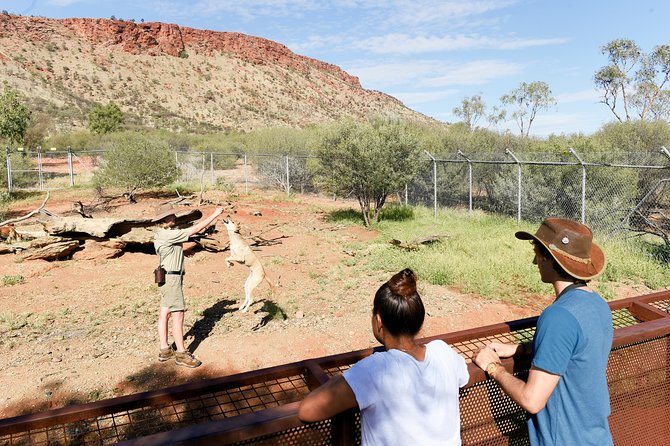
The outdoor amphitheater hosts a free-flying bird presentation, with birds of prey shown in action. This is more effective than a static display because you see the birds move, turn, and use the air in ways that are hard to appreciate from behind glass or wire.
The presentation also gives staff a chance to explain how these birds fit into central Australian ecosystems. Pay attention to the daily schedule so you do not arrive after it has begun. The park’s program is designed to help you plan around talks, and the show is one of the experiences that can shape your whole visit.
The bird presentation received some of the strongest praise in the available feedback. It was singled out alongside the Arrernte teaching and the variety of habitats. That pairing makes sense. The show gives you visual excitement, while the talks provide the cultural and ecological setting behind what you are seeing.
The amphitheater is outdoors, so your comfort may depend on the conditions on the day. The supplied information does not specify seating arrangements or weather cover, so check the schedule and plan your visit with the local climate in mind. The point is simple: do not save the bird show for a vague later time. Make it part of your route.
More Outback Tours in Alice Springs:
- 3 Day Red Centre Kata Tjuta Kings Canyon Outback ex.Alice Springs
★ 5.0 · 69 reviews - From Alice Springs/Yulara: 4-Day Red Centre 4WD Camping Tour
★ 4.6 · 68 reviews - Alice Springs Desert Park Nocturnal Tour
★ 5.0 · 45 reviews - Pinnacles Desert: Sunset BBQ & Stargazing Tour +Sandboarding
★ 4.8 · 1,555 reviews
Arrernte stories and practical desert knowledge
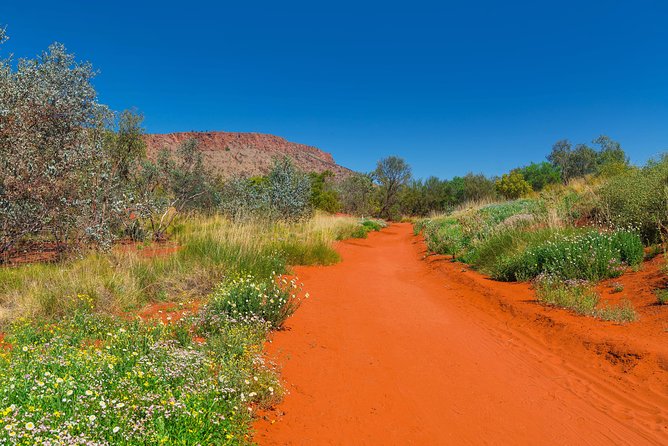
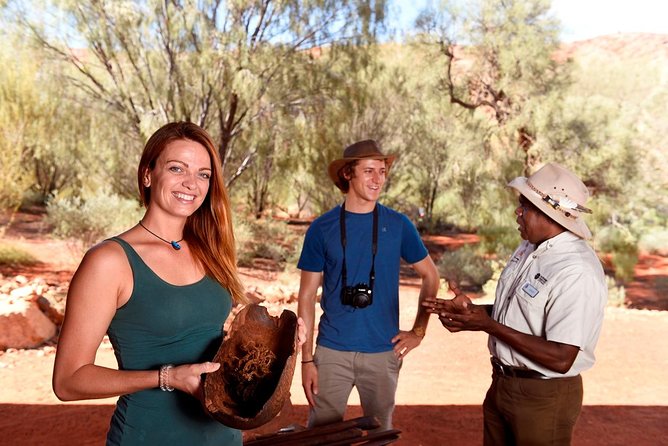
The park’s cultural presentations are among its most valuable features. Staff talks include information about the Arrernte people of Central Australia, their traditions, and their Dreamtime stories. These stories express connections between people and country, giving the animal and plant displays a human context.
This is more meaningful than adding a token cultural panel to a wildlife park. The presentations explain how people used the desert’s limited resources for food, medicine, and tools. One visitor especially valued learning how Aboriginal people survived in harsh conditions with meagre surroundings. That is the kind of information that can change how you see the country outside the park.
Specific guides can make a difference. Reuben was praised for combining wisdom and wit during his presentations, and for bringing the subject to life. If his talk appears on the daily program during your visit, make time for it. Since the schedule can vary, you should rely on the program you receive at the entrance rather than expect every presentation at a fixed time.
Listen for the relationship between knowledge and place. A plant is not just a botanical specimen. An animal is not just something to photograph. The talks show how food, medicine, tools, stories, and seasonal patterns fit together.
Planning your route for three to eight hours
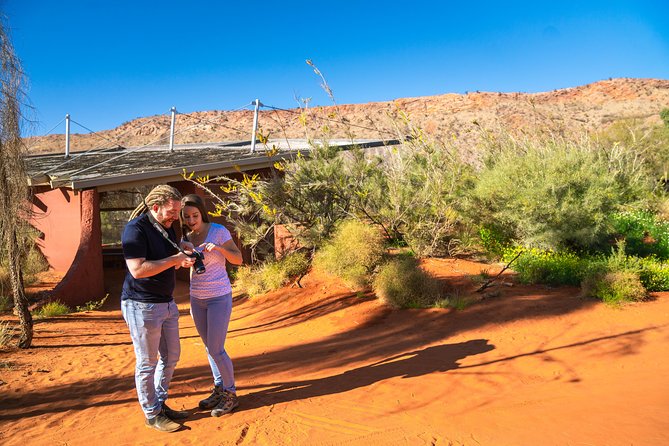
The park is easy to approach as a flexible half-day outing, but it can fill most of your day if you take your time. I would begin by checking the daily program, then choose the bird presentation and any keeper or cultural talks you most want to attend.
After that, use the map to build your walking route around those times. The order of the three habitat zones is less important than avoiding unnecessary backtracking. Leave room for the Nocturnal House, since its animals are easy to miss if you spend all your time outdoors.
A practical visit might look like this:
- Start with the map, daily program, and main walking trail.
- Explore the woodland, sand, and river sections at an unhurried pace.
- Visit the waterhole aquarium to see fish, turtles, burrowing frogs, and yabbies.
- Attend the free-flying bird show.
- Spend time in the Nocturnal House and join the keeper presentation if scheduled.
- Add an Arrernte cultural talk or botanical presentation.
- Finish with the café, picnic area, gift shop, or another favorite enclosure.
The park is family-friendly, and the self-guided format helps different age groups set their own pace. Younger children may prefer the birds and unusual nocturnal animals. Older children and adults may spend more time with the displays, cultural talks, and plant information.
Electric scooters are available for hire at an extra cost. That option may be useful if walking for several hours is not appealing, but the supplied details do not state the hire price or how many scooters are available. Treat it as an optional convenience, not part of the $16 admission.
What the $16 ticket includes

At $16, the entry fee offers good value if you want more than a quick animal viewing. Your admission gives you access to the park’s recreated habitats, botanical displays, Nocturnal House, aquarium, daily presentations, and free-flying bird show.
The price is especially reasonable for families who can spend several hours on site. You are paying for a full setting rather than a single short performance. The park also gives you room to choose your own pace, which can be a better deal than a tightly timed guided attraction.
You should budget separately for food and drinks. There is a café and a picnic area with barbecue facilities, but neither food nor beverages are included. Electric scooter hire and additional animal encounters also cost extra. Hotel pickup, drop-off, and transport to the park are not included, so you need to arrange your own way there.
The low entry price does not mean every possible feature is included. If you only have an hour, the value is weaker because you may miss parts of the walking trail and several presentations. If you have three hours or more, the ticket becomes easier to justify.
Practical details before your visit
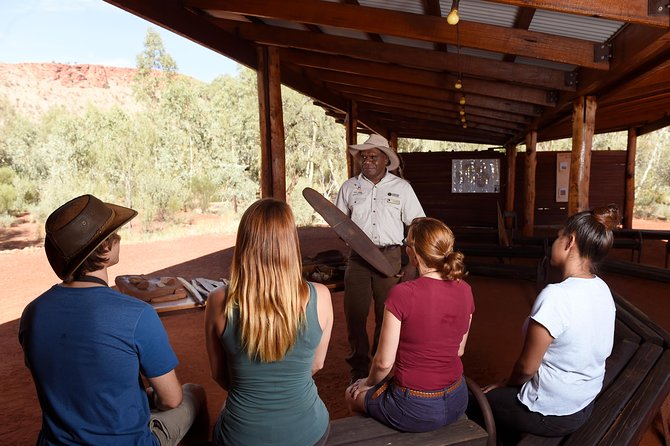
The listed start time is 7:30 am, and you make your own way to Alice Springs Desert Park. The experience is not a hotel pickup tour, and transportation to or from the attraction is not supplied.
Public transport is nearby, and service animals are allowed. Most people can take part, although the available information does not give detailed route measurements, surface descriptions, or scooter access arrangements. If those points matter to you, ask the park directly before booking.
The booking information describes the activity as having a maximum of one traveler. That appears to refer to the booking arrangement rather than a one-person-only park experience, but you should confirm the detail if you are booking for a family or group.
The experience is non-refundable and cannot be changed after booking. Since the ticket does not allow cancellation or amendments, choose your date carefully. That matters more here than it would for a flexible city attraction.
Who should book Alice Springs Desert Park?
I would recommend this park to anyone who wants an introduction to Central Australian wildlife without joining a long guided excursion. It suits families, independent visitors, wildlife fans, and people who want cultural context alongside animal exhibits.
It is also a smart choice at the beginning of an Alice Springs stay. One person described it as the perfect way to start an Alice Springs experience, especially after arriving with a Ghan train group. The park gives you vocabulary for what you will see elsewhere: desert rivers, tough plants, nocturnal animals, birds of prey, and the continuing relationship between Arrernte people and country.
You may not enjoy it as much if you dislike walking, prefer a short attraction with no scheduled talks, or have less than three hours available. The self-guided format is a strength for some people and a weakness for others. You need to read the map, watch the clock, and decide what matters most.
Should you book this $16 desert park ticket?
Yes, if you can spare at least three hours and want a broad, grounded introduction to Central Australia. The strongest reasons are the free-flying bird show, the Nocturnal House, the three habitat zones, and the Arrernte cultural presentations.
I would book it early in your Alice Springs visit, then use the park map and program to plan a calm route. Bring extra money for the café or optional activities, and remember that transport is your responsibility. At $16, this is an unusually accessible way to see desert animals and learn how people have lived with this country for generations.
FAQ
How much does Alice Springs Desert Park admission cost?
The general entry ticket costs $16.
How long should I allow for the visit?
The visit usually takes about three to eight hours, depending on how many exhibits and presentations you attend.
Is the experience guided?
The visit is self-guided, but you receive a park map and daily program. Staff also give guide presentations and animal talks during the day.
What habitats can I see?
The walking trail covers three main Central Australian desert environments: woodland, sand, and river.
Can I see animals that are active at night?
Yes. The Nocturnal House features rare and endangered animals that are active in darkness, including ghost bats and bilbies, also known as macrotis.
Is there a bird show?
Yes. The park offers a free-flying bird show in the outdoor amphitheater, including birds of prey.
Are food and drinks included?
No. Food and drinks are not included, but the park has a café and a picnic and barbecue area.
Does the ticket include electric scooter hire?
No. Electric scooter hire costs extra.
Can I cancel or change the booking?
No. The experience is non-refundable and cannot be changed after booking.
Just added in Alice Springs
- From Alice Springs: West MacDonnell Ranges Half Day Trip★ 4.4 · 44 reviews
- From Alice Springs: West MacDonnell Ranges Day Trip★ 4.7 · 296 reviews
- Uluru: 4-Day Rock to Rock Adventure Tour★ 4.9 · 141 reviews
- Alice Springs to Uluru (Ayers Rock) Coach Transfer★ 4.5 · 39 reviews
- Uluru, Kata Tjuta and Kings Canyon Camping Safari from Alice Springs★ 5.0 · 162 reviews
- West MacDonnell Ranges & Standley Chasm Day Trip from Alice Springs★ 5.0 · 67 reviews
- 1 Day Alice Explorer★ 4.5 · 80 reviews
- West MacDonnell Ranges Day Trip from Alice Springs★ 4.5 · 364 reviews
Uluru Tours, compared.
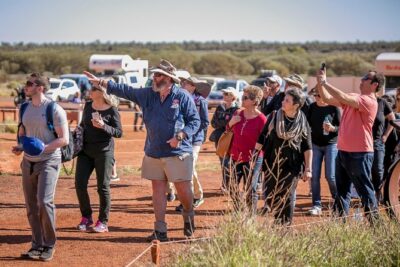
Ayers Rock Day Trip from Alice Springs Including BBQ Dinner
Read our review →
Uluru: Field of Light Sunrise Tour with Hot Drinks
Read our review →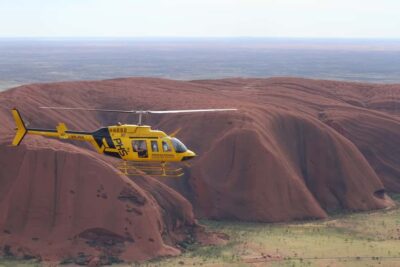
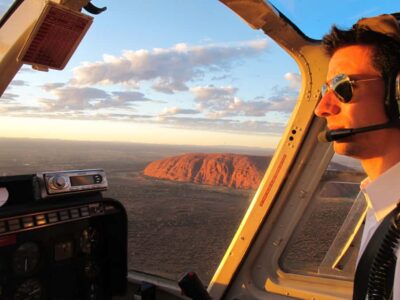
Uluru & Kata Tjuta 25-Minute Helicopter Experience
Read our review →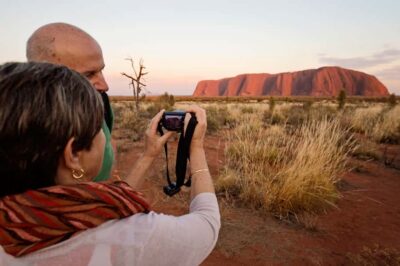
Uluru: Sacred Sites & Sunset Tour with Wine & Cheeseboard
Read our review →
Browse the lists this tour appears in