
Reviewed · ULURU TOURS
Uluru, Kata Tjuta and Kings Canyon Camping Safari from Ayers Rock
The Red Center rewards an early alarm. This three-day safari gives you the big three sights in one carefully timed trip: Uluru at sunset and sunrise, Kata Tjuta on foot, and Kings Canyon before the desert heat builds. I like that your guide handles the long drives, park visits, meals, and camp routine. I also like the mix of famous views and First Peoples culture, especially the Maruku Arts walk with an Aboriginal and Torres Strait Islander guide.
The main catch is the physical effort. You may face a 4:30 a.m. breakfast, a 10-kilometer Uluru base walk, and a 9-kilometer Kings Canyon rim walk across three hot days. Camping conditions can be basic, and one detailed account raised concerns about dirty bathrooms and showers and unclear expectations around helping with food and transport.
In This Review
- Key points to know before booking
- What this three-day Red Center trip actually covers
- Day one: Kata Tjuta’s domes and Uluru at sunset
- Day two: Uluru before breakfast and the cultural heart of the park
- Camping, meals, and the practical side of group travel
- Day three: Kings Canyon’s walls, rim, and Garden of Eden
- Group size, transport, and the Alice Springs finish
- Who should book this safari?
- Should you book the Uluru, Kata Tjuta and Kings Canyon safari?
- FAQ
- How long is the Uluru, Kata Tjuta and Kings Canyon safari?
- Where does the safari start?
- Where does the safari finish?
- How much walking is involved?
- Are meals included?
- Can I cancel for a full refund?
Key points to know before booking
- Three major Red Center sights in three days: You visit Kata Tjuta, Uluru, and Kings Canyon without arranging separate transport between them.
- Sunrise and sunset are built into the plan: The timing helps you see Uluru in changing light and walk at cooler hours.
- Cultural learning is part of the route: The Uluru Cultural Centre and Maruku Arts add context beyond photographs.
- Walking is a serious part of the safari: Expect long walks, early starts, heat, and a moderate fitness requirement.
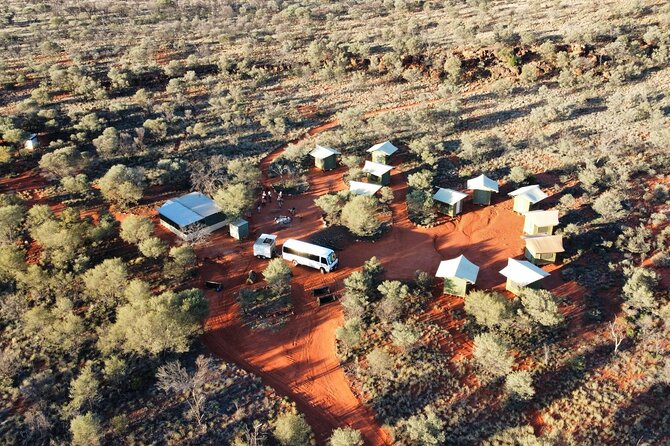
- Camping keeps the price down and the experience outdoors: Two nights under canvas or at campsites add atmosphere, but comfort and cleanliness may vary.
- The trip ends in Alice Springs: Drop-off at selected hotels is scheduled for about 5:30 to 6:30 p.m. on day three.
What this three-day Red Center trip actually covers
This is a guided camping safari from Ayers Rock Resort, also called Yulara. You start at 1 p.m. and finish in Central Australia, with drop-off at selected Alice Springs hotels on the final afternoon.
The route works because the three main sights are spread across a huge area. Organizing it yourself would mean sorting out a vehicle, park access, fuel, campsites, meal planning, and the long transfer toward Kings Canyon. Here, one guide and a group of up to 20 people manage the moving parts.
That convenience matters in the Outback. Distances are long, shade is limited, and the best walking hours are often the least comfortable hours for sleeping. Your guide sets the pace and timing, while you focus on walking, listening, and keeping water close.
The published price is $713.66 per person. That is not a bargain-basement bus trip, but the value becomes clearer when you count two nights of camping, most meals, guided walks, park visits, cultural interpretation, transport, and the transfer toward Alice Springs. It suits you best if you want the main Red Center sights without hiring a car or planning the route yourself.
A few more options to weigh up in Uluru
- From Alice Springs: Day Trip to Uluru with BBQ Dinner
★ 4.6 · 761 reviews - Ayers Rock Day Trip from Alice Springs Including BBQ Dinner
★ 4.5 · 639 reviews - Uluru: Field of Light Sunrise Tour with Hot Drinks
★ 4.6 · 572 reviews
Day one: Kata Tjuta’s domes and Uluru at sunset
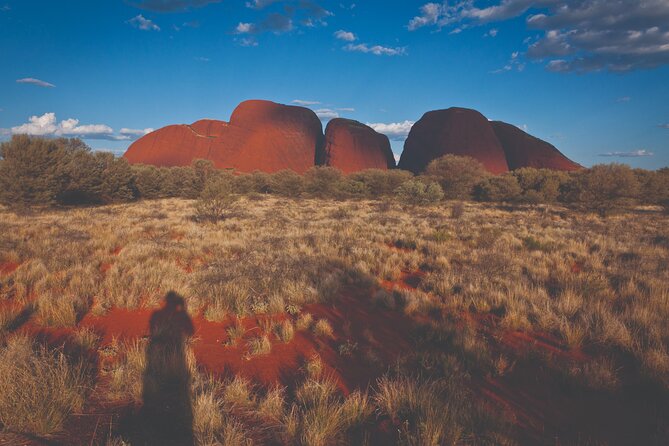
The first afternoon takes you into Uluru-Kata Tjuta National Park and toward Kata Tjuta. The name refers to the group of 36 domes, which rise from the surrounding desert in a striking cluster of rounded rock forms.
You spend about two hours walking here. That first hike is a useful introduction to the trip because Kata Tjuta feels different from Uluru. Uluru is one huge monolith with clean, simple lines. Kata Tjuta is a collection of domes, gaps, folds, and steep walls. The walk gives you time to notice those changes rather than simply stopping for a photograph.
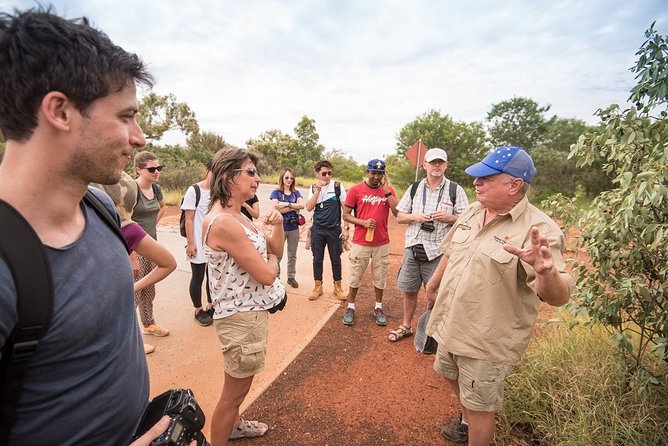
Your guide adds meaning to what you are seeing and explains the Outback way of life. That is important here. Without context, the rock formations can become just another scenic stop. With interpretation, you get a better sense of why the area matters and how the desert shapes daily life.
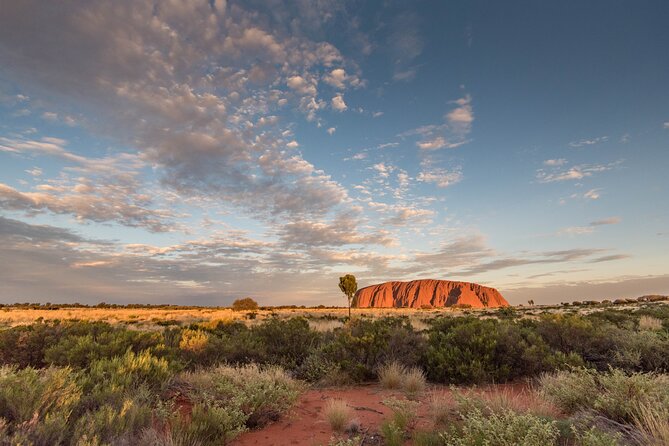
Later, the group moves to Uluru for sunset. The stop lasts about an hour, with snacks served as the sun drops. Uluru can shift from warm orange to red, purple, and darker tones as the light changes. The spectacle is simple but powerful, and the timing gives you one of the most memorable views of the trip without requiring a long walk at the end of a travel day.
The afternoon schedule is a good design choice. You see Kata Tjuta while there is still time for a proper walk, then settle in for Uluru at sunset. You should not expect a quiet, private viewing area, since this is one of Australia’s most visited natural sights. Still, having snacks and a guide nearby makes the stop easy and social.
Day two: Uluru before breakfast and the cultural heart of the park
Day two begins early. Very early. A 4:30 a.m. breakfast may be part of the schedule, especially when the group needs to start walking before temperatures climb. That sounds harsh when you are setting an alarm, but it makes practical sense. One account described daytime temperatures reaching 43 degrees Celsius, with the early start helping the group complete the walk before the worst heat.
You head to Uluru for sunrise, then take a walk around the base. The full base walk is listed at about 10 kilometers and can take much of the morning, with roughly four hours allocated to the stop. This is not a quick stroll from a parking area. You need decent stamina, suitable shoes, sun protection, and enough water for a long stretch outdoors.
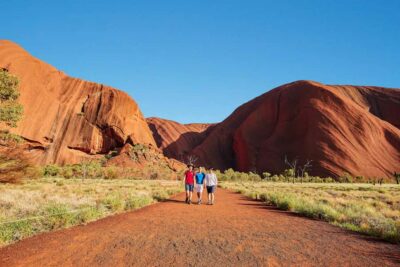
The base route gives you a different view of Uluru than sunset does. From a distance, the rock looks smooth and almost symmetrical. At ground level, you can notice caves, grooves, changing colors, and sections that hold cultural meaning. Your guide helps explain what you are seeing, but you should also be ready to follow local rules and treat the site with care.
The early timing is one of the safari’s strengths and one of its challenges. You gain cooler walking conditions and better light, but you lose sleep. If you are not used to long walks or pre-dawn starts, this day may feel demanding. The moderate fitness advice should be taken seriously.
After lunch, you have about 30 minutes at the Uluru-Kata Tjuta Cultural Centre. This is a valuable pause between the physical morning and the afternoon activities. You can learn more about Anangu culture and may have a chance to buy First Peoples art and crafts.
Do not treat the Cultural Centre as filler. It provides background that helps you understand the places you have just walked through. The time is short, though, so you may need to choose between browsing carefully and taking a proper break.
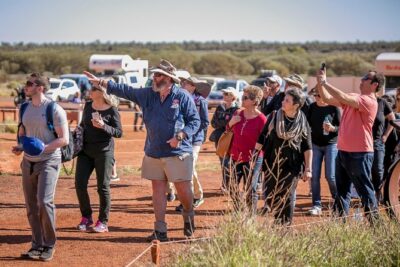
The next stop is Maruku Arts, with a 30-minute interpretive cultural walk led by an Aboriginal and Torres Strait Islander guide. This is one of the most worthwhile parts of the trip because it brings living culture into the schedule. You are not only hearing a general explanation from a road guide. You are receiving cultural interpretation connected to the people and traditions of the area.
After Maruku Arts, the group travels to Watarrka National Park, home of Kings Canyon. This is the longest transfer of the trip, and the published schedule gives the day and evening a very broad 12-hour block. Expect a travel-heavy afternoon as the group moves away from Uluru toward the Kings Canyon campsite.
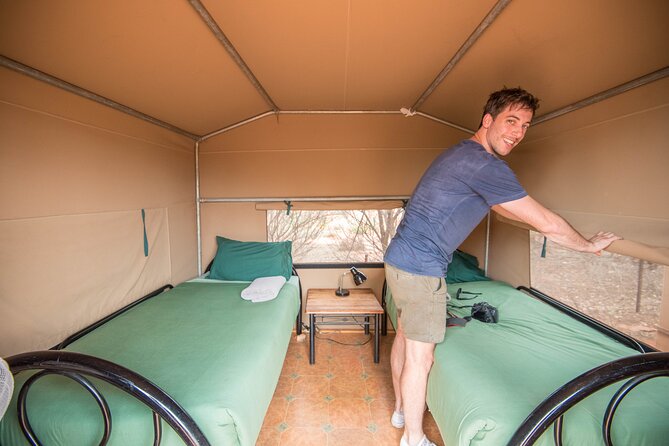
The campsite is described as exclusive and located within Watarrka National Park. You eat and sleep there for the night. The phrase camping safari should guide your expectations: this is an outdoor trip with shared routines, not a hotel circuit with a tent placed beside a polished bathroom.
Camping, meals, and the practical side of group travel
Most meals are included, and dining under the stars is part of the appeal. In a remote setting, a simple meal outdoors can feel more memorable than a restaurant dinner. You are surrounded by open desert, dark skies, and the shared rhythm of a small group settling in after a long day.
The tradeoff is that meal preparation and camp duties may not be entirely hands-off. One account said the need to help prepare food and assist with transporting supplies had not been clear in advance. That is worth considering before booking. Ask what cooking, packing, and carrying duties are expected if that matters to you.
Camping conditions also deserve an honest warning. One particularly negative account described both camps as unhygienic, with bathrooms and showers not properly cleaned. That may not reflect every departure, but it points to a real risk of variable facilities. Standards at remote camps can be basic, and one guide may be responsible for a lot of work.
The guide is central to the trip’s quality. A single leader is expected to drive or coordinate transport, explain the sites, manage timing, organize meals, and keep the group moving. That is a large workload. One guide named Wayne received strong praise for choosing walking times that helped the group manage temperatures of 41 degrees Celsius.
The best approach is to arrive ready to cooperate. Pack light, follow instructions, help when asked, and understand that the guide cannot provide hotel-style service while also managing a remote camping operation. The trip’s strong ratings, including 96 percent recommendation and an overall 4.8 rating from 118 reviews, suggest that many departures work very well. The lower rating about camp hygiene shows why your expectations should remain realistic.
A completely different kind of day out:
- Uluru 15-Minute Helicopter Experience
★ 4.9 · 548 reviews - Yulara: Uluru & Kata Tjuta 25-Minute Helicopter Experience
★ 4.8 · 536 reviews - Yulara: Uluru Sunrise and Kata Tjuta Day Trip by Bus
★ 4.5 · 469 reviews - Uluru: Sacred Sites & Sunset Tour with Wine & Cheeseboard
★ 4.5 · 450 reviews
Day three: Kings Canyon’s walls, rim, and Garden of Eden
Kings Canyon is the grand finale. Located in Watarrka National Park, the gorge has sheer rock walls hundreds of meters high and a cooler, more enclosed feel than the open country around Uluru.
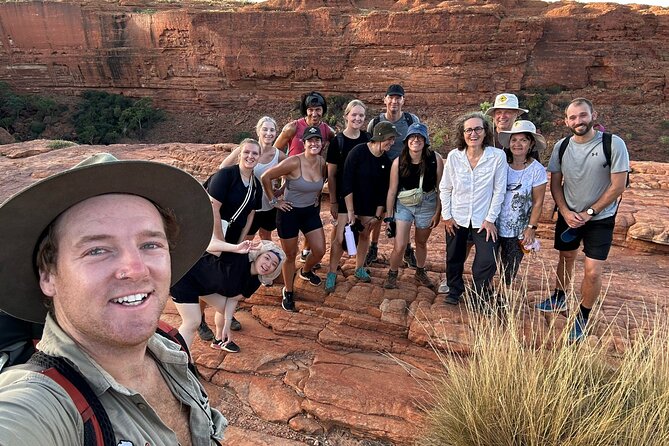
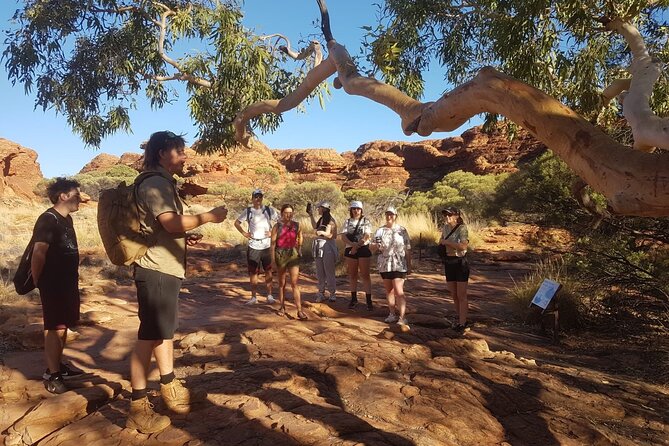
The main walk takes about four hours. The route includes the North and South walls, the Lost City, the Amphitheatre, and the Garden of Eden. Each section gives the walk a different character.
The Lost City is known for its weathered sandstone formations. The Amphitheatre brings you close to the canyon’s dramatic walls. The Garden of Eden offers a change from the dry surroundings, with water and plant life in the canyon’s protected interior. These names are not empty labels. They help you notice how wind, water, and time have shaped the gorge.
The North and South walls provide the big views. From the rim, the canyon opens into a vast arrangement of red rock and deep shadows. The route is physically demanding, especially after the previous day’s base walk and long transfer. One account described the Kings Canyon rim walk as about 9 kilometers, so you should not assume the four-hour stop means four easy hours.
Heat is the key issue. The schedule puts the walk early, which is exactly what you want in this part of Australia. Start slowly, drink regularly, and keep your hat and sunscreen available. If you are not comfortable with long walks in hot conditions, this tour may be too strenuous, even though the itinerary looks short on paper.
The canyon is a fitting final stop because it rewards effort. Uluru offers iconic scale and changing light. Kata Tjuta offers domed rock and a strong walking experience. Kings Canyon gives you height, depth, and a more winding route through the rock.
Group size, transport, and the Alice Springs finish
The maximum group size is 20 people. That is large enough to create a social camp atmosphere, but small enough for a guide to keep the group together on walks. The actual feel will depend on the departure, the guide, and how well people handle early starts and shared chores.
Pickup is offered from Ayers Rock Resort, with the listed meeting point at 170 Yulara Drive. The start time is 1 p.m. You should confirm the exact pickup instructions after booking, since the information gives a resort meeting point rather than a door-to-door promise for every accommodation.
The trip ends in Central Australia, with drop-off at selected Alice Springs hotels between about 5:30 and 6:30 p.m. on day three. This makes the safari useful if you are continuing overland to Alice Springs, but you should allow for the full stated time before arranging a tight evening connection.
Confirmation is sent within 48 hours, subject to availability. The experience also requires a minimum number of participants. If that minimum is not met and the tour is canceled, you are offered another date or experience, or a full refund.
Cancellation terms are strict near departure. You can receive a full refund if you cancel at least six full days before the start time. A cancellation two to six full days ahead receives a 50 percent refund, while less than two full days brings no refund. Plan carefully, especially if your wider Australian itinerary may change.
Who should book this safari?
I would recommend it to you if you want to see Uluru, Kata Tjuta, and Kings Canyon but do not want to drive long distances through remote Australia. It is also a good fit if you want a guide to explain culture and geography rather than simply deliver you to viewpoints.
The trip suits active visitors who can manage long walks, hot weather, basic camping, and very early mornings. You do not need to be an extreme hiker, but you should be honest about your fitness. The Uluru base walk and Kings Canyon rim walk are the heart of the experience, not optional extras hidden in the schedule.
I would think twice if you need private bathrooms, flexible sleep schedules, or a relaxed pace. The tour covers a lot in three days, and the reward for that efficiency is a packed program. Camping may also be uncomfortable if facilities are poorly maintained on your departure.
At $713.66, the price is reasonable for a guided three-day route with most meals, camping, park access, cultural activities, and the Alice Springs transfer. It is not the cheapest way to see the Red Center, but it combines transport and logistics that would be costly and tiring to arrange alone.
Should you book the Uluru, Kata Tjuta and Kings Canyon safari?
Book it if your priority is seeing all three major Red Center sights in a short window, with an organized route and real walking built in. The strongest parts are the timing around Uluru’s sunrise and sunset, the cultural stops, the dramatic Kings Canyon walk, and guides who can adjust the day around extreme heat.
Before paying, make sure you are comfortable with two nights of basic camping, possible shared duties, long walks, and a 4:30 a.m. start. If that sounds like part of the adventure rather than a problem, this is a practical and memorable way to cross the Red Center off your Australian itinerary.
FAQ
How long is the Uluru, Kata Tjuta and Kings Canyon safari?
The experience lasts approximately three days and includes two nights of camping.
Where does the safari start?
The listed meeting point is Ayers Rock Resort at 170 Yulara Drive, Yulara, Northern Territory. The scheduled start time is 1 p.m.
Where does the safari finish?
The trip ends in Central Australia, with drop-off at selected Alice Springs hotels between approximately 5:30 and 6:30 p.m. on day three.
How much walking is involved?
The program includes an afternoon hike at Kata Tjuta, an Uluru base walk that may be about 10 kilometers, and a Kings Canyon rim walk that may be about 9 kilometers. A moderate level of physical fitness is required.
Are meals included?
Most meals are included, and the program includes outdoor dining under the stars. You may also be expected to help with food preparation or transport of supplies, so confirm the camp duties before departure.
Can I cancel for a full refund?
Yes. You must cancel at least six full days before the experience’s start time for a full refund. Cancellation two to six full days ahead receives a 50 percent refund, and cancellation less than two full days before departure is not refunded.
Just added in Uluru
- From Alice Springs: West MacDonnell Ranges Half Day Trip★ 4.4 · 44 reviews
- From Alice Springs: West MacDonnell Ranges Day Trip★ 4.7 · 296 reviews
- Uluru: Sunset, Sparkling Wine, Cheeseboard & Gourmet BBQ★ 4.4 · 193 reviews
- Uluru: Sacred Sites Tour + Sparkling at Sunset & BBQ Dinner★ 4.5 · 82 reviews
- Uluru: Small Group Sunset Tour with Sparkling Wine★ 4.5 · 82 reviews
- Uluru: Guided Walking Tour at Sunrise with Light Breakfast★ 4.6 · 256 reviews
- Uluru: Small Group Guided Tour with Sunset Refreshments★ 4.8 · 190 reviews
- Uluru Highlights Small Group Morning Tour + Picnic Breakfast★ 4.8 · 212 reviews
Uluru Tours, compared.
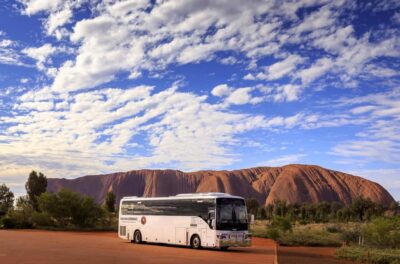
Ayers Rock Day Trip from Alice Springs Including BBQ Dinner
Read our review →
Uluru: Field of Light Sunrise Tour with Hot Drinks
Read our review →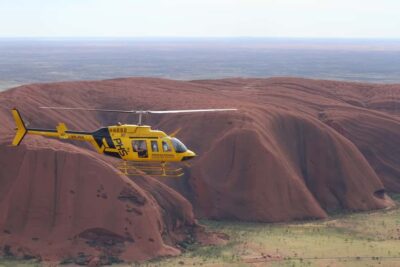
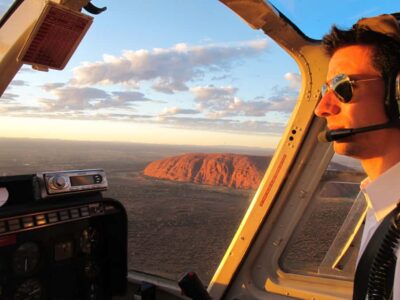
Uluru & Kata Tjuta 25-Minute Helicopter Experience
Read our review →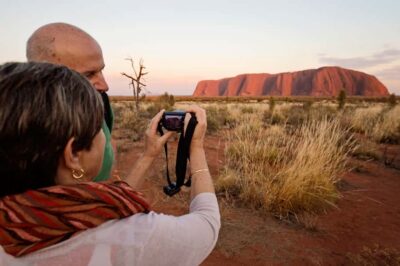
Uluru: Sacred Sites & Sunset Tour with Wine & Cheeseboard
Read our review →
Browse the lists this tour appears in