
Reviewed · ULURU TOURS
Alice Town and Country Half Day Sunset Tour -Small Group
Sunset gives Alice Springs its best final act. This 330-minute small-group outing brings together Aboriginal art, outback services, sacred Eastern Arrernte sites, and a fine view from Anzac Hill. I like the way it combines town attractions with a short trip into the East MacDonnell ranges, so you get more than a quick city circuit. I also like the thoughtful pacing: indoor visits come first, while the gaps and sunset are saved for later.
The best part may be the guide. Mahesh has earned praise for his humor, clear explanations, and local stories, although your guide may be someone else. My main caution is that this is a full afternoon with several stops, and the town museums take up a good share of the time. If you want a longer Aboriginal cultural experience or a slower outback walk, this tour may feel too broad.
In This Review
- Key points at a glance
- Why this half-day tour works well
- Araluen Arts Centre and Albert Namatjira
- The School of Air and life across great distances
- Royal Flying Doctor Service: the outback lifeline
- Emily Gap and Jessie Gap in the East MacDonnell ranges
- Anzac Hill at sunset
- What the transport and timing mean for you
- Who should book this Alice Springs outing?
- My verdict on the $138 price
- Should you book it?
- FAQ
- How long does the Alice Town and Country Sunset Tour last?
- What attractions are included?
- Is hotel pickup included?
- Is transport air-conditioned?
- Is food included?
- Is the tour conducted in English?
- Can infants join the tour?
- Is the tour suitable for wheelchair users?
Key points at a glance
- Five and a half hours of Alice Springs in one outing: You visit three town attractions, two striking gaps, and Anzac Hill without arranging separate transport.
- A strong final stop: Sunset from Anzac Hill gives you broad views over Alice Springs and the MacDonnell ranges.
- Useful outback context: The School of Air and Royal Flying Doctor Service explain how people live, study, and receive medical help across enormous distances.
- A respectful Aboriginal connection: Emily Gap and Jessie Gap are spiritual places for the Eastern Arrernte people, with a caterpillar dreaming story connected to the rocks.
- Comfortable practical setup: Hotel pickup, an air-conditioned bus, entry fees, and tea and coffee are included.
- A few limits to note: The tour is not suitable for wheelchair users, infants sit on laps, and large bags are not allowed.
Why this half-day tour works well
Alice Springs can be hard to understand if you only see the main streets. This tour gives you several pieces of the town’s story, then carries you into the surrounding country before sunset. I like that balance. You are not spending all afternoon inside museums, but you are also not left with only a scenic drive and a few photographs.
The tour costs $138 per person. That is not a bargain-basement outing, but the price includes transport, pickup and return within 10 kilometres of the town centre, entry fees, an English-speaking guide, and tea and coffee. Add the time saved by not organizing several separate visits, and the cost is reasonable for a visitor who wants a single, guided introduction to Alice Springs.
The small-group format should make the day more personal than a large coach excursion, though no exact group size is given. You will spend much of the time moving between stops, so this suits you best if you prefer a guided overview rather than a long stay at one site.
More Sunset Tours in Uluru:
- Uluru: Sacred Sites & Sunset Tour with Wine & Cheeseboard
★ 4.5 · 450 reviews - Uluru (Ayers Rock) Sunset + Outback Barbecue Dinner & Star Talk
★ 4.0 · 426 reviews - From Yulara: Uluru Tour and Sunset BBQ
★ 4.6 · 320 reviews
Araluen Arts Centre and Albert Namatjira
Your first stop is the Araluen Arts Centre, one of the strongest parts of the itinerary for anyone interested in Central Australian art. The centre holds a substantial collection of Aboriginal paintings, including works by Albert Namatjira and other local artists.
Namatjira is especially important here. His watercolours helped many people outside Central Australia see the West MacDonnell ranges through an Aboriginal artist’s eyes. At the centre, you can look closely at the colours, rock forms, and plant life that shape this region. The visit also connects art with natural history, including local creatures and the changing appearance of the country.
The centre aims to preserve a lasting record of art made in Central Australia. That matters because this is not simply a room of attractive paintings. It shows how artists have recorded place, memory, and cultural knowledge over time.
You should allow yourself enough attention for this stop. The tour continues on a schedule, so you may not have the freedom to study every work at length. Do not touch Aboriginal art, and follow instructions about photography. That is both a practical rule and a basic sign of respect.
The School of Air and life across great distances
Next comes the Alice Springs School of Air Experience. This stop explains how children in remote parts of the outback attend school when farms and communities may be far from a regular classroom.
The presentation covers the school’s development, life on the land, and the methods used to connect students with teachers despite distance and isolation. You will see a film and receive a guided presentation. If the timing is right, you might watch a teacher conduct a live lesson from one of the broadcasting studios. Live lessons can be replaced by recorded ones, so treat that part as a possibility rather than a promise.
I find this stop valuable because it makes distance feel real. On a map, remote Australia can look like a large blank area. The School of Air shows the practical work needed to provide ordinary schooling across that space. It also brings attention to the daily lives and ambitions of children who grow up far from town.
Some people may find the indoor presentations less exciting than the gaps or sunset. Still, this is one of the stops that gives the rest of your Alice Springs visit more meaning. You begin to understand the systems that hold scattered communities together.
Royal Flying Doctor Service: the outback lifeline
The Royal Flying Doctor Service facility adds another important part of the outback story. Through technology and displays, you learn how the service began and how it developed into a vital way of providing medical help across remote Australia.
This visit pairs well with the School of Air. One explains how children receive lessons across huge distances. The other explains how people receive medical care when a hospital is nowhere nearby. Together, they show the practical challenges of living far from major towns.
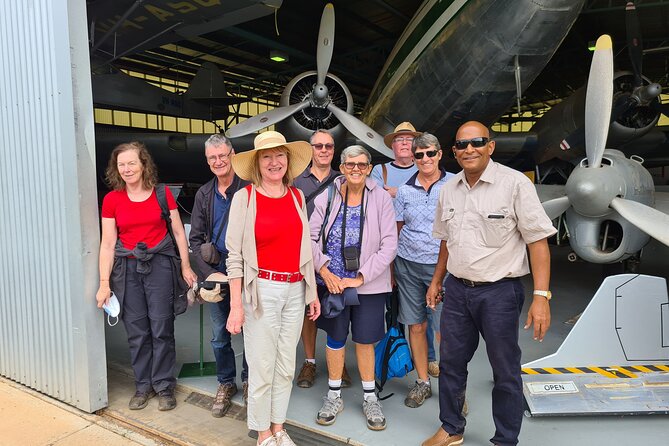
The facility uses technology to bring its stories to life. You can expect an informative visit rather than a long outdoor stop. If you are especially interested in aviation, emergency medicine, or the history of remote services, you may wish this section lasted longer. One piece of feedback suggested allowing more time for Aboriginal culture and less time at the flight doctor facility, so your priorities matter here.
For a first visit to Alice Springs, I think the stop earns its place. It is not just a museum about aircraft. It explains why the Royal Flying Doctor Service became so important to people spread across the Australian interior.
A few more options to weigh up in Uluru
- From Alice Springs: Day Trip to Uluru with BBQ Dinner
★ 4.6 · 761 reviews - Ayers Rock Day Trip from Alice Springs Including BBQ Dinner
★ 4.5 · 639 reviews - Uluru: Field of Light Sunrise Tour with Hot Drinks
★ 4.6 · 572 reviews - Uluru 15-Minute Helicopter Experience
★ 4.9 · 548 reviews
Emily Gap and Jessie Gap in the East MacDonnell ranges
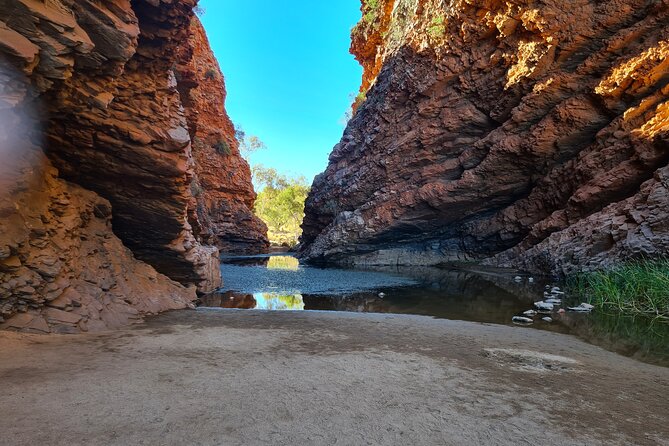
After the town attractions, the bus travels about 16 kilometres into the countryside to Emily Gap and Jessie Gap. These two openings in the Heavitree Range are spiritual places for the Eastern Arrernte people.
The guide shares the Indigenous caterpillar dreaming story connected with the gaps. This gives the rock formations a cultural meaning that a quick photo stop would miss. You are not simply looking at red stone and open sky. You are learning how the country is understood through story and living tradition.
The gaps are also among the most scenic points on the tour. Their rock shapes and narrow openings provide a sharp change from the indoor venues in town. You might find this part more rewarding if you pause, listen, and look carefully instead of treating it as a fast photography stop.
Respect is essential. Traditional owners ask visitors not to climb the rocks, and you should follow that request. Do not touch Aboriginal art, and be careful about taking photographs at culturally sensitive places. The tour offers an introduction, not permission to explore every surface or formation.
The main limitation is time. This is not a hiking tour, and the itinerary does not promise a long walk at either gap. If you want extended time in the ranges, you will need a separate outing.
Anzac Hill at sunset
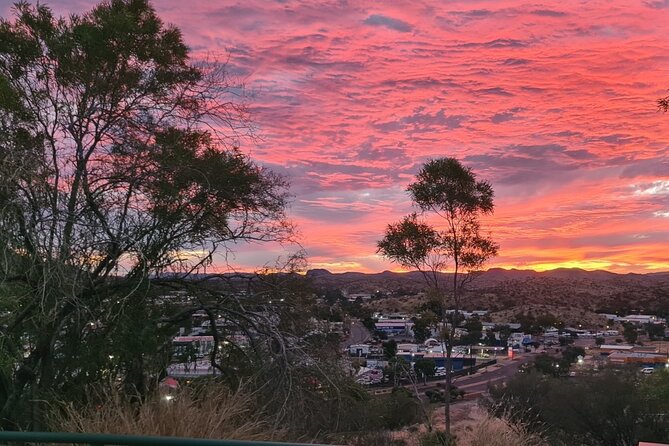
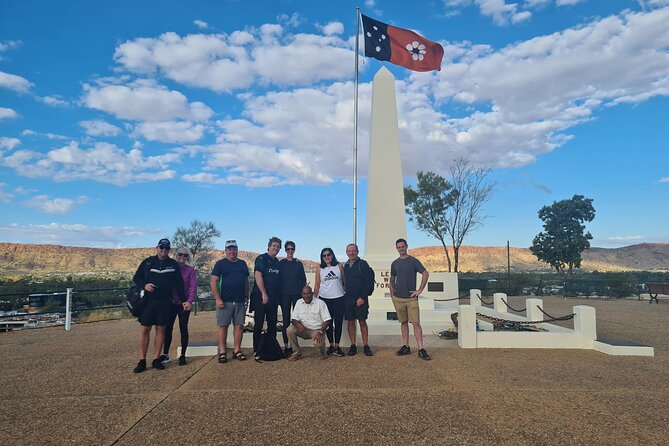
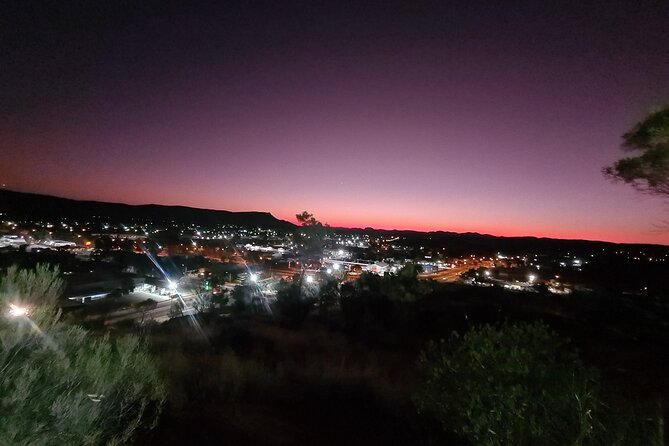
The day finishes at Anzac Hill, the city’s most useful viewpoint. From the top, you can look across Alice Springs and toward the MacDonnell ranges. The hill is also a memorial to Australians who served in the defence forces during international wars.
This is a fitting final stop because the view helps you connect the town with its setting. After hearing about schools, medical flights, art, and Aboriginal stories, you can see the settlement spread below you and the ranges beyond it.
Sunset is the reason this tour is scheduled in the afternoon. The light changes the colour of the country, and the broad view gives you a clear sense of Alice Springs as an outback town rather than an isolated collection of attractions. It is the kind of ending that makes the earlier visits feel connected.
Bring a jacket. The air can turn cold as the sun drops, even after a warm afternoon. A hat, sunscreen, comfortable shoes, and a camera also belong in your day bag. A fly net may be useful too, especially around the outdoor stops.
What the transport and timing mean for you
At 330 minutes, this is about five and a half hours. That is long enough to cover a lot, but not so long that it takes over your entire day. Pickup is available from hotels, caravan parks, and private residences within 10 kilometres of Alice Springs Town Centre. You should wait in the lobby or at the entrance at least 10 minutes before pickup.
The air-conditioned bus matters in Central Australia. You can move between indoor and outdoor sites without worrying about arranging taxis or finding parking. Return transport to your hotel or caravan park is included after the sunset stop.
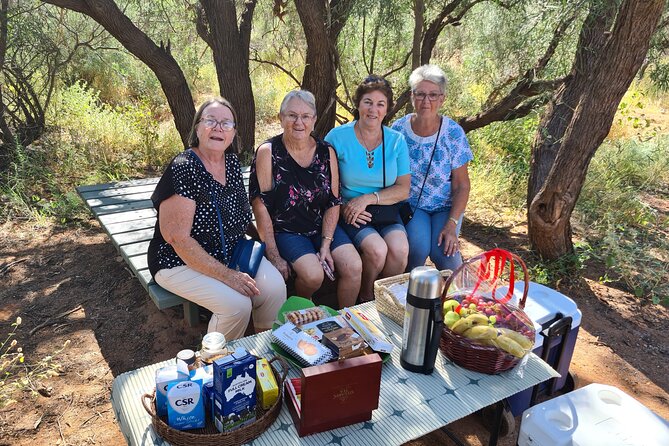
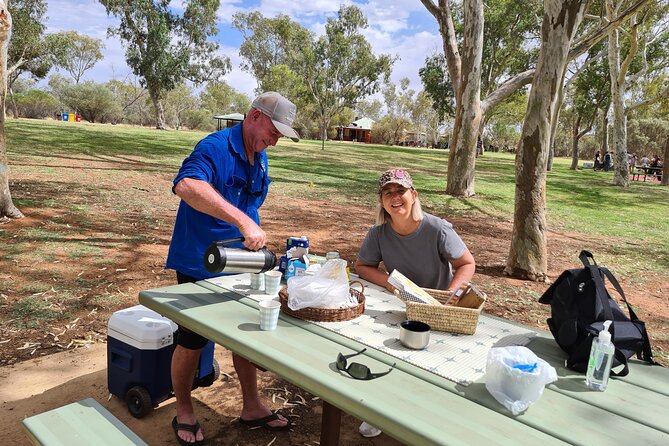
Tea and coffee are included. Food and other drinks are not, so do not count on a meal during the outing. One guest enjoyed hot drinks and snacks during the day, but the confirmed inclusion is tea and coffee. It is sensible to eat beforehand and carry only what the operator permits.
Large bags and luggage are not allowed. Infants must sit on an adult’s lap, and no car seat is supplied. The tour is not suitable for wheelchair users, which is an important consideration before booking.
Who should book this Alice Springs outing?
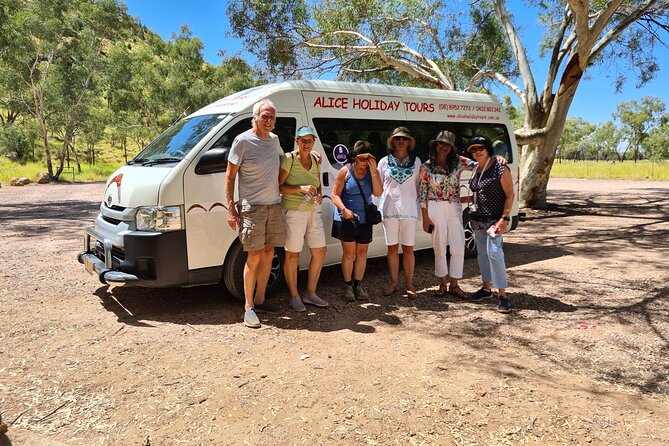
I would recommend it to first-time visitors who want a clear introduction to Alice Springs and do not have a car. It works especially well for people who want art, local institutions, cultural stories, and scenery in one afternoon.
It also suits couples, solo visitors, and anyone who prefers a guide to explain what they are seeing. A good guide can make a major difference here. Mahesh, when leading the tour, has been praised for his humor, kindness, professionalism, and stories about the area.
Families should check the infant arrangements carefully. Children who can manage a five-and-a-half-hour afternoon may enjoy the School of Air and sunset, but the day includes several presentations and museum visits rather than constant activity.
I would be less likely to recommend it to you if your main goal is an extended Aboriginal cultural program, serious hiking, or a long, quiet look at one museum. The itinerary covers a lot of ground, so it favors variety over depth.
My verdict on the $138 price
At $138, the tour offers fair value if you use all its parts. Entry fees, a guide, air-conditioned transport, hotel pickup and return, and the final sunset view would be inconvenient to arrange separately. You also get a useful overview of how Alice Springs connects to the wider outback.
The value is weaker if you already have a car and plan to visit the town attractions on your own. In that case, you may prefer to spend your money on a longer cultural or ranges excursion. The Italian-language feedback also points to a real choice: some people may prefer more time on Aboriginal culture and less time at the Royal Flying Doctor Service.
Still, for one afternoon, the route is well judged. The venues are informative, the countryside adds variety, and Anzac Hill gives the day a memorable finish.
Should you book it?
Book this tour if you want a practical first look at Alice Springs, especially if you value a friendly guide, included transport, and a sunset viewpoint. The strongest combination is the School of Air, Emily and Jessie Gaps, and Anzac Hill, with the Araluen Arts Centre adding real artistic depth.
Skip it if you want a slow outdoor adventure or a dedicated Aboriginal cultural tour. Also check the mobility and infant restrictions before paying. If the plan suits you, bring a hat, sunscreen, comfortable shoes, a jacket, and a camera, then leave room in your afternoon for a broad and useful introduction to the town.
FAQ
How long does the Alice Town and Country Sunset Tour last?
The tour lasts 330 minutes, or about five and a half hours.
What attractions are included?
The tour visits the Araluen Arts Centre, Alice Springs School of the Air Experience, Royal Flying Doctor Service Alice Springs Tour Facility, Emily Gap, Jessie Gap, and Anzac Hill.
Is hotel pickup included?
Yes. Pickup and drop-off are included from hotels, caravan parks, and private residences within 10 kilometres of Alice Springs Town Centre.
Is transport air-conditioned?
Yes. Transport is provided by an air-conditioned bus.
Is food included?
Food and drinks are not included, but tea and coffee are provided.
Is the tour conducted in English?
Yes. The tour has a live English-speaking guide.
Can infants join the tour?
Infants can join, but they must sit on an adult’s lap. No car seat is provided.
Is the tour suitable for wheelchair users?
No. The tour is not suitable for wheelchair users.
Just added in Uluru
- Best of Uluru – Segway and Walking Tour★ 4.8 · 204 reviews
- King’s Canyon: 15-minute Scenic Helicopter Tour★ 4.9 · 78 reviews
- Kata Tjuta: Small Group Sunrise Tour with Picnic Breakfast★ 4.7 · 113 reviews
- Yulara: Uluru and Kata Tjuta Sunset Helicopter Tour★ 4.9 · 148 reviews
- From Yulara: Uluru Tour and Sunset BBQ★ 4.6 · 320 reviews
- From Yulara: 3-Hour Small Group Kata Tjuta Afternoon Tour★ 4.7 · 101 reviews
- Uluru: Uluru Base Segway Tour★ 4.6 · 112 reviews
- From Alice Springs/Yulara: 4-Day Red Centre 4WD Camping Tour★ 4.6 · 68 reviews
Uluru Tours, compared.
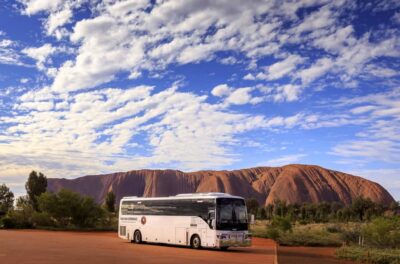
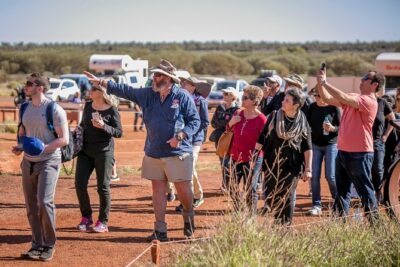
Ayers Rock Day Trip from Alice Springs Including BBQ Dinner
Read our review →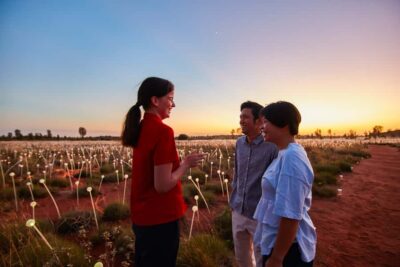
Uluru: Field of Light Sunrise Tour with Hot Drinks
Read our review →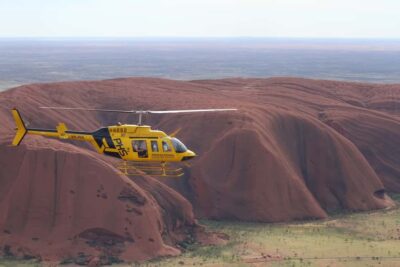
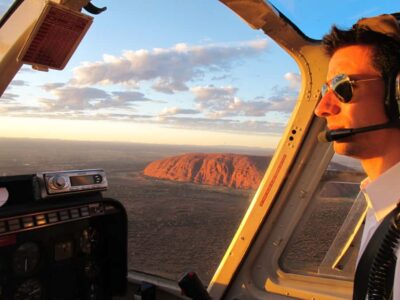
Uluru & Kata Tjuta 25-Minute Helicopter Experience
Read our review →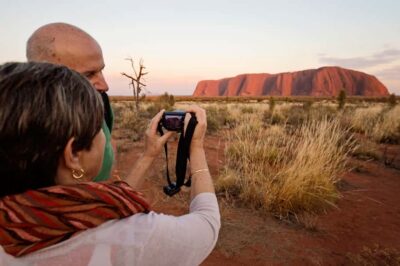
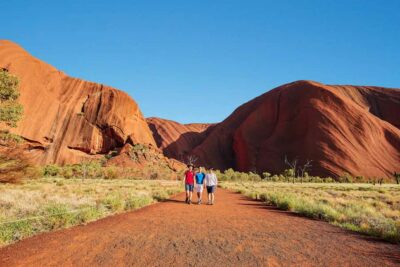
Uluru: Sacred Sites & Sunset Tour with Wine & Cheeseboard
Read our review →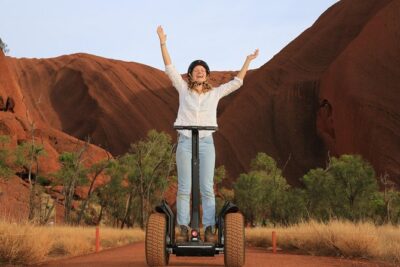
Browse the lists this tour appears in