
Reviewed · ULURU TOURS
Afternoon Kata Tjuta Small Group Tour
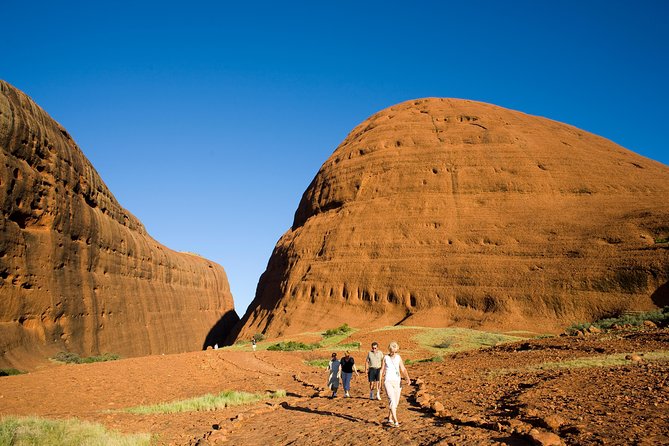
Kata Tjuta rewards the extra drive. This three-hour afternoon outing takes you from Ayers Rock Resort to Walpa Gorge, where you walk between the huge red domes of one of Central Australia’s most important sacred places. I like the small group of no more than 11 people and the way guides such as Rachel, Bea, Alex, and Mark bring geology, Aboriginal culture, plants, and wildlife into the journey. The air-conditioned ride is another welcome touch in the Red Centre.
I also like that this tour gives you a close look at Kata Tjuta rather than only a distant viewpoint. You get a proper 2.6-kilometer return walk into the gorge, plus a guide who can help you notice details you might otherwise miss. The main drawback is the heat: the walk can be tough in the afternoon, the ground is rough, and the tour does not operate at Walpa Gorge from December through March.
In This Review
- Key points to know before booking
- Why Kata Tjuta deserves time beyond Uluru
- The ride from Ayers Rock Resort to the domes
- Arriving at Kata Tjuta’s viewing area
- Walking the 2.6-kilometer Walpa Gorge track
- Heat, flies, and the practical side of the walk
- What the small group changes
- Is the $125.52 price good value?
- Who should choose this Kata Tjuta outing?
- FAQ
- How long does the Afternoon Kata Tjuta Small Group Tour last?
- Is hotel pickup included?
- How far is the Walpa Gorge walk?
- Is the Walpa Gorge walk difficult?
- Is the national park entry fee included?
- Does the tour operate in summer?
- How many people are in the group?
- Should you book the Walpa Gorge tour?
Key points to know before booking
- Walpa Gorge is a 2.6-kilometer return walk: Expect rocky, uneven ground and a moderate level of effort.
- The group is capped at 11 people: This keeps the experience quieter and makes it easier to ask questions or get help.
- Ayers Rock Resort pickup and drop-off are included: You do not need to arrange your own transport to Kata Tjuta.
- The national park entry fee is extra: Include this additional cost when working out the total price.
- Summer heat changes the itinerary: The tour does not walk Walpa Gorge from December to March because of extreme temperatures.
- A fly net is worth packing: Several people found the flies irritating, even when the scenery was magnificent.
Why Kata Tjuta deserves time beyond Uluru
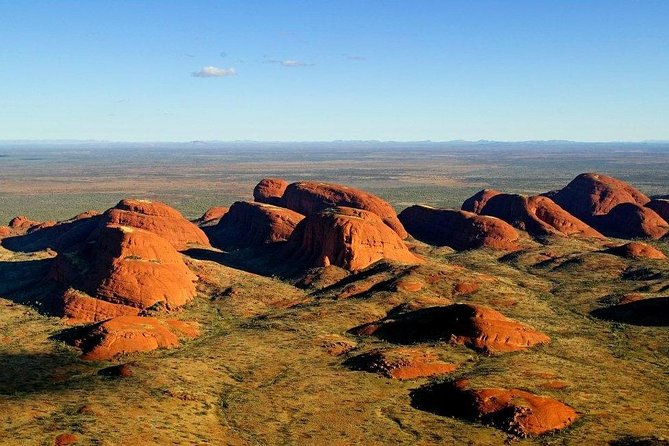
Uluru gets the fame, but Kata Tjuta gives you a different kind of Red Centre experience. Instead of one immense sandstone monolith, you see 36 rounded domes grouped across the desert. The rock formations feel broad and layered, with passages that draw you inward toward the gorge.
The two sites also carry different visual moods. Uluru is often experienced from a distance, around its base, or at a sunset viewpoint. Kata Tjuta becomes most impressive when you approach its walls and walk between them. From Walpa Gorge, the rock rises sharply on both sides, making you feel small without requiring a long backcountry hike.
I think this tour works particularly well if you have limited time around Yulara. It gives you an outing of about three hours, including transport, and returns you to your accommodation rather than taking up an entire day. You can pair it with a sunrise or morning activity and still have time to rest before an evening dinner.
The cultural setting matters, too. Kata Tjuta is sacred to the local Aboriginal people, and the guide explains that significance alongside the natural story of the domes. This makes the walk more meaningful than a simple photo stop. You are not just looking at red rock. You are entering a place with living cultural importance.
A few more options to weigh up in Uluru
- From Alice Springs: Day Trip to Uluru with BBQ Dinner
★ 4.6 · 761 reviews - Ayers Rock Day Trip from Alice Springs Including BBQ Dinner
★ 4.5 · 639 reviews - Uluru: Field of Light Sunrise Tour with Hot Drinks
★ 4.6 · 572 reviews
The ride from Ayers Rock Resort to the domes
Pickup is provided from all Ayers Rock Resort hotels. From there, you travel in an air-conditioned Mercedes-Benz Sprinter or another tour vehicle, heading into the open desert around Uluru-Kata Tjuta National Park.
The drive takes roughly 40 minutes each way according to the tour details shared by the operator. That is a useful part of the experience, not merely a transfer. Your guide can point out features of the Red Centre, discuss native animals, and explain what you are seeing before you reach the walking track.
The vehicle is especially valuable in the afternoon. After time outside in direct sun, returning to air conditioning gives you a proper break. The small group also makes the ride more personal than a large coach excursion. Guides have been praised for answering questions, taking photos, sharing local music during the drive, and checking that everyone is coping with the heat.
Wildlife sightings are possible, though never promised. Australian native animals in the park can include kangaroos and perentie lizards. Keep your eyes open, but do not book this tour expecting a wildlife safari. The real focus is Kata Tjuta and Walpa Gorge.
Arriving at Kata Tjuta’s viewing area
Before the walk, the guide may take you to a viewing platform for broad views of Kata Tjuta. This is where the scale of the formation becomes clear. You can see the collection of domes spread across the desert, and Uluru may be visible in the distance.
This viewpoint helps you understand the geology before you enter the gorge. From far away, Kata Tjuta can look like a single mountain range. Up close, the individual domes and their rounded profiles become easier to distinguish.
Afternoon light can work in your favor. As the sun shifts, the red and orange tones on the rock walls change. The blue sky provides a sharp contrast, and the colors can become especially strong inside the gorge. The exact effect depends on weather and timing, but the afternoon setting gives the outing a different look from a sunrise visit.
Use this stop to adjust your hat, apply sunscreen, drink water, and make sure your footwear is secure. Once you begin the walk, the track is not a smooth resort path.
Walking the 2.6-kilometer Walpa Gorge track
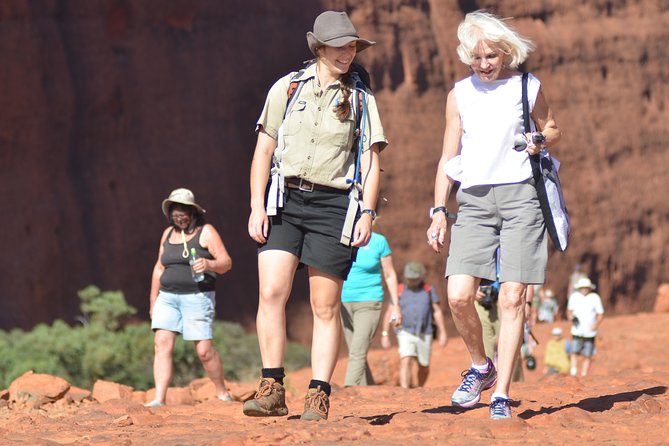
Walpa Gorge is the heart of the tour. The return walk covers about 2.6 kilometers, or 1.6 miles, and takes around 1 hour and 30 minutes as part of the visit. The official rating is moderate, but that word needs some explanation.
The distance is manageable for anyone with a reasonable level of fitness, yet the surface is rocky and uneven. Some sections can twist an ankle if you hurry or look only at the cliffs above. Several people described the track as rough underfoot, and one person called it a real ankle twister. You should wear sturdy sneakers, trainers, or walking boots, not casual sandals.
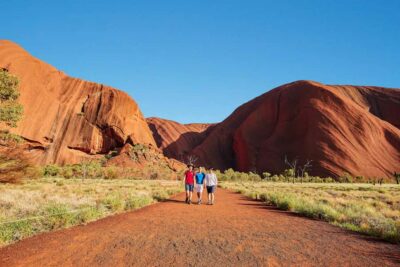
The reward comes as the rock walls close around you. You walk between the enormous conglomerate domes, hearing the wind high above and seeing how the formations have weathered over millions of years. The gorge creates a much stronger sense of place than a quick roadside photograph.
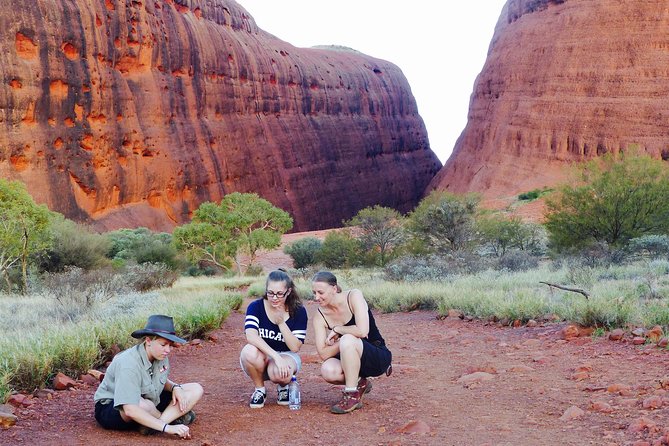
Your guide discusses the geology, flora, and fauna along the way. The domes are made from conglomerate, a rock formed from rounded stones bound together over great periods of time. You do not need a geology background to enjoy the explanation. A good guide connects the science to what you can see in the walls around you.
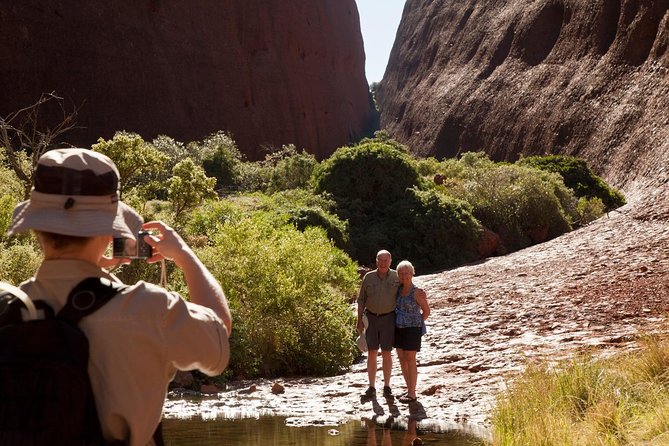
The path is not a race. Take the time you need, especially in hot weather. Guides have been praised for stopping to check on the group, helping with photographs, and making sure nobody is left behind. Bea, Rachel, Max, Lily, Dan, Jackie, and Mark were all singled out for friendly, useful guidance in different outings. The exact guide cannot be guaranteed, but the repeated praise for the guiding is one of the tour’s strongest points.
At the end of the walk, you return along the same route. The gorge can seem different on the way back as the light shifts and you know what details to look for. The route is short enough for a half-day plan, but it is not so short that the visit feels like a token stop.
A completely different kind of day out:
- Uluru 15-Minute Helicopter Experience
★ 4.9 · 548 reviews - Yulara: Uluru & Kata Tjuta 25-Minute Helicopter Experience
★ 4.8 · 536 reviews - Yulara: Uluru Sunrise and Kata Tjuta Day Trip by Bus
★ 4.5 · 469 reviews - Uluru: Sacred Sites & Sunset Tour with Wine & Cheeseboard
★ 4.5 · 450 reviews
Heat, flies, and the practical side of the walk
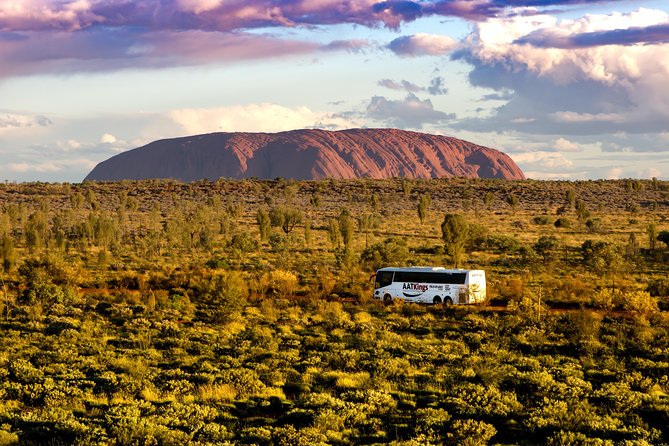
The Red Centre does not negotiate with poor preparation. Even during cooler months, direct sun can make the walk feel harder than the distance suggests. In summer, the heat is serious enough that the operator does not travel through Walpa Gorge from December to March.
The afternoon departure also deserves careful thought. One outing began around 2:30 pm, with the sun still intense. Another person strongly disliked the timing and felt the hottest part of the day created a health concern. This is the clearest warning I would give you: if you struggle with heat, ask about current conditions before booking and be realistic about your fitness.
Bring plenty of water, sunscreen, and a broad-brimmed hat. Water was supplied on at least some outings, but I would still carry your own bottle rather than depend on a refill or shared supply.
Flies are another part of the Red Centre experience. They do not bite, but they can gather around your face, ears, and neck. A fly net takes up little room and can make the walk much more pleasant. Several people wished they had brought one, while those who carried nets were glad they did.
The tour requires good mobility for the rocky track. It is not described as wheelchair accessible, and the uneven surface means you should not treat it as a fully accessible stroll. If you are unsure about your ability to manage the terrain, contact the operator before booking.
What the small group changes
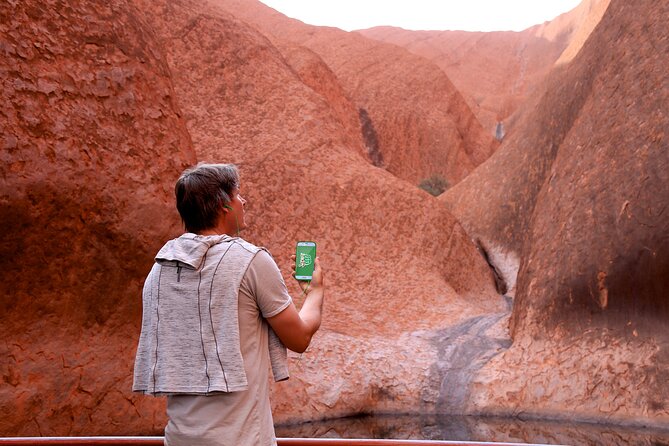
The maximum group size is 11. That is small enough to keep the walk from feeling like a procession, while still offering the structure and safety of a guided outing.
I value this most during the explanations. You can hear the guide more easily, ask a question without holding up a large crowd, and stop for photographs without losing sight of the group. The guide can also pay closer attention to different walking speeds and comfort levels.
The small size does not make this a private tour. You may still share the vehicle and track with other park visitors. It does, however, create a more relaxed feel than a large bus tour. Some outings had only six or seven people, while the stated limit allows up to 11.
It is also useful for solo visitors. The drive gives the group a chance to get acquainted, and the compact setting can feel more social without forcing you into a formal group activity. Families can benefit as well, provided children can manage the uneven path and heat. One guide was praised for looking after a child while still keeping the rest of the group engaged.
Is the $125.52 price good value?

At $125.52 per person, this is not a cheap short outing. You also need to pay the national park entry fee separately, so check that cost before committing.
Still, the price covers hotel pickup and drop-off, air-conditioned transport, a professional guide, and a guided walk at Kata Tjuta. If you do not have a rental car, that transport alone removes a major logistical problem. You also avoid navigating an unfamiliar park while trying to judge heat, walking time, and the best places to stop.
The strongest value comes from the interpretation. A self-drive visit can give you the same red domes, but not necessarily the explanation of how 36 formations developed, what plants and animals live nearby, or why the site is spiritually important. The guides are repeatedly praised for their warmth, safety awareness, and ability to explain the area clearly.
For a family or couple, the cost adds up quickly. If you already have a car and are comfortable organizing your own national park visit, you may prefer to spend the money elsewhere. If your stay is short, though, the included transport and focused itinerary make the fee easier to justify.
The outing also returns approximately 30 minutes before pickup for the Sounds of Silence dinner. That timing can make the tour fit neatly into a full day of Uluru activities, though you should confirm the current schedule if your evening plans are fixed.
Who should choose this Kata Tjuta outing?
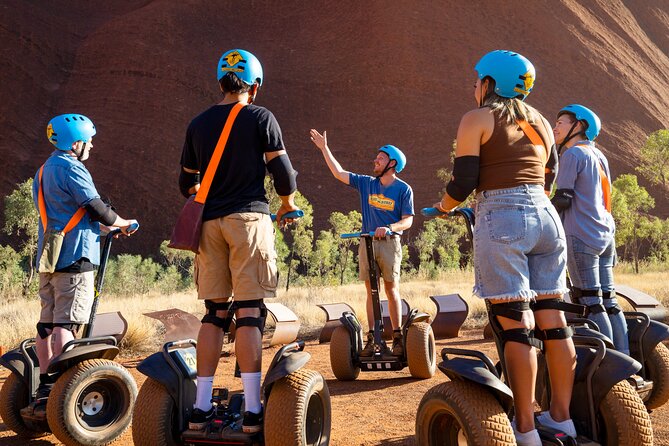
I would choose this tour if you want to see more than Uluru but do not want a full-day excursion. It suits people who value explanation, prefer not to drive, and can handle a moderate walk over rough ground.
It is a good match for:
- Visitors staying at Ayers Rock Resort without their own vehicle
- People with only a few days in the Uluru area
- First-time visitors who want cultural and geological context
- Solo visitors who prefer a small guided group
- Families with reasonably fit older children
- Anyone who wants an active afternoon before an evening dinner
I would think twice if you dislike heat, flies, or uneven surfaces. The walk is not extreme, but it is not a polished footpath. I would also avoid booking between December and March if Walpa Gorge itself is your main reason for going, since the gorge walk does not operate during those months.
Cancellation terms are strict. A full refund is available when you cancel at least six full days before the start time. Cancelling two to six days ahead brings a 50 percent refund, while cancelling less than two full days ahead brings no refund. Poor weather or failure to meet the minimum group size can lead to a different date, another experience, or a full refund.
FAQ
How long does the Afternoon Kata Tjuta Small Group Tour last?
The experience lasts approximately three hours, including transport from Ayers Rock Resort and the visit to Walpa Gorge.
Is hotel pickup included?
Yes. Pickup and drop-off are included from all Ayers Rock Resort hotels.
How far is the Walpa Gorge walk?
The walk is 2.6 kilometers, or 1.6 miles, return.
Is the Walpa Gorge walk difficult?
The walk is rated moderate. The track is rocky and uneven underfoot, so you should have a moderate level of physical fitness and wear sturdy footwear.
Is the national park entry fee included?
No. The national park entry fee is not included in the tour price.
Does the tour operate in summer?
The tour does not travel through Walpa Gorge from December to March because of extreme heat.
How many people are in the group?
The maximum group size is 11 people.
Should you book the Walpa Gorge tour?
I would book it if you want a focused, well-guided introduction to Kata Tjuta and can manage a 2.6-kilometer rocky walk in afternoon heat. The combination of small-group transport, strong guiding, and time inside the gorge gives you much more than a quick viewpoint stop.
Pack water, sunscreen, sturdy shoes, and a fly net. Check the season and national park fee, then make an honest call about your heat tolerance. If those basics work for you, this is a worthwhile way to give Kata Tjuta the attention it deserves, rather than treating it as a side note to Uluru.
Just added in Uluru
- From Alice Springs: West MacDonnell Ranges Half Day Trip★ 4.4 · 44 reviews
- From Alice Springs: West MacDonnell Ranges Day Trip★ 4.7 · 296 reviews
- Uluru: Sunset, Sparkling Wine, Cheeseboard & Gourmet BBQ★ 4.4 · 193 reviews
- Uluru: Small Group Sunset Tour with Sparkling Wine★ 4.5 · 82 reviews
- Uluru: Guided Walking Tour at Sunrise with Light Breakfast★ 4.6 · 256 reviews
- Uluru: Sacred Sites Tour + Sparkling at Sunset & BBQ Dinner★ 4.5 · 82 reviews
- Uluru: Small Group Guided Tour with Sunset Refreshments★ 4.8 · 190 reviews
- Uluru Highlights Small Group Morning Tour + Picnic Breakfast★ 4.8 · 212 reviews
Uluru Tours, compared.
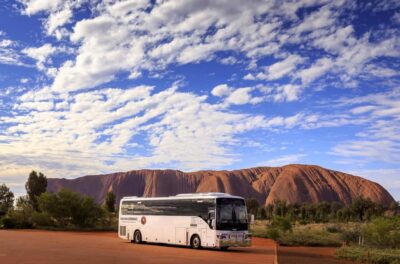
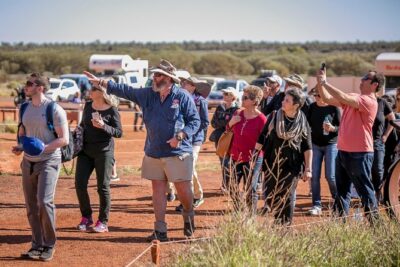
Ayers Rock Day Trip from Alice Springs Including BBQ Dinner
Read our review →
Uluru: Field of Light Sunrise Tour with Hot Drinks
Read our review →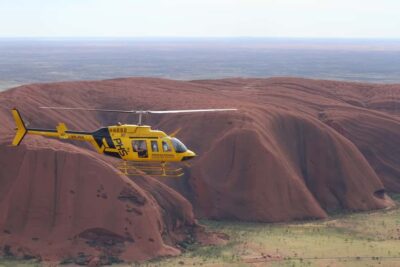
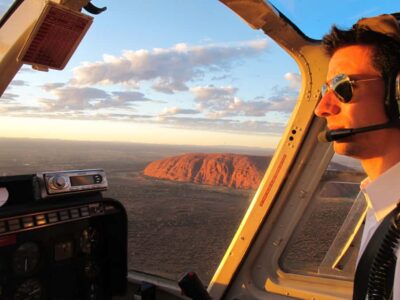
Uluru & Kata Tjuta 25-Minute Helicopter Experience
Read our review →
Uluru: Sacred Sites & Sunset Tour with Wine & Cheeseboard
Read our review →
Browse the lists this tour appears in