
Reviewed · NATIONAL PARKS
Darwin: Kakadu National Park & Wildlife Full Day Tour
Kakadu rewards a long day on the road. This Darwin day trip pairs ancient Aboriginal rock art at Ubirr with wetlands, wildlife, and stories from an experienced guide. I like the air-conditioned minibus and the chance to see several key parts of the Top End without arranging a rental car or planning a huge national park route yourself.
I also like the strong cultural focus. Guides such as Danni, Becs, Leigh, Pascal, and Tim have been praised for explaining Indigenous traditions, animals, plants, and difficult historical subjects with care and humour. The main drawback is simple: 12 hours is a very long day, and the minibus can feel tight, especially for taller people or when every seat is taken.
In This Review
- Key points to know before booking
- A big Kakadu day from Darwin
- Fogg Dam begins the wildlife story
- The Adelaide River crocodile cruise
- Marrakai and the long road east
- Bowali Visitor Centre adds useful context
- Cahill Crossing and the crocodile question
- Ubirr delivers the day’s main reward
- Wet season plans are flexible for good reason
- Guides make or break the long day
- Food, fitness, and what to pack
- Is $166 good value?
- Should you book this Kakadu day tour?
- FAQ
- How long is the Kakadu tour from Darwin?
- Where does the tour start?
- Is hotel pickup included?
- Is the Kakadu park entry fee included?
- Is the Jumping Croc Cruise included?
- Can I see crocodiles at Cahill Crossing?
- What happens if Ubirr is closed?
- What should I bring?
- Is the tour suitable for children and wheelchair users?
Key points to know before booking
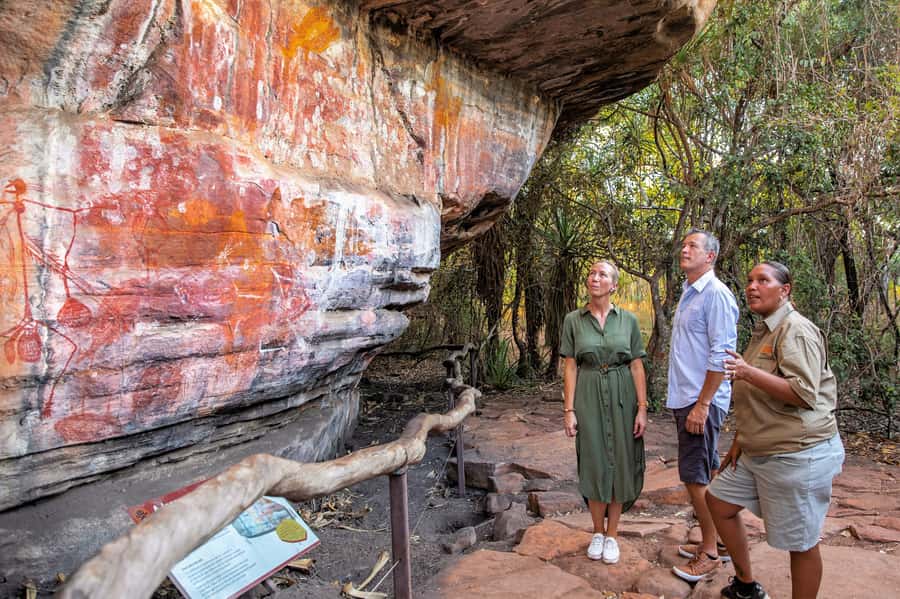
- Ubirr is the cultural high point: Allow about two hours for guided rock art viewing, walking, and escarpment scenery when conditions permit.
- The day begins with wetlands and crocodiles: Fogg Dam and the optional Adelaide River Jumping Croc Cruise add wildlife before Kakadu.
- Cahill Crossing is seasonal: Saltwater crocodiles may be visible, but flooding, rain, or river conditions can close the area.
- Your guide matters greatly: The best part of the long drive is the live commentary on Indigenous culture, wildlife, plants, and Top End history.
- Expect a packed schedule: You cover large distances in a single day, with several short stops and long stretches in the minibus.
- The wet season changes the plan: From November through April, Ubirr may be replaced by Nourlangie Rock, and some roads or viewing areas may close.
A big Kakadu day from Darwin
Kakadu National Park covers about 20,000 square kilometres, so a day trip from Darwin always involves serious driving. This is not a slow village outing with a few nearby stops. You leave Darwin for the wetlands, continue east into Kakadu, walk among ancient rock art, and return to the city after a long ride home.
That scale is the main reason to take a guided trip. You get transport, park entry, an English-speaking driver-guide, and a route that links several major sights. At $166 per person, the price is fair for a full 12-hour day with the Kakadu entry fee included, though food, drinks, and the optional crocodile cruise cost extra.
The minibus is air-conditioned, which matters in the Top End heat. It also spends much of the day on the road, so comfort is not a minor detail. Some people found the smaller vehicle pleasant and easy for getting on and off. Others found the seats cramped, with limited legroom and tight seatbelts when the vehicle was full.
You meet outside The Leea Darwin at 64 Cavenagh Street. Arrive 10 minutes early. Hotel pickup and drop-off are not included, and luggage space is limited to one bag weighing about 5 to 7 kilograms per person. Leave suitcases behind.
More Day Trips in Darwin
- Kakadu Day Tour from Darwin with Offroad Dreaming
★ 5.0 · 776 reviews - Litchfield and Jumping Crocodiles Full Day Trip from Darwin
★ 5.0 · 433 reviews - Katherine Day Tour from Darwin including Katherine Gorge Cruise
★ 4.5 · 428 reviews
Fogg Dam begins the wildlife story
The first major stop is Fogg Dam Conservation Reserve, on the traditional lands of the Limilngan-Wulna people. The reserve is a useful introduction to the Top End because it brings together wetlands, birdlife, turtles, water pythons, and the possibility of seeing saltwater crocodiles.
You have about 45 minutes for sightseeing. This is a good early stop for stretching your legs and getting used to the broad, open wetland country. Bring insect repellent, a hat, sunscreen, and a refillable water bottle. Breathable clothing and closed-toe shoes make the morning easier.
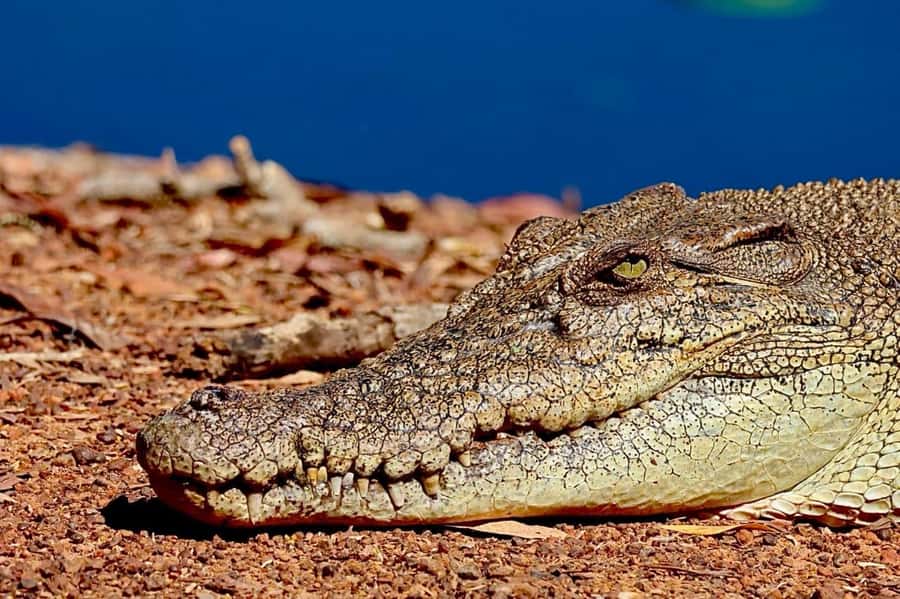
Wildlife sightings are never guaranteed. Still, the setting gives you a strong first look at the kind of habitat that makes this region special. One person even saw a crocodile sunning itself on the road at Fogg Dam, a reminder that the wildlife here is not confined to neat viewing platforms.
An important cost detail is easy to miss: a Northern Territory park pass is required for Fogg Dam under the WKD fare type. The Kakadu park pass is included, but this separate Fogg Dam requirement may affect the final cost.
The Adelaide River crocodile cruise
The Adelaide River stop includes an optional one-hour Jumping Croc Cruise. If you enjoy wildlife encounters, this is likely to be one of the day’s most thrilling moments. The boat brings you closer to large saltwater crocodiles while keeping you at a safe distance, and the guides explain their behaviour and place in the river system.
I would treat the cruise as an add-on rather than the central reason to book the Kakadu trip. It adds excitement and makes the first part of the day memorable, but it also uses time that could otherwise go toward Kakadu itself. One useful criticism of the schedule is that some people would prefer to skip the cruise and spend longer at Ubirr or Jabiru.
The cruise is especially appealing if you have never seen saltwater crocodiles in the wild. It is also a practical choice for families with older children, provided everyone meets the minimum age requirement for the full tour. Children under six cannot join this experience.
Marrakai and the long road east
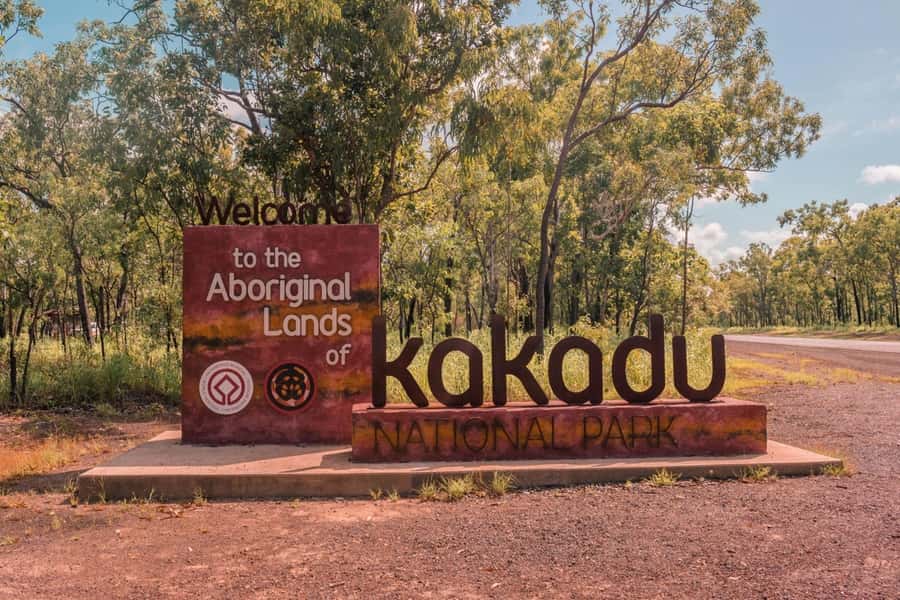
After Fogg Dam and the Adelaide River area, the minibus continues toward Marrakai. There is a short break of about 20 minutes, followed by more driving. This is where you need to understand the rhythm of the day: stop, listen, walk, photograph, then ride again.
The guide commentary helps make the road time useful. Guides have been praised for filling the journey with stories, facts, humour, and explanations of the plants and animals along the route. Pascal, Daryl, Leigh, and Becs were singled out for turning what could have been a dull transfer into part of the experience.
Still, no commentary can change the distances. The route includes an hour to the Adelaide River, around 25 minutes to Fogg Dam, about 80 minutes farther on, and several additional road sections. The return drive from Ubirr to Darwin is listed at roughly three hours. If you dislike long bus rides, this may feel like too much Kakadu in one day.
There is usually a photo stop along the way, followed by a visit to Bowali Visitor Centre. These shorter stops break up the journey and give you more context before the main rock art walk.
More Wildlife Tours in Darwin
- Litchfield National Park and Jumping Crocodile Cruise
★ 5.0 · 2,119 reviews - Adelaide River Cruises – Jumping Crocodile Experience
★ 5.0 · 997 reviews - From Darwin: Litchfield Park Tour & Jumping Crocodile Cruise
★ 4.9 · 829 reviews - The Croc Bus to the Famous Jumping Crocodile Cruise
★ 5.0 · 481 reviews
Bowali Visitor Centre adds useful context
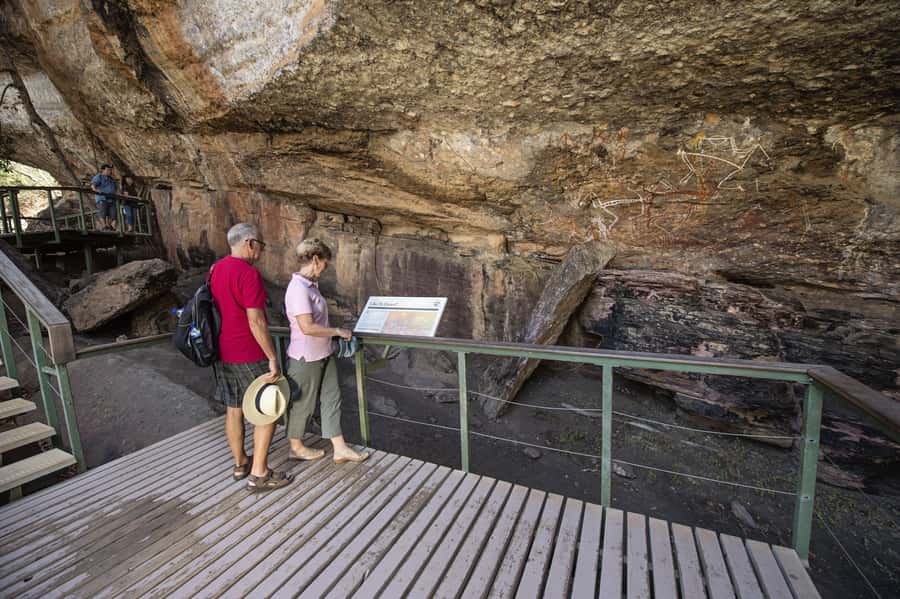
Bowali Visitor Centre is a brief 20-minute stop. It is not the main attraction, but it helps place Kakadu’s natural and cultural features into a wider setting before you reach Ubirr.
Because the visit is short, do not expect a long museum session. Use it as a chance to gather information, use facilities, and reset before the final Kakadu stops. A flexible schedule may also change the length or order of this visit.
The most valuable part of the stop is the way it supports the rest of the day. Kakadu is not only a collection of dramatic views. It is a living cultural place managed in partnership with Traditional Owners, and your guide’s explanations help you understand why certain sites may close for ceremonies or cultural reasons.
Cahill Crossing and the crocodile question
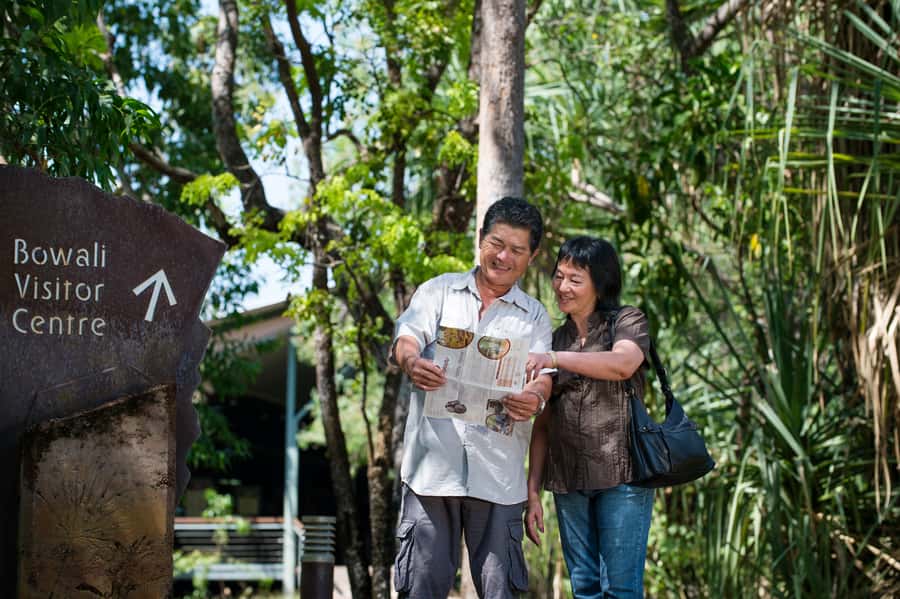
Cahill Crossing is scheduled as a 30-minute guided stop and photo opportunity. The crossing is known for the possibility of spotting wild saltwater crocodiles, so it can be a major draw for anyone interested in wildlife photography.
The word possibility matters. You may see crocodiles, but there is no promise of a sighting. The crossing can also become inaccessible after heavy rainfall or during large wet season flows. In one case, the planned stop was replaced by a detour to see wallabies. That sort of change is normal in Kakadu and is preferable to forcing an unsafe route.
Some people have wished for more time at Cahill Crossing, especially when it was a chief reason for booking. The schedule allows about half an hour, and the guide must keep the whole group moving. If you want a long, patient wildlife watch, a dedicated wildlife outing may suit you better.
The safety focus is welcome. Guides are responsible for keeping people at suitable viewing points and adjusting the plan when water levels, closures, or wildlife conditions make a site unsuitable.
Ubirr delivers the day’s main reward
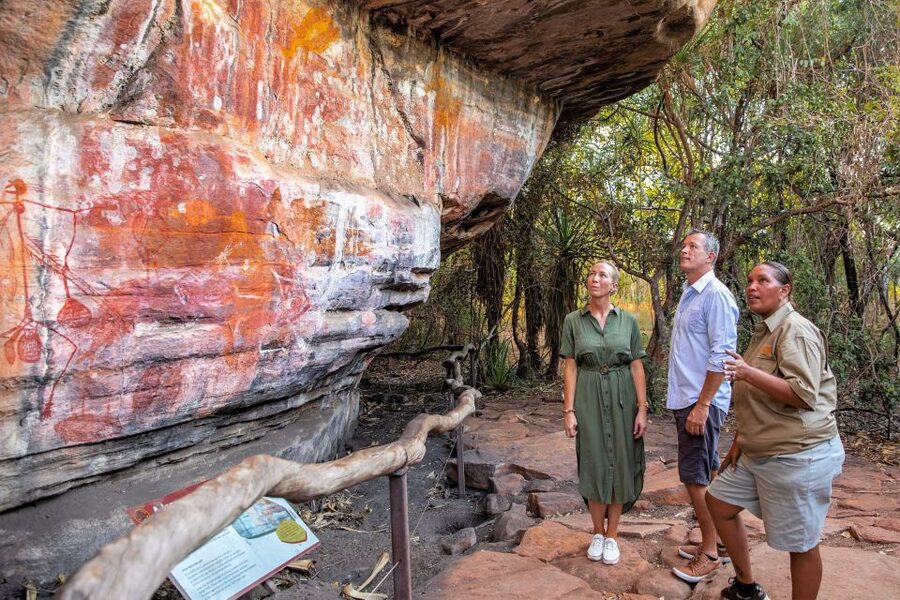
Ubirr is the strongest reason to choose this tour. The site contains Aboriginal rock art, including images and stories connected with the people who have lived on and cared for this country for thousands of years. The guide explains how the art was made, what it depicts, and how it relates to animals, culture, and ancient life.
You have around two hours for the guided visit, sightseeing, and walk. That is a worthwhile amount of time, though the heat can make the route demanding. One person noted that some members of the group stopped before completing the walk on a very hot day. Good hiking shoes, a hat, water, and sunscreen are essential.
The rock art is not simply an old picture gallery. The value comes from learning how the images connect with cultural knowledge and the surrounding country. Several guides were praised for speaking respectfully about Indigenous culture and for not avoiding difficult subjects. That gives the visit more weight than a quick photo stop.
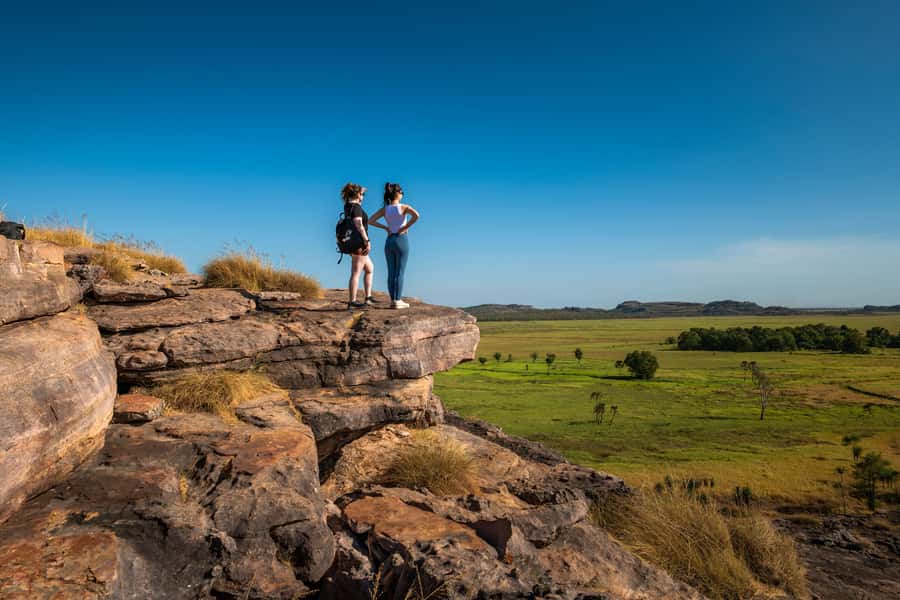
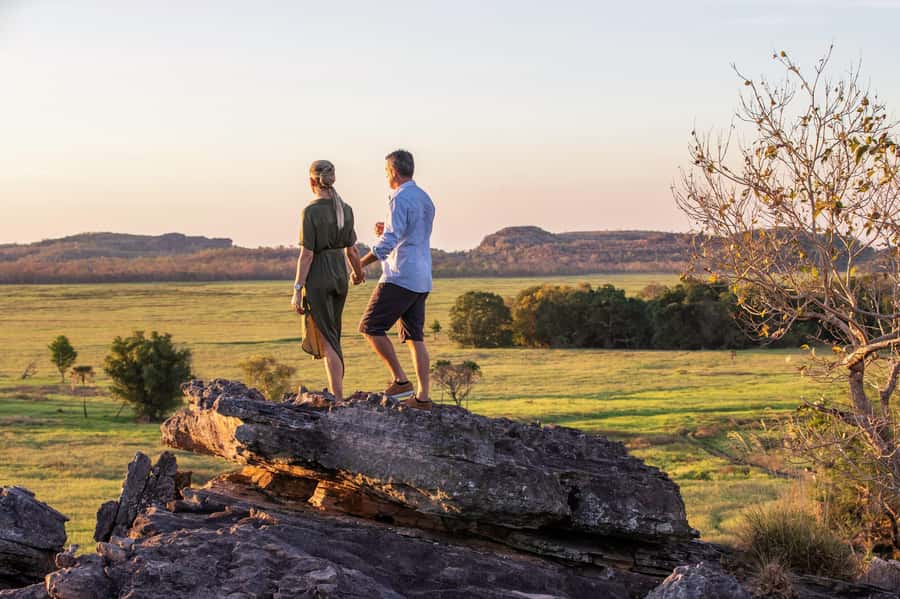
The walk also brings you to dramatic escarpment views across Kakadu. The broad scenery is a fitting counterpoint to the close detail of the paintings. You get both the human story in the rock shelters and the immense Top End setting around them.
Wet season plans are flexible for good reason
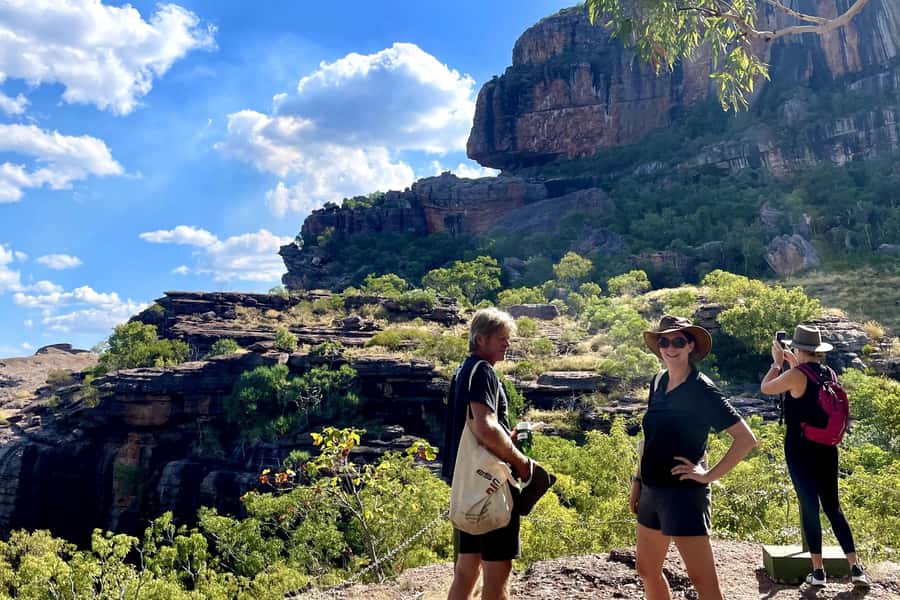
From November through April, heavy rain can flood roads and alter access inside Kakadu. Ubirr may be replaced by Nourlangie Rock, also known as Burrungkuy, and Cahill Crossing may close after substantial rainfall or strong wet season flows.
This is not a minor scheduling note. Ubirr and Nourlangie are active ceremonial places of deep importance to Traditional Owners, so closures can also happen for cultural reasons at any time. The operator may change the order of stops or use a similar alternative.
I would book this tour in the wet season only if you can accept a change of plan. You should still expect ancient rock art, escarpment scenery, wetlands, and wildlife possibilities, but not a fixed checklist. Rain can also affect walking conditions and the time available at each stop.
Guides make or break the long day
The praise for the driver-guides is unusually consistent. Lee was credited with making a full day better through constant information and a friendly manner. Pascal was appreciated for anecdotes and humour. Danni was praised for her knowledge of Kakadu, animals, and plants, while Becs was noted for helping a solo participant feel included.
Leigh received praise for careful driving and detailed explanations, although one person found the microphone volume too low. That is worth remembering if English is not your first language. Sit close enough to hear the commentary, and tell the guide early if the volume is difficult.
The guides also handle practical matters: toilet breaks, safety instructions, hot weather, group timing, and small emergencies. Their role is not just to point at attractions. They turn a long transfer into an ongoing lesson about Indigenous culture, wildlife, flora, and the history of the Northern Territory.
The group size is not specified, and the vehicle may be full. Several people liked the smaller minibus because it felt personal and efficient. A tall passenger, around 194 centimetres, found the legroom difficult, while another person found the seats too small when the bus was at capacity.
Food, fitness, and what to pack
Food and drinks are not included. Bring your own lunch and snacks, along with a reusable water bottle. The schedule includes a break at Marrakai and other stops, but you should not depend on finding a full meal exactly when you want one.
Wear breathable clothing and closed-toe hiking shoes. Pack sunglasses, a broad hat, sunscreen, insect repellent, and a small daypack. Large bags and oversize luggage are not allowed, and storage on the minibus is limited.
This is not a suitable outing for people with mobility impairments, wheelchair users, or anyone with a low level of fitness. The Ubirr walk includes some walking and a slight climb, and the heat can be intense. The tour is best for families with children aged six or older, active adults, solo visitors, and anyone who wants an efficient first taste of Kakadu.
Is $166 good value?
At $166, the tour offers solid value if you want transport from Darwin, a guide, Kakadu entry, and several major stops in one day. A self-drive visit might give you more freedom and longer at individual sites, but it also requires a vehicle, fuel, route planning, park information, and a confident driver for a very long day.
The trade-off is control. You get a carefully managed introduction rather than a relaxed, self-paced visit. You may spend less time at Cahill Crossing than hoped, or swap Ubirr for Nourlangie because of weather or cultural closures.
For a first visit to Kakadu, I think the price works. It is particularly useful if your Darwin stay is short and you want to combine wildlife, wetlands, Aboriginal art, and major scenery without staying overnight. The optional crocodile cruise is worth adding if crocodiles are a priority, but skip it if your main goal is more time inside Kakadu.
Should you book this Kakadu day tour?
Book it if you want a well-guided first look at Kakadu and do not mind a long day in a minibus. The strongest reasons are the Ubirr walk, the cultural commentary, included Kakadu entry, and the chance to see wetlands and crocodiles on the same outing.
Think twice if you need lots of legroom, dislike fixed schedules, want extended wildlife watching, or hope to explore Jabiru at leisure. For everyone else, this is a practical and worthwhile way to reach a huge national park from Darwin, especially when you choose a date with suitable weather and arrive prepared for heat, walking, and many hours on the road.
FAQ
How long is the Kakadu tour from Darwin?
The experience lasts 12 hours, including transport between Darwin, the wetlands, Kakadu National Park, and the return to The Leea Darwin.
Where does the tour start?
Meet outside The Leea Darwin at 64 Cavenagh Street, Darwin City, Northern Territory. You should arrive 10 minutes before departure.
Is hotel pickup included?
No. Transfer to and from Darwin City is included, but hotel pickup and drop-off are not included.
Is the Kakadu park entry fee included?
Yes. The Kakadu National Park pass entry fee is included. A separate NT park pass may be required for Fogg Dam under the WKD fare type.
Is the Jumping Croc Cruise included?
No. The one-hour Adelaide River Jumping Croc Cruise is an optional add-on.
Can I see crocodiles at Cahill Crossing?
You may see wild saltwater crocodiles, but sightings are not guaranteed. Cahill Crossing can also close because of heavy rain or high wet season flows.
What happens if Ubirr is closed?
The itinerary may switch Ubirr for Nourlangie Rock, also called Burrungkuy, or use another suitable alternative. Changes can result from weather, road conditions, ceremonies, or park closures.
What should I bring?
Bring sunglasses, a sun hat, sunscreen, insect repellent, breathable clothing, hiking shoes, closed-toe shoes, a daypack, and a reusable water bottle. Food and drinks are not included.
Is the tour suitable for children and wheelchair users?
Children under six cannot join. The tour is not suitable for wheelchair users, mobility scooters, electric wheelchairs, people with mobility impairments, or people with a low level of fitness.
More National Park Trips in Darwin
- From Darwin: Kakadu Wilderness Escape & Rock Art Day Tour
★ 4.5 · 403 reviews - Litchfield National Park: Full-Day & Lunch from Darwin
★ 4.6 · 205 reviews - Darwin: Kakadu National Park Day Tour with Lunch
★ 4.7 · 151 reviews - From Darwin: Litchfield National Park Small-Group Day Trip
★ 4.7 · 131 reviews
Just added in Darwin
- LookAbout Darwin Wetlands Wildlife Premium Tour Max 6 Guests★ 4.9 · 72 reviews
- Litchfield National Park: Full-Day & Lunch from Darwin★ 4.6 · 205 reviews
- Darwin: Premium Litchfield Regional Small Group Day Tour★ 4.6 · 61 reviews
- From Darwin: Litchfield National Park Small-Group Day Trip★ 4.7 · 131 reviews
- Katherine Gorge & Edith Falls Full-Day Tour from Darwin★ 4.6 · 250 reviews
- Darwin: Kakadu & Nourlangie Day Trip Plus Billabong Cruise★ 4.3 · 166 reviews
- Jumping Crocodile Cruise from Darwin Half-Day Scenic Trip★ 4.5 · 80 reviews
- Darwin: Adelaide River Half-Day Jumping Crocs Cruise★ 4.3 · 130 reviews
National Parks, compared.
Litchfield National Park and Jumping Crocodile Cruise
Read our review →
Grampians National Park Small-Group Eco Tour from Melbourne
Read our review →
Blue Mountains National Park Tour with River Cruise
Read our review →
From Hobart/Adventure Bay: Bruny Island Wilderness Cruise
Read our review →
Port Arthur Full-day Guided Tour with Harbour Cruise and Tasman National Park
Read our review →
Grampians National Park Small-Group Eco Day Tour
Read our review →
Bruny Island Wilderness Coast Eco Cruise with Lunch
Read our review →Browse the lists this tour appears in