
Reviewed · DARWIN TOURS
Royal Flying Doctor Service Tourist Facility: Two Iconic Territory Stories
Darwin’s past takes flight here. I like the clever pairing of the Royal Flying Doctor Service with the 1942 Bombing of Darwin, and I like the way holograms, films, VR, and an actual aircraft make serious subjects easier to grasp. At about $21.52 per person, this is a strong-value indoor stop, especially when Darwin’s heat or rain puts a brake on outdoor plans.
The main consideration is time. The advertised visit lasts about two hours, but some people find 60 to 90 minutes enough, so visitors who move quickly may feel the price is less attractive. The experience is self-guided after a short introduction, which gives you freedom but means you will need to read, watch, and explore at your own pace.
In This Review
- Key points to know before you go
- Why these two Darwin stories belong together
- Starting with the RFDS vision
- Inside the Pilatus PC-12 aircraft
- The Bombing of Darwin through VR
- Films, displays, and the human side of the RFDS
- How long to allow, and when to visit
- Is $21.52 good value?
- Who will enjoy this most?
- Practical tips for a smoother visit
- Should you book the RFDS Darwin Tourist Facility?
- FAQ
- How long does the RFDS Darwin Tourist Facility visit take?
- What stories does the facility cover?
- Is the experience guided?
- Can I enter an RFDS aircraft?
- Is the facility suitable for children?
- Is the facility indoors and air-conditioned?
- Are translated presentations available?
- What is the cancellation policy?
Key points to know before you go
- Two Territory stories in one visit: Learn about the RFDS and the Bombing of Darwin at the same waterfront facility.
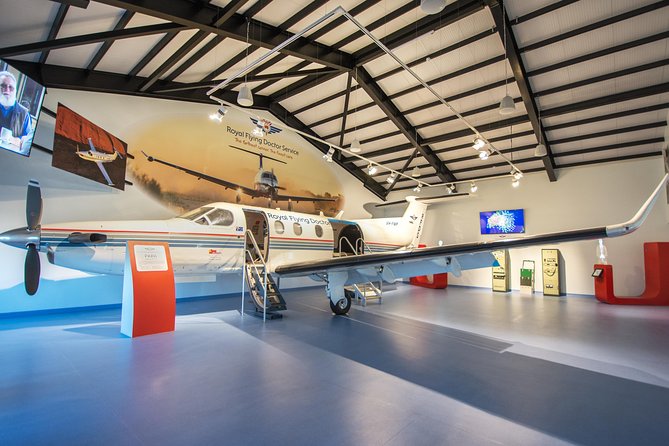
- A real aero-medical aircraft: Walk through a decommissioned Pilatus PC-12 and see how much medical work fits inside a small plane.
- Strong use of technology: Hologram theatre presentations and VR bring difficult subjects closer to everyday understanding.
- Good for families: Children can enjoy the aircraft, cockpit access, and interactive displays while adults take in the history.
- Easy timing: You can choose from entrance times throughout the day, then explore without being tied to a group schedule.
- Useful in hot weather: The entire facility is indoors and air-conditioned, with seating available around the building.
Why these two Darwin stories belong together
The Royal Flying Doctor Service and the Bombing of Darwin may seem like separate subjects at first. One is about remote medical care, the other about wartime attack. Yet both tell you something important about life in Australia’s Northern Territory: distance matters, emergencies can arrive without warning, and people have often needed courage, skill, and quick decisions to help one another.
The RFDS began with Rev John Flynn’s vision of bringing medical care to people scattered across the outback. The facility follows that idea from its early beginnings to the service operating today. You learn why aircraft became essential tools in places where roads were long, rough, or simply absent.
The Bombing of Darwin presentation shifts the focus to February 1942 and the attacks on the city during World War II. The subject is handled in a serious and respectful way. It is not presented as a simple action spectacle. Instead, the technology helps you understand the shock and damage caused by the attacks, along with the experience of the people caught up in them.
I like this pairing because it gives your Darwin sightseeing day more shape. You are not just looking at old objects behind glass. You are seeing how the Territory responded to two kinds of crisis, one spread across remote distances and the other arriving over the harbour.
A few more options to weigh up in Darwin
- Litchfield National Park and Jumping Crocodile Cruise
★ 5.0 · 2,119 reviews - Adelaide River Cruises – Jumping Crocodile Experience
★ 5.0 · 997 reviews - Sunset 3-Hour Cruise from Darwin with Dinner and Sparkling Wine
★ 5.0 · 980 reviews
Starting with the RFDS vision
Your visit begins with an introduction from the facility team. The main experiences are self-guided, so this opening overview helps you understand how the displays fit together before you set off on your own.
The hologram cinema presents the story of Rev John Flynn’s vision and its growth into the modern RFDS. Life-size holographic technology gives the presentation a stronger sense of presence than a standard wall panel or recorded narration. It helps put a face and voice to the early idea of bringing doctors and nurses to isolated communities by air.
This part is especially useful if you know little about the RFDS before arriving. You do not need specialist medical or aviation knowledge. The presentation explains the basic problem clearly: people living far from major towns may be many hours from a hospital, so the ability to send medical staff and equipment by plane can make an enormous difference.
The theatre format also works well for families. Younger children may not read every display, but a moving presentation gives them a clear starting point. Audio translation is available for the hologram cinema sessions in Japanese, German, French, and Simplified Chinese, which makes this section more accessible to international visitors.
One small limitation is that a theatre presentation sets the pace for you. You cannot skim it as quickly as a sign, and you may need to wait for the next session if you arrive between showings. That is a minor issue, but it is worth remembering if your schedule is tight.
Inside the Pilatus PC-12 aircraft
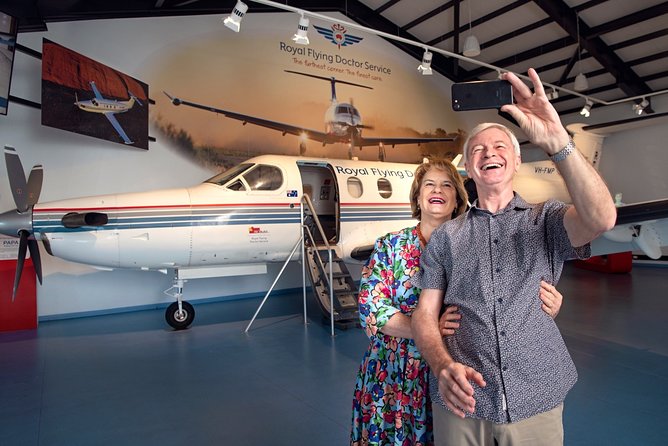
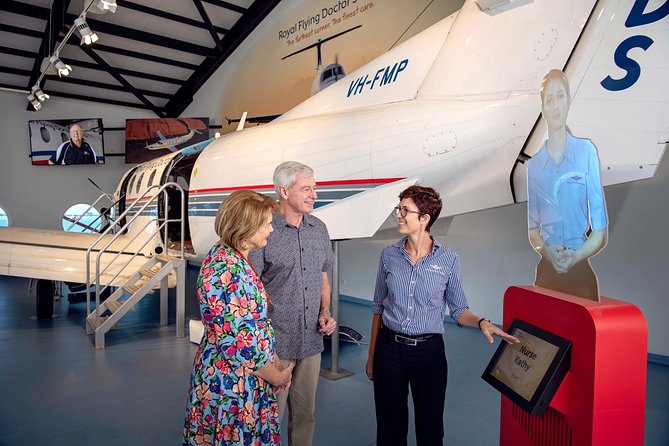
The aircraft is the physical centerpiece of the RFDS section. You can climb aboard a decommissioned RFDS Pilatus PC-12 that has been fitted out for aero-medical work.
This is where the service becomes easier to understand. From the outside, a medical flight may sound like a simple air transfer. Inside the plane, you see the space limits that pilots, engineers, doctors, nurses, and patients must work around. The aircraft shows how medical equipment and patient care can be arranged within a compact cabin.
I find the aircraft valuable because it turns an abstract service into something you can picture. You can imagine the practical demands of treating or carrying a patient in flight, rather than thinking only about the RFDS as a famous Australian name.
The displays also explain the work of the wider team. The pilots do more than fly. Engineers keep the aircraft safe, medical staff care for patients, and the service must operate across huge distances. The facility gives each role a place in the larger story.
Children often connect with this section quickly because it is hands-on and recognisable. Being able to enter the aircraft and see the cockpit makes the visit feel less like a conventional museum. Adults may appreciate the details of how a relatively small plane can support serious medical transport.
The aircraft is not a long flight simulator, and you should not expect a large aviation museum. Its strength is focus. You get a close look at one medical aircraft and the work it supports, then move on to the films and displays that provide the wider context.
The Bombing of Darwin through VR
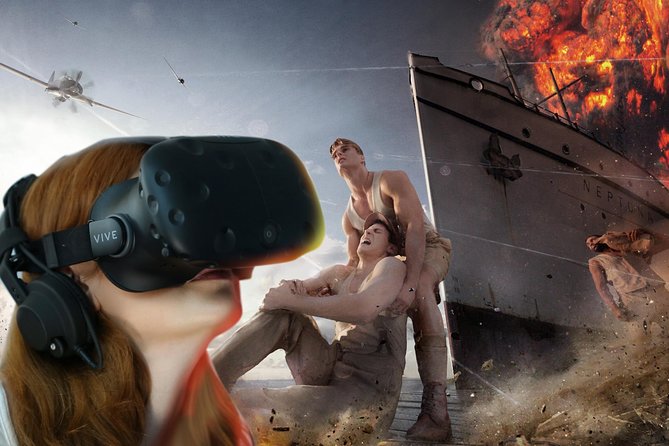
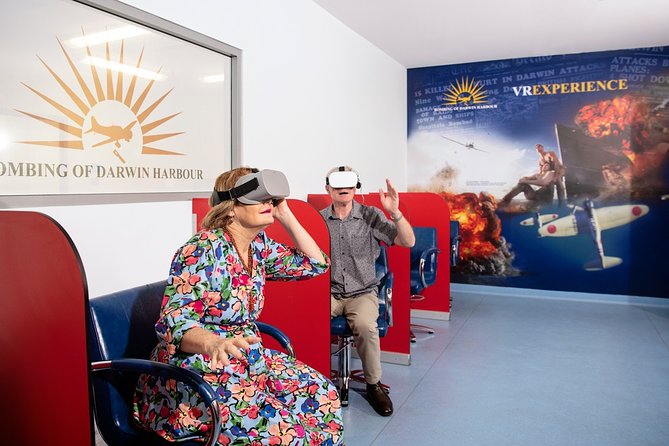
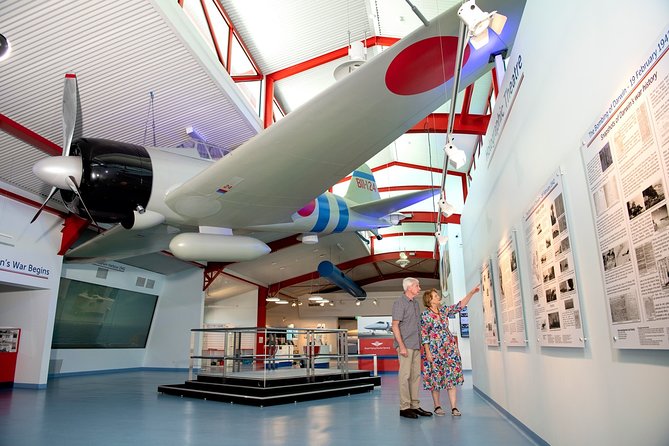
The second major story uses film and virtual reality to recreate the Bombing of Darwin. The VR segment is one of the most praised parts of the experience, and it is easy to see why. A written account can explain dates and events, but a visual recreation gives you a clearer sense of what an attack on Darwin Harbour meant.
The presentation is designed to help you understand the event, not simply to entertain you. The subject involves war, destruction, and loss, so the respectful tone matters. Parents may want to prepare younger children for the serious nature of this section, even though the technology itself can feel exciting.
The VR experience is also a good reason to visit even if you have already seen some of Darwin’s other wartime sites. It gives you a different way to picture the harbour attacks and connects with the wider Defence of Darwin attractions around the city.
At the same time, VR does not suit everyone. Some people prefer ordinary film and displays, and anyone who finds headsets uncomfortable may get more from the theatre presentations and printed material. The facility includes seating throughout, so you can take a break between sections.
The value here comes from the mix of emotional weight and clear presentation. You are not asked to rely on a long lecture. Instead, you move through a sequence of films, images, and interactive elements that help the event make sense.
A completely different kind of day out:
- From Darwin: Litchfield Park Tour & Jumping Crocodile Cruise
★ 4.9 · 829 reviews - Charles Darwin Dinner Cruise
★ 4.5 · 820 reviews - Kakadu Day Tour from Darwin with Offroad Dreaming
★ 5.0 · 776 reviews - Cape Adieu Darwin Sunset Dinner Cruise
★ 5.0 · 750 reviews
Films, displays, and the human side of the RFDS
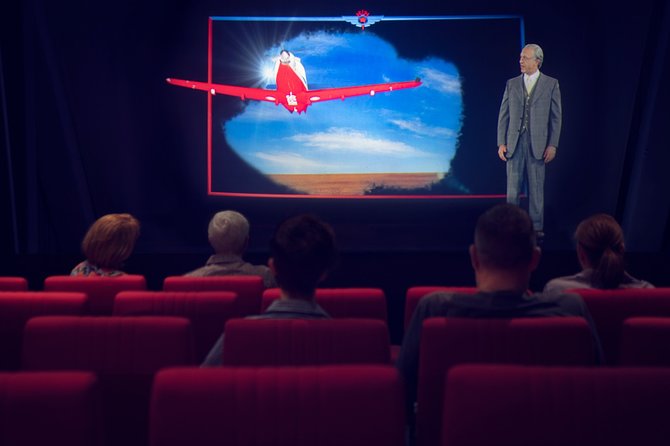
The facility is more than its headline technology. The films and displays fill in the details that a short hologram or VR session cannot cover.
The RFDS story includes the experiences of patients carried and cared for by the service. Those personal accounts help explain why the organisation matters beyond aircraft and equipment. A plane is only part of the system. The real purpose is getting care to someone who may be isolated, injured, or seriously ill.
This is also where you can think about the sacrifice and determination behind the service. The RFDS was not created because remote medical care was easy. It required new ideas, trained staff, reliable aircraft, and a willingness to work far from major centres.
The wartime displays give you another human angle. They show how the Bombing of Darwin affected the city and the people serving there. The presentation honours those involved without turning the subject into a simple victory story.
I recommend slowing down here. The technology attracts attention, but the quieter displays may give you the clearest sense of the people behind both stories. If you allow about 90 minutes, you should have time to watch the presentations, enter the aircraft, try the VR, and read at a comfortable pace.
How long to allow, and when to visit
The official duration is about two hours, but your visit can be shorter or longer depending on how closely you read the displays and how long you spend with the technology. A brisk visit may take around an hour, while families and history fans should allow 90 minutes to two hours.
The choice of entrance times throughout the day is useful. You can fit the facility around a morning outing, a midday meal, or an afternoon visit instead of committing to one fixed group departure.
The building is indoors and air-conditioned. That matters in Darwin, where heat and sudden rain can quickly change your plans. The facility also has seating throughout, so you do not need to remain standing while waiting for a presentation or moving between sections.
If you are arriving from a cruise ship, a free shuttle bus may take you to the facility. Check the current shuttle arrangements before setting out, but this can make the visit a practical choice during a port day.
A useful plan is to visit around lunchtime and continue to the wharf afterward. The waterfront location gives you a chance to eat and keep thinking about the harbour story while it is still fresh in your mind. The facility itself does not include souvenirs in the admission price, and food is not listed as part of the ticket, so plan those extras separately.
Is $21.52 good value?
At roughly $21.52 per person, the ticket is reasonably priced for a two-hour indoor attraction with several different presentation styles. You get the hologram theatre, films, VR, interactive displays, and access to a real aero-medical aircraft.
The value is strongest for visitors who want more than a quick photo stop. If you watch the presentations, try the VR, and read the displays, the admission gives you a solid block of worthwhile sightseeing. It is also a good use of time when outdoor conditions are unpleasant.
Families may find the price easier to justify because adults and children can approach the facility in different ways. Children can focus on the plane and technology, while adults take more time with the RFDS and wartime material.
The value is weaker if you only want to walk through the aircraft. The plane is interesting, but the ticket is really for the complete set of experiences. I would not recommend rushing through in 30 minutes, especially if you have paid for each member of a family group.
There is also a gift shop inside the facility. It sells RFDS and Bombing of Darwin items, including T-shirts, hats, books, collectibles, and a co-branded RFDS and RM Williams clothing and belt range. These purchases cost extra, but they give you a way to support the themes of the visit or take home a useful souvenir.
Who will enjoy this most?
This is a particularly good choice for families, because it combines serious subjects with aircraft access and interactive technology. Children can enter the cockpit and engage with the VR, while older visitors can spend more time on the historical context.
It also suits anyone interested in Australian aviation, emergency medicine, military history, or the Northern Territory. You do not need to be an enthusiast. The presentations explain enough for a first-time visitor, and the self-guided format lets you choose how much detail you want.
Cruise passengers can use it as a manageable Darwin outing, especially if the shuttle connection is operating. It also works well for people building a day around the Defence of Darwin museums and other wartime sites.
The facility is fully accessible, with complete disability access and seating options around the building. Service animals are allowed, and most people can take part. A multilingual guide may operate the visit, while the hologram cinema offers audio translation in four listed languages.
The subject matter may be heavy for very young children. The technology is engaging, but the Bombing of Darwin section deals with wartime attack and its impact. Use your judgment, and allow time for a quiet break if needed.
Practical tips for a smoother visit
Book your preferred entrance time in advance, particularly if your Darwin schedule is tied to a cruise or another timed activity. The experience is often booked around 18 days ahead, so leaving it until the last minute may reduce your choice of times.
Allow at least an hour, but aim for 90 minutes if you want the visit to feel unhurried. The most worthwhile order is to begin with the introduction, follow the RFDS story, enter the aircraft, then give proper time to the Bombing of Darwin films and VR.
Keep your schedule flexible enough to watch the theatre presentations rather than skipping them. They provide the background that makes the aircraft and interactive sections more meaningful.
If you are visiting with children, explain that the VR is about a real wartime event. That small bit of preparation can help them understand why the experience feels different from a simple entertainment ride.
You can cancel for a full refund up to 24 hours before the experience start time. Changes or cancellations made within 24 hours are not accepted for a refund, so check the local start time carefully before making adjustments.
Should you book the RFDS Darwin Tourist Facility?
Yes, if you want a clear, well-paced introduction to two important Territory stories. I especially recommend it for families, cruise passengers, first-time Darwin visitors, and anyone looking for an air-conditioned activity that still feels connected to the city.
Book it if you enjoy seeing history through more than one format. The actual aircraft gives the RFDS section a physical focus, while the hologram and VR presentations help explain events that would otherwise remain distant.
You might skip it if your Darwin schedule is extremely short or if you have little interest in aviation, wartime history, or medical services. But at about $21.52, with a recommended time of 90 minutes to two hours, it offers enough substance to earn its place on a Darwin itinerary.
FAQ
How long does the RFDS Darwin Tourist Facility visit take?
The visit lasts approximately two hours, although some people may complete it in about one hour. Allow 90 minutes or more if you want time for the films, VR, aircraft, and displays.
What stories does the facility cover?
The facility covers the work and development of the Royal Flying Doctor Service and the Bombing of Darwin during World War II.
Is the experience guided?
The main experiences are self-guided, but the facility team provides an introductory overview before you explore.
Can I enter an RFDS aircraft?
Yes. You can board a decommissioned Royal Flying Doctor Service Pilatus PC-12 aircraft fitted out for aero-medical use.
Is the facility suitable for children?
Yes. The interactive museum, aircraft, VR presentation, and cockpit access make it suitable for families. The Bombing of Darwin section covers serious wartime events, so parents should consider the age and sensitivity of younger children.
Is the facility indoors and air-conditioned?
Yes. The facility is indoors and air-conditioned, making it a practical option in Darwin’s heat or wet weather.
Are translated presentations available?
The hologram cinema sessions have audio translation in Japanese, German, French, and Simplified Chinese.
What is the cancellation policy?
You can cancel at least 24 hours before the experience start time for a full refund. Cancellations or changes made less than 24 hours before the start time are not accepted for a refund.
Just added in Darwin
- Nitmiluk (Katherine) Gorge 3.5-Hour Sunset Dinner Boat Tour★ 5.0 · 210 reviews
- Cutta Cutta Caves Nature Park Guided Tours★ 4.5 · 115 reviews
- Katherine Outback Experience Show Ticket★ 5.0 · 307 reviews
- Tiwi Islands Cultural Experience from Darwin Including Ferry★ 4.0 · 97 reviews
- 1-Hour Thunderball WWII Adventure Jet Skiing in Darwin★ 5.0 · 70 reviews
- Bombing of Darwin World War II Tour with Harbour Cruise★ 4.5 · 219 reviews
- Darwin Combo: The Bombing of Darwin Experience & Darwin Harbour Cruise★ 4.5 · 123 reviews
- ETHICAL ADVENTURES – 1 Day premium Litchfield tour, small group★ 5.0 · 178 reviews
Darwin Tours, compared.
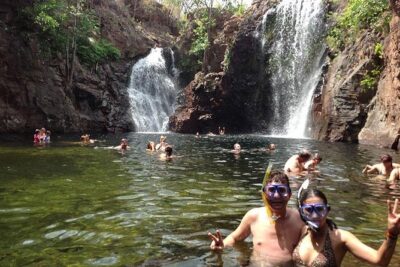
Litchfield National Park and Jumping Crocodile Cruise
Read our review →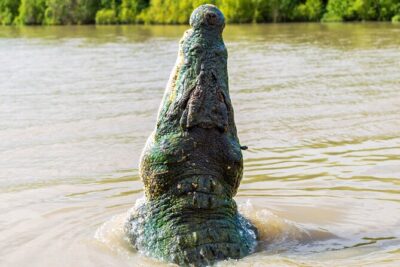
Adelaide River Cruises – Jumping Crocodile Experience
Read our review →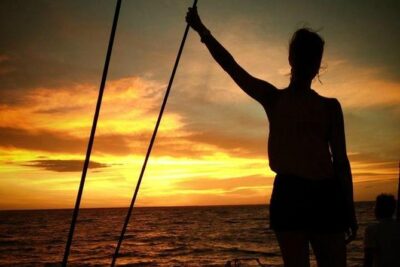
Sunset 3-Hour Cruise from Darwin with Dinner and Sparkling Wine
Read our review →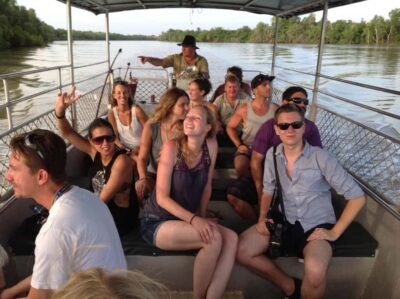
Litchfield Park Tour & Jumping Crocodile Cruise
Read our review →
Kakadu Day Tour from Darwin with Offroad Dreaming
Read our review →
Browse the lists this tour appears in