
Reviewed · NATIONAL PARKS
From Darwin: Kakadu Wilderness Escape & Rock Art Day Tour
Ancient art and crocodiles make a powerful pairing. This $180 day tour gives you a practical first look at Kakadu National Park, combining floodplains, wildlife, First Nations culture, and the famous views from Ubirr. I like the way it packs major Top End sights into one day, and I especially like that you can choose between the Jumping Croc Cruise and Fogg Dam.
The catch is the distance. You will cover about 620 kilometres and spend up to 12 hours on the move, with an early start and an evening return to Darwin. That makes this a long, hot day rather than a gentle outing, but it is a sensible choice if you have limited time and want a strong introduction to Kakadu.
In This Review
- The essential Kakadu experience in six points
- Leaving Darwin for the Adelaide River
- Fogg Dam and the choice between action and wetlands
- Corroboree gives you a practical lunch break
- Bowali Visitor Centre puts Kakadu in context
- Ubirr delivers the day’s biggest reward
- Cahills Crossing brings crocodile country into focus
- How comfortable is this 620-kilometre day?
- When to go and what to pack
- Is $180 good value?
- Who should book this Kakadu day trip?
- Should you book it?
- FAQ
- Where does the Kakadu day tour depart from?
- How long is the tour?
- Is the Kakadu National Park pass included?
- Are meals included?
- Is the Jumping Croc Cruise included?
- Can I choose Fogg Dam instead of the crocodile cruise?
- Is Fogg Dam covered by the park pass?
- What happens if Ubirr is closed?
- Is the tour suitable for wheelchair users or young children?
The essential Kakadu experience in six points
- Ubirr’s rock art and summit view: Ancient paintings, Dreamtime stories, and a sweeping outlook across the Nadab floodplain form the tour’s big cultural and scenic payoff.
- Two wildlife choices early in the day: Pick the Adelaide River Jumping Croc Cruise for close action, or Fogg Dam for wetlands, birds, wallabies, and a quieter encounter with the Top End.
- Cahills Crossing from a safe platform: This famous crossing is known for tidal water and saltwater crocodiles. Conditions and access can change with the season.
- A guide makes the long drive worthwhile: Guides including Leigh, Boggy, Becs, Tim, Danii, Rick, and Dani have been praised for clear commentary, humour, care, and strong local knowledge.
- Lunch is at your own expense: You can buy food at local stops or bring your own. An eski and onboard water refill station make packing lunch fairly easy.
- The dry season is the safer bet for access: From October to April, heat, humidity, flooding, and sudden road closures can affect the plan.
Leaving Darwin for the Adelaide River
Meet outside The Leea, at 64 Cavenagh Street, at 7:30 am. Arrive 10 minutes early, since hotel pickup and drop-off are not included. The air-conditioned midi-coach or bus is important here. Top End heat can be intense, and the vehicle gives you a cool base between stops.
The drive out of Darwin begins the lesson. Kakadu is not a small park squeezed around a few attractions. It covers more than 20,000 square kilometres, so a one-day visit can only show you a fraction of it. The long road is part of the deal, and your guide fills it with commentary about wildlife, plants, the region’s Traditional Custodians, and the changing conditions of the Top End.
The first major stop is the Adelaide River, where you have about 70 minutes for guided sightseeing and wildlife viewing. If you choose the optional Jumping Croc Cruise, you board a boat and watch saltwater crocodiles launch themselves from the water toward food held above the river.
This is a theatrical experience, but it is also a useful close look at the strength and size of these animals. The cruise is one of the day’s most exciting moments, and several people have found it worth adding. If crocodiles are high on your list, I would choose it.
Still, the cruise is optional and costs extra if it is not included in your booking. You can instead choose Fogg Dam Conservation Reserve, which offers a slower and more natural wildlife setting.
More Day Trips in Darwin
- Kakadu Day Tour from Darwin with Offroad Dreaming
★ 5.0 · 776 reviews - Litchfield and Jumping Crocodiles Full Day Trip from Darwin
★ 5.0 · 433 reviews - Katherine Day Tour from Darwin including Katherine Gorge Cruise
★ 4.5 · 428 reviews
Fogg Dam and the choice between action and wetlands
Fogg Dam is a sacred place for the Limilngan-Wulna people and a wetland refuge for Top End wildlife. The planned visit lasts about 45 minutes and includes a walk, guided commentary, and scenic viewing from the reserve’s observation areas.
Here, you might spot water pythons, magpie geese, white-bellied sea eagles, wallabies, buffalo, dingoes, or a crocodile. You will not see the same guaranteed spectacle as a jumping crocodile cruise, but Fogg Dam can give you a better sense of how animals live in the wetlands.
This choice depends on your style. I would pick the croc cruise if you want a memorable, high-energy wildlife encounter. I would pick Fogg Dam if birds, wetland ecology, and a quieter setting appeal more. One useful detail is that an NT park pass is required for Fogg Dam’s wetlands under the KD fare type. Check this when booking so the apparent tour price does not catch you off guard.
The exact arrangement may change with weather, water levels, road conditions, or cultural events. In April, for example, access can become less predictable as the wet season affects roads and floodplains.
Corroboree gives you a practical lunch break
The route includes a stop at Corroboree Park Tavern, with time to buy food and support a local business. The schedule also lists a short break at Corroboree Billabong. Do not expect a long restaurant meal or a full catered lunch. Food and drinks are not included.
You can buy lunch locally, but I would bring snacks and a packed meal if you have dietary needs or want to save time. The bus has an eski for keeping food cool, and there is a water refill station. Bring at least a 1.5-litre bottle, preferably more if you drink heavily in hot weather.
The tavern area can add a small slice of local character to a day otherwise focused on national park sights. You may also see resident animals around the property, including crocodiles and buffalo. Keep your attention on the guide and follow all safety instructions around water and wildlife.
Bowali Visitor Centre puts Kakadu in context
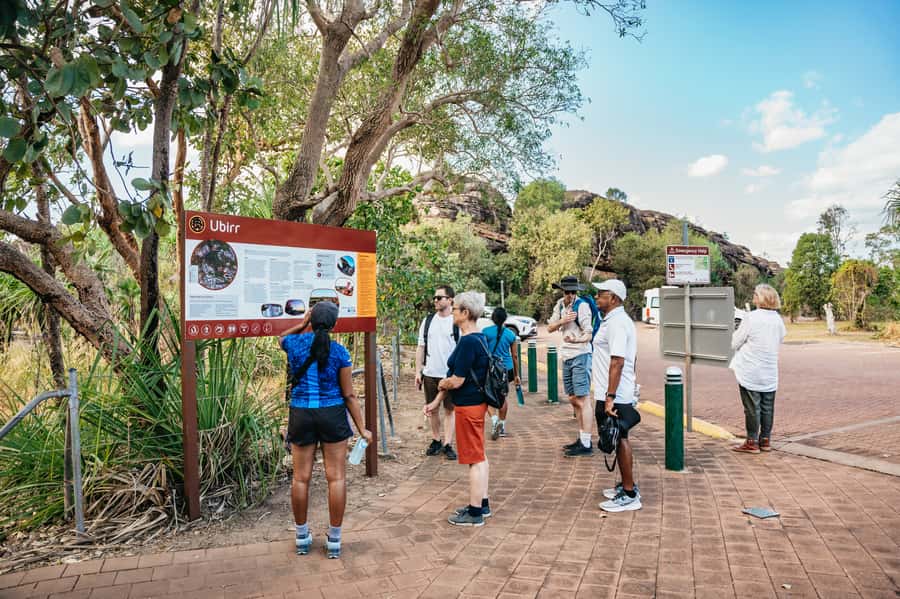
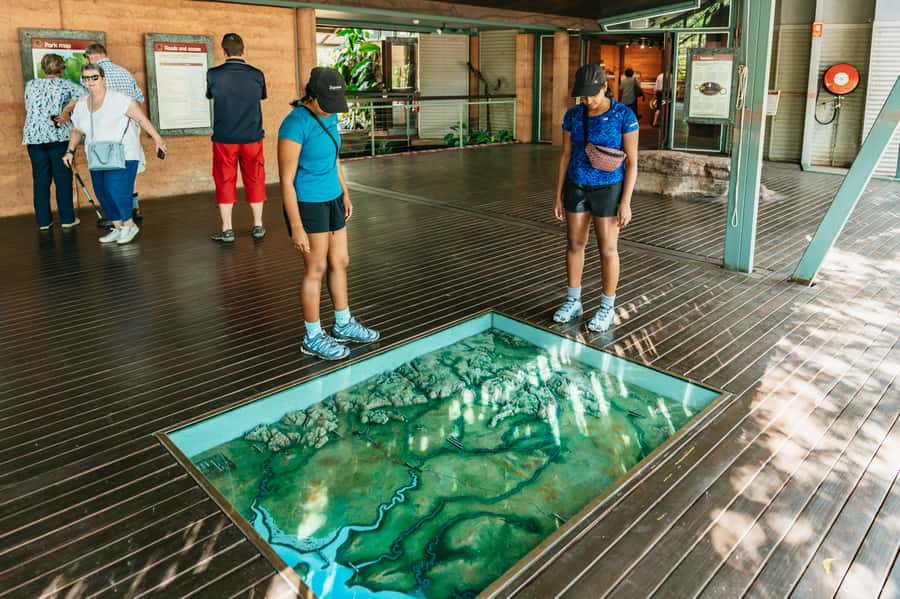
The Bowali Visitor Centre is a valuable stop because it helps connect the scenery to the people who care for Country. You have around 30 minutes of free time to see interpretive displays, look at local art, and learn about Kakadu’s Traditional Custodians.
This is not just a place to stretch your legs. Without context, rock art can become a quick photo stop. Bowali helps you approach the later cultural sites with more respect and curiosity. Your guide’s commentary adds another layer, especially when they explain local stories, animals, plants, and the ongoing relationship between First Nations people and the land.
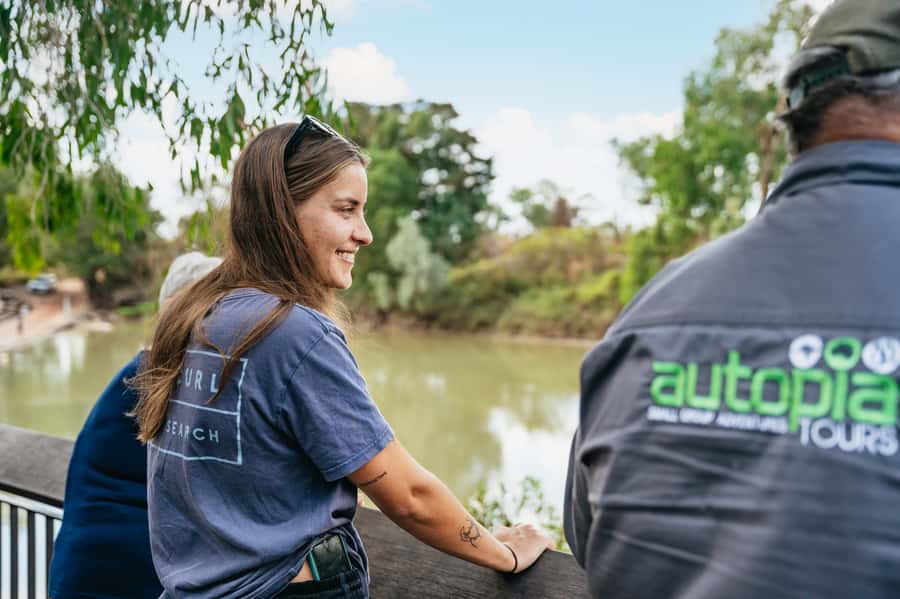
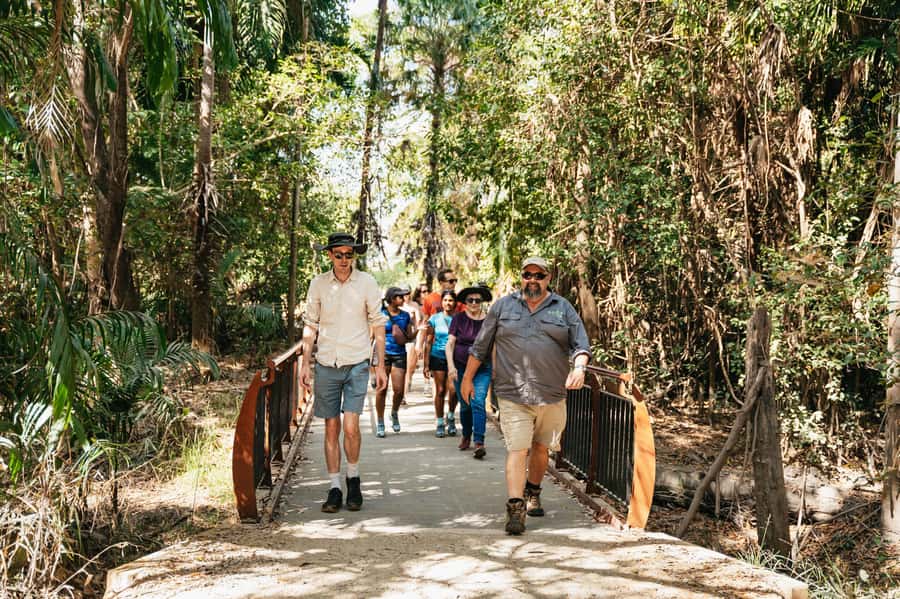
The strongest part of this tour is often the guide. Names change from departure to departure, but guides such as Danii, Becs, Leigh, Boggy, Tim, Rick, Dani, and Naomi have been praised for warmth, humour, careful driving, and clear explanations. Their personal stories and local connections can turn a long coach ride into useful preparation for the sites ahead.
A completely different kind of day out:
- Litchfield National Park and Jumping Crocodile Cruise
★ 5.0 · 2,119 reviews - Adelaide River Cruises – Jumping Crocodile Experience
★ 5.0 · 997 reviews - Sunset 3-Hour Cruise from Darwin with Dinner and Sparkling Wine
★ 5.0 · 980 reviews - From Darwin: Litchfield Park Tour & Jumping Crocodile Cruise
★ 4.9 · 829 reviews
Ubirr delivers the day’s biggest reward
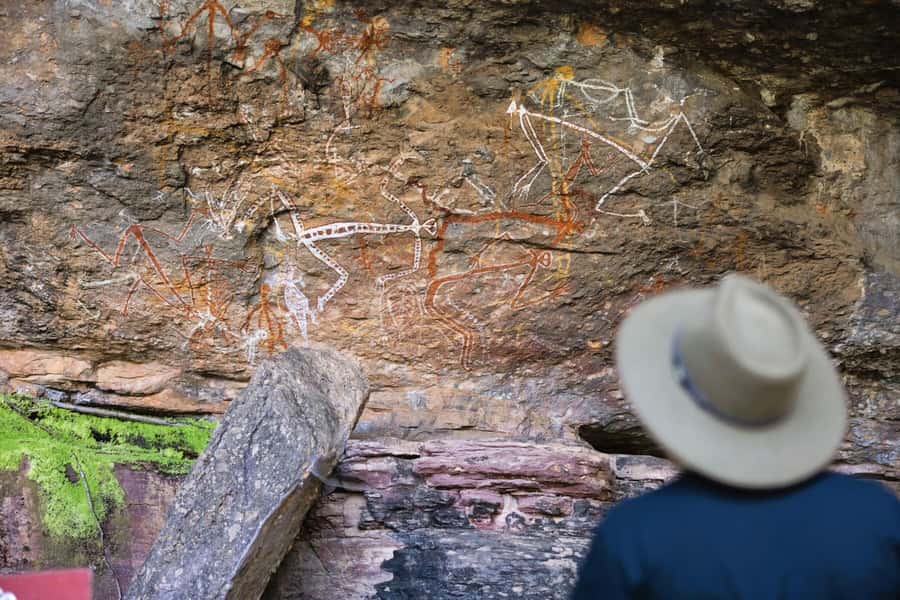
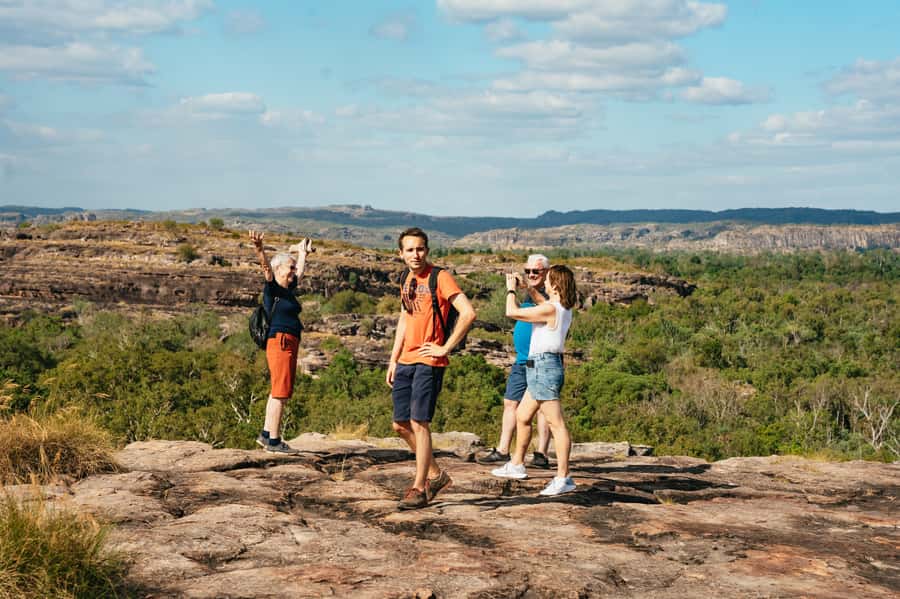
Ubirr is the heart of this trip. You spend about 90 minutes walking through rock shelters and art galleries, then climbing toward the lookout. The walking distance for the whole day is about two kilometres, but the Ubirr section includes uneven ground, steps, and a short climb.
The paintings show ancestral beings, native animals, and scenes tied to Dreamtime stories. Some works are thousands of years old. The value here is not simply age. The art remains connected to living cultural traditions and to the Bininj relationship with Country. Listen closely to the guide, and avoid treating the shelters as a collection of isolated images.
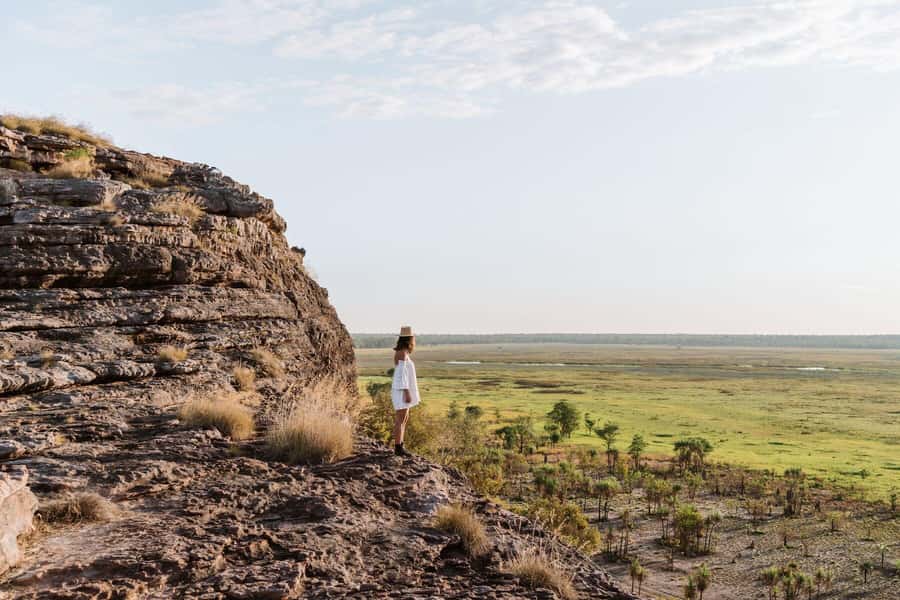
At the top, the view opens across the Nadab floodplain, the East Alligator River, and the distant Arnhem Land escarpment. This is the photograph you will probably remember, but the climb is also worth doing for the shift in scale. From the rock, you can see why Kakadu is defined by water, stone, floodplain, and huge distances.
Heat can make the climb harder than the distance suggests. Wear closed-toe hiking shoes, not slides. Bring sunscreen, a hat, sunglasses, insect repellent, and water. Several departures have returned to the bus with cold water and other small comforts after a hot walk, but you should still manage your own hydration.
If Ubirr is closed because of seasonal conditions, the backup is Nourlangie Rock, also known as Burrungkuy. It offers ancient rock art among sandstone cliffs and a different view of Bininj culture. Nourlangie is also a good place for birdwatching. It may not provide Ubirr’s famous summit panorama, but it remains a serious cultural site rather than a consolation prize.
Cahills Crossing brings crocodile country into focus
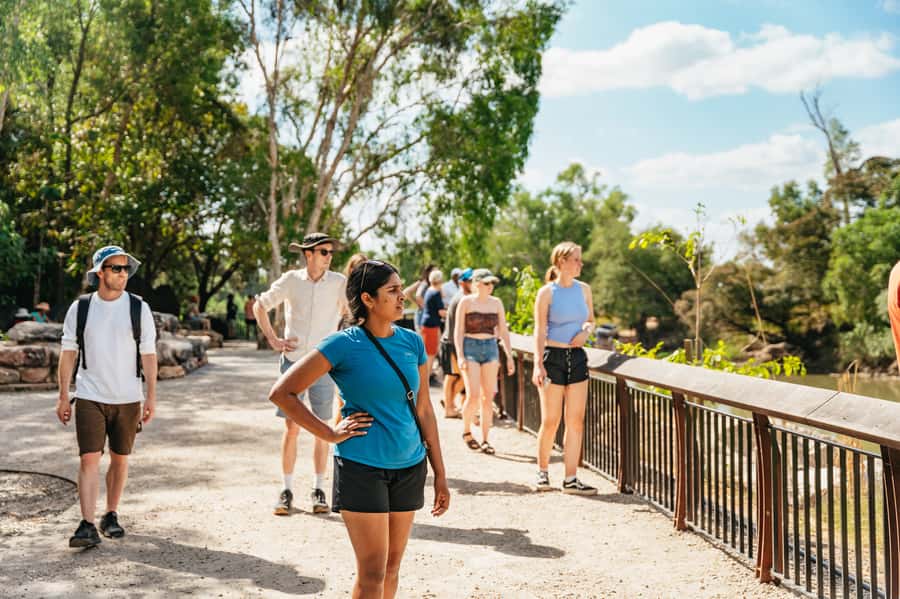
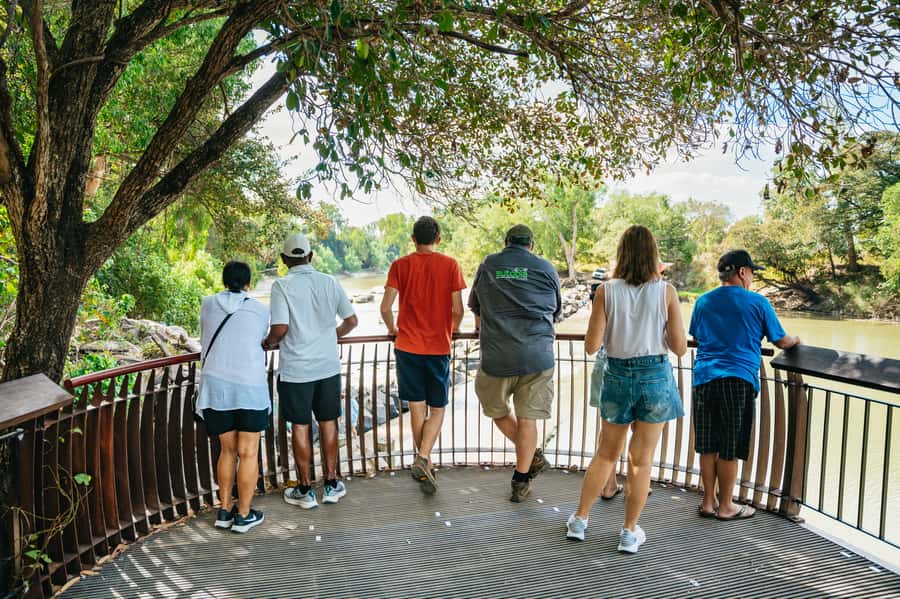
Cahills Crossing is where Kakadu and Arnhem Land meet across the East Alligator River. The crossing is affected by tides and is known for saltwater crocodile activity. You view the area from a platform, not from the water, and that distinction matters.
The stop can last about 90 minutes, including a photo stop, commentary, and wildlife viewing. You might see crocodiles below, along with vehicles attempting the crossing. One departure saw several crocodiles and watched cars and a road train pass. You may also see the risks of ignoring local conditions, so stay behind barriers and follow instructions.
Access is not guaranteed. Seasonal flooding, road closures, and water levels can prevent the group from reaching Cahills Crossing. This is one reason the tour needs flexibility. A fixed plan is less useful than a safe one in Kakadu.
How comfortable is this 620-kilometre day?
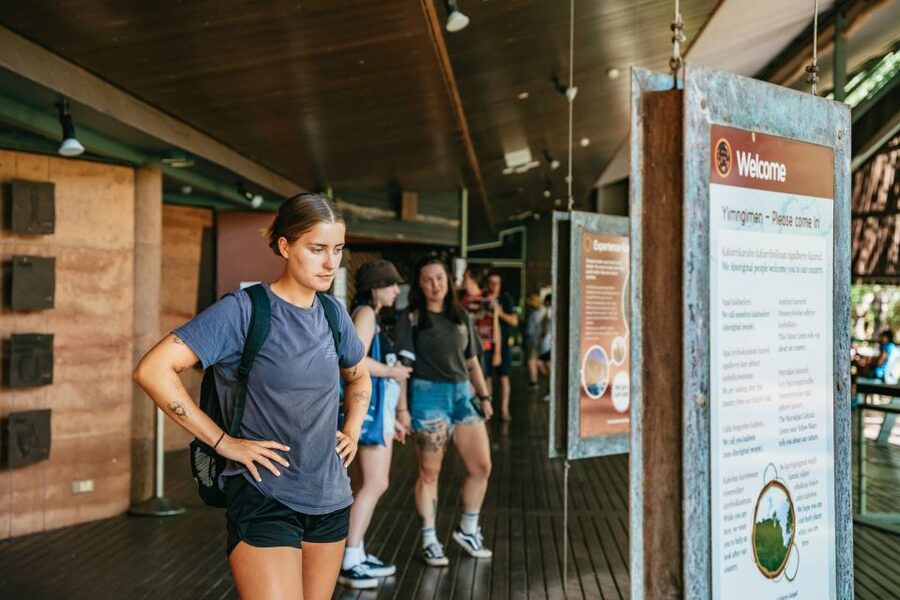
The bus is air-conditioned, and cold water is available throughout the day. That matters in a region where temperatures can reach the high 30s. The vehicle is comfortable enough for the route, but legroom may be limited for taller people. One six-foot passenger found the seating manageable but could not keep both knees straight ahead.
You should expect a mix of driving, short breaks, walking, and standing in the sun. The day begins at 7:30 am and returns to Darwin in the evening, often around 7:30 pm. This is not an easygoing park stroll. It is a concentrated survey of a vast area.
The tour does not suit children under six, wheelchair users, or anyone who needs a large bag or mobility scooter. You can bring a small day bag of roughly 5 to 7 kilograms, but oversize luggage, large backpacks, electric wheelchairs, and mobility scooters are not allowed.
Tell the operator about medical conditions or mobility concerns, and provide a contact phone number at least 48 hours before departure. The walking is modest in distance, but the heat, uneven surfaces, and long day can still be demanding.
When to go and what to pack
The dry season generally offers the best chance of reaching the planned sights, though conditions can still change. From October to April, expect high heat, humidity, and possible monsoonal rain. Flooding can close roads or restrict access at short notice.
Pack:
- A refillable 1.5-litre water bottle
- Sun hat, sunglasses, and sunscreen
- Breathable clothing and weather-appropriate layers
- Closed-toe walking shoes
- Insect repellent
- Camera
- Small daypack
- Personal medication
- Cash for food and personal purchases
- Swimmers and a towel only if specifically requested, since there is no planned swimming stop on this outing
The bus water supply helps, but it is not a substitute for carrying your own bottle. Frozen drinks can be useful in the hotter months. A towel and swimmers appear on the general packing advice, yet the route does not include a swim, so these are low-priority items.
Is $180 good value?
At $180 per person, the tour offers solid value if you have only one free day from Darwin. The fee includes the Kakadu National Park pass, transport, an accredited driver-guide, local commentary, and wildlife viewing in natural settings. You also get access to a route that would be tiring to manage alone in one day.
The price does not include meals, drinks, travel insurance, personal expenses, or hotel transfers. The Jumping Croc Cruise may also be an extra cost, depending on the booking option. Add lunch and the cruise before comparing the final total with other day trips.
The main compromise is time. You are paying for access and interpretation, but you are also accepting a very long road day. If you have three or more days in the Top End, I would prefer a longer Kakadu stay, since the park deserves more than a quick survey. If your schedule is tight, this tour gives you a useful taste of its scale and culture without hiring a car or planning every road condition yourself.
Who should book this Kakadu day trip?
I would recommend it to first-time visitors based in Darwin who want rock art, crocodiles, wetlands, and major scenery in one outing. It works especially well for people who value explanation and cultural context rather than simply ticking off photo stops.
It also suits solo visitors and small groups who do not want to drive long distances in unfamiliar conditions. The guide can adjust the pace to the group, provide safety reminders, and keep the day moving when heat or road delays interfere.
I would hesitate if you dislike long bus rides, struggle in hot weather, need generous legroom, or want a relaxed day with plenty of time at each place. For families, the minimum age is six, and the walking and heat still require sensible preparation.
Cancellation is free up to 24 hours before departure, and you can reserve now and pay later. Those policies help if your Darwin plans depend on weather, but they do not remove the risk of wet-season closures.
Should you book it?
Book this tour if you have one day for Kakadu and want an efficient, well-explained introduction. I especially like the balance between Ubirr’s ancient art, the floodplain views, and your choice of a crocodile cruise or Fogg Dam.
Choose the Jumping Croc Cruise for excitement. Choose Fogg Dam for birds and wetland life. Travel in the dry season if you can, pack serious sun protection, bring lunch, and accept that 620 kilometres is a lot of road.
If you can spare several days, stay longer in Kakadu. If you cannot, this is a strong-value way to reach places that would otherwise be difficult to combine in a single day.
FAQ
Where does the Kakadu day tour depart from?
The meeting point is outside the front of The Leea, at 64 Cavenagh Street, Darwin City. You should arrive by 7:20 am for the 7:30 am departure.
How long is the tour?
The tour lasts 12 hours, returning to Darwin in the evening.
Is the Kakadu National Park pass included?
Yes, the Kakadu National Park pass is included in the tour price.
Are meals included?
No. You can buy lunch at local stops or bring your own food. The bus has an eski and a water refill station.
Is the Jumping Croc Cruise included?
The crocodile cruise is listed as an optional inclusion, so check the exact booking option and final price before paying.
Can I choose Fogg Dam instead of the crocodile cruise?
Yes. The itinerary offers a choice between the Adelaide River Jumping Croc Cruise and Fogg Dam Conservation Reserve, subject to conditions.
Is Fogg Dam covered by the park pass?
An NT park pass is required for the Fogg Dam Conservation Reserve wetlands under the KD fare type. Check whether your fare covers this before departure.
What happens if Ubirr is closed?
If access to Ubirr is restricted, the tour may visit Nourlangie Rock, also called Burrungkuy, instead.
Is the tour suitable for wheelchair users or young children?
The tour is not suitable for wheelchair users or children under six. Mobility issues and medical conditions should be reported at least 48 hours before departure.
More National Park Trips in Darwin
- Litchfield National Park: Full-Day & Lunch from Darwin
★ 4.6 · 205 reviews - Darwin: Kakadu National Park & Wildlife Full Day Tour
★ 4.5 · 200 reviews - Darwin: Kakadu National Park Day Tour with Lunch
★ 4.7 · 151 reviews - From Darwin: Litchfield National Park Small-Group Day Trip
★ 4.7 · 131 reviews
Just added in Darwin
- LookAbout Darwin Wetlands Wildlife Premium Tour Max 6 Guests★ 4.9 · 72 reviews
- Litchfield National Park: Full-Day & Lunch from Darwin★ 4.6 · 205 reviews
- Darwin: Premium Litchfield Regional Small Group Day Tour★ 4.6 · 61 reviews
- From Darwin: Litchfield National Park Small-Group Day Trip★ 4.7 · 131 reviews
- Katherine Gorge & Edith Falls Full-Day Tour from Darwin★ 4.6 · 250 reviews
- Darwin: Kakadu & Nourlangie Day Trip Plus Billabong Cruise★ 4.3 · 166 reviews
- Jumping Crocodile Cruise from Darwin Half-Day Scenic Trip★ 4.5 · 80 reviews
- Darwin: Adelaide River Half-Day Jumping Crocs Cruise★ 4.3 · 130 reviews
National Parks, compared.
Litchfield National Park and Jumping Crocodile Cruise
Read our review →
Grampians National Park Small-Group Eco Tour from Melbourne
Read our review →
Blue Mountains National Park Tour with River Cruise
Read our review →
From Hobart/Adventure Bay: Bruny Island Wilderness Cruise
Read our review →
Port Arthur Full-day Guided Tour with Harbour Cruise and Tasman National Park
Read our review →
Grampians National Park Small-Group Eco Day Tour
Read our review →
Bruny Island Wilderness Coast Eco Cruise with Lunch
Read our review →Browse the lists this tour appears in