
Reviewed · HISTORICAL TOURS
Darwin Heritage Walk
Darwin’s story is written in fragments. This two-hour to two-and-a-half-hour walk connects those fragments, taking you from old civic buildings and wartime memories to the modern tropical capital beside Darwin Harbour. I especially like the small group size, capped at six people, and the guides’ gift for turning plain facades into stories about the people who shaped the city.
I also like the steady pace and frequent chances to stop in the shade for photographs and questions. The main consideration is that this is a listening-heavy tour rather than a brisk sightseeing march, and one section around the mall may feel slow if you want to reach the later historic sites quickly.
In This Review
- Key points to know before booking
- What this Darwin walk is really about
- Starting in the Darwin CBD at 8:30 am
- Star Village and Darwin before Cyclone Tracy
- Brown’s Mart Theatre and civic life
- The Old Town Hall ruins and visible loss
- The Administrator’s buildings and early Darwin
- Parliament House and modern self-government
- Bicentennial Park and the harbour outlook
- The stories that give the walk its value
- Is the pace right for you?
- Is $42.32 good value?
- Who should book the Darwin Heritage Walk?
- Should you book it?
- FAQ
- How long does the Darwin Heritage Walk take?
- What time does the tour start?
- Where does the Darwin Heritage Walk begin?
- Where does the tour finish?
- What is included in the tour price?
- Are food and drinks included?
- Is the walk physically demanding?
- Can children join the tour?
- What happens if the tour is cancelled?
Key points to know before booking
- Small groups of up to six: You get a more personal tour, with plenty of room for questions and conversation.
- Cyclone Tracy and wartime Darwin: These two events receive strong attention because they changed the city in lasting ways.
- A mostly easy-paced walk: Expect walking and standing, but not a strenuous hike. Shade breaks are part of the comfort factor.
- Original Darwin buildings: Star Village, Brown’s Mart Theatre, the Old Town Hall ruins, and the Administrator’s buildings show different chapters of the city.
- Local guides make the difference: John, Robin, Yvonne, and other guides are praised for their stories, local experience, and willingness to answer questions.
- A useful first morning in Darwin: The tour starts at 8:30 am and finishes near The Esplanade, giving you a practical introduction to the city centre.
What this Darwin walk is really about
Darwin can look young at first glance. Tropical streets, modern offices, retail arcades, and broad views over the harbour dominate the centre. But the city has been rebuilt, damaged, rebuilt again, and reshaped by war, cyclones, migration, politics, and sheer persistence.
That is the point of this walk. You are not simply ticking off monuments. You are learning why certain buildings survived, how Darwin’s civic life developed, and what happened behind the attractive fronts you might otherwise pass without a second look.
The tour is led by a local guide from Walk Darwin Pty Ltd. The strongest guide feedback centres on John, who is described as passionate about Darwin and the Northern Territory, as well as Robin and Yvonne. Their approach appears to be conversational rather than theatrical. They explain, pause, take questions, and add personal stories where they help bring the city into focus.
The walk is limited to six people, which matters in a city tour. You can hear the commentary more clearly, ask about places that catch your eye, and avoid the impersonal feel of a large group gathered around a guide. It also means the experience may feel more like a guided conversation than a formal lecture.
More Walking Tours in Darwin:
- Darwin: Small Group 2-Hour Heritage Walk
★ 4.9 · 28 reviews - Sydney Opera House Official Guided Walking Tour
★ 4.5 · 3,770 reviews - Sydney The Rocks Guided Walking Tour
★ 5.0 · 1,546 reviews
Starting in the Darwin CBD at 8:30 am
The meeting point is at John McDouall Stuart, at the corner of The Mall and Knuckey Street in Darwin City. The start time is 8:30 am, a useful choice in a tropical city where an early outing can be more comfortable than a midday walk.
You should arrive ready for sun, heat, and occasional weather changes. Bring drinking water, sunscreen, and a hat. Good enclosed shoes with non-slip soles are recommended, and that advice makes sense even though the pace is described as easy. You will be on your feet for much of the experience, moving between streets and stopping to listen.
The tour operates in all weather conditions, so dress for the forecast rather than assuming a dry morning. The activity can be cancelled if weather conditions are considered unsuitable, in which case you are offered another date or a full refund.
Public transport is nearby, but hotel pickup and drop-off are not included. You make your own way to the start and arrange your own return from the finish.
Star Village and Darwin before Cyclone Tracy
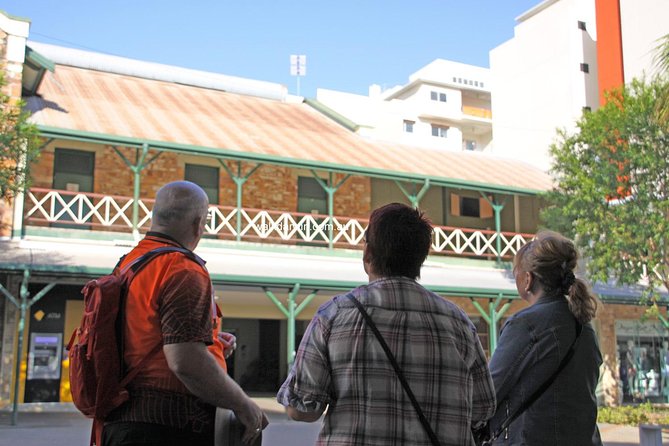
The first listed stop is Star Village, with about 10 minutes set aside. This former open-air cinema is one of the few original buildings still standing from before Cyclone Tracy.
Today, it has been turned into a stylish retail centre. That change is part of its appeal. The building is not preserved as a museum piece, frozen in the past. It remains in use, while the guide points out historic features and explains what the site once meant to Darwin residents.
This is a good early lesson in how the walk works. You see the old and new side by side, then hear the story that links them. On your own, you might notice an attractive shopping area. With the guide, you learn to look for traces of the former cinema and the city that existed before the cyclone.
The stop is short, so it does not become an architectural lecture. You should have time for photographs, but the main value comes from the explanation.
Brown’s Mart Theatre and civic life
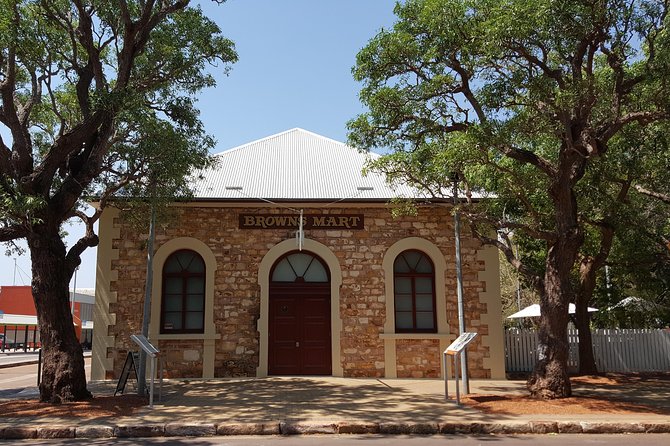
Brown’s Mart Theatre receives another 10-minute stop. The building has been part of Darwin’s social culture for more than a century, and the guide discusses its role from the exterior.
This is one of the tour’s useful reminders that heritage is not limited to grand government buildings. Community buildings often reveal more about everyday Darwin than an official monument does. Brown’s Mart connects the city’s social and cultural life with its older built environment.
You will mainly be listening outside, so do not expect an interior theatre visit. That distinction is important if you prefer tours with regular indoor access. The walk’s focus is the stories attached to places, not entry to every building.
More history tours in Darwin:
- Bombing of Darwin WWII Heritage Tours
★ 5.0 · 261 reviews - Darwin History and Wartime Experience Tour
★ 5.0 · 144 reviews - Ultimate Melbourne Walking Tour: History, Laneways & Culture
★ 5.0 · 1,451 reviews - Puffing Billy Railway: Heritage Steam Train Journey
★ 4.6 · 1,195 reviews
The Old Town Hall ruins and visible loss
The Old Palmerston Town Hall is one of the more striking stops because it is now in ruins. About 10 minutes are allocated here, where the remains provide a direct reminder of Darwin’s early residents and civic pioneers.
Ruins can be easy to overlook in a functioning city. The guide’s role is to explain what happened at the site and who passed through it. That background turns a fragment of masonry into part of Darwin’s civic story.
This stop also helps balance the polished facades elsewhere. You see that Darwin’s past is not only preserved in handsome buildings. Some of it survives as damaged, incomplete, or repurposed remains.
If you prefer a tour with constant movement, you may find the repeated 10-minute stops slow. If you enjoy context, the pauses give you time to absorb the site and ask questions.
The Administrator’s buildings and early Darwin
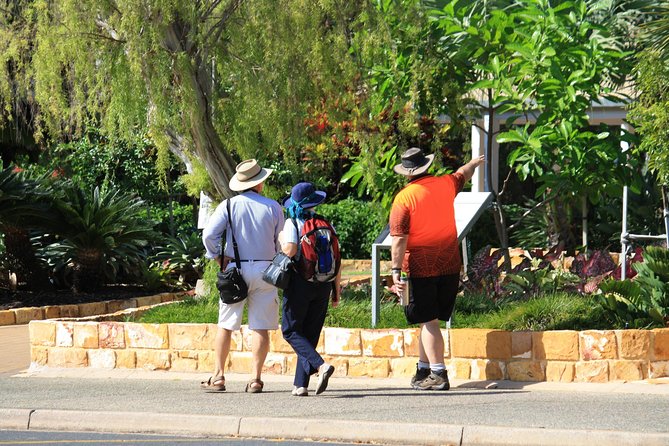
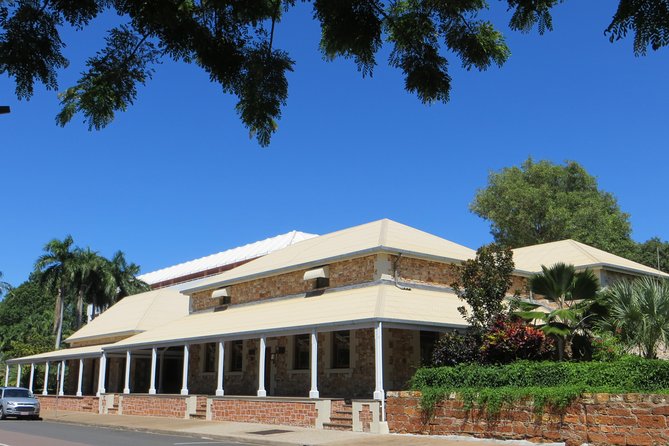
The buildings associated with the Administrator of the Northern Territory are described as beautifully restored, with gardens that reflect life in Darwin’s early years. The group spends around 10 minutes here.
This section offers a different mood from the Old Town Hall ruins. Instead of visible decay, you see careful restoration and a setting that suggests the formal side of early government. The buildings are still used as offices today, so the site remains part of working Darwin rather than being isolated as a historic display.
The guide helps you read the buildings as evidence of how the city developed. Their design, gardens, and continued use show a connection between the early administrative centre and the modern capital.
As with Brown’s Mart, the stop is focused on exterior views and commentary. You should not book this expecting a full interiors tour.
Parliament House and modern self-government
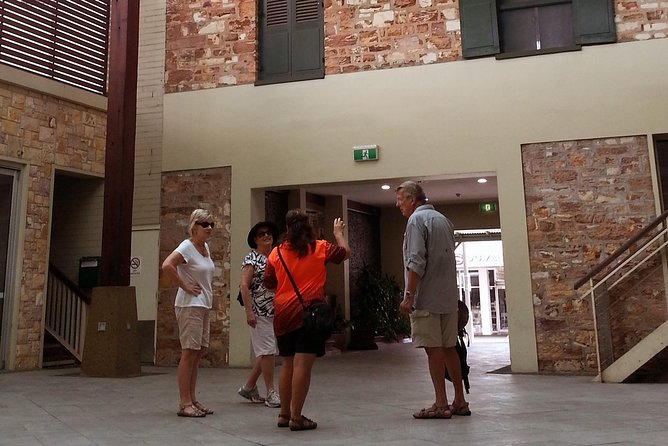
Parliament House takes the walk into modern Darwin. The building presides over Darwin Harbour, and the guide uses it to explain the city’s self-governing era.
This is an important part of the route because the tour is not only about old buildings. Darwin’s identity includes its role as the capital of the Northern Territory and its continuing political life. Parliament House gives the guide a natural place to explain how the modern city functions.
The harbour setting also creates one of the route’s more open views. After several stops among streets and buildings, you get a broader sense of Darwin’s position beside the water.
The stop lasts about 10 minutes. You will want your camera ready, but the real benefit is the connection between architecture, government, and the city’s present-day character.
Bicentennial Park and the harbour outlook

Bicentennial Park is allocated about 15 minutes, making it the longest named stop. The park overlooks Darwin Harbour and provides open space for recreation, but it also contains reminders of early Darwin.
This is where the route seems to shift from formal civic history to small details scattered through a public park. The guide points out lesser-known features and explains their links to the city’s beginnings.
The park is also a practical comfort stop. Several tour members have especially appreciated guides choosing shade when pausing, which matters in Darwin’s sun. You can take photographs, listen without rushing, and ask questions while looking across the harbour.
The tour ends at the intersection of The Esplanade and Knuckey Street, opposite Lyons Cottage. The supplied meeting information also gives the address of Lyons Cottage as 74 Esplanade, Darwin City. From here, you are well placed to continue exploring central Darwin on foot, although you will need to organise your own onward transport if you are staying elsewhere.
The stories that give the walk its value
The best part of the experience is not simply the number of stops. It is the way the guide connects them through stories about people, disaster, politics, and daily life.
The bombing of Darwin during the Second World War and Cyclone Tracy receive particular attention. These are not minor footnotes. They are defining events that explain why so much of Darwin looks rebuilt, why older structures are precious, and why resilience is such a strong part of the city’s identity.
The guides also add local anecdotes and personal experiences. John, in particular, is praised for answering questions, stopping for photographs, and sharing his long familiarity with Darwin. Robin is also praised for bringing personal stories and current affairs into the tour. That mix helps keep the walk from becoming a dry sequence of dates.
There is one important limitation in the content. One detailed assessment felt the discussion of Larrakia people, first contact, colonisation, and the lives of Aboriginal people in the early township was too limited. That is a fair concern. Darwin’s story cannot be fully understood through buildings and European civic events alone.
If this subject matters to you, ask the guide directly about Larrakia history and the impact of colonisation. The company says its guides can adapt their commentary to group interests, but you should not assume that every departure will give this topic equal attention.
Is the pace right for you?
The walk lasts approximately two to two-and-a-half hours and requires a moderate level of physical fitness. In practical terms, the challenge is less about speed or steep climbs and more about the combination of walking, standing, sun, and listening.
Several comments describe the pace as easy or slow, with shade breaks and time for questions. That suits you if you want to take photographs, hear full explanations, or explore Darwin without hurrying.
It may not suit you if you want a fast orientation tour with constant movement. One assessment found the early mall section too drawn out and felt the more interesting material came later, particularly around the Cenotaph and the state green. The listed route includes Bicentennial Park and major civic sites, but the exact amount of time at each place can vary with the guide and group.
Wear enclosed, comfortable, non-slip shoes. Bring water even if the morning feels mild, and do not skip sunscreen. Children must be accompanied by an adult, and service animals are allowed.
Is $42.32 good value?
At $42.32 per person, this is not the cheapest way to spend a morning in Darwin, since you can walk through the CBD without paying anything. The value comes from the interpretation.
You are paying for a local guide, spoken commentary, a small group, and the chance to understand buildings that may otherwise seem ordinary. If you enjoy history, architecture, local politics, or stories about how communities recover from disasters, the price is reasonable for two hours of focused attention.
The value is also stronger at the beginning of a Darwin stay. A morning orientation can help you recognise key buildings, understand the city centre, and decide where to return later. Several guides also recommend local things to do, and those suggestions can make the tour useful beyond its scheduled finish.
The price feels less worthwhile if you want museum entry, food, transport, or extensive access inside historic buildings. None of those are included. This is a guided streets-and-stories experience, not an attraction pass.
The tour is often booked about 45 days ahead, so reserve early if your Darwin dates are fixed. A minimum of two people is required for the departure to operate, and the maximum group size is six.
Who should book the Darwin Heritage Walk?
I would recommend it to first-time visitors who want context before exploring Darwin independently. It is also a good match for history-minded adults, older children accompanied by an adult, and anyone who prefers a calm walk with time for questions.
You will get the most from it if you enjoy listening and are willing to look closely at buildings, ruins, gardens, and memorial spaces. The guides’ strongest qualities are their local knowledge, enthusiasm, and personal connection to Darwin.
I would be more cautious if you dislike standing outdoors, need frequent indoor shelter, or want a rapid list of attractions. The tour can also leave you wanting more on Larrakia history, so raise that subject directly if it is important to you.
Should you book it?
Book the Darwin Heritage Walk if you want Darwin explained rather than simply photographed. Its small group, early start, easy pace, and passionate guides make it a strong introduction to the city, especially with John, Robin, or Yvonne leading the way.
The main drawbacks are the listening-heavy format, the warm outdoor conditions, and uneven treatment of some parts of Darwin’s history. Still, the 4.7 rating from 101 reviews and 95 percent recommendation rate fit the experience described here: a thoughtful, local-led walk that makes the centre more meaningful.
I would book it near the start of a Darwin visit, carry water, ask questions, and leave room afterward to continue along the harbour.
FAQ
How long does the Darwin Heritage Walk take?
The walk lasts approximately two hours to two hours and 30 minutes.
What time does the tour start?
The tour starts at 8:30 am.
Where does the Darwin Heritage Walk begin?
It begins at John McDouall Stuart, at the corner of The Mall and Knuckey Street, Darwin City, Northern Territory.
Where does the tour finish?
The walk ends at the intersection of The Esplanade and Knuckey Street, opposite Lyons Cottage. Lyons Cottage is listed at 74 Esplanade, Darwin City.
What is included in the tour price?
A local guide and spoken commentary are included.
Are food and drinks included?
No. Food and drinks are not included, so bring drinking water.
Is the walk physically demanding?
You need a moderate level of physical fitness because the experience involves walking and standing. Good enclosed non-slip walking shoes are recommended.
Can children join the tour?
Yes. Children can join, but they must be accompanied by an adult.
What happens if the tour is cancelled?
If poor weather causes cancellation, you are offered another date or a full refund. If the minimum number of participants is not met, you are offered another date or experience, or a full refund. Free cancellation is available up to 24 hours before the start time.
Just added in Darwin
- Nitmiluk (Katherine) Gorge 3.5-Hour Sunset Dinner Boat Tour★ 5.0 · 210 reviews
- Cutta Cutta Caves Nature Park Guided Tours★ 4.5 · 115 reviews
- Katherine Outback Experience Show Ticket★ 5.0 · 307 reviews
- Tiwi Islands Cultural Experience from Darwin Including Ferry★ 4.0 · 97 reviews
- 1-Hour Thunderball WWII Adventure Jet Skiing in Darwin★ 5.0 · 70 reviews
- Bombing of Darwin World War II Tour with Harbour Cruise★ 4.5 · 219 reviews
- ETHICAL ADVENTURES – 1 Day premium Litchfield tour, small group★ 5.0 · 178 reviews
- Royal Flying Doctor Service Tourist Facility: Two Iconic Territory Stories★ 5.0 · 256 reviews
Historical Tours, compared.

Ultimate Melbourne Walking Tour: History, Laneways & Culture
Read our review →
Puffing Billy Railway: Heritage Steam Train Journey
Read our review →
Morning World Heritage Cruise on the Gordon River from Strahan
Read our review →
World Heritage Cruise on Gordon River with Lunch
Read our review →
Experience History onboard The Mary Valley Rattler
Read our review →
Snorkel & Dive the Reef: Sustainable, Scientific & Cultural Tour
Read our review →
Derwent River Historic Harbour Cruise From Hobart
Read our review →Browse the lists this tour appears in