
Reviewed · HISTORICAL TOURS
Darwin: Small Group 2-Hour Heritage Walk
Darwin’s past is best read on foot. This two-hour walk links wartime stories, Cyclone Tracy, rebuilt civic buildings, and today’s multicultural city in a relaxed local-led outing. I like the small group of up to 10 and the chance to reach places a bus cannot. Guide John is also a major plus, with repeated praise for his clear stories, local insight, and friendly manner.
I also like the sensible pace. Several people found the walk easy to follow and not too long, while John has made a point of keeping people hydrated and protected from the sun. The main consideration is physical: there are few places to sit, so this is not a good choice if you need frequent rests.
In This Review
- Key points at a glance
- Why a walking tour suits Darwin
- Meeting John beneath the Stuart statue
- World War II and Darwin’s difficult turning point
- Cyclone Tracy and a city rebuilt
- The old courthouse and police station
- Brown’s Mart Theatre and the Palmerston Town Hall ruins
- Government House, Parliament House, and the Supreme Court
- Darwin’s multicultural present
- What the two-hour pace feels like
- What you get for $41
- Who should book this Darwin walk?
- Should you book the Walk Darwin heritage tour?
- FAQ
- How long is the Darwin Heritage Walk?
- Where does the tour begin?
- How do I identify the guide?
- Where does the tour finish?
- What language is the tour conducted in?
- How many people can join the group?
- How many paying guests are needed for the tour to operate?
- Is hotel pickup included?
- Is food or drink included?
- What should I bring?
- Are children allowed on the tour?
- Can I bring a pet?
- Can I cancel for a refund?
- Can I reserve now and pay later?
Key points at a glance
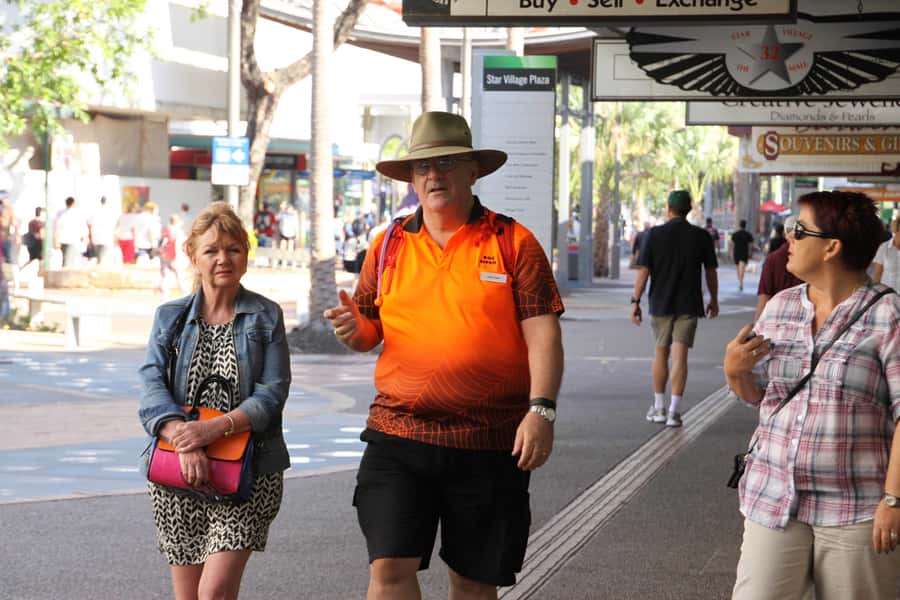
- Darwin’s rebuilding story: Hear how World War II bombing and Cyclone Tracy changed the city.
- A genuinely small group: The tour is limited to 10 people, and it may run with only two paying guests.
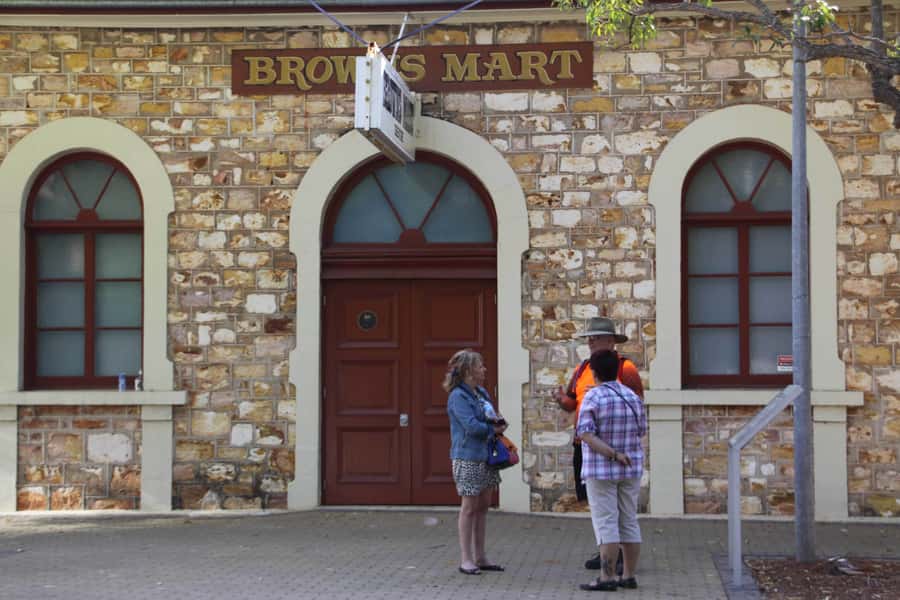
- Landmarks you can reach only on foot: See Brown’s Mart Theatre, the old courthouse and police station, and the Palmerston Town Hall ruins.
- A local guide with a personal touch: John’s lively explanations and willingness to answer questions are central to the experience.
- A useful first outing: The walk gives you a clear introduction to central Darwin before you explore farther afield.
- Prepare for tropical conditions: Bring water, sunscreen, a hat, and a camera, and wear comfortable walking shoes.
Why a walking tour suits Darwin
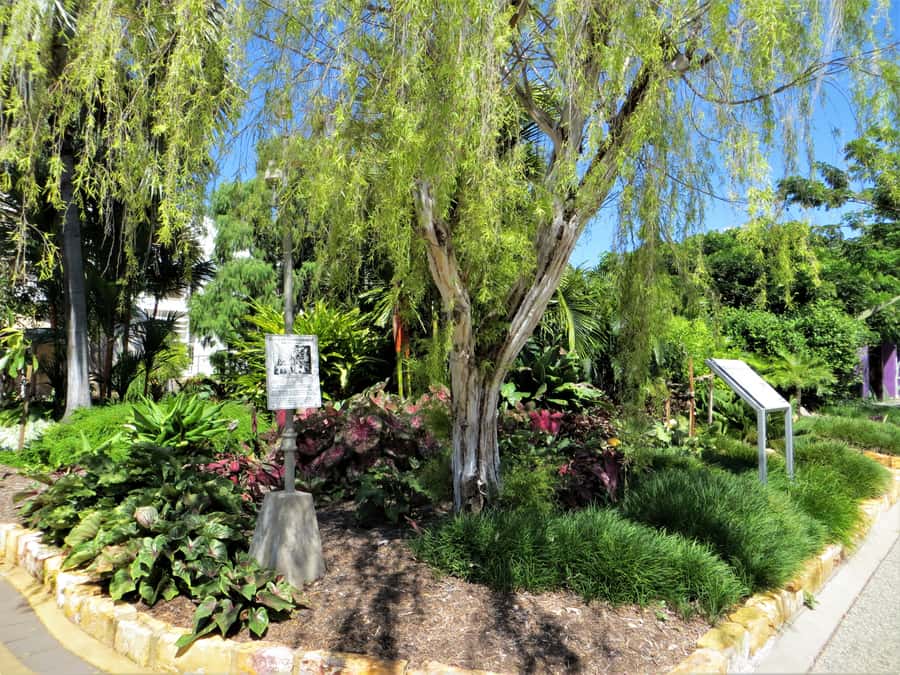
Darwin can look modern and spread out at first glance, yet its central streets hold clues to several very different chapters. A guided walk helps you connect those pieces instead of seeing a government building here and an old ruin there with no context.
The city’s story includes early settlement, wartime attacks, destructive weather, reconstruction, and a modern population shaped by many cultures. On this tour, those themes are explained as you move through the streets, so the city becomes easier to understand as a place that has repeatedly had to rebuild itself.
I think the walking format is especially useful for a short stay. You are not simply driven past a landmark and asked to photograph it through a window. You can stop, look at details, take pictures, and ask why a building or public artwork matters.
The pace is described as leisurely, not athletic. Still, two hours on your feet in Darwin’s heat is not nothing. The tour information warns that seating is limited, so I would treat the fitness requirement seriously and bring water from the start.
More Walking Tours in Darwin:
- Sydney Opera House Official Guided Walking Tour
★ 4.5 · 3,770 reviews - Sydney The Rocks Guided Walking Tour
★ 5.0 · 1,546 reviews - Ultimate Melbourne Walking Tour: History, Laneways & Culture
★ 5.0 · 1,451 reviews
Meeting John beneath the Stuart statue
The meeting point is under the John McDouall Stuart statue in Raintree Park. Look for a guide wearing a bright orange shirt, which should make the start easy to identify in a busy central area.
The tour begins by walking the paths associated with Darwin’s pioneers. That opening gives the guide a natural way to explain how the town developed before moving into its later wartime and civic stories.
John has guided many of these outings, and his style is one of the strongest reasons to book. The feedback consistently describes him as personable, enthusiastic, and generous with explanations. He also makes room for questions rather than treating the walk as a fixed speech.
That matters in a small group. With no more than 10 participants, you have a better chance of hearing clearly and asking about a building, street, or event that catches your attention. One particularly small outing had only two people, turning the experience into something close to a private tour.
The minimum operating group is two paying guests. If your plans depend on a particular departure, check availability before you build the rest of your day around it.
World War II and Darwin’s difficult turning point
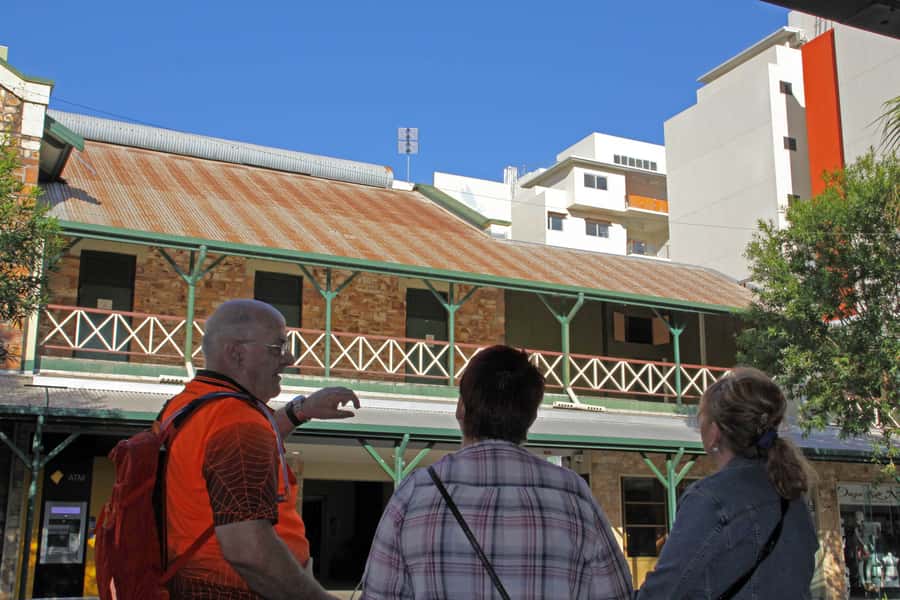
World War II is one of the key subjects on the walk. Darwin was bombed during the war, and the attacks changed the town’s place in Australian history and its physical appearance.
A guide can make this subject more meaningful than a plaque or museum label. As you walk through the city, you get a sense of how a tropical northern settlement became connected to a major wartime effort and how that period left its mark.
The tour does not present Darwin as an old city frozen in time. Instead, the war is part of a wider story about change. You hear how the city developed, how buildings and public spaces were affected, and how later reconstruction shaped the central area you see today.
If you are interested in military history, this is a useful introduction rather than a full specialist tour. The experience lasts two hours and covers several themes, so it cannot provide the detail of a dedicated museum visit. Its value is in giving you a framework for understanding Darwin before you decide which museums or memorials deserve more time.
Cyclone Tracy and a city rebuilt
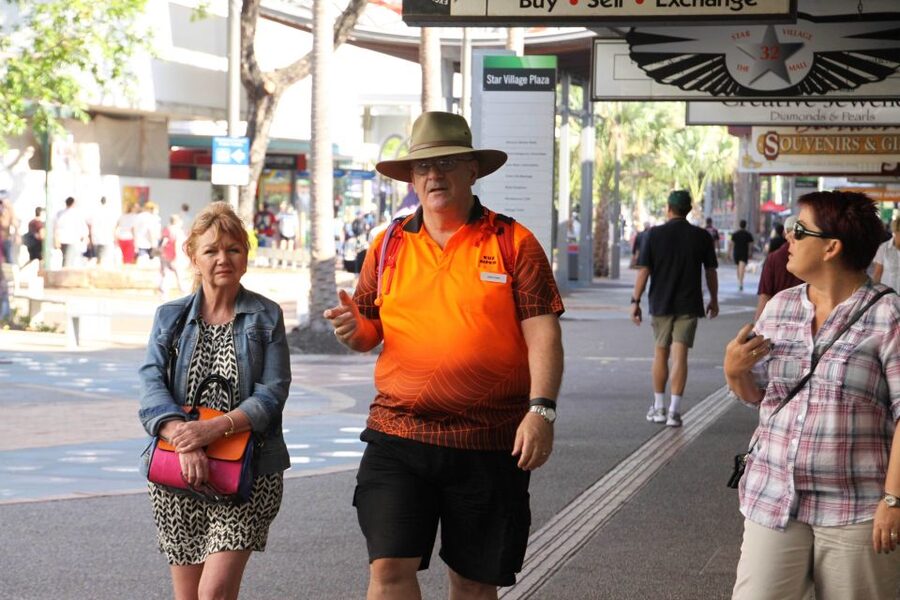
Cyclone Tracy is another central subject. The storm caused enormous damage in Darwin, and its effect remains part of how the city explains its own past.
The walk connects that disaster with the buildings and streets around you. You are not only hearing about a storm as a date in a textbook. You are considering how a city has had to repair, replace, and rethink its built environment.
This is one of the tour’s most useful themes because it explains why Darwin can feel different from older Australian cities. Some places reflect early colonial beginnings, while others show careful reconstruction after major destruction.
The guide also brings lived experience and local perspective into the storytelling. That personal element was especially valued by people who wanted more than a list of dates. If you enjoy history told through cause and effect, rather than isolated facts, this part should appeal.
More history tours in Darwin:
- Puffing Billy Railway: Heritage Steam Train Journey
★ 4.6 · 1,195 reviews - Morning World Heritage Cruise on the Gordon River from Strahan
★ 5.0 · 1,193 reviews - Strahan: World Heritage Cruise on Gordon River with Lunch
★ 4.8 · 1,143 reviews - Sydney: The Rocks 90-Minute History Walking Tour
★ 4.7 · 1,092 reviews
The old courthouse and police station
The remaining old courthouse and police station provide a look at Darwin’s early civic life. These are not just attractive old structures. They help show how government and law operated in the town’s earlier years.
The buildings have been painstakingly reconstructed, which gives the stop an extra layer. You can consider both their original role and the work required to preserve or recreate them after Darwin’s repeated upheavals.
I like this kind of stop on a walking tour because the scale is human. Government buildings can seem formal and distant when viewed from a vehicle. On foot, you can notice the architecture and listen as the guide explains how the buildings fit into the town’s development.
Do not expect a long interior visit to each site. The experience is a guided street walk, and the supplied details focus on viewing and discussing the landmarks. The attraction lies in the commentary and the chance to see the buildings in their wider setting.
Brown’s Mart Theatre and the Palmerston Town Hall ruins
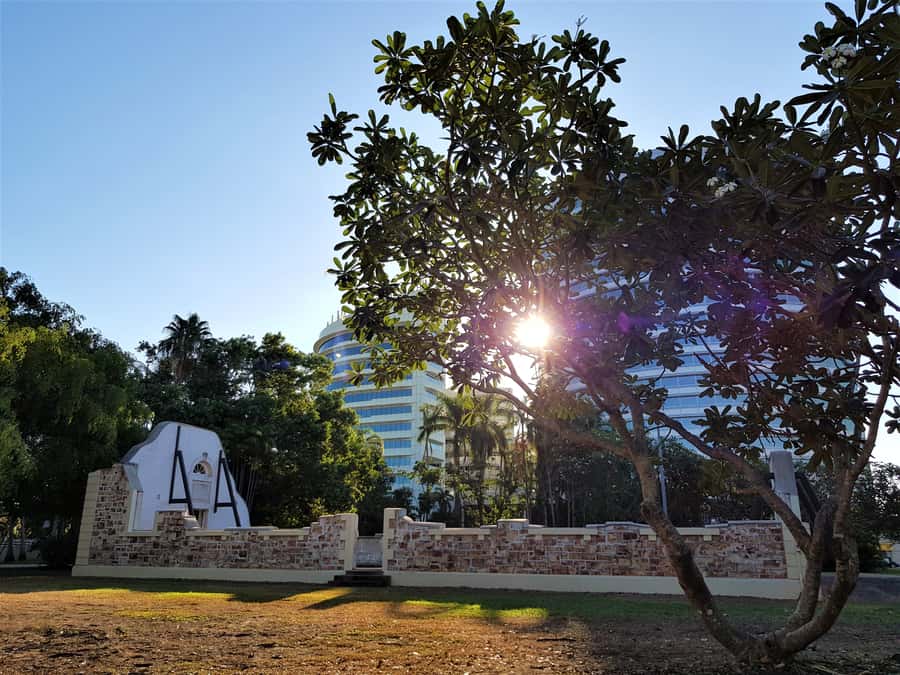
Brown’s Mart Theatre adds a cultural note to the route. Its presence helps show that Darwin’s story is not only about war, storms, and administration. Performance and public life are also part of the city’s identity.
The Palmerston Town Hall ruins offer a different sort of lesson. Ruins can look modest if you do not know what happened to the original structure. With the guide’s explanation, they become evidence of the city’s earlier civic ambitions and the forces that altered them.
These two stops work well together because they show different ways a building can survive. One remains associated with public culture, while the other is remembered through its remnants. That contrast gives the walk variety and helps prevent the history from becoming a parade of government offices.
The tour also points out public artworks, architecture, tropical plants, and wildlife along the way. You will want your camera ready, but do not expect every photograph to be a major attraction. The pleasure is in noticing details you might otherwise pass without a second thought.
Government House, Parliament House, and the Supreme Court
The route includes Government House, Parliament House, and the Supreme Court of the Northern Territory. Together, these sites introduce the institutions that shape present-day Darwin.
Government House connects the city to its colonial and administrative past. Parliament House represents the Northern Territory’s modern political life, while the Supreme Court adds the judicial side of government.
Seeing these places in one walk makes the city’s civic structure easier to grasp. You are moving from early settlement and colonial administration toward the institutions of a contemporary territory.
This section may appeal most to people who enjoy architecture and public history. It is not presented as an inside tour of the buildings, so your experience will be from the streets and public spaces around them. That is also the benefit: you see how these important buildings sit within the everyday city rather than as isolated attractions.
Darwin’s multicultural present
The guide also discusses Darwin’s modern multicultural atmosphere. This keeps the tour from becoming only a backward look at pioneers, war, and natural disaster.
Darwin has developed into a city shaped by many communities, and the walk places that present alongside its earlier chapters. I appreciate that balance. It shows the city as a living place, not a museum of reconstructed buildings.
This part depends heavily on the guide’s ability to connect broad ideas to the streets you are walking through. John’s warm style and willingness to answer questions should suit anyone who wants a more conversational introduction.
You may find this particularly useful early in your visit. It gives you local context that can help you understand later meals, markets, cultural sites, and conversations around town, even though food and drink are not included in the tour itself.
What the two-hour pace feels like
Two hours is a sensible length for a city introduction. You get enough time to cover major themes without giving up most of your day, and the pace is intended to be leisurely rather than rushed.
The route ends at Knuckey Street and the Esplanade in Darwin City. That finish is useful because it leaves you in the central area rather than returning you to the starting point. Plan your next activity from the endpoint, not from Raintree Park.
There are 13 itinerary points listed, though not every point is named individually. The practical meaning is that you will make a series of sightseeing stops as you move through central Darwin, with the guide linking them together through spoken commentary.
You will need to remain on your feet for much of the experience. The tour is not suitable for children under 10, and it is also a poor match for anyone with a low level of fitness. Assistance dogs are allowed, but other pets are not.
Smoking and bare feet are not permitted. Those rules are simple, but the sun advice matters more: carry a hat, sunscreen, water, and perhaps hand sanitizer or tissues. A camera is worthwhile for the public art, old buildings, plant life, and city views.
What you get for $41
At $41 per person, the tour is priced as a short, guide-led introduction rather than an all-day sightseeing package. You receive two hours of walking, a local guide, and live English commentary.
The value depends on how much context you want. If you only need to see the buildings, you can walk through central Darwin on your own for free. If you want to understand the bombings, Cyclone Tracy, reconstruction, civic history, and modern culture as one connected story, the fee is more reasonable.
The small group improves that value. A group limited to 10 people is easier to manage than a large procession, and the possibility of a two-person departure can make the guide’s attention feel unusually personal.
There is no hotel pickup, drop-off, food, or drink. You will need to reach Raintree Park yourself and arrange whatever comes next from the Knuckey Street and Esplanade finish. That is not a flaw for an independent visitor, but it is worth allowing for when planning your day.
The tour has a 4.9 rating from 28 reviews, with praise focused on the guide’s facts, local perspective, friendly manner, and relaxed pace. One person called it a good use of limited time, which captures the main selling point: you can gain a clear sense of Darwin in a single morning or afternoon.
Who should book this Darwin walk?
I would choose this for a first visit, especially if you have only a short time in Darwin. It gives you names, dates, and places that can make the rest of your stay more rewarding.
It also suits people who routinely take walking tours in new cities. The experience has the familiar structure of a city orientation, but the focus on bombing, Cyclone Tracy, rebuilding, and local government gives it a distinctly Darwin feel.
History fans should enjoy the range of subjects, from pioneers and colonial buildings to wartime attacks and civic reconstruction. Photography fans will also find plenty to point a camera at, including public artworks, architecture, tropical plants, and wildlife.
I would be more cautious if you dislike walking in warm weather, need regular seating, or prefer a tour with transport between sights. The pace is gentle, but gentle does not mean stationary.
English is the only tour language. Children under 10 cannot join, and the activity requires at least two paying guests to operate. Those limits make the tour less flexible for some families, but they help preserve the adult-focused, small-group format.
Should you book the Walk Darwin heritage tour?
Book it if you want a friendly, low-key introduction to central Darwin and value a guide who can explain how war, weather, government, and migration shaped the city. John’s enthusiasm, local stories, and careful pace are the clearest reasons to choose it.
Skip it if you want a vehicle tour, a museum-heavy experience, or a route with plenty of places to sit. For most first-time visitors who can comfortably walk for two hours, $41 is fair value for a compact and personal orientation to Darwin.
FAQ
How long is the Darwin Heritage Walk?
The tour lasts two hours.
Where does the tour begin?
It begins under the John McDouall Stuart statue in Raintree Park.
How do I identify the guide?
The guide will be wearing a bright orange shirt.
Where does the tour finish?
It finishes at Knuckey Street and the Esplanade in Darwin City, Northern Territory 0800, Australia.
What language is the tour conducted in?
The live tour and commentary are in English only.
How many people can join the group?
The group is limited to 10 participants.
How many paying guests are needed for the tour to operate?
At least two paying guests are required.
Is hotel pickup included?
No. Hotel pickup and drop-off are not included.
Is food or drink included?
No. Food and drink are not included, so you should bring water.
What should I bring?
Bring a sun hat, sunscreen, water, a camera, and hand sanitizer or tissues.
Are children allowed on the tour?
Children under 10 are not suitable for this activity.
Can I bring a pet?
Pets are not allowed, but assistance dogs are permitted.
Can I cancel for a refund?
You can cancel up to 24 hours in advance for a full refund.
Can I reserve now and pay later?
Yes. You can reserve your place and pay nothing at the time of booking.
Just added in Darwin
- LookAbout Darwin Wetlands Wildlife Premium Tour Max 6 Guests★ 4.9 · 72 reviews
- Litchfield National Park: Full-Day & Lunch from Darwin★ 4.6 · 205 reviews
- Darwin: Premium Litchfield Regional Small Group Day Tour★ 4.6 · 61 reviews
- From Darwin: Litchfield National Park Small-Group Day Trip★ 4.7 · 131 reviews
- Katherine Gorge & Edith Falls Full-Day Tour from Darwin★ 4.6 · 250 reviews
- Darwin: Kakadu & Nourlangie Day Trip Plus Billabong Cruise★ 4.3 · 166 reviews
- Jumping Crocodile Cruise from Darwin Half-Day Scenic Trip★ 4.5 · 80 reviews
- Darwin: Adelaide River Half-Day Jumping Crocs Cruise★ 4.3 · 130 reviews
Historical Tours, compared.

Ultimate Melbourne Walking Tour: History, Laneways & Culture
Read our review →
Puffing Billy Railway: Heritage Steam Train Journey
Read our review →
Morning World Heritage Cruise on the Gordon River from Strahan
Read our review →
World Heritage Cruise on Gordon River with Lunch
Read our review →
Experience History onboard The Mary Valley Rattler
Read our review →
Snorkel & Dive the Reef: Sustainable, Scientific & Cultural Tour
Read our review →
Derwent River Historic Harbour Cruise From Hobart
Read our review →Browse the lists this tour appears in