
Reviewed · RAINFOREST TOURS
Kuranda: Australian Butterfly Sanctuary
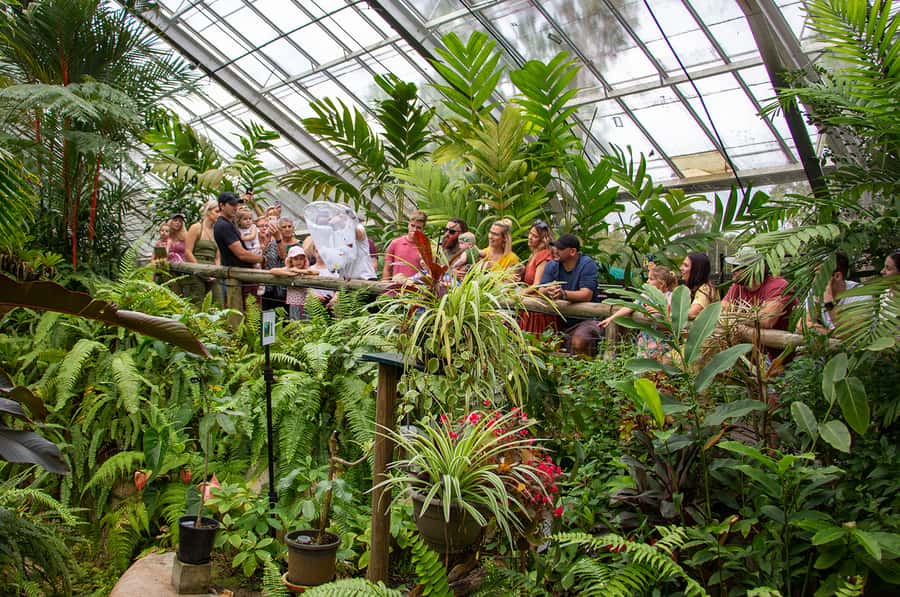
Small wings create a big welcome. The Australian Butterfly Sanctuary gives you a close look at more than 1,500 local tropical butterflies, including the bright green Cairns Birdwing. I especially like the freedom to explore the large aviary at your own pace and the chance to see caterpillars being raised behind laboratory viewing windows.
I also like that you can join a free guided tour and learn how eggs become caterpillars, chrysalises, and adult butterflies. The main caution is heat: one recent visitor found the sanctuary hot, and butterfly numbers and variety may vary on the day.
In This Review
- Key points to know before you go
- Entering Kuranda’s butterfly aviary
- Meeting the Cairns Birdwing
- Following the butterfly life cycle
- Looking through the breeding laboratory windows
- Exploring the museum and gift shop
- Fitting the sanctuary into a Kuranda day
- Is $17 good value?
- Who will enjoy it most?
- Should you book the Australian Butterfly Sanctuary?
- FAQ
- Where is the Australian Butterfly Sanctuary located?
- How much does entry cost?
- How long is the ticket valid?
- How many butterflies are in the sanctuary?
- Can I see how the butterflies are bred?
- Are guided tours included?
- Can I bring food or drinks inside?
Key points to know before you go
- More than 1,500 tropical butterflies: The sanctuary focuses on local rainforest species, with the Cairns Birdwing as its star.
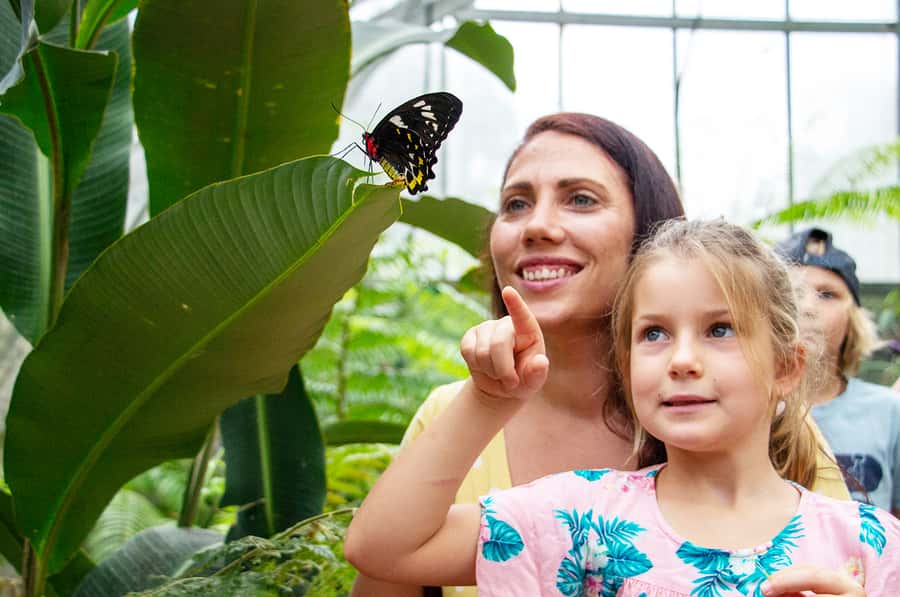
- Wear bright clothing: Red, white, and hot pink are recommended because butterflies may flutter toward these colors.
- The breeding laboratory adds real substance: You can view up to 4,000 caterpillars at different stages of growth.
- Free guided tours are available: Ask about the day’s tour times when you arrive, and look for guides such as Nicole, whose warm and enthusiastic style has earned high praise.
- Plan it as part of a Kuranda day: The sanctuary is at 8 Rob Veivers Drive, close to Kuranda Village, restaurants, shops, Skyrail, and the Kuranda Scenic Railway.
- Allow for changing conditions: The experience is all-weather, but the aviary can feel hot, and butterfly activity is not guaranteed to be equally strong every day.
Entering Kuranda’s butterfly aviary

Kuranda’s Australian Butterfly Sanctuary is a focused wildlife stop rather than a full-day tour with a set route. You arrive at 8 Rob Veivers Drive, enter the sanctuary, and then explore the aviary on a self-guided visit.
That flexible format matters. You are not pushed through in a large group or tied to a strict sequence. You can pause when a butterfly lands nearby, move on when a section is quiet, and return to a favorite area. You can also ask about free guided tour times and add a more structured explanation to your visit.
The sanctuary is promoted as Australia’s largest butterfly flight aviary and exhibit, and the experience is built around scale. More than 1,500 tropical butterflies are kept here, all from local rainforest species. That local focus gives the visit a clear sense of place. You are not looking at a random indoor collection from around the world. You are seeing the kinds of butterflies associated with the tropical forests around Cairns and Far North Queensland.
Still, keep your expectations sensible. A large aviary does not mean every corner will be full of butterflies at every moment. On one July visit, the number and range of species felt limited. The staff were friendly and helpful, but the display did not match the visitor’s expectation. Butterfly activity can change, so treat the numbers as a general guide rather than a promise that hundreds will surround you at once.
More Rainforest Tours in Cairns
- From Cairns: Self-Guided Kuranda Trip with Train and Skyrail
★ 4.6 · 3,392 reviews - Cairns: Daintree Rainforest and Mossman Gorge Tour
★ 4.6 · 2,485 reviews - Daintree Rainforest, Mossman Gorge Small-Group from Port Douglas
★ 5.0 · 2,326 reviews
Meeting the Cairns Birdwing
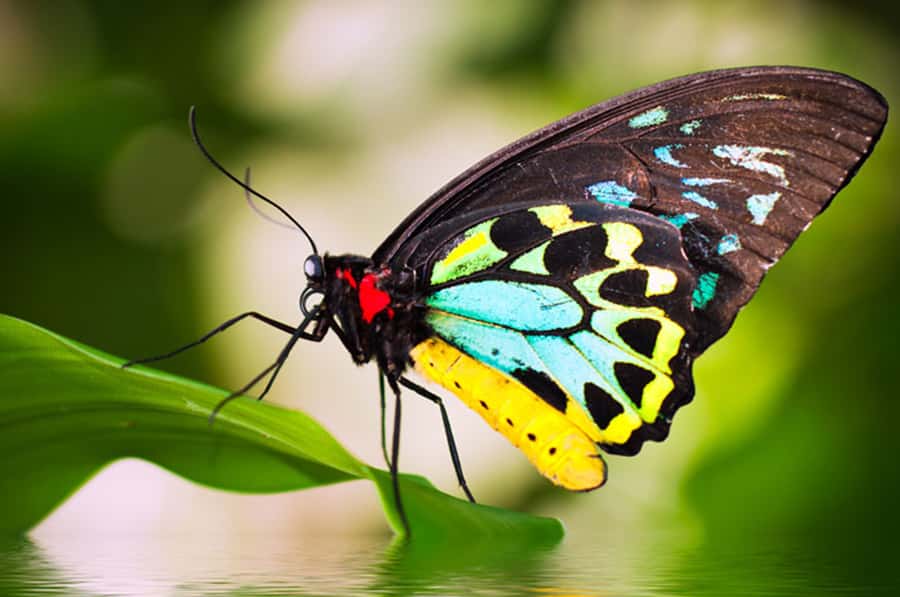
The clear star is the Cairns Birdwing, known for its striking fluorescent green coloring. This is the butterfly to watch for if you want the sanctuary’s most memorable sight.
The point of the visit is not just to see a framed specimen or a distant flutter. Inside the flight aviary, you have the chance to observe these butterflies close up as they move through the enclosed rainforest setting. The experience can be especially enjoyable when one comes near enough for you to study its color and wing shape.
You can improve your chances by wearing bright clothing. Red, white, and hot pink are the recommended choices. There is no guarantee that a butterfly will land on you, but the sanctuary specifically suggests these colors to encourage closer interaction.
This is one of the rare wildlife experiences where your clothing can become part of the fun. A bright shirt is not essential, but it may make the visit more active for children and anyone hoping for a butterfly to flutter close.
The atmosphere can be warm. One January visit was praised for the staff and overall experience but noted that the heat was uncomfortable. Since this is a tropical flight aviary, light clothing and a slower pace make sense. The sanctuary operates as an all-weather attraction, but all-weather does not mean cool or climate-controlled.
Following the butterfly life cycle
The free guided tour is worth asking about when you arrive. It gives the visit more shape and helps you identify the species moving around the aviary.
A guide can explain butterfly behavior, the differences between species, and the stages of the life cycle. That turns the experience from a pretty walk through an enclosure into a practical lesson in how butterflies develop.
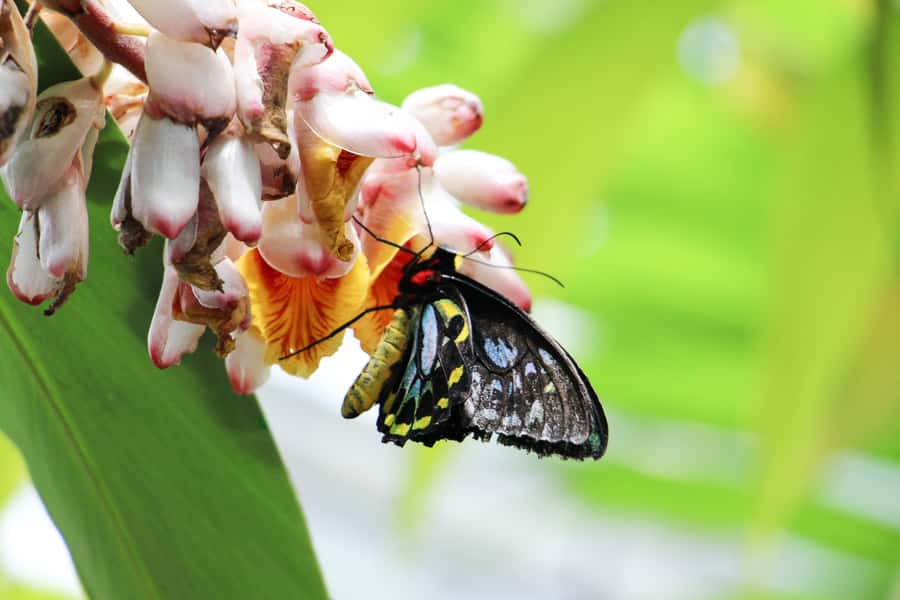
The life cycle is easy to follow once you know what you are seeing. Eggs become caterpillars. Caterpillars grow through different stages before forming chrysalises. Adult butterflies then emerge and are released into the sanctuary.
If Nicole is leading a tour during your visit, make time for it. A December visit from Melbourne received especially warm praise for her enthusiastic, interesting, and welcoming approach. The praise was specific, which is useful: the value of the tour depends partly on how much attention and explanation you want, and a lively guide can make the science much easier to remember.
You can also explore without a guide. That suits you if you prefer to move slowly, take your own time, or keep the visit short. The best approach is to ask about tour times first, then decide if the schedule fits your day in Kuranda.
Looking through the breeding laboratory windows
The breeding laboratory is the sanctuary’s most distinctive feature. Viewing windows let you look into the working area where staff collect butterfly eggs each day and raise the caterpillars by hand.
Up to 4,000 caterpillars may be housed in the laboratory. You can see them in different stages of development, which makes the display more than a simple adult butterfly exhibit. It shows the work needed to keep the aviary supplied with local species.
This behind-the-scenes element gives you a better understanding of why the butterfly collection changes. The sanctuary is not simply holding a fixed group of insects. Staff are managing eggs, caterpillars, chrysalises, and newly emerged butterflies, then releasing the adult butterflies into the flight area.
For children, the laboratory can be the part that makes the visit click. Adults who enjoy nature photography or animal care may also find it more interesting than simply walking through the aviary. You are seeing the less glamorous side of a butterfly attraction, including the careful breeding process that visitors usually never get to observe.
The laboratory also helps set realistic expectations. Butterfly numbers and species variety are part of a living cycle. A quiet day in the aviary does not necessarily mean nothing is happening. The next generation may be developing behind the windows.
A completely different kind of day out:
- Great Barrier Reef Snorkeling and Diving Cruise from Cairns
★ 4.5 · 3,714 reviews - From Cairns: Great Barrier Reef Cruise by Premium Catamaran
★ 4.9 · 3,567 reviews - Cairns: Outer Edges of The Great Barrier Reef Scenic Flight
★ 4.9 · 2,912 reviews - Passions of Paradise Great Barrier Reef Cruise by Catamaran
★ 5.0 · 2,564 reviews
Exploring the museum and gift shop
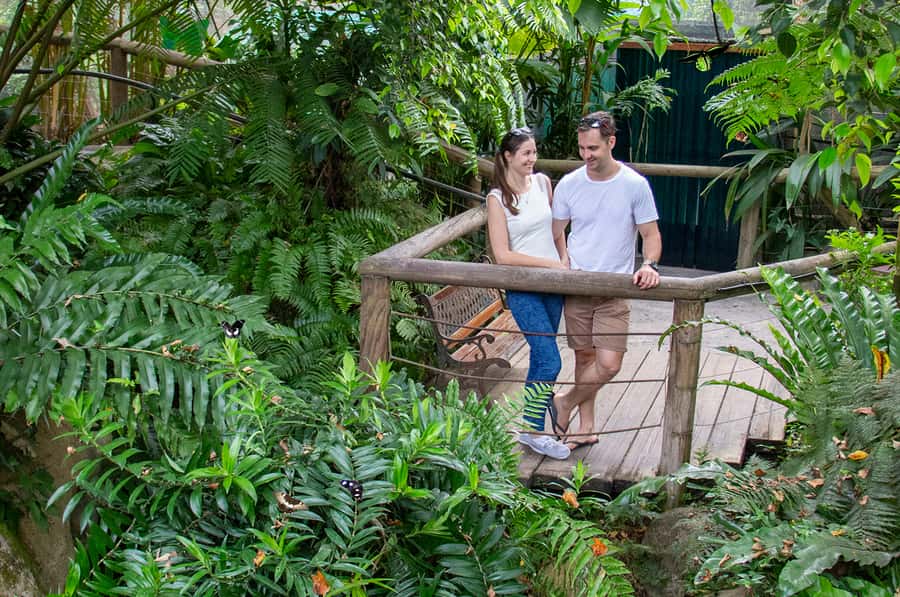
Admission includes access to a museum covering butterflies from around the world. This is useful if the aviary is busy, hot, or temporarily less active. It also gives you a wider frame of reference after seeing local Queensland species.
The local focus remains the strongest reason to visit, but the museum can help you compare the Cairns Birdwing and other regional species with butterflies from different parts of the globe. It is an educational add-on rather than the central attraction.
A gift shop is also included as part of the sanctuary visit. You can browse for a butterfly-themed souvenir, which may suit families looking for something small to remember the day. The available information does not specify particular products or prices, so I would treat it as an optional browse rather than a reason to book.
Food and drinks are not allowed inside the sanctuary. That is a practical rule to know before arriving, especially if you are visiting with children. Kuranda Village has plenty of places to eat before or after your visit, so plan your meal outside the sanctuary rather than arriving with snacks in hand.
Fitting the sanctuary into a Kuranda day
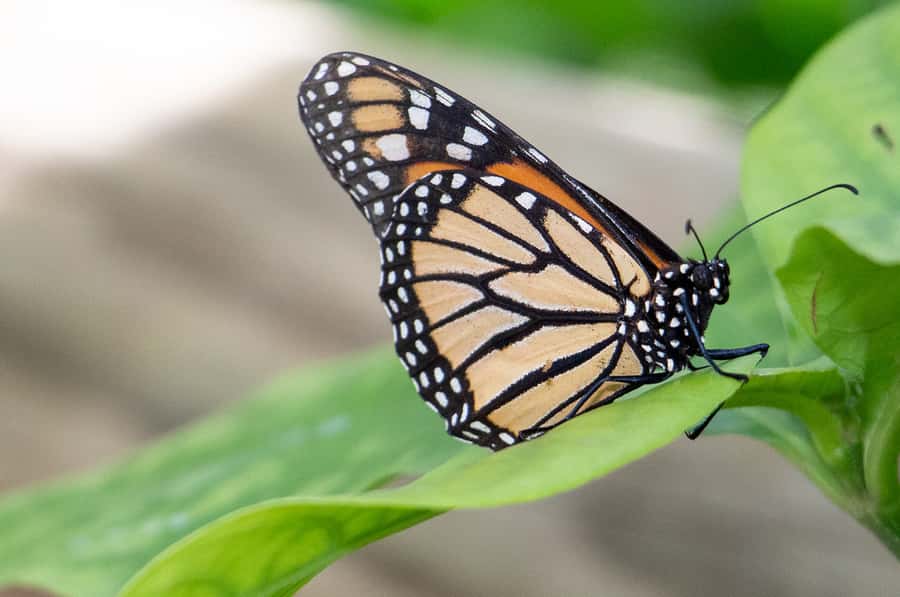
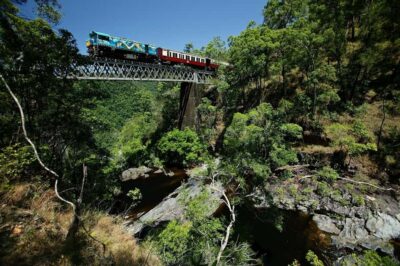
The easiest way to think about this attraction is as one stop in a larger Kuranda outing. You can reach Kuranda by Skyrail cable car, the Kuranda Scenic Railway, or by driving yourself.
The sanctuary’s location on Rob Veivers Drive makes it simple to combine with time in Kuranda Village. You can visit the butterflies, eat in the village, and continue with other Kuranda activities. The information provided does not give a fixed visit length, only a one-day validity period, so you have room to fit the sanctuary around your transport schedule.
If you arrive by Skyrail or train, check your return timing before settling into a long visit. The sanctuary itself is self-guided, which helps, but your wider day may still depend on a scheduled departure.
If you drive, you have more control over timing. You can stop in Kuranda when it suits you and use the sanctuary as a shorter wildlife visit rather than building the whole day around it.
The attraction is wheelchair accessible, which makes it a practical option for more visitors. The host and tours are in English, and the listed language for the experience is English.
Is $17 good value?
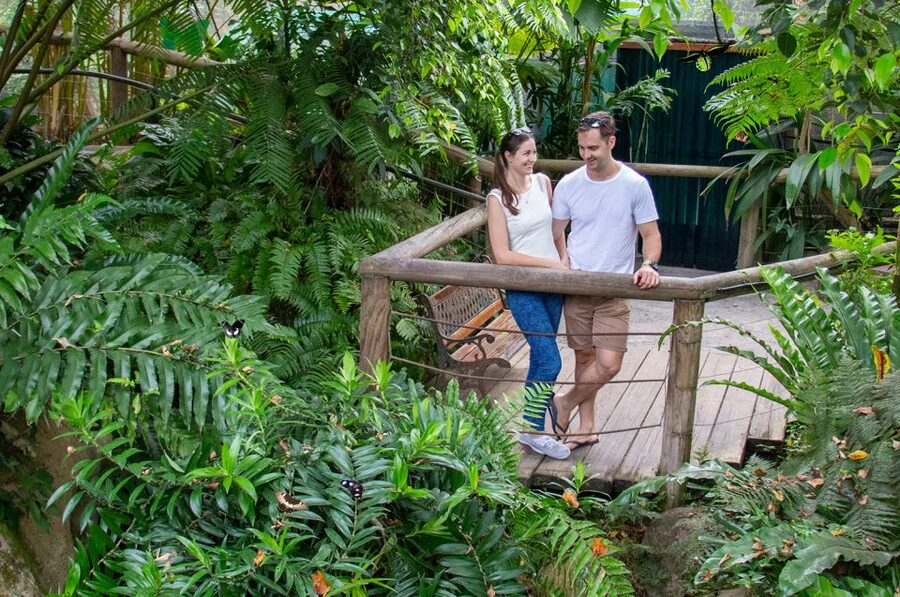
At $17 per person, the sanctuary is reasonably priced for a specialist wildlife attraction, especially if you use more than just the main aviary. The value is strongest when you include the breeding laboratory, museum, and free guided tour.
A quick walk through the aviary alone may feel less satisfying if butterfly activity is low during your visit. The laboratory helps protect your investment because it gives you another clear feature to see even when fewer adult butterflies are flying.
The price also works well for a family or couple building a day in Kuranda. It is not an expensive full-day excursion, and you are paying for entry rather than a packaged transport experience. Skyrail, the scenic railway, meals, and other Kuranda activities are separate costs.
You should also note that the $17 price does not guarantee a particular guide, species count, or number of butterflies flying around you. The experience is based on living animals. That means conditions may vary, but it also means the visit has a natural quality that a static display cannot provide.
The overall rating is 4.3 from 40 reviews, which fits the experience described here: strong staff service and an appealing concept, with some unevenness in heat, butterfly numbers, and species variety.
Who will enjoy it most?
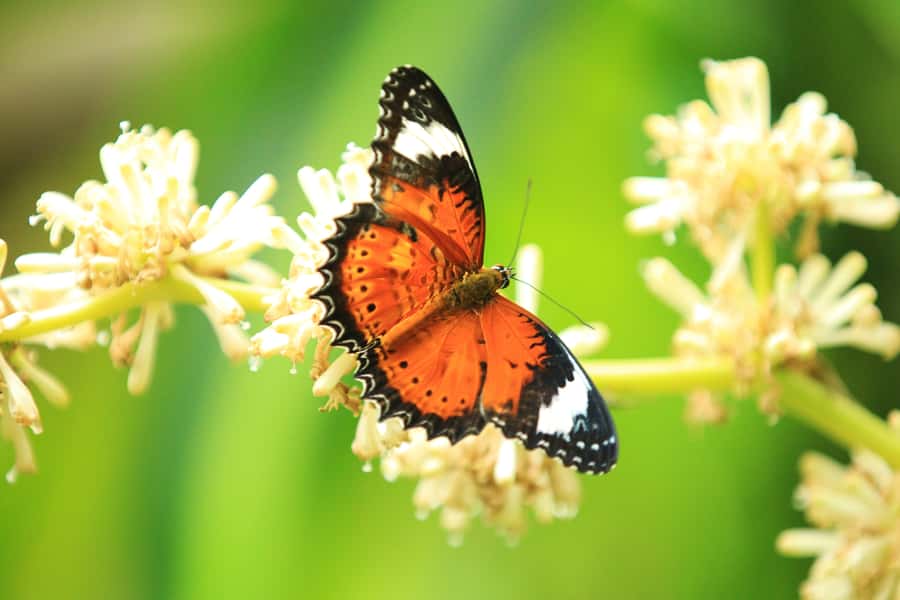
I would recommend the sanctuary to families, first-time visitors to Kuranda, and anyone who enjoys small-scale wildlife experiences. Children can watch butterflies land nearby, look for bright colors, and see caterpillars at different stages in the laboratory.
It is also a good match for adults who prefer a relaxed attraction with a clear educational side. You do not need to be an insect expert. The guides explain the basics, and the life cycle is easy to understand once you see the different stages in one place.
The sanctuary may be less satisfying if you expect a constant cloud of butterflies or a huge range of species every day. Two recent visits described the staff as friendly, but one found the display short on butterflies and another found the aviary hot. Those are fair warnings, not reasons to dismiss the attraction.
Wear bright clothing if close encounters appeal to you. Ask about Nicole or the day’s free tour if you want lively explanations. Plan a meal in Kuranda Village, and allow yourself enough time to see both the aviary and the breeding laboratory rather than rushing through the entrance area.
Should you book the Australian Butterfly Sanctuary?
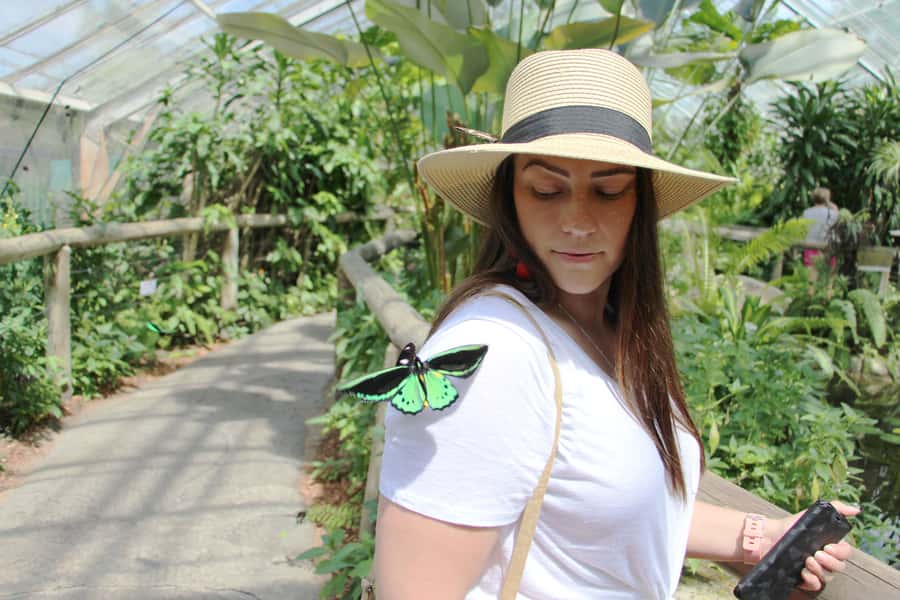
Book it if you want a reasonably priced Kuranda attraction that combines close-up wildlife, a working breeding laboratory, and an easy self-guided format. The Cairns Birdwing, bright clothing tip, and chance to watch caterpillars develop give the visit more character than a standard indoor exhibit.
I would be more cautious if you are visiting mainly for large numbers of butterflies or a wide variety of species. Activity can vary, and the tropical setting may feel hot. For the best value, join the free tour, take your time in the laboratory, and pair the sanctuary with lunch or another stop in Kuranda Village.
FAQ
Where is the Australian Butterfly Sanctuary located?
It is located at 8 Rob Veivers Drive, Kuranda, Queensland 4881.
How much does entry cost?
The listed price is $17 per person.
How long is the ticket valid?
Entry is valid for one day. The information does not give a fixed length for the visit, so you can explore the self-guided aviary and included areas at your own pace.
How many butterflies are in the sanctuary?
The sanctuary is home to more than 1,500 tropical butterflies. The collection consists of local rainforest species, including the Cairns Birdwing.
Can I see how the butterflies are bred?
Yes. Viewing windows let you look into the breeding laboratory, where staff collect eggs and hand-raise caterpillars through the chrysalis stage before releasing adult butterflies into the sanctuary. Up to 4,000 caterpillars may be housed there.
Are guided tours included?
Yes. Free guided tours are available, and you should ask about the times when you arrive. The host and tour language is English.
Can I bring food or drinks inside?
No. Food and drinks are not allowed in the sanctuary. Kuranda Village has places to eat before or after your visit.
Just added in Cairns
- Southern Daintree Explorer Tour – Half Day★ 4.1 · 28 reviews
- Cairns: Spirit of Cairns Dinner Cruise★ 4.6 · 336 reviews
- From Cairns: Rainforest & Nocturnal Wildlife Tour★ 4.7 · 144 reviews
- Port Douglas: Wildlife Habitat Swim with Crocodiles★ 4.8 · 27 reviews
- From Port Douglas: Barramundi Pond Fishing with Lunch★ 4.9 · 21 reviews
- Port Douglas: Sunset Cruise on a Chinese Shaolin Junk Ship★ 4.7 · 169 reviews
- Port Douglas: Silversonic Great Barrier Reef Dive & Snorkel★ 4.8 · 353 reviews
- Port Douglas: Shaolin Seafood Lunch Sail, with Fresh Prawns★ 4.9 · 57 reviews
Rainforest Tours, compared.
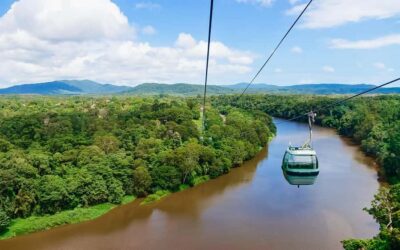
Self-Guided Kuranda Trip with Train and Skyrail
Read our review →
Daintree Rainforest, Mossman Gorge Small-Group from Port Douglas
Read our review →
Cape Tribulation, Mossman Gorge, and Daintree Rainforest Day Trip
Read our review →
Solar Whisper Daintree River Crocodile and Wildlife Cruise
Read our review →
Daintree Rainforest & Cape Tribulation 4WD Tour
Read our review →
Skyrail, Kuranda, and Rail Tour with Hotel Transfers
Read our review →Browse the lists this tour appears in