
Reviewed · FARMS
Jurlique Farm Tour
Plants do the talking here. The Jurlique Farm Tour takes you behind the scenes of the South Australian skincare brand, where you learn how plants are propagated, grown, harvested, and used in pure and natural products. The setting is the Adelaide Hills, at 31 Liebelt Road in Biggs Flat, and the visit lasts about 90 minutes.
I like the tour’s hands-on approach and its clear look at biodynamic farming, from compost production to soil fertility. I also like the chance to connect the plants in the garden with the products they support, including opportunities to try some Jurlique products in the garden. The main drawback is practical: you must arrange your own transport to the farm, and the tour may feel too specialized if you are not interested in plants, farming, or skincare.
The visit is led by a Jurlique Ambassador, and Lexi has earned particular praise for being friendly, clear, and well informed. The pace suits a mixed group, including solo visitors, and the maximum group size of 50 keeps this from being a private garden walk but still allows for a structured tour.
In This Review
- Key points about the Jurlique Farm Tour
- Why the Adelaide Hills setting matters
- Starting with Jurlique’s story
- Seeing seedlings and plant propagation
- Meeting the plants and their uses
- Understanding biodynamic farming
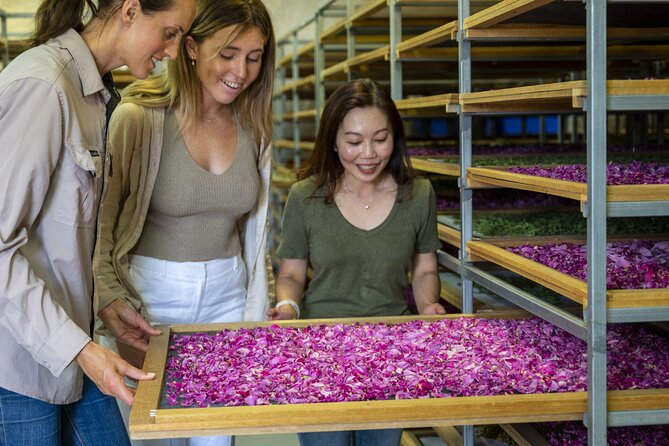
- Following the harvest process
- What the guide adds to the experience
- Is the $28.69 price good value?
- Who will enjoy this farm visit most?
- Timing, group size, and practical planning
- Should you book the Jurlique Farm Tour?
- FAQ
- Where does the Jurlique Farm Tour begin?
- Where does the tour finish?
- How long does the tour last?
- What is included in the price?
- Are transfers to the farm included?
- What does the tour cover?
- Is the experience suitable for most people?
- How large can the tour group be?
- Can I cancel for a full refund?
Key points about the Jurlique Farm Tour
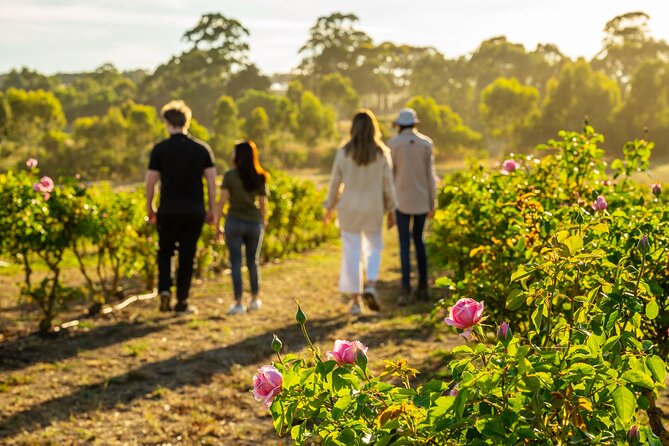
- See how Jurlique grows its own ingredients: The tour connects the company’s skincare products with the plants grown on its biodynamic farm.
- Follow the process from seedling to harvest: You learn about propagation, plant care, harvesting, and the uses of different plant varieties.
- Explore biodynamic farming in plain terms: Soil fertility and compost production are part of the visit, giving the tour more substance than a simple garden stroll.
- Try selected products in the garden: The experience links the scent and feel of the plants with Jurlique’s skincare range.
- Allow 90 minutes at the farm: The tour begins and ends at Jurlique Farm, so you need to plan your own route to Biggs Flat.
- Expect a friendly group experience: A Jurlique Ambassador leads the tour, with up to 50 people permitted in the group.
Why the Adelaide Hills setting matters
The farm sits in the Adelaide Hills, away from central Adelaide and surrounded by the type of rural setting that makes a working garden more meaningful. You are not simply looking at finished bottles on a shop shelf. You are seeing the place where the ingredients begin their journey.
The address is 31 Liebelt Road, Biggs Flat, South Australia 5153. Since transfers are not included, you need to make your own way there. That is the biggest logistical point to settle before booking. The tour itself starts and finishes at the farm, so there is no separate drop-off point to manage afterward.
I like this arrangement for visitors already exploring the Adelaide Hills. You can treat the farm as one stop in a wider day out, though the tour details do not include a transfer service or a wider regional itinerary. If you are staying in Adelaide and do not have transport arranged, check your route carefully before paying.
The setting also gives the tour a calmer feel than a standard product presentation. The focus is not just on what Jurlique sells, but on how plants, soil, farming methods, and harvesting fit together.
A few more options to weigh up in Adelaide
- Barossa & Maggie Beers Farm (4 wine Tastings & Lunch included)
★ 4.5 · 45 reviews - Amazing Yarra Valley Wine Tour + Chocolate, Farm Fresh, Gin
★ 5.0 · 1,566 reviews - Hidden Gems: Boutique Full-Day Wine, Farm & Lunch Tour
★ 5.0 · 881 reviews
Starting with Jurlique’s story
The tour begins with the history of Jurlique. That opening gives you a useful frame for the rest of the visit. Instead of hearing isolated facts about herbs and flowers, you learn why the farm matters to the company’s skincare work.
Jurlique has grown the ingredients used in its international skincare products on its South Australian biodynamic farm for more than 35 years. That long connection between brand and farm is central to the experience. You are learning about an ongoing growing process, not a temporary display created only for visitors.
I find this kind of introduction valuable because it helps you understand the company’s identity before you examine the plants. The farm is not presented as a decorative backdrop. It is part of the product story, from the first seedlings to the harvested botanicals.
The history section should also help you decide if the tour matches your interests. If you want a general Adelaide Hills sightseeing trip, this is a narrow subject. If you like natural skincare, gardening, sustainable growing, or the origins of commercial products, the introduction gives the rest of the tour a clear purpose.
Seeing seedlings and plant propagation
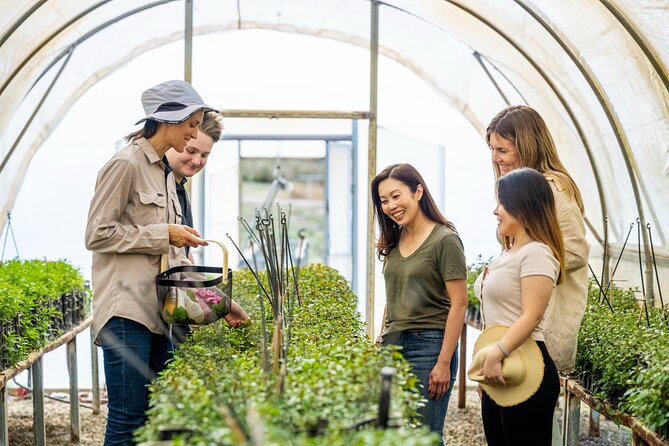
One of the most useful sections covers how Jurlique propagates its seedlings and plants. Propagation is the point where the farm’s work begins, and it shows you that skincare ingredients do not simply appear when a crop is ready to pick.
The exact techniques and plant varieties can vary, but the tour is designed to explain how new plants are started and cared for. That makes this part more practical than a simple identification walk. You are encouraged to think about how a plant moves through the growing cycle before it becomes an ingredient.
This is also where the tour can appeal to garden-minded visitors. You may find yourself paying more attention to the work behind healthy plants, rather than only admiring their appearance. The connection between careful propagation and reliable ingredients is easy to understand.
A larger group can affect how closely you follow demonstrations or explanations. With a maximum of 50 people, you should expect a group tour rather than a quiet one-on-one lesson. Still, the reported pace works for a mixed group, and the guide’s role is to keep the information accessible.
Meeting the plants and their uses
The plant varieties are not shown as random greenery. The tour explains what different plants are used for, linking each one to Jurlique’s products and wider approach to natural skincare.
This connection is one of the strongest reasons to choose the tour. You can see the botanical source, hear about its use, and then relate it to the finished product. That gives the visit a sensory side without turning it into a sales pitch alone.
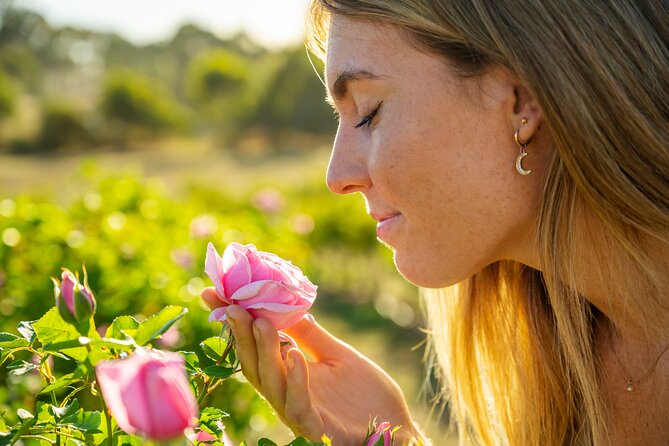
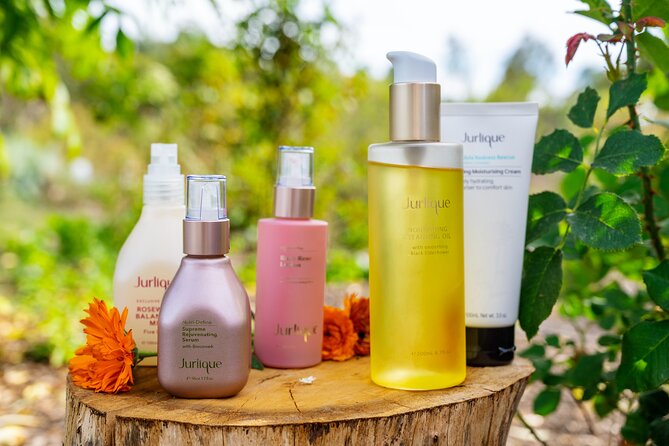
The display gardens are part of the experience, and selected products may be tried in the garden. This small detail adds a welcome bit of participation. You are not only listening to a guide describe botanicals. You may also compare the living plants with the products made from them.
I would keep your expectations measured. The tour is not described as a full skincare consultation, a product workshop, or a treatment. It is a farm visit with a product connection. If you want detailed advice about which cream or oil suits your skin, this may not be the right format.
For someone already curious about Jurlique, though, the plant-to-product link is a real advantage. It makes the brand feel less abstract and helps explain why the farm is important.
A completely different kind of day out:
- Barossa Premium Wine Tasting Tour & lunch Departs 7 days a week
★ 5.0 · 1,475 reviews - Adelaide: Barossa Premium Wine Tasting tour & Winery Lunch
★ 4.8 · 1,452 reviews - Kangaroo Island Full Day Experience by Ferry Including Lunch
★ 4.5 · 1,202 reviews - Discover Barossa: 4 Wine Tastings, Gourmet Lunch, and Hidden Gems
★ 5.0 · 1,027 reviews
Understanding biodynamic farming
Biodynamic farming is a major part of the visit. The guide explains the principles behind the farm’s approach, giving you a chance to learn how Jurlique thinks about growing rather than simply hearing that the farm follows a particular label.
The subject is especially useful because biodynamic farming can sound vague if it is only used as a marketing term. Here, the tour includes practical subjects such as soil fertility and compost production. Those topics give the farming approach something concrete to discuss.
I like that the tour includes the soil beneath the plants. A garden visit focused only on blooms and scents would be pleasant, but limited. By talking about fertility and compost, the experience shows the less glamorous work that supports the visible garden.
This part may be the most informative section for anyone interested in sustainable agriculture or growing methods. It also gives you a better sense of why the farm needs ongoing care. Healthy ingredients begin with the condition of the soil, and the tour treats that as part of the full process.
You should not expect an advanced agricultural course. The experience lasts about 90 minutes and covers several themes, including history, propagation, plant uses, farming principles, compost, and harvest. The explanations are intended for a general audience, which is good news if you are new to biodynamic farming.
Following the harvest process
The tour also covers harvesting. This is the point where the plants move from the farm into the next stage of Jurlique’s production process, so it completes the story begun with propagation.
Learning about harvest helps you see that timing and handling matter. The tour details do not specify particular harvest dates, crops, or techniques, so you should not expect a seasonal guarantee of seeing every stage in action. Instead, the guide explains the process as part of the farm’s work.
That distinction matters. This is a guided farm tour, not a promise that you will watch a live harvest during every visit. The value comes from understanding the complete cycle and seeing how the farm supports the brand’s products.
For me, this gives the visit a satisfying structure. You start with Jurlique’s background, move to young plants, learn about different varieties, examine the soil and compost, and finish with the harvest connection. The sequence makes sense and keeps the tour from feeling like a collection of unrelated facts.
What the guide adds to the experience
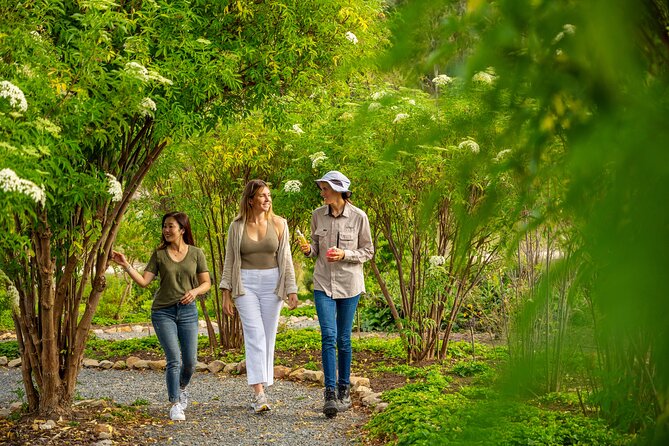
The 90-minute tour is led by a Jurlique Ambassador. That guide is important because the subject could easily become either too technical or too sales-focused. A good guide keeps the focus on the farm while explaining how the products relate to the plants.
Lexi is specifically praised for being friendly and well informed. That matters if you are joining alone or arriving without much knowledge of Jurlique. A solo visitor has reported feeling included in a larger group, which suggests that the tour does not depend on arriving with companions.
The pace is another strength. It is described as suitable for a group with different interests and levels of knowledge. You should still expect to walk through the farm and display gardens, so comfortable footwear is a sensible choice, although the provided details do not specify the walking surface or accessibility conditions.
The guide also helps bring the products into the outdoor setting. Trying some products in the garden gives you a direct sensory connection, but the main value is the explanation around them. You are learning why particular botanicals matter, not simply being shown a retail display.
Is the $28.69 price good value?
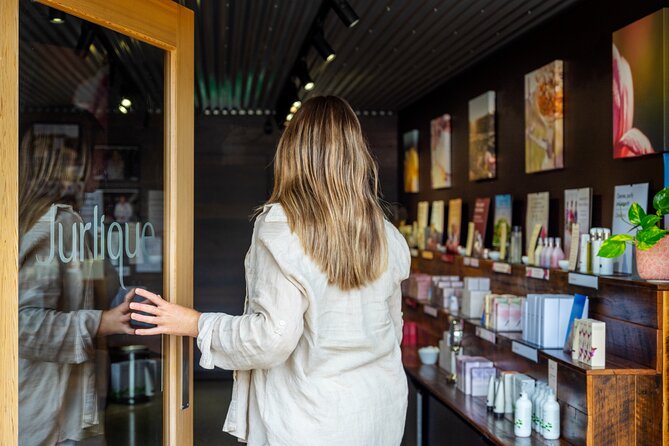
At $28.69 per person, the tour is reasonably priced for a guided 90-minute experience, especially if you already plan to visit the Adelaide Hills. The cost includes the guided farm tour with a Jurlique Ambassador and admission to the farm experience.
The value comes from several parts working together:
- You receive a structured 90-minute tour rather than general access to a garden.
- The guide covers Jurlique’s background, propagation, plant varieties, biodynamic methods, compost, soil fertility, and harvesting.
- You get a direct link between the farm and the company’s skincare products.
- The visit includes an interactive element through product sampling in the garden.
The price looks less attractive if you are paying for separate transport solely to reach the farm. Transfers are not included, and the tour does not offer a broader Adelaide Hills excursion. Your total cost depends on how you get to Biggs Flat.
I would book it as part of a day in the hills, not as an isolated trip unless the farm itself is a priority. That approach makes the transport effort easier to justify. If you are already nearby, the price is easier to defend because the tour gives you a focused, guided experience with a clear subject.
The tour receives a 4.8 rating from 37 reviews, with 100 percent recommending it. Those figures support the idea that the experience delivers what it promises, though the review count is not large enough to tell you everything about every season or group size.
Who will enjoy this farm visit most?
I would recommend the tour to you if you enjoy one or more of the following:
- Natural skincare and botanical products
- Gardening and plant propagation
- Biodynamic farming and soil care
- Small-scale or specialty agriculture
- Behind-the-scenes brand experiences
- Quiet Adelaide Hills activities
- Guided visits with a clear educational focus
It should also suit solo visitors. The group format does not require you to arrive with friends, and the guide is expected to keep individuals included.
Families may find useful material here, but the supplied details do not describe a children’s program or age-specific activities. I would choose it for children who already enjoy plants or nature rather than assuming it will entertain every young visitor.
You may want to skip it if you are looking for a fast photo stop, a broad sightseeing tour, or a large product shopping experience. The subject is specific, and much of the time is devoted to growing methods and farm processes.
Timing, group size, and practical planning
Set aside about 90 minutes for the tour itself. Since the activity ends back at the meeting point, you can plan the rest of your day from the farm without arranging a return transfer through the operator.
The maximum group size is 50 people. That is large enough to create a shared tour atmosphere, but the experience is not advertised as private or small group. If you prefer a personal guide with plenty of individual attention, this format may not suit you.
A mobile ticket is provided, which is convenient for booking and entry. Confirmation arrives at the time of booking. Service animals are allowed, and most people can participate.
The cancellation terms are friendly but firm. You can cancel at least 24 hours before the local start time for a full refund. Cancellations or changes made within 24 hours are not accepted for a refund. I would check your transport plans before the deadline, since getting to Biggs Flat is your responsibility.
The tour is often booked about 28 days ahead. That does not guarantee every date will sell out, but it is a useful sign that advance planning is sensible, especially if your Adelaide Hills schedule is fixed.
Should you book the Jurlique Farm Tour?
Book this tour if you want to understand the full path from seedling to skincare and you enjoy guided nature experiences with practical detail. The biodynamic farming section, the propagation and harvest story, and the chance to try products in the garden give the visit more depth than a standard brand presentation.
I would be especially happy to recommend it to anyone already planning time in the Adelaide Hills. The $28.69 price is fair for 90 minutes with a guide, provided you are comfortable arranging your own transport and joining a group of up to 50 people.
Skip it if your main goal is general sightseeing or if plant and skincare subjects do not interest you. For the right audience, though, this is a friendly, focused look at how a well-known natural skincare brand grows and uses its ingredients.
FAQ
Where does the Jurlique Farm Tour begin?
The tour begins at Jurlique Farm, 31 Liebelt Road, Biggs Flat, South Australia 5153.
Where does the tour finish?
The activity ends back at the meeting point at Jurlique Farm.
How long does the tour last?
The guided farm tour lasts approximately 90 minutes.
What is included in the price?
The price includes a 90-minute guided farm tour with a Jurlique Ambassador.
Are transfers to the farm included?
No. Transfers to and from the meeting point are not included, so you must arrange your own transport.
What does the tour cover?
The tour covers Jurlique’s history, seedling and plant propagation, plant varieties and their uses, biodynamic farming principles, soil fertility, compost production, and the harvest process.
Is the experience suitable for most people?
Yes. Most people can participate, and service animals are allowed.
How large can the tour group be?
The maximum group size is 50 people.
Can I cancel for a full refund?
Yes. You can cancel at least 24 hours before the experience start time for a full refund. Cancellations or changes made less than 24 hours before the start time are not accepted for a refund.
Just added in Adelaide
- Wild Dolphin Swim Cruise★ 5.0 · 55 reviews
- d’Arenberg Cube / McLaren Vale Regional Tour★ 4.5 · 26 reviews
- Ultimate Adelaide City and Hahndorf Tour★ 4.5 · 45 reviews
- Victor Harbor and Southern Highlights from Adelaide★ 4.0 · 47 reviews
- Victor Harbor and Fleurieu Peninsula Tour★ 4.5 · 145 reviews
- The F Factor: Adelaide food tour★ 5.0 · 89 reviews
- Western Ridge & Valley Floor: 20-Minute Helicopter Flight★ 5.0 · 24 reviews
- Adelaide Twilight Cruise from Glenelg★ 4.5 · 94 reviews
Farms, compared.
Amazing Yarra Valley Wine Tour + Chocolate, Farm Fresh, Gin
Read our review →
Hidden Gems: Boutique Full-Day Wine, Farm & Lunch Tour
Read our review →
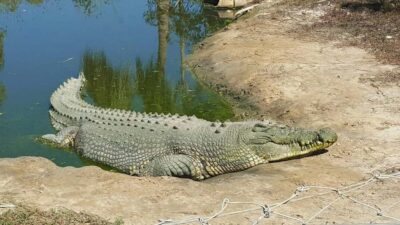
Rockhampton: Koorana Crocodile Farm Guided Tour
Read our review →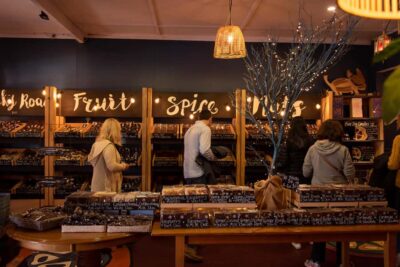
Hidden Gems Margaret River: Authentic Wine & Farm Experience
Read our review →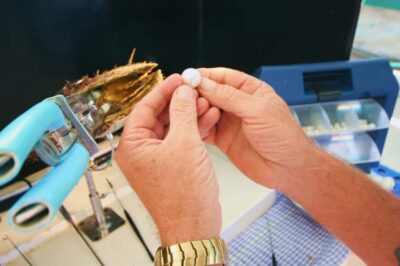
Cygnet Bay Pearl Farm Behind-the-Scenes Tour & Live Harvest
Read our review →
Barossa & Maggie Beers Farm (4 wine Tastings & Lunch included)
Read our review →
Coffin Bay: Oyster Farm Boat Tour with Wading & 12 Oysters
Read our review →Browse the lists this tour appears in