
Reviewed · WILDLIFE TOURS
Rockhampton: Koorana Crocodile Farm Guided Tour
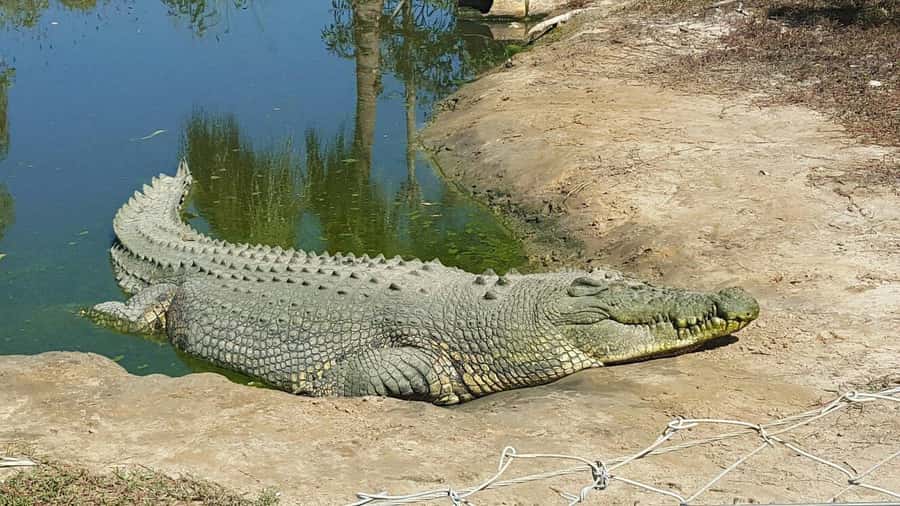
Crocodiles make ordinary farm visits unforgettable. Koorana Crocodile Farm, Queensland’s first commercial crocodile farm, mixes wildlife education with the rare chance to hold a small crocodile. I like the close-up handling experience and the clear focus on crocodile conservation. The main drawback is that much of the tour takes place outdoors, so heat, sun, and insects can affect your comfort.
I also like the way the 90-minute visit builds from a talk and video into a farm walk and feeding session. Guides such as Kia and Mel have earned praise for making the information lively and easy to follow. Just keep your expectations realistic: seasonal activities, such as egg collection and hatching, are not available all year.
In This Review
- Koorana Crocodile Farm at a glance
- Why this farm visit is more than a photo stop
- The opening talk sets the tone
- The crocodile behavior video adds useful context
- The farm walk brings the information to life
- Holding a baby crocodile is the memorable finale
- Egg collection and hatching depend on the calendar
- Guides make a major difference
- Is $28 good value for 90 minutes?
- Prepare for heat, sun, and insects
- Who will enjoy Koorana most?
- Should you book this crocodile tour?
- FAQ
- How long is the Koorana Crocodile Farm tour?
- How much does the tour cost?
- What does the admission price include?
- Can I hold a baby crocodile?
- Are food and drinks included?
- When can I see crocodile eggs being collected?
- When do baby crocodiles hatch?
- What should I bring?
- Who cannot take this tour?
Koorana Crocodile Farm at a glance
- Queensland’s first commercial crocodile farm: Learn how conservation and crocodile farming connect at this long-running Capricorn Coast attraction.
- A 90-minute guided visit: The tour has enough time for an introduction, video, farm walk, feeding, and a hands-on photo opportunity.
- Hold a small crocodile: You can get a photograph with a baby croc under staff supervision.
- Seasonal egg activity: Nest raids and egg collection generally take place from December to February, with hatching usually from February to May.
- Strong guide-led experience: Kia, Mel, and other guides are praised for clear explanations, humor, enthusiasm, and careful attention to safety.
- Good value at $28 per person: The price includes the fully guided tour and all listed activities, but food and drinks are extra.
Why this farm visit is more than a photo stop
A crocodile farm can sound like a simple wildlife attraction: walk around, see large reptiles, take a picture, and leave. Koorana offers more substance than that. The tour explains crocodile behavior, their life cycle, conservation, and the commercial side of farming.
That wider context matters. You are not simply looking at animals behind barriers. You are learning why crocodile farms exist, how crocodiles behave, and how eggs, hatchlings, breeding animals, and commercial production fit together.
I especially like that the tour focuses on crocodile behavior rather than treating the animals as props. The farm walk and feeding session give you something to watch, while the introductory talk and video help explain what you are seeing.
The experience is also structured around a clear progression. You begin with information, move into observation, and finish with a hands-on moment. That makes the visit useful for children, adults, and anyone who wants more than a quick photograph.
More Wildlife Tours in Australia:
- All Inclusive Blue Mountain,Scenic World,Lunch,Koalas,ferry
★ 5.0 · 7,832 reviews - From Melbourne: Great Ocean Road, 12 Apostles, Wildlife Tour
★ 4.7 · 6,020 reviews - Penguin Parade, & Wildlife Encounters Eco Tour from Melbourne
★ 5.0 · 3,774 reviews
The opening talk sets the tone
Your tour begins with an introductory talk about the conservation and commercialisation of crocodiles. This is an important first step because it gives you a framework for understanding the farm.
The subject can be complicated. Crocodiles are wild predators, yet they are also part of a commercial industry. The introduction addresses both sides rather than presenting the farm as only a zoo or only a production facility.
You can expect the guide to explain the farm’s background and the role of crocodile conservation. The emphasis is on how crocodiles live and behave, along with the reasons they are bred and managed in a farm setting.
The best part of a live talk is the chance to ask questions. Guides such as Kia have been praised for their enthusiasm and ability to make technical information interesting. Mel has also been singled out for making the experience enjoyable and explaining the subject with confidence.
If you are visiting with children, this opening helps turn excitement into useful learning. Instead of simply hearing that crocodiles are dangerous, children can begin to understand how these animals act, feed, grow, and reproduce.
The crocodile behavior video adds useful context
After the introduction, you watch a video presentation about crocodile behavior and the farm’s history. This gives you a closer look at the animals before you walk around the enclosures.
A video is particularly useful on a hot day, when a short indoor or sheltered presentation can provide a break from the Queensland sun. It also allows the guide to show details that may be hard to observe during a farm walk.
The subject is not limited to dramatic feeding scenes. You learn about crocodile behavior and their life, which gives the rest of the tour more meaning. When you later see the animals lying still or reacting to food, you have some idea of what those actions mean.
One small point to keep in mind is that the English presentation may require extra concentration for some international visitors. One visitor found the guide’s pace a little fast to follow. If English is not your first language, do not hesitate to ask for a slower explanation or clarification.
The farm walk brings the information to life
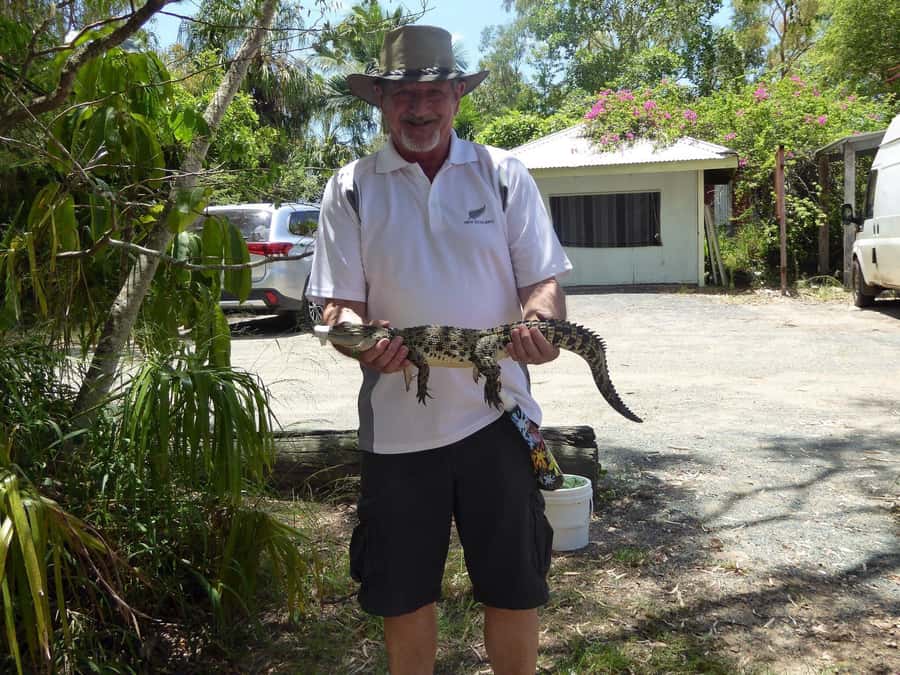
The outdoor walk is the main sightseeing portion of the visit. You move around the farm with your guide and see crocodiles in their enclosures, including breeding animals.
This is where the tour shifts from classroom-style learning to direct observation. Crocodiles can appear motionless for long periods, so the guide’s explanations matter. A good guide helps you notice behavior and body language that you might otherwise miss.
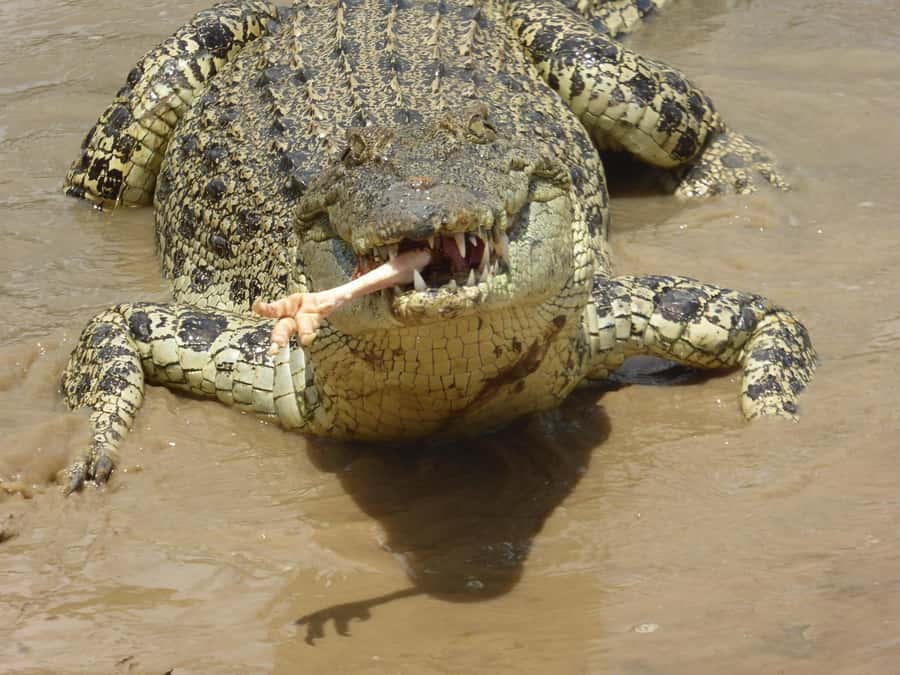
The feeding session adds action. Farm staff feed the crocodiles while the guide explains what is happening. The feeding is designed to be entertaining, but it also shows the animals’ reactions and physical power in a controlled setting.
Safety is given strong attention. That is reassuring, especially when you are close to large reptiles. The feeding takes place under staff direction, and the tour keeps a clear line between observation and handling.
One point worth understanding is that the feeding may not always be as dramatic as you expect. One detailed assessment felt that the guide talked up the feeding, while only a small amount of action occurred. That is a fair caution. The value is in seeing normal behavior and hearing the explanation, not in expecting a nonstop wildlife show.
The farm walk may also focus mainly on breeding pairs. If you hope to see every stage of commercial crocodile production, the tour may offer less detail than you want. The experience is strongest as a behavior and conservation tour.
A few more options to weigh up in Australia
- Amazing Yarra Valley Wine Tour + Chocolate, Farm Fresh, Gin
★ 5.0 · 1,566 reviews - Hidden Gems: Boutique Full-Day Wine, Farm & Lunch Tour
★ 5.0 · 881 reviews - Melbourne: Yarra Valley Wine, Choc, Farm Fresh, Gin Tour
★ 4.9 · 258 reviews - Hidden Gems Margaret River: Authentic Wine & Farm Experience
★ 4.9 · 101 reviews
Holding a baby crocodile is the memorable finale
For many people, the highlight is the chance to hold a small crocodile and have a photo taken. This is the moment when the animal changes from something viewed at a distance into something you can feel and study up close.
The handling takes place under staff supervision. You are not expected to manage the crocodile alone, and the guide will direct you on how to hold it safely. That makes the activity accessible even if you are nervous.
I would still treat the opportunity with respect. A baby crocodile may look harmless, but it is still a reptile with natural instincts. Listen carefully to the staff, keep your movements controlled, and follow the instructions for the photograph.
The photo is included as part of the listed tour experience, so you do not need to plan a separate animal encounter. Several people described holding a baby croc as the best part of the visit, and it is easy to see why. It gives you a strong memory without turning the entire tour into a handling session.
The experience suits families particularly well. Children old enough to follow instructions can learn about the animal and take part in a supervised activity. Children under three are not permitted, and the tour is not suitable for pregnant women.
Egg collection and hatching depend on the calendar
Koorana’s crocodile life-cycle activities are seasonal. Nest raids and egg collection generally take place from December through February. Baby crocodiles usually hatch from February through May.
If you visit during one of these periods, you might see staff collect eggs from nests or watch baby crocodiles hatch. These are valuable parts of the experience because they show the next stage of the farm’s breeding process.
Do not book outside those months expecting to see eggs hatch. The standard tour still includes crocodile behavior, the video, feeding, and the farm walk, but seasonal events depend on timing.
The egg and hatching activities also give the conservation discussion a practical focus. You can connect the talk about breeding and protection with real eggs and hatchlings rather than hearing only general information.
If this is your main reason for visiting, check the available date carefully before booking. The farm can offer the core tour year-round, but the special breeding activities cannot be guaranteed on every visit.
Guides make a major difference
The guide is central to the quality of this experience. A crocodile enclosure is interesting, but a good explanation turns a short look into a proper wildlife lesson.
Kia has been praised for his passion, humor, and ability to explain crocodile behavior and ecological importance. His enthusiasm appears to work well in difficult conditions, including very hot days. Mel has also been praised for strong subject knowledge and an entertaining style.
The feedback is not entirely one-sided, and that is useful. One person found the pace difficult at times because the guide spoke quickly. Another wanted more explanation of how live reptiles connect to meat and byproduct production.
That second point is important if you are interested in the commercial side of the farm. The introductory talk covers commercialisation, but the tour may not explain every step from live animal to final product in detail.
For most people, the guide-led format is a strength. You do not need prior knowledge, and you can ask questions as you go. You will get more from the visit if you listen closely during the first talk and use the farm walk to ask about anything you find surprising.
Is $28 good value for 90 minutes?
At $28 per person, the tour is reasonably priced for a 90-minute guided wildlife experience. The fee includes the introductory conservation and commercialisation talk, the behavior video, the farm walk, crocodile feeding, and the supervised small-crocodile photo opportunity.
That is better value than paying only for access to view animals. You receive interpretation throughout the visit, and the hands-on photograph gives the tour a clear personal highlight.
The price also works well for families, provided every participant meets the age requirements. Children under three cannot join, and food and drinks are not included.
You may see separate references to a charge for holding a baby crocodile in informal comments, so check the conditions when booking. The supplied tour details say the admission includes the hands-on photo opportunity, while the stated activity price is $28 per person.
Food should be treated as an extra. One person described having crocodile steak at lunch, but food is not included in the tour price. Do not arrive assuming a meal forms part of the 90-minute visit.
The free cancellation period and reserve-now, pay-later option also reduce the financial risk of fitting this into a Queensland itinerary. You can cancel up to 24 hours ahead for a full refund, according to the stated conditions.
Prepare for heat, sun, and insects
The farm is an outdoor experience, and Queensland weather can shape your comfort. Bring comfortable shoes because the tour includes a farm walk, not just a seated presentation.
Pack:
- Water
- Sunscreen
- A hat
- Insect repellent
- A camera
- Comfortable walking shoes
A hat and sunscreen are especially important. One person found the farm hot even during a January visit, while another said the guide kept the tour enjoyable in hot conditions. Summer is also when nest raids and egg collection may occur, so you may face a choice between ideal seasonal timing and stronger heat.
Rain does not automatically ruin the experience. One visit was considered worthwhile despite poor weather because the guide kept the presentation entertaining and informative. Still, practical clothing will make the walk easier.
Bring your camera for the small-crocodile photograph, but listen to the staff before taking it out near the animals. The photo opportunity is part of the experience, not a reason to ignore safety instructions.
Who will enjoy Koorana most?
I would recommend this tour to families with children over three, couples looking for an unusual Capricorn Coast activity, and anyone curious about Australian wildlife and conservation.
It is also a good choice for people who prefer guided interpretation to wandering around alone. You receive a clear explanation of crocodile behavior, then see the animals during feeding and have the option to hold a small crocodile.
The tour may be less suitable if you want a long, technical account of crocodile farming or a detailed explanation of the full meat and byproduct process. The strongest focus is behavior, conservation, breeding, and safe observation.
It is also not the right fit for anyone unable to manage outdoor conditions, though the available information does not specify an accessibility assessment. Pregnant women and children under three should not attend.
Should you book this crocodile tour?
I would book Koorana Crocodile Farm if you want a short, educational wildlife experience with one genuinely memorable activity. The combination of a farm walk, feeding session, seasonal breeding information, and a baby-crocodile photograph gives you more variety than a simple animal viewing stop.
The biggest reasons to go are the guides, the conservation focus, and the chance to see crocodiles at different stages of their life cycle when the season is right. Book with sunscreen, water, and sensible expectations about the feeding. If egg collection or hatching is your priority, choose your dates carefully. At $28 for 90 minutes, it is a practical addition to a Rockhampton or Capricorn Coast itinerary.
FAQ
How long is the Koorana Crocodile Farm tour?
The guided tour lasts 90 minutes, or one and a half hours.
How much does the tour cost?
The stated price is $28 per person.
What does the admission price include?
Admission includes the fully guided tour, an introductory talk about conservation and commercialisation, a crocodile behavior video, a farm walk, crocodile feeding, and a supervised photo opportunity with a small crocodile.
Can I hold a baby crocodile?
Yes. The tour includes a hands-on photo opportunity with a small crocodile under staff supervision.
Are food and drinks included?
No. Food and drinks are not included in the tour price.
When can I see crocodile eggs being collected?
Nest raids and egg collection generally take place from December to February.
When do baby crocodiles hatch?
Baby crocodiles generally hatch from February to May. Hatching is seasonal and may not be available on every tour date.
What should I bring?
Bring comfortable shoes, a camera, sunscreen, water, and insect repellent. A hat is also a sensible choice for the outdoor farm walk.
Who cannot take this tour?
The experience is not suitable for children under three or pregnant women.
Just added in Australia
- 1hour Scenic Flight Heart Reef, Whitehaven Beach, Hill Inlet, GBR★ 5.0 · 134 reviews
- Fly Raft Package: Whitehaven Beach, Snorkel and Scenic Flight★ 5.0 · 316 reviews
- All-Inclusive Waterfall Explorer Day Trip from Airlie Beach★ 4.5 · 253 reviews
- Airlie Coastal Beach Adventures – Dingo Beach & Cape Gloucester★ 5.0 · 27 reviews
- Airlie Beach Glass Bottom Boat Tour★ 4.5 · 329 reviews
- Bowen Beaches Discovery-Top of the Whitsundays★ 5.0 · 40 reviews
- Airlie Waterfalls & Rainforest Bushwalk Eco Adventure★ 5.0 · 23 reviews
- British Defender 3D2N Whitsunday Snorkelling Sailing Adventure★ 5.0 · 30 reviews
Wildlife Tours, compared.
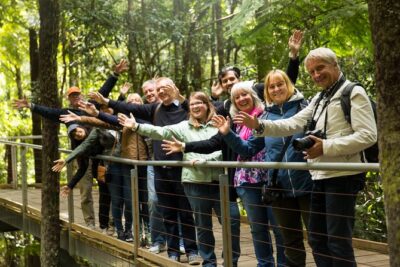
All Inclusive Blue Mountain,Scenic World,Lunch,Koalas,ferry
Read our review →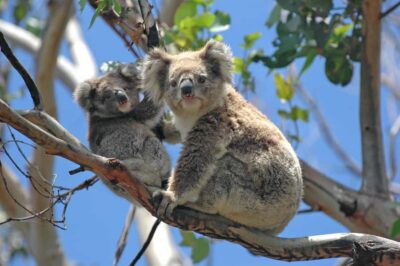
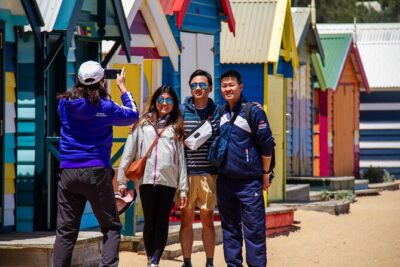
Penguin Parade, & Wildlife Encounters Eco Tour from Melbourne
Read our review →
Blue Mountain Small Group Scenic World, Wildlife, Waterfall
Read our review →
Melbourne Great Ocean Rd Reverse Tour London Bridge Wildlife
Read our review →
Litchfield National Park and Jumping Crocodile Cruise
Read our review →
Blue Mountains Adventure: Scenic World, Zoo & Koala Photo
Read our review →
Browse the lists this tour appears in