
Reviewed · HISTORICAL TOURS
Historical True Crime Walking Tour of East Sydney
Sydney has a criminal past worth walking for. This two-hour tour links Hyde Park with Darlinghurst’s old lanes, gaol, courthouse, and gangland sites, mixing true crime with social history. I like the modest $24 price and the way the route brings together architecture, crime stories, convict history, and Sydney’s later LGBT story. The main caution is that the experience depends on good weather and a moderate level of fitness.
I also like the easy East Sydney meeting point and the small maximum group of 25. Elliott receives especially strong praise for his lively delivery and wide grasp of the area, but this is not a museum visit or a theatrical show. You spend the time outdoors, moving between streets, so come ready to listen while walking.
In This Review
- Key reasons to consider this East Sydney walk
- Why this tour works for curious Sydney visitors
- Starting at Hyde Park, from cricket to a cold case
- Entering Darlinghurst and the old Razorhurst streets
- Sydney Gaol, convicts, and the business of punishment
- The police station, courthouse, and cases behind the streets
- Finishing at Kinselas and Taylor Square
- Elliott’s guiding style matters
- Is $24 good value for two hours?
- Who should book this walk?
- Final verdict: book it for stories, not spectacle
- FAQ
- Where does the tour start?
- What time does the tour begin?
- How long does the walking tour last?
- Where does the tour finish?
- How much does the tour cost?
- How many people can join the tour?
- Is the tour suitable for people with limited mobility?
- Can I cancel for a full refund?
- What happens if the tour is canceled?
Key reasons to consider this East Sydney walk
- A $24 introduction to Darlinghurst: Two hours of guided history costs less than many major Sydney attractions, while covering several neighborhoods and themes.
- Crime scenes from 1860 to 1970: The route reaches beyond one famous case and places murders, gangs, drugs, and prostitution within a longer story.
- Hyde Park adds more than crime: You hear about Aboriginal use of the area, early cricket, the ANZAC Memorial, and a 1920s cold case.
- Razorhurst gives the tour its edge: Old gang fights and slum life help explain why Darlinghurst once had such a grim reputation.
- Elliott is a major part of the experience: His engaging style and broad historical knowledge are praised repeatedly.
- The finish at Kinselas is memorable: A former 1930s funeral parlour now used as a bar, it sits on Taylor Square, linked with Sydney’s Mardi Gras.
Why this tour works for curious Sydney visitors
The best true crime walks do more than list shocking events. They show how streets, institutions, poverty, policing, and public attitudes shaped the crimes. This experience takes that wider approach.
You begin at Hyde Park and then spend most of the walk in Darlinghurst, also known as East Sydney. The subject matter reaches from the 1860s to the 1970s, so you get a sense of change over time rather than one narrow crime story.
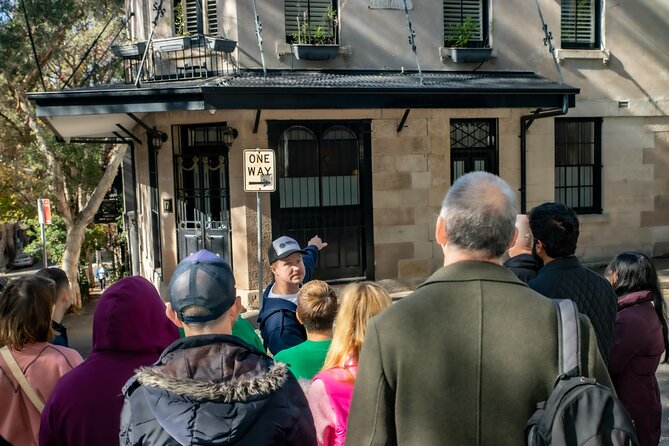
The route also gives you a look at Victorian and Edwardian architecture. That matters because Darlinghurst can look polished today, with handsome older buildings and lively streets, yet the tour asks you to picture its earlier life as a place of slums, gangs, brothels, drug dealing, prisons, and police work.
I would choose this walk if you enjoy history with a darker side but still want context. You will hear about criminals, prostitutes, drug dealers, gang fights, murder cases, inmates, and hangmen. The tour is meant to entertain, but its subject is not treated as a collection of isolated shocks.
More Walking Tours in Sydney
- Sydney Opera House Official Guided Walking Tour
★ 4.5 · 3,770 reviews - Sydney The Rocks Guided Walking Tour
★ 5.0 · 1,546 reviews - Sydney: The Rocks 90-Minute History Walking Tour
★ 4.7 · 1,092 reviews
Starting at Hyde Park, from cricket to a cold case
The meeting point is near Museum in Sydney, NSW 2000, with the walk beginning at 11:00 am. The location is described as easy to find, which is useful in a busy city where a vague corner or hard-to-spot doorway can sour the mood before a tour starts.
The first stop lasts about 30 minutes in Hyde Park. This opening gives the guide room to establish the area’s older layers before turning to Darlinghurst’s crime stories.
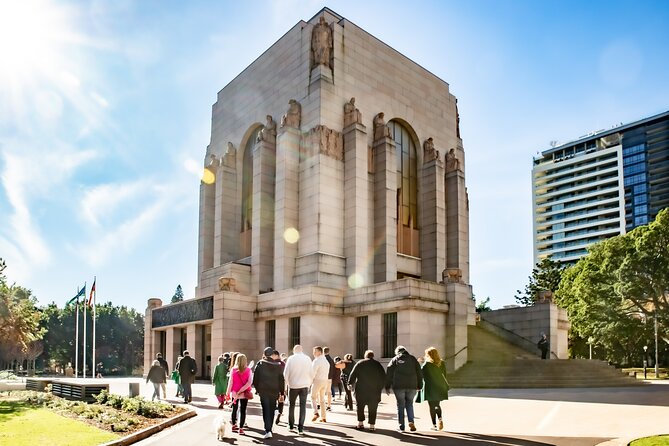
You hear about the Aboriginal use of Hyde Park before colonization. That point is important because it places the later colonial story in a much longer timeline. The tour also covers the ANZAC Memorial and the park’s pond, adding civic and public history to the opening section.
There is an early sporting detail too: the first cricket match between Australians and English took place here in 1830. It is a useful reminder that Hyde Park has served many roles over time, from a place used by Aboriginal people to a public setting for sport, commemoration, and crime stories.
The darker thread arrives through a cold case murder from the 1920s. This is a good way to begin the true crime material without rushing straight into Darlinghurst’s gangland past.
Hyde Park is also the least focused part of the walk if you have come only for notorious murders. You spend roughly half an hour here, and the content is deliberately broad. I see that as a strength for most people, though dedicated true crime fans may wish the first stop moved faster.
Entering Darlinghurst and the old Razorhurst streets
After Hyde Park, the route enters Darlinghurst. This is where the walk becomes more tightly focused on crime scenes and the suburb’s former reputation.
From about 1890 to 1960, Darlinghurst was described as the most dangerous suburb in Australia. The reason was not one single criminal case. The area was associated with dangerous slums, gangs, prostitution, drug dealing, and street violence.
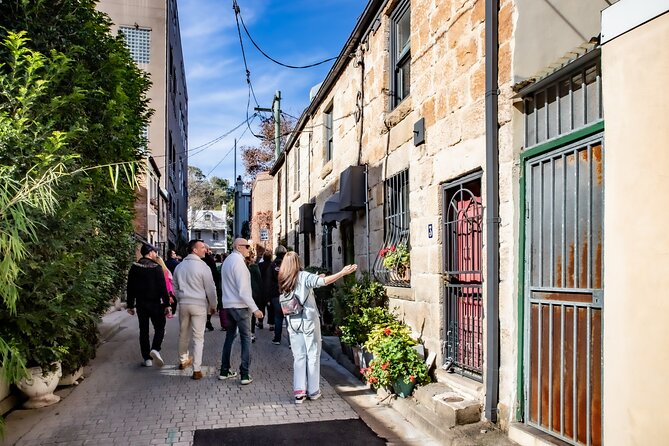
You hear about a district once called Razorhurst, a name tied to gang fights long ago. That detail gives the old streets a strong sense of place. Rather than hearing about crime in an abstract way, you are shown where this part of Sydney’s past unfolded.
The route uses old lanes and streets, with historical crime scenes dating from 1860 to 1970. That range allows the guide to compare different periods and explain how the suburb changed.
The walking distance is not especially demanding. One detailed assessment says you do not walk terribly far despite the tour lasting two hours. Still, the activity requires a moderate level of fitness, and you should expect to remain on your feet while listening and moving between stops.
Because the walk is outdoors, footwear and weather matter. The tour requires good weather, so poor conditions can lead to a different date or a full refund. No special dress or equipment is listed, but sensible walking shoes are the practical choice.
Sydney Gaol, convicts, and the business of punishment
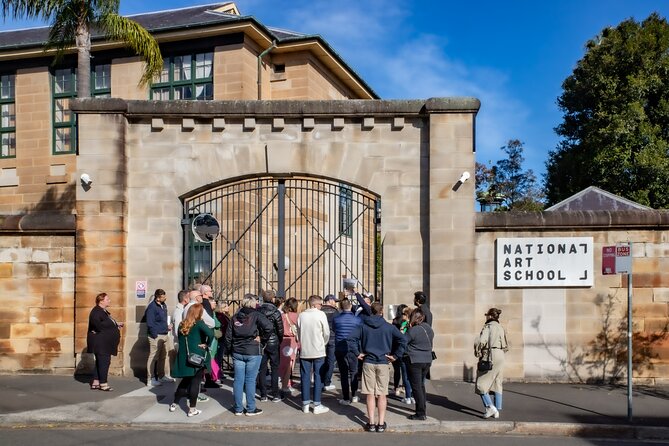
One of the most useful stops is the old Sydney Gaol, built by convicts in 1841. The building brings the criminal stories into contact with the justice system that dealt with them.
You hear about inmates and hangmen here. That pairing shifts the focus from street crime to punishment. A story about a criminal has one kind of force, but a story about the people imprisoned or executed by the authorities raises questions about law, class, working conditions, and public attitudes toward punishment.
The gaol also connects the suburb to Australia’s convict past. You are not simply looking at an old building. You are considering who built it, who was confined there, and how the city dealt with crime during a period when convict labor shaped much of colonial Sydney.
This part will suit you if you prefer social history alongside grisly stories. The tour’s strongest praise comes from the way it explains the broader setting, from the convict years through the 1970s. That wider view keeps the walk from becoming a string of sensational anecdotes.
One limitation is that the tour does not include an admission visit inside the gaol. The stops are listed as free admission, and the experience is a walking tour through the streets and historical sites. You should expect to learn through the guide’s narration rather than through indoor exhibits.
A completely different kind of day out:
- Sydney: Opera House Guided Tour with Entrance Ticket
★ 4.8 · 8,312 reviews - All Inclusive Blue Mountain,Scenic World,Lunch,Koalas,ferry
★ 5.0 · 7,832 reviews - From Sydney: Blue Mountains Full-Day Trip
★ 4.5 · 4,471 reviews - Blue Mountains Small-Group Tour from Sydney with Scenic World,Sydney Zoo & Ferry
★ 5.0 · 3,709 reviews
The police station, courthouse, and cases behind the streets
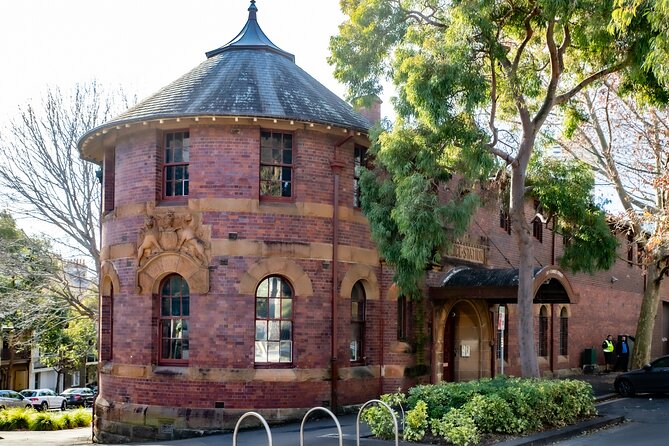
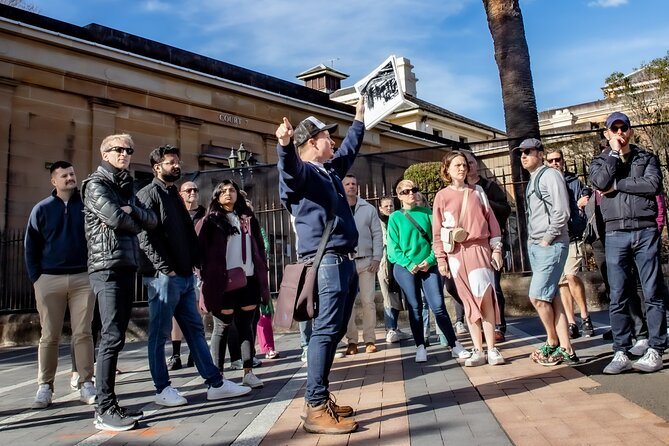
The next major points are the old police station and courthouse. Together, they show the official side of Darlinghurst’s crime story.
The police station represents investigation and enforcement. The courthouse represents the process that followed. Placing these sites on the same route as the old gaol helps you see a chain: crime in the streets, police action, court proceedings, and imprisonment or execution.
The tour includes cases connected with the Parkland Killer and the Mutilator Murders of the 1960s. The material reaches into the more recent decades covered by the tour, when Darlinghurst’s earlier reputation was still part of local memory.
These subjects are likely to appeal most to people who enjoy true crime podcasts or historical crime books. At the same time, the guide’s job is to add background that a short article or guidebook may leave out. Elliott is praised for doing exactly that, with an entertaining style and a strong grasp of East Sydney’s social history.
I would not book this as a quiet architecture stroll. The buildings provide atmosphere, but the main purpose is the stories connected to them. Some subjects may also feel grim or unsettling, especially when the walk deals with murder, hangings, prostitution, and violence.
Finishing at Kinselas and Taylor Square
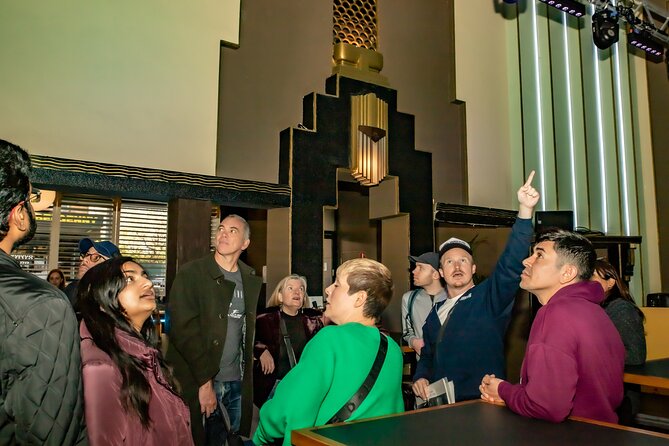
The walk ends at Kinselas Hotel at 383 Bourke Street, Darlinghurst, on Taylor Square. This is a particularly effective final stop because the building has passed through several lives.
Kinselas began as a funeral parlour in the 1930s and has since become a bar. That change reflects the way Darlinghurst has shifted from a district known for crime and hardship to a better-known part of Sydney’s social and nightlife scene.
Taylor Square also provides the backdrop for Sydney’s LGBT Mardi Gras. Ending here adds another chapter to the suburb’s story. The tour does not stop with gangs and murder. It finishes in a place tied to public identity, celebration, and changing attitudes.
The endpoint is practical too. You finish in Darlinghurst rather than returning to Hyde Park, so you can continue exploring the area, stop for a drink at Kinselas, or make your own way elsewhere in Sydney.
Remember that the tour is a point-to-point walk. If you have a fixed booking afterward, allow extra time beyond the approximate two-hour duration. The walk ends at Kinselas, not at the Museum meeting point.
Elliott’s guiding style matters
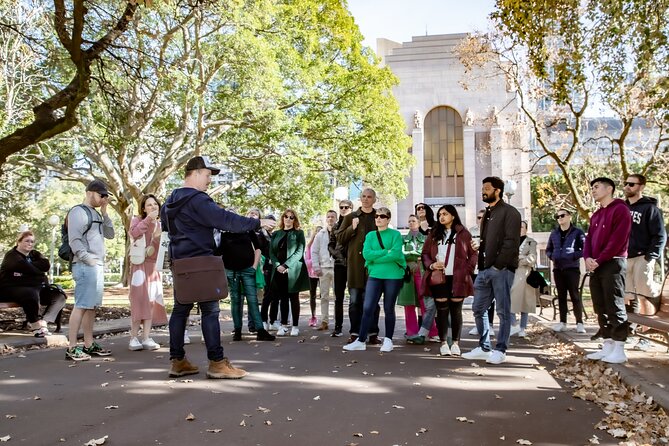
A walking tour lives or dies by its guide. Here, Elliott receives the strongest praise, both for his engaging manner and for his command of the material.
His role appears to go beyond reciting murder dates. He links crime stories with the sociology of East Sydney, covering the convict era, the suburb’s slums and gangs, policing, and the changes that carried the area into the 1970s.
That approach is valuable because a true crime tour can easily become sensational. A guide who explains how people lived and how institutions worked gives the stories more meaning. You still get the criminals, murder cases, hangmen, and gang fights, but you also get a clearer picture of the society around them.
The group can include up to 25 people. That is small enough to feel more personal than a large city tour, though it is not a private walk. The group format can be a plus if you like meeting people while exploring. It may be less appealing if you want a quiet, self-paced visit.
The experience receives a five-star rating from 53 reviews, with 100 percent recommending it. That is a strong record, and the praise is unusually focused on one thing: the guide’s delivery and breadth of information.
Is $24 good value for two hours?
At $24, this is an inexpensive way to spend a morning in Sydney. The value comes from the route and the interpretation, not from paid entry to attractions. Admission to the listed stops is free, so you are paying for the guide, the planning, and the stories that connect the locations.
I think the price works especially well if you are already planning to see Hyde Park or Darlinghurst. The tour turns familiar public spaces into places with a past. You also cover several subjects in one booking: Aboriginal history, sport, the ANZAC Memorial, colonial punishment, murder cases, gang culture, architecture, and Sydney’s Mardi Gras setting.
The trade-off is that you do not get a long indoor visit or a major attraction ticket. If you want museum collections or access behind historic walls, this is not the right use of your money. If you value a well-told local story and a guided walk through an attractive old suburb, the cost is fair.
Who should book this walk?
I would recommend it to adults and older teens who enjoy historical crime, local stories, and urban architecture. It is also a good choice if you have already seen Sydney Harbour’s main sights and want something more unusual.
The tour suits you particularly well if you like:
- True crime with social and historical context
- Stories about convicts, prisons, police, and courts
- Old Victorian and Edwardian buildings
- Walking tours that finish near restaurants, bars, and city transport
- Meeting a small group rather than touring alone
- A guide-led experience with plenty of spoken detail
I would think twice if you dislike murder stories, gang violence, or discussions of prostitution and drug dealing. The route is not described as physically hard, but you still need moderate fitness and comfort with an outdoor walk.
Service animals are allowed, and the meeting point is near public transportation. Confirmation arrives at booking, and the maximum group size is 25. Free cancellation is available up to 24 hours before the start time. Cancellations inside that window are not refunded, and changes are not accepted. Weather or failure to meet the minimum group size can lead to a new date, another experience, or a full refund.
Final verdict: book it for stories, not spectacle
I would book the Historical True Crime Walking Tour of East Sydney if you want a low-cost, guide-led look at the city’s less polished past. The combination of Hyde Park, Razorhurst, the old gaol, police and courthouse sites, and Kinselas creates a strong route with a clear sense of place.
The best reason to go is Elliott’s storytelling and the social context he brings to the crimes. The main reason to skip it is simple: this is an outdoor walking tour with serious subject matter, not an attraction packed with displays or special effects.
For $24, it offers a memorable way to see Darlinghurst beyond its present-day cafes, bars, and handsome buildings. Book it if the idea of hearing how a suburb changed from Sydney’s notorious gangland district to a major Mardi Gras setting sounds more appealing than another standard sightseeing loop.
FAQ
Where does the tour start?
The tour starts near Museum in Sydney, NSW 2000, Australia.
What time does the tour begin?
The scheduled start time is 11:00 am.
How long does the walking tour last?
The tour lasts approximately two hours.
Where does the tour finish?
It finishes at Kinselas Hotel, 383 Bourke Street, Darlinghurst, on Taylor Square.
How much does the tour cost?
The listed price is $24.
How many people can join the tour?
The maximum group size is 25 people.
Is the tour suitable for people with limited mobility?
The activity requires a moderate level of physical fitness. The tour is a walk through Hyde Park, Darlinghurst streets, and old lanes.
Can I cancel for a full refund?
Yes. You can cancel at least 24 hours before the experience start time for a full refund. Cancellations made less than 24 hours before the start time are not refunded.
What happens if the tour is canceled?
If poor weather causes cancellation, you can be offered another date or a full refund. If the minimum number of participants is not reached, you can be offered a different date or experience, or a full refund.
More History Tours in Sydney
- Sydney The Rocks Historical Pub Tour
★ 5.0 · 251 reviews - Sydney Convicts, History & The Rocks 2.5-Hour Walking Tour
★ 4.9 · 181 reviews - Sydney Photography Course in the Historic Rocks Area
★ 5.0 · 35 reviews - Ultimate Melbourne Walking Tour: History, Laneways & Culture
★ 5.0 · 1,451 reviews
Just added in Sydney
- Sydney: Wildlife, Waterfalls and Wine Small Group Tour★ 5.0 · 251 reviews
- WILD LIFE Sydney Zoo★ 4.3 · 240 reviews
- Sydney: “Vivid Sydney” Festival of Light Sightseeing Cruise★ 4.3 · 24 reviews
- From Sydney: Location Tour of Home and Away★ 4.7 · 290 reviews
- Sydney: Vivid Festival of Light Harbor Cruise with Dinner★ 4.5 · 120 reviews
- From Sydney: Tandem Skydive Experience over Wollongong Beach★ 4.5 · 83 reviews
- illi-Langi The Rocks Aboriginal Dreaming Tour★ 4.5 · 90 reviews
- Walking with Wild Kangaroos Private Half-Day Trip from Sydney★ 5.0 · 45 reviews
Historical Tours, compared.

Ultimate Melbourne Walking Tour: History, Laneways & Culture
Read our review →
Puffing Billy Railway: Heritage Steam Train Journey
Read our review →
Morning World Heritage Cruise on the Gordon River from Strahan
Read our review →
World Heritage Cruise on Gordon River with Lunch
Read our review →

Experience History onboard The Mary Valley Rattler
Read our review →
Snorkel & Dive the Reef: Sustainable, Scientific & Cultural Tour
Read our review →
Derwent River Historic Harbour Cruise From Hobart
Read our review →Browse the lists this tour appears in