
Reviewed · HISTORICAL TOURS
Cairns History Walking Tour
Cairns has more stories than beaches. This 90-minute walk gives you a useful introduction to the city beyond reef trips and rainforest drives, tracing Aboriginal culture, colonial settlement, Chinese migration, wartime Cairns, architecture, and local government. I like the small group of no more than 12 people, and I like that the route uses real city landmarks rather than relying on a lecture indoors.
The $37.98 price is reasonable if you want context before exploring Cairns on your own, especially since the guide also points out places to eat, drink coffee, and shop. The main consideration is the short format: 1.5 hours allows for a brisk overview, not a detailed examination of every building or historic event.
- Forty thousand years of history: The tour connects present-day Cairns with the traditional owners and the area’s long Aboriginal past.
- Eight central Cairns stops: The route covers the museum, art gallery, Esplanade, war memorial, Chinatown, historic hotels, and former government buildings.
- A maximum of 12 people: The small group makes it easier to hear the guide and ask questions.
- Stories beyond the postcard: Colonialism, pirates, the opium trade, gold, Chinese migration, and World War II all have a place.
- An easy city-center route: The walk begins and ends at Cairns Museum, with free admission at each listed stop.
- A strong customer rating: The experience has a 4.9 rating from 52 reviews, with 98 percent recommending it.
In This Review
- Why Cairns Needs a History Walk
- Starting at Cairns Museum
- Art, Gold, and Colonial Cairns on Shields Street
- The Esplanade, Reef, Rainforest, and Pirates
- Early Government at the Mulgrave Shire Building
- War Memories Beside the Reef Hotel Casino
- Bolands Centre, Shipping, and Hotel Life
- Chinatown on Grafton Street
- Returning Through Hides Hotel
- What the Guides Add
- Is $37.98 a Fair Price?
- Who Should Book This Walk?
- The Final Call on Cairns History Walking Tour
- FAQ
- How long is the Cairns History Walking Tour?
- Where does the tour begin?
- Where does the tour finish?
- How many people can join the tour?
- What subjects are covered?
- Does the tour visit the Great Barrier Reef?
- Are admission fees included?
- Is the tour accessible by public transportation?
- What happens if the weather is poor?
Why Cairns Needs a History Walk
Cairns is often treated as a launch pad for the Great Barrier Reef. That is understandable, but it leaves out much of what makes the city interesting. The streets reveal a meeting point between traditional owners, colonial settlers, Chinese traders, government officials, wartime forces, and visitors drawn by the reef and rainforest.
This tour helps you read those clues. A building that looks like a plain shopfront may once have housed a department store, hotel, government office, or shipping company. A public artwork may point to Aboriginal culture and place. A war memorial near a casino may lead into the story of how World War II changed daily life in Cairns.
I especially like the way the walk links buildings and events. You are not simply shown a structure and given a date. You hear why the site mattered, who used it, and how Cairns developed around it.
The tour also gives you a useful first look at the city center. Several participants found the guide’s suggestions about coffee, dining, and shopping helpful, so you can use the walk to plan the rest of your stay. That practical touch adds value beyond the history lesson.
Starting at Cairns Museum
Meet outside Cairns Museum at 93/105 Lake Street in Cairns City. The museum is a fitting place to begin because the opening discussion focuses on the area as a meeting place for traditional owners and colonial settlers.
The tour recognizes that Cairns history did not begin with European arrival. The guide discusses a past reaching back at least 40,000 years, giving you a broader frame for everything that follows. That matters in a city where colonial buildings and modern tourism can easily dominate the conversation.
You should expect about 10 minutes at this first stop. It is not a museum visit, and admission is listed as free for the tour. Instead, the museum provides the starting point for understanding how different cultures and interests came together in this part of Queensland.
Because the walk returns here at the end, the starting point is easy to find and practical if you are staying in central Cairns. The tour uses a mobile ticket, so keep the booking confirmation accessible on your phone.
More Walking Tours in Cairns:
- Sydney Opera House Official Guided Walking Tour
★ 4.5 · 3,770 reviews - Sydney The Rocks Guided Walking Tour
★ 5.0 · 1,546 reviews - Ultimate Melbourne Walking Tour: History, Laneways & Culture
★ 5.0 · 1,451 reviews
Art, Gold, and Colonial Cairns on Shields Street
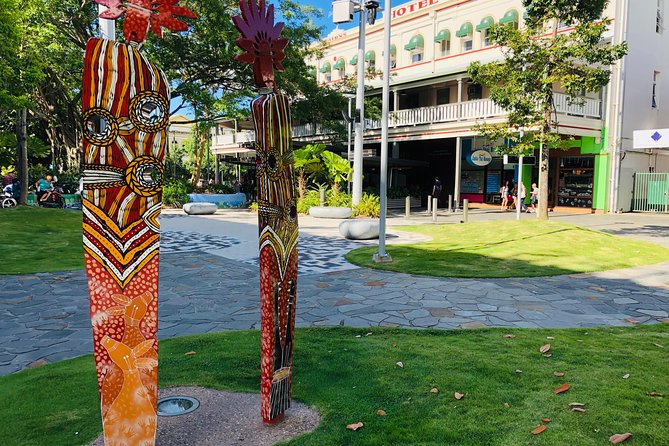
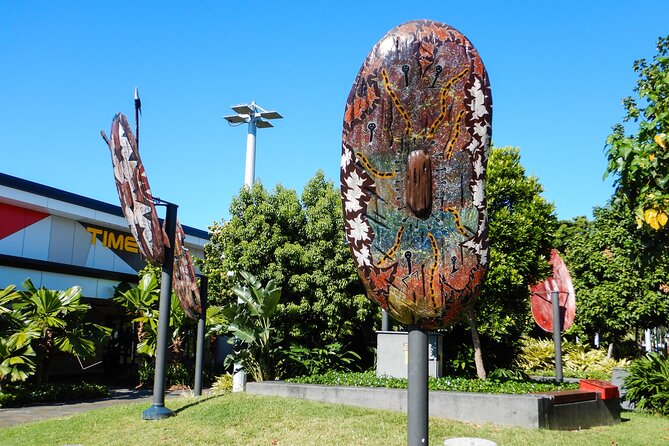
The next stop is Cairns Art Gallery, where the guide discusses the traditional Aboriginal shields street art by Paul Bong on Shields Street. This adds a public-art element to the walk and brings Aboriginal culture into the city center rather than treating it as a separate subject.
The discussion also covers the gold rush and the establishment of the colony. Those subjects help explain why Cairns developed as it did, with people, goods, and government systems arriving to support economic growth.
You will also hear about the former Public Curators building, now associated with the Cairns Regional Gallery. The stop is brief, around 10 minutes, so you should expect key points and stories rather than a full architectural tour.
I like this part of the route because it connects art, government, settlement, and economics in one place. It also shows why you should not judge Cairns only by its newer hotels and tour offices. The city’s older layers are still visible if someone points them out.
The Esplanade, Reef, Rainforest, and Pirates
At the Cairns Esplanade Lagoon, the focus shifts from buildings to the natural world and the people who used the region. The guide discusses the reef and rainforest as World Heritage sites, along with the early settlers and even pirates.
This stop provides useful background before a reef excursion. The Great Barrier Reef is not just a day-trip product, and the rainforest is not merely a scenic backdrop. Both shape Cairns’s identity and economy, while also carrying their own environmental and cultural importance.
The pirate stories add a lighter note to the walk. They break up the formal history and remind you that port towns often attract more than respectable merchants and government officials. The stop lasts about 10 minutes, enough for a clear explanation without asking you to linger in one spot for too long.
The Esplanade is also a practical place to orient yourself. After the tour, you will know how this public waterfront fits into the city’s story, rather than seeing it only as a place for an evening stroll.
Early Government at the Mulgrave Shire Building
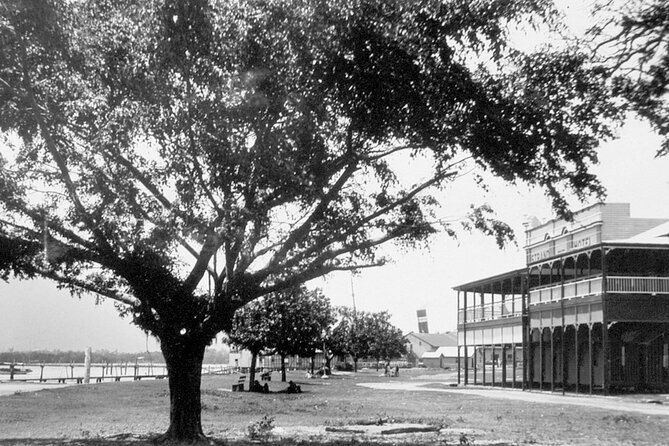
The Cairns Tourist Information Centre is the setting for a discussion about early government. From here, the guide points out the Mulgrave Shire building, which served as the original local government headquarters for the colony.
This is the sort of detail that can pass unnoticed. Tourist information offices are easy to treat as modern service points, but the surrounding buildings may carry the story of how local administration first took shape.
The stop is listed at around 10 minutes. That short time works well for a walking tour because the guide can explain the building’s purpose while keeping the route moving. I would not expect a technical account of Queensland government, but you should come away with a better sense of how Cairns was organized during its early development.
For anyone interested in civic buildings, local politics, or the practical work of establishing a settlement, this is one of the more useful stops. It puts faces and functions behind the broad idea of colonization.
More history tours in Cairns:
- Snorkel & Dive the Reef: Sustainable, Scientific & Cultural Tour
★ 4.5 · 841 reviews - Entry Ticket at Historic Village Herberton
★ 5.0 · 114 reviews - Authentic Indigenous Cultural Tour Including Scenic River Cruise
★ 5.0 · 88 reviews - Puffing Billy Railway: Heritage Steam Train Journey
★ 4.6 · 1,195 reviews
War Memories Beside the Reef Hotel Casino
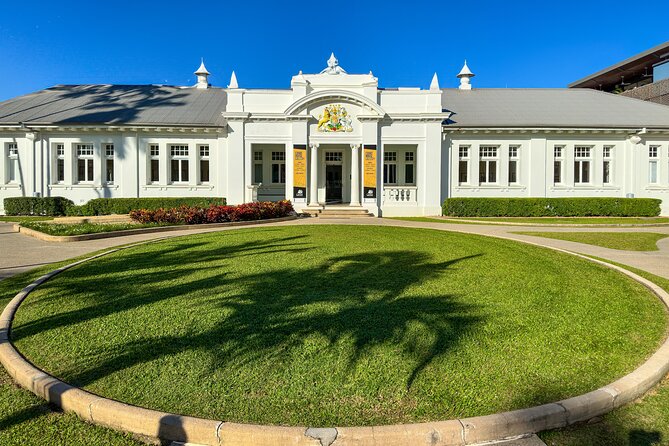
The tour then visits the war memorial beside the Reef Hotel Casino. Here, the guide explains the role of war in Cairns life, with particular attention to World War II.
The location creates an interesting contrast. A modern casino sits beside a memorial that points to sacrifice, military service, and a very different period in the city’s past. The stop encourages you to see Cairns as more than a resort town. Its history includes national conflict and the changes that war brought to local communities.
You should allow about 10 minutes here. The guide’s task is to explain why the wars mattered to Cairns, especially during World War II, rather than provide a complete military history.
I appreciate this inclusion because many short city walks skip wartime history in favor of prettier buildings. Here, the memorial gives the city’s past some weight and connects Cairns to events far beyond the tropics.
Bolands Centre, Shipping, and Hotel Life
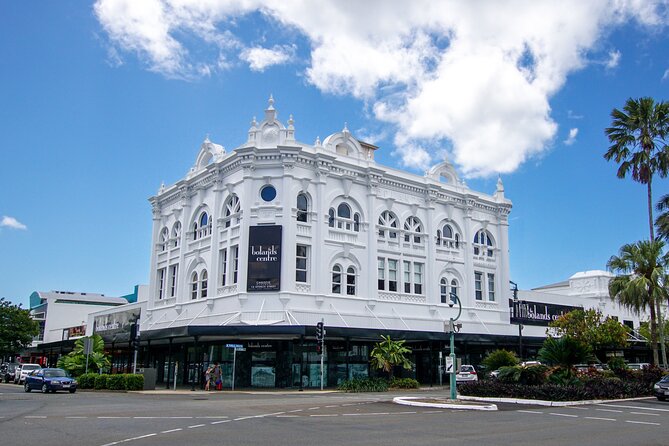
At The Chambers, you look toward the Bolands Centre, described as the first department store in Cairns. The guide also discusses the Adelaide Steamship Company and the Central Hotel from this viewpoint.
This is a strong example of how the tour uses a single street position to explain several parts of early city life. Department stores reveal changing consumer habits. A steamship company points to transport and trade. A central hotel shows where people stayed, met, and conducted business.
The stop lasts around 10 minutes, which should give you time to take in the buildings while listening. You may not enter each property, so the value comes from understanding what you are looking at from the street.
The story of historic hotels is particularly useful. In an early colony, a hotel was not simply a place to sleep. It could be part of the social and commercial center of town. That context helps you look at Cairns’s older hotels with more curiosity.
Chinatown on Grafton Street
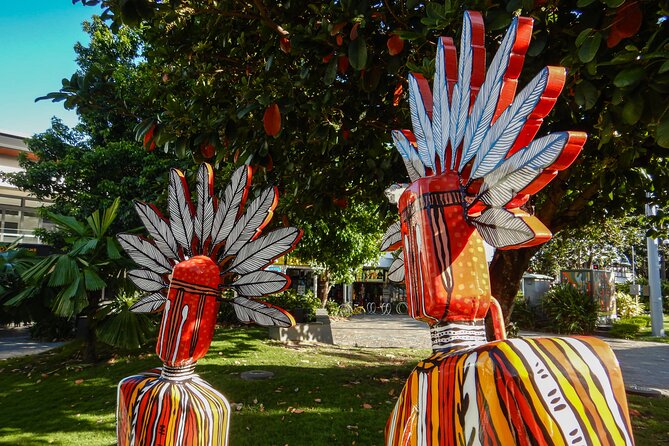
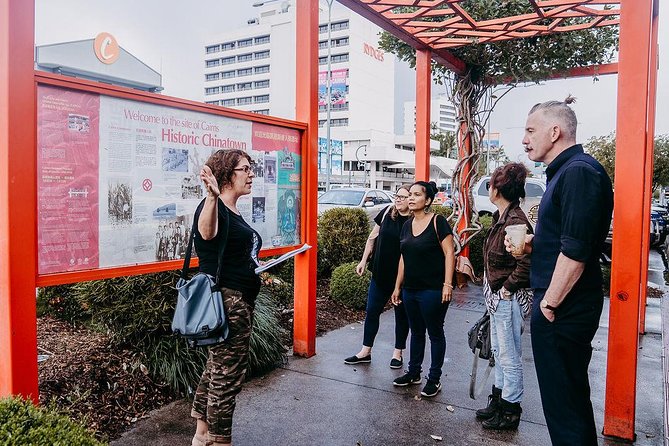
At Crystal Ball Bookstore, the walk turns to the Chinese role in Cairns history. The guide visits the Chinatown exhibit in front of the bookstore and discusses Grafton Street as the heart of Chinatown.
This is an important part of the route. Cairns developed through many communities, and Chinese migrants played a major role in the city’s commercial life. The Chinatown discussion gives you a clearer sense of how migration shaped streets, businesses, and local culture.
This stop is shorter, at about five minutes, so expect a compact explanation. It is enough to introduce the subject, but not enough to cover every aspect of Chinese settlement, trade, and social life in northern Queensland.
Even so, the location gives you something concrete to remember. Instead of hearing about Chinatown as an abstract idea, you stand in the area associated with it and learn why Grafton Street mattered.
Returning Through Hides Hotel
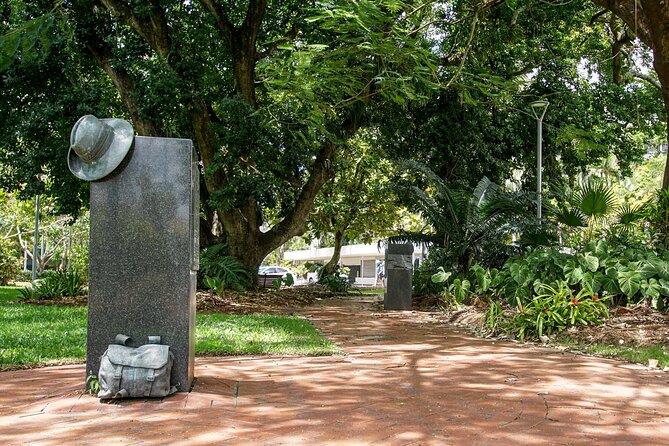
The route ends back near Cairns Museum, in front of Hides Hotel. The guide discusses the School of Arts and its role in the founding colony, then explains Hides Hotel and the part historic hotels played in early Cairns life.
This final stop brings several earlier themes together: public institutions, education, hotels, and the social structure of a young settlement. It also makes the route easy to manage, since you finish where you began.
The stop is listed at about five minutes. That brevity is practical, though you may wish for more time if you are especially interested in the School of Arts or Hides Hotel.
Because the tour finishes in the city center, you can continue directly to lunch, coffee, shopping, or another attraction. The guide’s local suggestions may be particularly useful at this point. One guide, Georgia, was praised for pointing out coffee and dining options, while Peter was praised for making the history clear and entertaining.
What the Guides Add
The quality of a short history walk depends heavily on the guide. There is no time for long pauses or dense academic explanations, so the person leading the route needs to tell a good story and keep the group moving.
Peter receives repeated praise for making the time pass quickly and for offering fun facts and stories. One account also notes his strong grasp of Cairns and the Great Barrier Reef. Georgia is noted for combining local history with useful recommendations for coffee and dining.
That combination is valuable. You want accurate context, but you also want a guide who can make the city feel usable during the rest of your visit. A dry list of dates would not do much for you. The feedback suggests the guides add personality and practical local help.
The experience has a 4.9 rating from 52 reviews and a 98 percent recommendation rate. Those figures point to a consistently well-liked tour, though they should not make you expect a long museum-style lecture. The walk is compact, conversational, and focused on key stories.
Is $37.98 a Fair Price?
At $37.98 per person, this is not the cheapest way to walk around Cairns. You can stroll the city center without paying anything. The question is whether the guide’s explanations are worth the cost.
I think the price is fair for three reasons. First, the group is capped at 12 people, which is much more personal than a large coach or crowded group walk. Second, the route covers a wide range of subjects, from Aboriginal culture and colonialism to pirates, the opium trade, Chinese migration, gold, government, and World War II. Third, the tour gives you local orientation and suggestions for food and shopping.
The value is strongest at the beginning of your Cairns stay. You can use the walk to understand the city before spending time on the reef or in the rainforest. It may also help you decide which buildings, streets, and public spaces deserve a closer look later.
The price is less appealing if you want extensive interior access or a highly detailed history seminar. Most stops are around 10 minutes, and two are only about five minutes. Think of this as a well-paced introduction rather than a full historical course.
Who Should Book This Walk?
I would recommend the tour to first-time visitors who want Cairns to feel like a real city, not just a base for excursions. It suits history fans, architecture fans, and anyone interested in Aboriginal culture, migration, colonial development, or wartime stories.
It is also a good choice if you have limited time. In 90 minutes, you see several important central locations and return to the starting point. The route should appeal to people who prefer a manageable city walk to a long day tour.
Families and older participants may appreciate the short duration, although the experience is still a walking tour and may require standing at several city stops. Most people can participate, and service animals are allowed. The route is near public transportation.
You may want to skip it if you have no interest in urban history or if you prefer to spend every available hour on the reef, beaches, or rainforest. The tour does not replace a major reef trip or museum visit. It explains the setting that makes those experiences more meaningful.
Weather also matters. The activity requires good weather, and poor conditions can lead to a new date or a full refund. You can cancel for a full refund up to 24 hours before the start time, but changes or cancellations within 24 hours are not refunded.
The Final Call on Cairns History Walking Tour
Book this tour if you want a clear, friendly introduction to Cairns and you like learning why ordinary streets matter. The small group, central route, capable guides, and wide range of subjects make the $37.98 fee reasonable.
I would book it early in a Cairns visit, ideally before planning the rest of your city time. You will leave with a better sense of the Aboriginal, colonial, Chinese, commercial, and wartime stories behind the streets.
Skip it only if your schedule is extremely tight or your interests lie entirely outside city history. For most first-time visitors, this is a short and useful way to see Cairns with fresh eyes.
FAQ
How long is the Cairns History Walking Tour?
The tour lasts approximately 1 hour and 30 minutes.
Where does the tour begin?
It begins at Cairns Museum, located at 93/105 Lake Street, Cairns City, Queensland 4870.
Where does the tour finish?
The activity ends back at the meeting point in front of Cairns Museum.
How many people can join the tour?
The group has a maximum of 12 travelers.
What subjects are covered?
The tour covers traditional owners, Aboriginal culture, colonialism, architecture, public art, gold rush history, pirates, the opium trade, Chinese migration, early government, historic hotels, and World War II.
Does the tour visit the Great Barrier Reef?
No. The walking tour discusses the history of the reef and rainforest as World Heritage sites, but it does not provide a reef excursion.
Are admission fees included?
Admission at the listed stops is free.
Is the tour accessible by public transportation?
Yes. The meeting area is near public transportation.
What happens if the weather is poor?
If poor weather causes cancellation, you will be offered a different date or a full refund. The tour may also be canceled if the minimum number of participants is not reached, with a different date, another experience, or a full refund offered.
Just added in Cairns
- From Port Douglas: Sail to Low Isles Great Barrier Reef★ 4.7 · 216 reviews
- Cairns: Great Barrier Reef Pontoon with Water Activities★ 4.8 · 132 reviews
- Port Douglas: Kuranda tour with Skyrail or Scenic Train★ 4.5 · 64 reviews
- Shaolin Sunset Sail on Authentic Chinese Junk Boat★ 4.5 · 243 reviews
- Quicksilver Dive 4 Day PADI Learn to Dive Course★ 5.0 · 35 reviews
- Shaolin Seafood Lunch Sail in Port Douglas★ 5.0 · 38 reviews
- Walkabout Cultural Adventures – Ngana Kulkinga Dungay Full Day★ 5.0 · 54 reviews
- Port Douglas to Cairns ONE WAY Private Transfer 6 pax★ 5.0 · 48 reviews
Historical Tours, compared.

Ultimate Melbourne Walking Tour: History, Laneways & Culture
Read our review →
Puffing Billy Railway: Heritage Steam Train Journey
Read our review →
Morning World Heritage Cruise on the Gordon River from Strahan
Read our review →
World Heritage Cruise on Gordon River with Lunch
Read our review →

Experience History onboard The Mary Valley Rattler
Read our review →
Snorkel & Dive the Reef: Sustainable, Scientific & Cultural Tour
Read our review →
Derwent River Historic Harbour Cruise From Hobart
Read our review →Browse the lists this tour appears in