
Reviewed · MUSEUMS
Australian National Maritime Museum Entry Ticket – Holiday Ticket
Sydney’s best museum may float. The Australian National Maritime Museum pairs hands-on ship tours with galleries covering Aboriginal seafaring, European exploration, naval defense, surfing, immigration, and beach culture. I especially like the chance to walk through HMAS Onslow, a Royal Australian Navy submarine, and the full-size replica of Captain Cook’s Endeavour. I also like the Darling Harbour setting, where the outdoor docks add real scale to the displays.
The main consideration is ticket choice. The cheaper special-exhibitions option does not give you the same access as the Big Ticket, which includes the historic vessels and children’s areas. Ship boarding can also change by day, so check the schedule when you arrive and reach the vessels early.
In This Review
- Key things to know before you go
- Why Darling Harbour is the right setting
- Choosing between the two ticket options
- Start indoors with Australia’s ocean story
- Board the replica of Captain Cook’s Endeavour
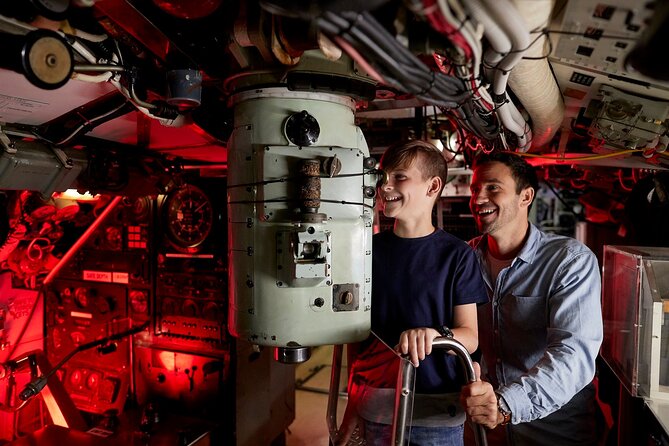
- HMAS Onslow shows submarine life in tight quarters
- HMAS Vampire brings the naval collection to life
- James Craig offers a glimpse of a working sailing ship
- The Spirit of Australia and the thrill of speed
- Action Stations and Kids on Deck
- How long should you spend at the museum?
- Guides, access, and comfort
- Is $25.10 good value?
- Who should book this experience?
- Should you book the Australian National Maritime Museum?
- FAQ
- What does the Big Ticket include?
- Is there a ticket for exhibitions only?
- What are the museum’s opening hours?
- Can I board the submarine and ships?
- Is food included with admission?
- Can I cancel for a full refund?
Key things to know before you go
- The ships make this museum special: The Big Ticket can include HMAS Vampire, HMAS Onslow, Endeavour, and James Craig, subject to opening schedules.
- The submarine is a priority: HMAS Onslow has narrow passages and can develop a queue, so go early if it is open.
- Endeavour is family gold: The full-size replica lets you picture life aboard an 18th-century tall ship rather than just reading about it.
- Allow at least three hours: You can see the main galleries in one to two hours, but the ships, special exhibitions, and children’s areas can fill most of a day.
- Volunteer guides add useful detail: Some ship guides are former Australian military personnel who can explain what life was like aboard these vessels.
- Bring sun protection: The outdoor dock area can get hot, especially around HMAS Vampire, with little relief from the sun.
Why Darling Harbour is the right setting
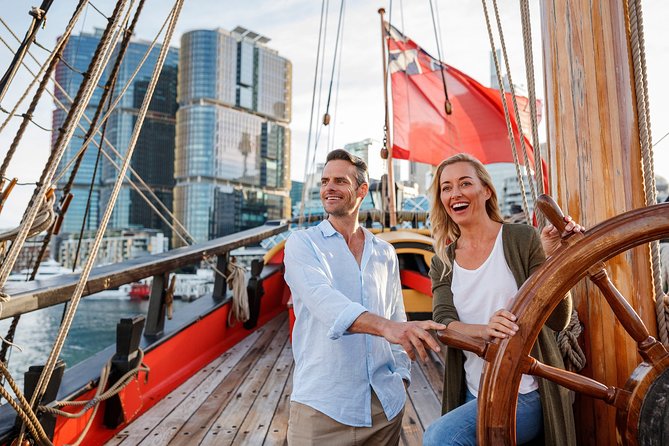
The museum sits directly on the water at Darling Harbour, a fitting home for a national collection about Australia and the sea. You do not simply look at maritime objects behind glass. You move from indoor galleries to working docks, then onto vessels where ladders, cramped cabins, decks, and machinery show the practical side of life at sea.
I like this change of pace. A display about naval service has more meaning after you have squeezed through a submarine passage. A lesson about Captain James Cook becomes easier to picture once you step onto the deck of Endeavour. The setting turns the museum into more than a standard indoor visit.
The museum is near public transportation, and you arrange your own way there. No hotel pickup or transport is included. Once inside, you can visit at your own speed, which is useful because the site contains enough material for a quick stop or a full day.
More entry tickets in Sydney:
- SEA LIFE Sydney Aquarium Entry Ticket
★ 4.3 · 1,025 reviews - Sydney Taronga Zoo General Entry Ticket
★ 4.0 · 941 reviews - Sydney: Madame Tussauds Sydney General Admission
★ 4.6 · 143 reviews
Choosing between the two ticket options
The important decision is simple: choose the special-exhibitions and permanent-galleries option, or pay for the Big Ticket with access to the outdoor dock area and historic vessels.
At about $25.10 per person, the ticket is good value if you plan to board ships. The vessels are the museum’s most memorable feature, and they turn a normal museum admission into an active Sydney outing. If your time is short and you only want the indoor galleries or a particular temporary exhibition, the more limited option may be enough.
I would choose the Big Ticket for families, ship enthusiasts, military-history fans, and anyone with at least half a day. It gives you more to do and reduces the chance that you leave wishing you had paid for access to the docks.
The ticket includes admission fees and taxes. Food and drinks cost extra. A cafe overlooks the marina and harbour, and you can also bring snacks to enjoy on the museum terrace.
Start indoors with Australia’s ocean story
The indoor galleries provide the context for everything outside. You can learn about the maritime customs of Aboriginal peoples and Torres Strait Islanders, whose connection with the sea long predates European arrival. This section matters because it places Australia’s ocean story in its proper time frame instead of beginning with Captain Cook.
Other displays cover European exploration, immigration, sailing, surfing, naval defense, and Australia’s beach culture. The subject range is broad, but it reflects how much of Australian life has been shaped by water. You get stories of movement, work, conflict, leisure, and survival rather than a collection focused only on ships.
I find the combination useful for families and mixed-interest groups. One person can focus on naval technology, another on migration, and a child can move toward the interactive activities. The museum also includes material connected with Australia’s part in World War II, which adds important context to the naval galleries.
Special exhibitions change over time. The listed program includes The Beach & Ocean Photographer of the Year, along with other seasonal displays. Photography can be a welcome pause after technical exhibits, and one natural-world photography exhibition was considered worth the admission cost by itself.
Board the replica of Captain Cook’s Endeavour
Endeavour is one of the most accessible ways to picture an 18th-century voyage. This is a full-size replica of Captain James Cook’s ship, the vessel associated with his journey to Australia in the 1780s.
You can walk across the deck and look into the working spaces below. The value is not just visual. The ship helps you understand how little room people had, how much equipment had to be stored, and how exposed sailors were to weather and the sea.
Children often respond especially well here because the ship feels like a place to explore. Adults get a clearer sense of the practical demands of navigation and long voyages. I would make Endeavour a first stop if you are visiting with young children, then return to the indoor exploration galleries afterward.
Boarding times matter. Endeavour’s last boarding time is listed as 4:10 pm during the stated operating period, but you should still check the day’s schedule when you arrive. A late visit can leave you with the ship in sight but no chance to go aboard.
More museum visits in Sydney:
- Sydney Cricket Ground (SCG) and Museum Walking Tour
★ 4.9 · 616 reviews - Bundaberg Rum Behind The Scenes Distillery Tour And Museum Experience
★ 5.0 · 724 reviews - Melbourne: MCG and Australian Sports Museum Guided Tour
★ 4.7 · 638 reviews - ArtVo Immersive Gallery Experience
★ 4.5 · 423 reviews
HMAS Onslow shows submarine life in tight quarters
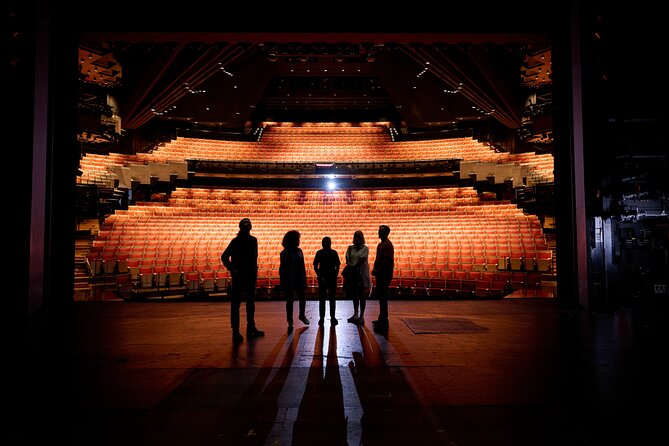
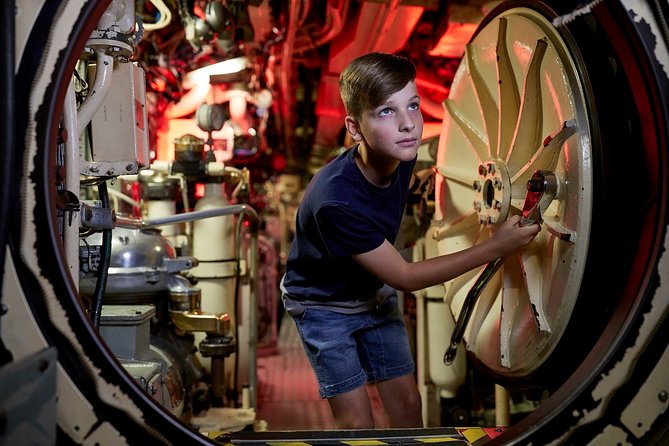
HMAS Onslow is a former Royal Australian Navy submarine, and it gives the museum one of its strongest experiences. You pass through tight spaces, see how crew members lived and worked, and gain a practical sense of why submarine service required discipline and cooperation.
The cramped interior is the point. It is hard to imagine people spending long periods in such confined quarters until you stand inside the vessel. The submarine also makes naval history feel personal, since the focus shifts from broad military events to bunks, corridors, equipment, and daily routines.
I would visit Onslow early in the day if it is open. It can attract a line, and the last boarding time is listed as 4:10 pm. One important caution: vessel access is not guaranteed every day. Maintenance work has sometimes kept the submarine closed, so check current conditions at the entrance rather than building your entire visit around it.
HMAS Vampire brings the naval collection to life
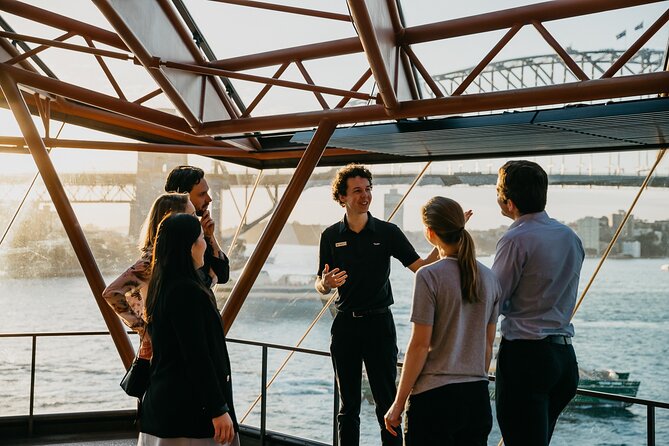
HMAS Vampire is described as the last remaining big-gun ship in Australia. Its size, deck equipment, and military purpose give you a different experience from the submarine. On the destroyer, you can move through a larger naval environment and compare the working spaces with the tighter interior of Onslow.
The ship is particularly useful if you want to understand the Australian navy through physical evidence. A guide who has served in the Australian military may be able to explain the vessel from personal experience, making the visit more grounded than a simple label beside an object.
Allow time outdoors here. The decks can become hot, so I would bring a hat and sunglasses. The ship’s last boarding time is listed as 4:10 pm, but check the schedule because operating details can change.
James Craig offers a glimpse of a working sailing ship
James Craig is a 19th-century barque and one of the few remaining sea-worthy vessels of its type. It took 30 years to restore, which gives you some sense of the care involved in bringing an old sailing ship back into serviceable condition.
Compared with Endeavour, James Craig represents a later period of sailing and commercial shipping. Its presence helps connect the age of exploration with the era when large sailing vessels carried cargo and supported international trade.
Access to James Craig depends on the daily program, and the final boarding time should be checked upon arrival. This is one place where a flexible plan helps. If you see the ship open, take the opportunity rather than assuming you can return later.
The Spirit of Australia and the thrill of speed
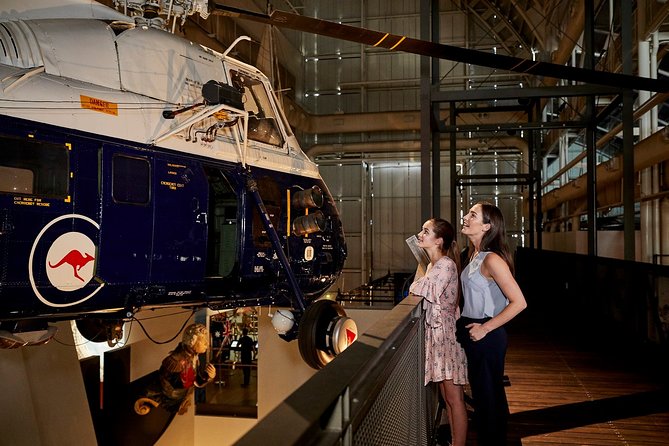
Not every object here is old or built for long voyages. The Spirit of Australia holds the world water-speed record set in 1977, adding a high-speed engineering story to the collection.
This boat changes the rhythm of the visit. After tall ships, naval vessels, and submarine corridors, it shows what happens when design is focused almost entirely on speed. It is a good reminder that maritime history includes sport, engineering, risk, and national ambition, not just exploration and war.
I would not skip it simply because it is smaller than the docked vessels. Its importance comes from the record and the engineering challenge it represents.
Action Stations and Kids on Deck
The museum makes a real effort to serve families. Kids on Deck includes interactive activities, giving younger children something to touch, try, and investigate instead of asking them to read long panels.
Action Stations adds another hands-on element to the visit. These spaces are useful when children have reached their limit with traditional displays. I would use them as part of a planned rhythm: one gallery, one vessel, then an interactive stop.
The children’s areas also help mixed-age groups stay together. Adults can spend time with naval or exploration displays while younger visitors have a more active part of the museum to enjoy. The Big Ticket is the better choice if these areas are important to your day.
How long should you spend at the museum?
The official visit can take from one to four hours, but I would treat one hour as a quick look, not a complete visit. A short stop can cover a few indoor galleries and perhaps one ship. It will not give you much time for the full dock area, special exhibitions, or interactive children’s spaces.
For a relaxed visit, plan three to four hours. A full day is reasonable if you want to board several vessels, read the galleries carefully, join volunteer-led explanations, stop for food, and let children use the interactive areas without rushing.
A practical order is:
- Start with the indoor galleries and check the day’s ship schedule.
- Visit the vessel with the earliest or most limited boarding time.
- Tour Endeavour, Vampire, Onslow, and James Craig if they are open.
- Return indoors for special exhibitions and the remaining galleries.
- Finish with the cafe or terrace overlooking Darling Harbour.
This order protects you from missing a ship because you spent too long reading indoors. The museum is self-paced, so you can adjust as you go.
Guides, access, and comfort
Volunteer guides are one of the museum’s strongest features. Several are former Australian military personnel, and their first-hand connection with naval vessels can add small practical details that standard displays cannot provide. Ask about guided tours when you enter.
Most people can take part, and the museum has ramps and lifts. Some historic ships still involve tight passages, steep or confined areas, so the indoor galleries may be the easier option for anyone who prefers more open space.
The outdoor sections need a little planning. Wear comfortable shoes, bring a hat and sunglasses, and allow time for the heat around the ships. The cafe overlooking Darling Harbour provides a useful break, particularly during a longer family visit.
The experience is not a fixed guided tour. You can arrive, explore, pause, and move on at your own pace. The activity listing notes a maximum of 10 travelers, but the museum visit itself is primarily an admission experience rather than a tightly managed group excursion.
Is $25.10 good value?
At $25.10 per person, the ticket is fairly priced if you use the Big Ticket fully. Access to several historic vessels, permanent galleries, special exhibitions, and family activities gives you enough content for several hours.
The value drops if you choose the limited ticket and only spend a short time inside. That option can still make sense for a quick cultural stop or a specific photography exhibition, but it does not offer the same physical experience as boarding the ships.
I see this as one of Sydney’s better family-value attractions because the admission supports several kinds of interest. You can study Aboriginal and Torres Strait Islander maritime customs, learn about European exploration, walk through a submarine, explore a tall ship, and look over Darling Harbour without changing venues.
Who should book this experience?
I recommend the museum most strongly to:
- Families with children who enjoy interactive exhibits and exploring real vessels
- People interested in naval service, submarines, or military technology
- Anyone curious about Captain Cook and the practical side of 18th-century voyages
- Visitors who want a history museum with outdoor activity and harbour views
- Photography fans interested in the special exhibitions
- Anyone looking for a flexible Sydney attraction that can fill one hour or most of a day
It may be less suitable if you dislike confined spaces, have only a few minutes, or want every ship to be open on a guaranteed schedule. Vessel access can change, and the most interesting part of the visit may require walking outside in the sun.
Should you book the Australian National Maritime Museum?
Book it if you want to step inside history, not just read about it. The submarine, destroyer, tall ships, and Darling Harbour location give this museum a physical edge that many city museums lack.
Choose the Big Ticket when you have at least three hours and want the full experience. Check the ship schedule at the start, visit Onslow and the other priority vessels early, and bring sun protection. If your time is tight or your interest is limited to galleries and special exhibitions, the simpler ticket may be enough.
Free cancellation is available when you cancel at least 24 hours before the experience start time. Changes or cancellations made less than 24 hours ahead are not accepted for a refund.
FAQ
What does the Big Ticket include?
The Big Ticket includes the museum’s seasonal and permanent exhibitions, the outdoor dock area, and access to historic vessels when they are open. It can include HMAS Vampire, HMAS Onslow, Endeavour, and James Craig.
Is there a ticket for exhibitions only?
Yes. You can choose an option limited to the special exhibitions and permanent galleries instead of buying the Big Ticket with vessel access.
What are the museum’s opening hours?
From March 12, 2024 through February 1, 2026, the stated hours are 9:30 am to 5:00 pm daily. From February 2, 2026 through March 31, 2027, the stated hours are 10:00 am to 4:00 pm daily.
Can I board the submarine and ships?
Boarding is available for vessels included with the selected ticket when they are operating. HMAS Vampire, HMAS Onslow, and Endeavour list a last boarding time of 4:10 pm. James Craig’s final boarding time should be checked when you arrive.
Is food included with admission?
No. Food and drinks are not included. You can buy refreshments at the cafe overlooking Darling Harbour or bring snacks for the museum terrace.
Can I cancel for a full refund?
Yes. You can receive a full refund if you cancel at least 24 hours before the experience start time. Cancellations or changes made less than 24 hours before the start time are not accepted for a refund.
Just added in Sydney
- Sydney: Wildlife, Waterfalls and Wine Small Group Tour★ 5.0 · 251 reviews
- WILD LIFE Sydney Zoo★ 4.3 · 240 reviews
- Sydney: “Vivid Sydney” Festival of Light Sightseeing Cruise★ 4.3 · 24 reviews
- From Sydney: Location Tour of Home and Away★ 4.7 · 290 reviews
- Sydney: Vivid Festival of Light Harbor Cruise with Dinner★ 4.5 · 120 reviews
- From Sydney: Tandem Skydive Experience over Wollongong Beach★ 4.5 · 83 reviews
- illi-Langi The Rocks Aboriginal Dreaming Tour★ 4.5 · 90 reviews
- Walking with Wild Kangaroos Private Half-Day Trip from Sydney★ 5.0 · 45 reviews
Museums, compared.
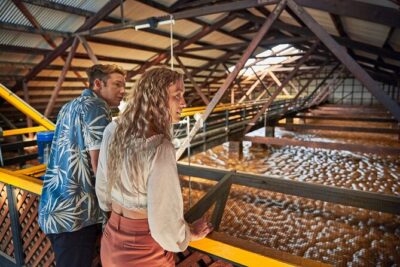
Bundaberg Rum Behind The Scenes Distillery Tour And Museum Experience
Read our review →
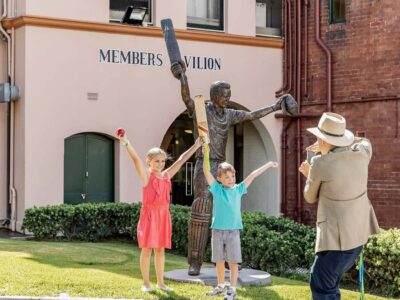
Sydney Cricket Ground (SCG) and Museum Walking Tour
Read our review →

Broome Trio Afternoon Adventure: Brewery, Museum & Crocodile Park
Read our review →

Bundaberg: Brew Tasting and Self-Guided Gallery Tour
Read our review →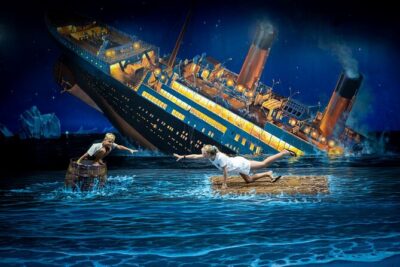
ArtVo Gold Coast – Queensland’s First Trick Art Gallery
Read our review →Browse the lists this tour appears in