
Reviewed · 7-DAY EXPERIENCES
7-Day Super Value Tour of Tasmania: Explore Tasmania’s West and East Coasts
Tasmania rewards early starts. This seven-day circuit packs the island’s best-known natural and historic sights into one moving trip, from rainforest and waterfalls to Cradle Mountain, Wineglass Bay, the Bay of Fires, and Port Arthur. I especially like the wide range of scenery and the chance to see places that are awkward to connect without your own car. I also like the small-group format, capped at 24 people, with guides such as Natalie and Evan praised for patience, thoughtful driving, and lively local context. The trade-off is a brisk schedule with long days, several walks, and no room for a slow, stay-put holiday.
You pay $1,038.14 per person for about a week, including six nights of accommodation, park fees, hotel pickups in central Hobart, a guide, Port Arthur, Bonorong Wildlife Sanctuary, and an Advanced Eco-Certified operation. That is solid value if you want transport and lodging handled, but check the fine print: the Gordon River cruise is not included, and The Ship That Never Was costs extra. The tour is non-refundable, so choose your dates carefully.
In This Review
- Six details that define this Tasmania tour
- Why this route works for a first Tasmania visit
- Day one: waterfalls, wilderness, and Lake St Clair
- Day two: Strahan, the Gordon River, and the wild west coast
- Day three: choosing your Cradle Mountain walk
- Day four: from Cataract Gorge to the Bay of Fires
- Day five: Wineglass Bay and the Great Eastern Drive
- Day six: Tasmanian animals, Richmond, and kunanyi
- Day seven: convict history and the Tasman Peninsula
- Guides, group size, and the value of the price
- Should you book this Tasmania tour?
- FAQ
- Where does the tour start?
- What time does the tour begin?
- Where does the tour finish?
- Is pickup available?
- How long is the tour?
- What is included in the price?
- Is the Gordon River cruise included?
- Is The Ship That Never Was included?
- How physically demanding is the tour?
Six details that define this Tasmania tour
- Seven days, two coasts, and a lot of ground: You travel from Hobart through the western wilderness, north to Cradle Mountain and Launceston, east to the Bay of Fires and Freycinet, then back to the Tasman Peninsula.
- The Gordon River cruise is optional in cost: Day two allows six hours for World Heritage Cruises, but its admission is not included in the tour price.
- Cradle Mountain offers choice: You can take the four-hour Dove Lake Circuit, tackle the more demanding Marion’s Lookout Walk, or choose a shorter Ronny Creek outing.
- Wildlife is built into the route: Bonorong includes wombats, quolls, birds, kangaroos, and Tasmanian devils, while Ronny Creek gives you a chance to spot wombats in the wild.
- History arrives in several forms: You see Queenstown’s mining past, Strahan’s convict connections, Richmond’s Georgian buildings, and Port Arthur’s former penal settlement.
- Central Hobart pickup keeps the start simple: The tour begins at YHA Hobart Central, 9 Argyle Street, at 7:00 a.m., and returns there at the end.
Why this route works for a first Tasmania visit
Tasmania is compact on a map but slow to cross by road. This trip solves that problem by linking the western, northern, eastern, and southeastern corners without asking you to arrange separate buses, hotels, park entries, and day tours.
I like the order of the route. The first two days introduce the island’s wet western forests and mining towns. Day three brings the high country at Cradle Mountain. The eastern coast then shifts the mood to beaches, granite, fishing towns, and open sea. The final days add animals, colonial buildings, and convict history.
This is not a resort-style package. You change locations often, and the itinerary uses early starts and timed visits to fit in a great deal. That makes it useful for a first visit, especially if you do not want to drive on unfamiliar roads. It is less suitable if you prefer long mornings, private rooms guaranteed by the package details, or plenty of unplanned time.
The advertised rate includes six nights of accommodation, but the supplied details do not specify room types or whether every meal is covered. Treat all-inclusive as covering the listed touring services rather than every personal expense. The cruise and Strahan theater are clear examples of extras.
A few more options to weigh up in Hobart
- Bruny Island Food, Sightseeing, Guided Lighthouse Tour & Lunch
★ 5.0 · 2,989 reviews - Full-Day Guided Bruny Island Tour from Hobart
★ 5.0 · 1,331 reviews - kunanyi/Mt Wellington Explorer Bus- Return Tour (2.5 hours)
★ 5.0 · 1,249 reviews
Day one: waterfalls, wilderness, and Lake St Clair
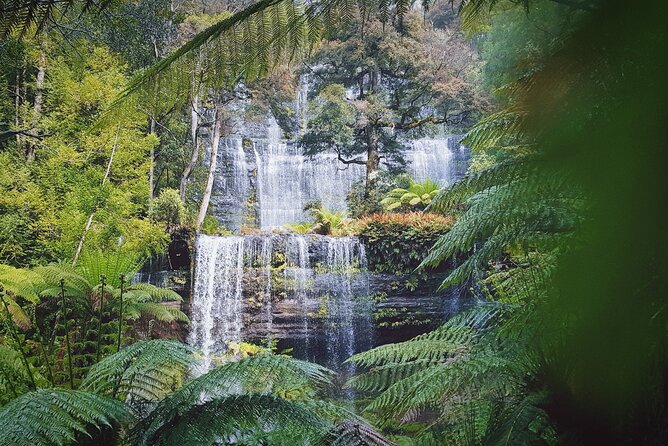
The opening morning begins at Russell Falls, one of Tasmania’s easy-to-love stops. A 90-minute visit combines the Tall Trees walk with the falls, so you get both towering forest and moving water rather than a quick roadside photo. The walk is a good first taste of Tasmania’s wet western country, though sturdy walking shoes make sense.
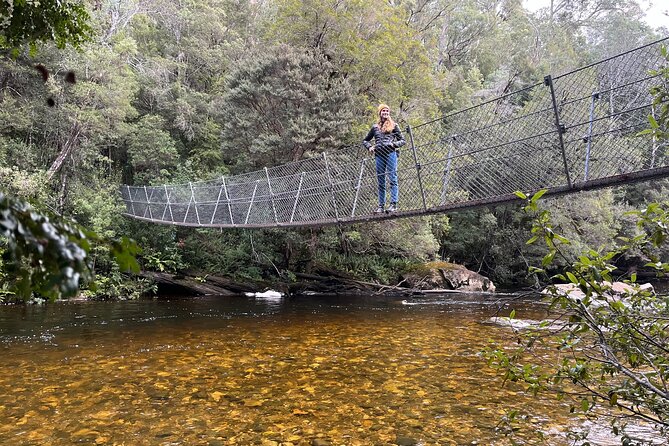
Next comes Franklin-Gordon Wild Rivers National Park, part of the Tasmanian World Heritage Area. The focus here is on rainforest, mountain peaks, and views across a protected region that feels far removed from Hobart. The included park entry is useful because national park fees can otherwise turn into a string of small extra costs.
Lake St Clair Park Center gives you about 75 minutes at Australia’s deepest freshwater lake. You can walk or have lunch by the water, but the short stop means you should not expect an extensive exploration of the park. This is a scenic pause, not a full Lake St Clair experience.
The day ends in Queenstown, a rugged former mining town with a quirky character and plenty of old West flavor. Twenty-five minutes is enough to look around, but not enough for a proper town visit. The real value is seeing how sharply the western scenery and settlements differ from the polished coastal towns later in the week.
Day two: Strahan, the Gordon River, and the wild west coast
Strahan receives a longer look on the second morning. Its harbor setting and convict past add a human story to the wilderness around it. Forty-five minutes is modest, but it helps you get your bearings before the main activity.
The central choice is the Gordon River cruise, scheduled for six hours. The boat trip follows the Gordon River into Tasmania’s World Heritage Area and focuses on temperate rainforest and quiet waterways. It is a major part of the day, but the cruise admission is not included, so budget for it separately before you commit.
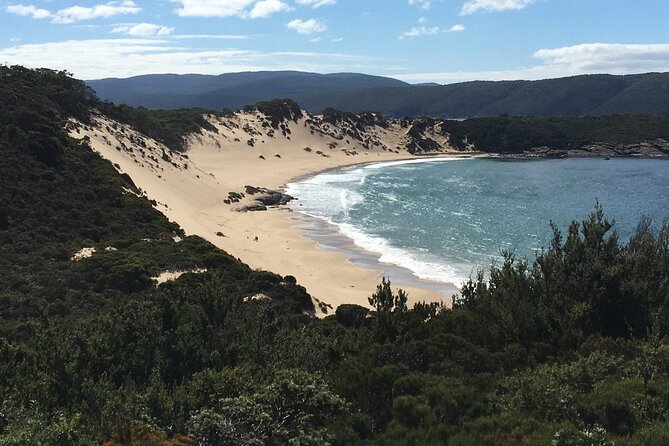
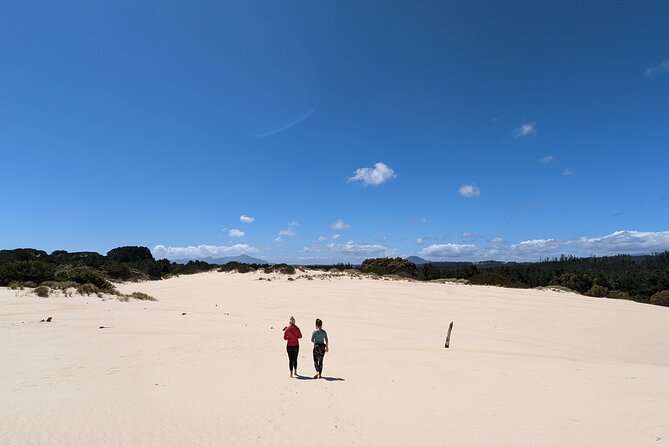
If you prefer not to take the cruise, the schedule also points toward the Henty Dunes and Ocean Beach. Henty’s sand extends for 15 kilometers, with dunes reaching 30 meters high. Ocean Beach runs for more than 40 kilometers, and its remote position gives you an unusually open view across the Southern Ocean. The supplied route notes that the next landfall in that direction is South America, more than 10,000 kilometers away.
That detail captures the western coast well: broad, windy, and spare. You get 45 minutes at each beach stop, enough to feel the scale but not enough for a long walk. Bring layers because exposed coastal weather can change the comfort of a short stop quickly.
In the evening, you can pay extra for The Ship That Never Was, a 75-minute play based on the 1834 escape from Sarah Island. The performance is described as dramatic and funny, and guide Natalie specifically encouraged it through her helpful tour leadership. It is a smart optional add-on if you enjoy local history presented with some humor.
Day three: choosing your Cradle Mountain walk

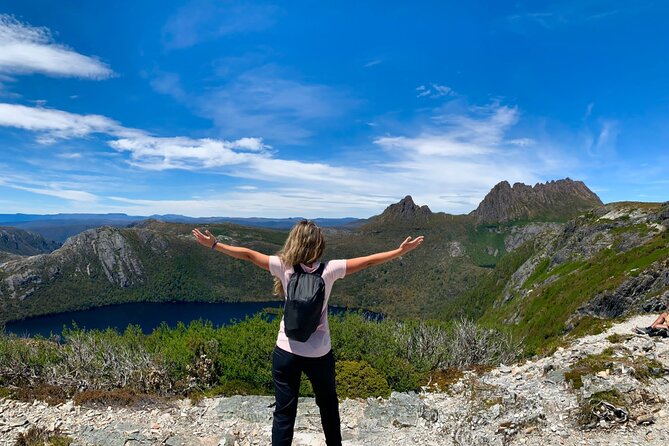
Cradle Mountain is the physical centerpiece of the week. The route allows four hours around Dove Lake, where you can enjoy close-up and wide views of the famous mountain. The circuit gives you a substantial walk without requiring the most demanding option on the schedule.
Marion’s Lookout is offered as a tougher alternative, also with four hours allocated. The reward is a higher viewpoint and broad alpine views, but the wording makes clear that this is for people comfortable with a challenge. You should judge the walk by your own fitness, not by the fact that both options appear in the same day.
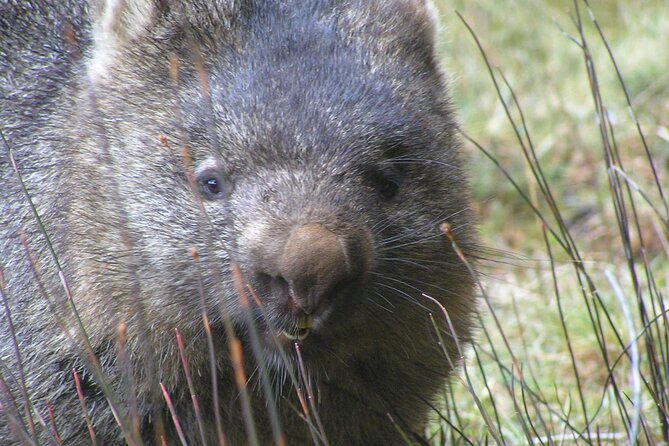
There is also a 30-minute boardwalk outing from Ronny Creek. Your guide leads you out and back into wombat territory, where the animals are accustomed to people and may be visible. Wildlife is never guaranteed, but this short stop is a useful choice if you want a gentler walk or have already spent your energy at Dove Lake.
Sheffield adds a lighter finish. Known for murals, the town combines local history and outdoor art in a compact setting. Forty-five minutes gives you time to wander, take in the painted walls, and stretch your legs after the mountain stop.
The main caution here is timing. Four hours sounds generous, but it can pass quickly once you include walking pace, photographs, weather, and regrouping. Pick one main Cradle Mountain goal rather than trying to force every option into the same afternoon.
A completely different kind of day out:
- Hobart: Bruny Island Food, Sightseeing & Lighthouse Day Tour
★ 4.8 · 960 reviews - Hobart: kunanyi/Mt Wellington Explorer Bus Pass
★ 4.8 · 848 reviews - Bruny Island Traveller – Gourmet Tasting and Sightseeing Day Trip from Hobart
★ 5.0 · 786 reviews - Hobart: 24-Hour Hop-on Hop-off Sightseeing Bus Ticket
★ 4.5 · 770 reviews
Day four: from Cataract Gorge to the Bay of Fires
Launceston’s Cataract Gorge is an appealing urban nature stop. It sits close to the city and includes walking tracks, a single-span chairlift, and picnic or rest areas. You have about an hour, so use it for a walk and viewpoints rather than trying to cover every track.
The route then turns east. St Helens is a 30-minute lunch stop, with time to see the harbor and its cray boats. It is a practical break as much as a sightseeing stop, and that matters on a week with many hours on the road.
Binalong Bay introduces the Bay of Fires, one of Tasmania’s most photogenic coastal areas. Expect clear water, white sand, and orange lichen on granite boulders. If conditions allow, you may swim, but the itinerary does not promise suitable weather or a dedicated swimming session. A towel and swimwear could be useful, but only if you have room and do not mind carrying them.
You spend the evening in Bicheno, where two hours are free for coastal views, fish and chips, and a chance to look for local wildlife. The unstructured time is welcome after several tightly timed stops. Still, the description does not promise a guided wildlife encounter, so think of animal spotting as a possibility rather than a scheduled event.
Day five: Wineglass Bay and the Great Eastern Drive
Freycinet National Park gets five hours, making this one of the more satisfying stops. Arriving early is intended to help avoid the biggest crowds, and the main walk heads to the Wineglass Bay lookout for the famous curved view over the water and beach.
You can then choose whether to relax at Wineglass Bay or spend more time walking. That choice gives you a little control over the day, though the details do not specify how far transport or walking access extends beyond the main lookout. Ask your guide about the best use of the available time once you arrive.
Cape Tourville Lighthouse adds a 45-minute coastal viewpoint. From there, you look toward the Tasman Sea and back toward the pink granite peaks of the Hazards and Wineglass Bay. It complements the inland lookout by giving you a broader sense of the coast.
The day continues along the Great Eastern Drive, with a brief stop in Orford. Fifteen minutes is little more than a stretch and a quick look, but it breaks up the road journey before the tour moves on.
Freycinet is one of the places where an early start pays off. The popular lookout can feel crowded later, while a quieter arrival gives you more time to enjoy the view rather than queue for it. Comfortable shoes are important because the tour includes a proper walk, not just a bus stop with a photograph.
Day six: Tasmanian animals, Richmond, and kunanyi
Bonorong Wildlife Sanctuary receives two hours and provides the most reliable wildlife time on the route. You can see quolls, birds, wombats, kangaroos, and Tasmanian devils in a conservation setting. For anyone hoping to see Tasmanian animals without relying on luck beside the road, this included admission adds real value.
Richmond shifts the focus to colonial Tasmania. The town has more than 50 Georgian buildings, many restored as cafes, restaurants, galleries, and accommodation. One hour lets you walk through the center and absorb its preserved character without turning the stop into a formal history lesson.
The nearby Richmond Bridge receives 15 minutes. It is described as Australia’s oldest existing stone arch bridge, so even a short visit has a clear point. The stop is easy to combine with Richmond because you do not need another long transfer.
The final major stop is Wellington Park on Mount Wellington, also called kunanyi. Its fern glades, eucalyptus forest, rock columns, and boulder fields create a strong contrast with the open eastern beaches. Two hours gives you time for a walk and viewpoints, though mountain weather can affect what you see.
This day works well for variety, but it also asks you to move between very different subjects: wildlife, architecture, engineering, and mountain scenery. That range is a strength if you like a tour with plenty of contrasts.
Day seven: convict history and the Tasman Peninsula
The final day heads to the Tasman Peninsula, beginning with a brief stop at Pirates Bay and Eaglehawk Neck. Ten minutes is enough for a panoramic look toward Cape Hauy and Cape Pillar, but it is strictly a viewpoint stop.
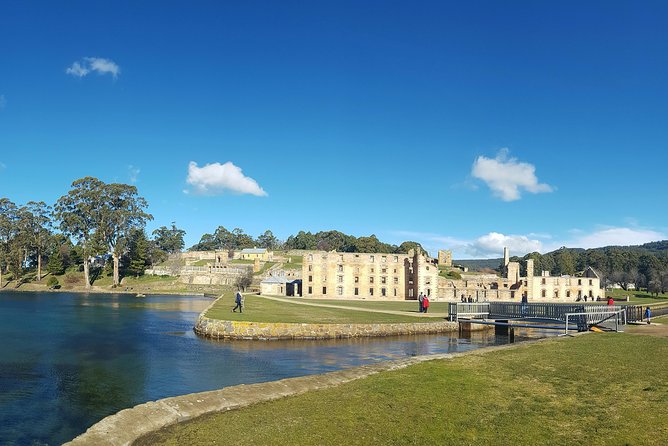
Port Arthur Historic Site gets three hours, and this is the main historical visit of the trip. The former convict settlement is a UNESCO-listed site and one of Australia’s best-preserved penal locations. You have enough time to explore its buildings and grounds and consider the harsh realities behind the settlement’s carefully preserved remains.
The setting is powerful, but it is not light sightseeing. The site deals with imprisonment and punishment, so allow yourself time to read and think rather than rushing only for photographs. Included entry improves the tour’s value here, since Port Arthur is a major reason to visit the peninsula.
Tasman National Park supplies the final burst of coastal drama. The route includes Tasman Arch, Devil’s Kitchen, and the Blowhole, with about an hour for the main geological features. A separate 20-minute Tasman Arch Track and 15-minute Devil’s Kitchen stop give you clear, short walks to viewpoints.
Remarkable Cave receives the longest final nature stop, at two hours and 15 minutes. The walk includes views toward the coastal sand dunes of Crescent Bay, giving the tour an unusual last note: broad shore, carved rock, and open sea rather than another town or museum.
Guides, group size, and the value of the price
A maximum of 24 people keeps this from being an intimate private tour, but it is still more manageable than a large coach group. Pickup and drop-off at Hobart CBD hotels, hostels, and motels remove one early logistical problem, though everyone must be ready at YHA Hobart Central by 7:00 a.m.
Guide quality matters greatly on a route this long. Natalie is praised for accommodating a group with a wide range of ages, while Evan is singled out for detailed but interesting history, considerate driving, and useful recommendations. Those comments point to the features that can make or break a road trip: calm driving, flexible explanations, and attention to different walking abilities.
At $1,038.14 per person, the package offers reasonable value for six nights of accommodation, national park entry, transport, guiding, Port Arthur, and Bonorong. You still need to account for the Gordon River cruise, the optional Strahan play, meals not specifically listed, and personal spending. The price works best if you value convenience and want to avoid car hire, route planning, and separate hotel bookings.
The physical demand is moderate, but the description is not describing a lazy week. You may walk for four hours at Cradle Mountain, five hours around Freycinet, and two hours at several other stops. Tell yourself honestly if you are comfortable with that rhythm before booking.
Should you book this Tasmania tour?
Book it if you want a broad first look at Tasmania and prefer a guide to handle the driving, accommodation, park access, and daily route. Nature lovers get waterfalls, rainforest, alpine views, beaches, dunes, and wildlife. History fans get Queenstown, Strahan, Richmond, Port Arthur, and the story behind The Ship That Never Was.
Think twice if you want a flexible itinerary, guaranteed private accommodation details, or full control over meals and optional activities. Also remember that the booking cannot be changed or refunded, which makes date selection especially important.
For the strongest experience, budget separately for the Gordon River cruise, consider the Strahan play, bring reliable walking shoes, and choose the Cradle Mountain walk that matches your fitness. If those conditions suit you, this is a practical way to see a remarkable amount of Tasmania in one week.
FAQ
Where does the tour start?
It starts at YHA Hobart Central, 9 Argyle Street, Hobart, Tasmania.
What time does the tour begin?
The scheduled start time is 7:00 a.m.
Where does the tour finish?
The activity ends back at the meeting point in Hobart.
Is pickup available?
Yes. Pickup and drop-off are offered for hotels, hostels, and motels in Hobart CBD.
How long is the tour?
The tour lasts approximately seven days and includes six nights of accommodation.
What is included in the price?
Included services are national park entry fees, accommodation for six nights, expert guides, Hobart CBD pickup and drop-off, Port Arthur Historic Site entry, Bonorong Wildlife Sanctuary entry, and the Advanced Eco-Certified tour operation.
Is the Gordon River cruise included?
No. The six-hour World Heritage Cruises activity is listed separately and its admission is not included.
Is The Ship That Never Was included?
No. The 75-minute show in Strahan is an optional extra and requires separate payment.
How physically demanding is the tour?
A moderate level of physical fitness is recommended. The itinerary includes several walks, including up to four hours at Cradle Mountain and five hours at Freycinet National Park.
Just added in Hobart
- Wineglass Bay and Maria Island Scenic Flight Experience★ 4.7 · 54 reviews
- Wineglass Bay & Freycinet National Park Day Trip from Hobart★ 4.7 · 249 reviews
- nipaluna (Hobart) Highlights Day Tour★ 5.0 · 33 reviews
- kunanyi/Mt Wellington Explorer Bus – One Way Tour★ 5.0 · 63 reviews
- kunanyi/Mt Wellington Tour & Hobart Hop-On Hop-Off Bus★ 5.0 · 275 reviews
- Hobart: Waterfalls, Wilderness & Wildlife – Active Day Tour★ 5.0 · 22 reviews
- Hobart: Wineglass Bay & Freycinet National Park – Active Day Tour★ 4.5 · 142 reviews
- Full-Day Tour to Wineglass Bay from Hobart★ 5.0 · 122 reviews
7-Day Experiences, compared.

Barossa Premium Wine Tasting Tour & lunch Departs 7 days a week
Read our review →
7-Day Exmouth Explorer via Pinnacles Monkey Mia Ningaloo Reef returning to Perth
Read our review →
Movie World, Sea World & Wet’n’Wild 7-Day Pass
Read our review →
7 Day Exmouth Explorer & Ningaloo Reef Return Perth
Read our review →

7 Day Adelaide to Uluru Adventure and Cultural Tour
Read our review →
7 Day Uluru to Adelaide Cultural and Adventure Tour
Read our review →Browse the lists this tour appears in