
Reviewed · HISTORICAL TOURS
7 Day Adelaide to Uluru Adventure and Cultural Tour
The outback starts before sunrise. This seven-day journey links Adelaide, Coober Pedy, Kings Canyon, and Uluru in one long, purposeful sweep through South Australia and the Northern Territory. I like the way it mixes serious walking with unusual stops, from Aboriginal rock art at Arkaroo Rock to underground rooms in Coober Pedy. I also like the camping style, especially sleeping in a swag beneath the stars near Uluru.
The main caution is the amount of time spent on the road. Day four is especially long, and the 5:30 am departure on day one is not for late sleepers. You need a moderate level of fitness, a tolerance for basic camping, and enough curiosity to enjoy the spaces between the major sights.
In This Review
- Key points to know before booking
- Why this seven-day route works
- Day one: Wirrabara, Arkaroo Rock, and Wilpena Pound
- Day two: a serious Flinders Ranges walk
- Day three: salt plains and Coober Pedy underground
- Day four: the long haul toward Kings Canyon
- Day five: Kings Canyon and your first Uluru sunset
- Day six: Kata Tjuṯa and Anangu culture
- Day seven: Uluru at sunrise and the finish at Yulara
- Camping, meals, and what the price covers
- Who should book this Adelaide to Uluru trip?
- Should you book it?
- FAQ
- How long is the Adelaide to Uluru tour?
- Where does the tour start?
- Where does the tour finish?
- Is the transfer from Yulara to Alice Springs included?
- What meals are included?
- Is the Field of Light experience included?
- How fit do I need to be?
Key points to know before booking
- Arkaroo Rock brings Adnyamathanha culture into the first day, with a 3.2-kilometer trail leading to ochre and charcoal art.
- The Wangara Lookout Hike covers 7 kilometers return, giving you a proper walk through the Flinders Ranges rather than a quick roadside stop.
- Coober Pedy offers an underground night, including a visit to the Old Timers Mine and accommodation at Radeka Downunder.
- The Kings Canyon Rim Walk is a demanding 6-kilometer loop, with an early start and steep sections.
- Uluru is experienced across sunset, sunrise, Kata Tjuṯa, and the Cultural Centre, not simply as a photo stop.
- The trip ends at Yulara, so you must arrange your own onward transfer to Alice Springs if needed.
Why this seven-day route works
At $1,108.14 per person, this is not a cheap bus ride to Uluru. It is a guided camping trip that includes transport, national park fees, activities, six breakfasts, and three dinners. Those inclusions matter in remote Australia, where entry costs and long-distance transport can quickly add up.
I see the value in the route because it gives you several very different outback experiences. You get the folded mountain country of the Flinders Ranges, the dry salt plains around Lake Hart, Coober Pedy’s mining culture, the sandstone walls of Kings Canyon, and the sacred places around Uluru and Kata Tjuṯa.
The group is capped at 20 people. That is large enough to provide a social campfire atmosphere but small enough for a guide to keep the group together on walks. The strongest praise is directed at the guides, with Eli and Brandon singled out for their stories, humor, care, and ability to make the long days enjoyable.
You should also note the booking pattern. The trip is booked an average of 67 days ahead, so waiting until the last minute may limit your date choices. Pickup is offered, and the listed starting point is YHA Adelaide Central at 135 Waymouth Street.
More history tours in Adelaide:
- A Barossa Valley pickup: Wine and Heritage Tour, Local Guide
★ 4.9 · 20 reviews - Ultimate Melbourne Walking Tour: History, Laneways & Culture
★ 5.0 · 1,451 reviews - Puffing Billy Railway: Heritage Steam Train Journey
★ 4.6 · 1,195 reviews
Day one: Wirrabara, Arkaroo Rock, and Wilpena Pound
The first morning begins at 5:30 am. That early departure lets the group leave Adelaide before the day heats up, but you will want your breakfast and coffee plan sorted in advance. The first stop is Wirrabara, a short 15-minute pause that breaks up the initial drive north.
The day becomes more memorable at Arkaroo Rock, in Adnyamathanha Country. The 3.2-kilometer walk takes about an hour and leads through native bush to a rock shelter marked with ochre and charcoal art. This is a useful early lesson in how the Flinders Ranges are not just scenery. They are a cultural place with stories and meaning that predate European settlement by a very long time.
The route then continues to Wilpena Pound, a natural basin framed by the ranges. A local Yura guide welcomes the group and shares stories first spoken in Yura Ngawarla before explaining them in English. That kind of cultural introduction gives the evening more weight than a standard scenic drive.
You stay at Wilpena Pound for the night, with roughly 14 hours allocated there. The timing allows the group to settle in after a big first day, although you should not expect a slow start or a leisurely schedule. The reward is a first night in a striking part of the Flinders Ranges, rather than a bland roadside motel.
Day two: a serious Flinders Ranges walk
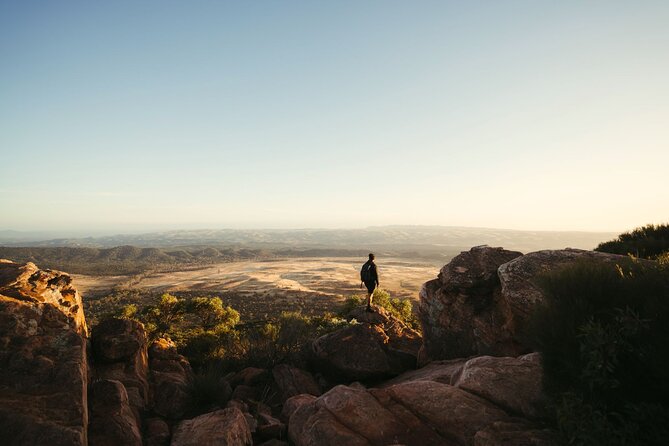
Day two begins with the Wangara Lookout Hike, a 7-kilometer return walk taking about three hours. The trail starts at the Wilpena Pound Visitor Centre and passes through Pound Gap, where river red gums shade parts of the route.
This is one of the most important physical sections of the trip. Three hours on a marked walk may sound modest, but heat, uneven ground, and the general pace of a group can make it feel more substantial. You should bring suitable walking shoes and take the moderate fitness warning seriously.
The lookout provides the broad views that make the Flinders Ranges so memorable. You see the scale of the basin and the weathered ridges around it, rather than only viewing the area through a bus window. If you enjoy walking, this is likely to be one of your favorite sections.
The day also includes Old Wilpena Station, where pastoral history meets Adnyamathanha Country. Afterward, the group travels to Hawker for lunch and a short stop before continuing toward Warren Gorge. The day is listed as a long 13-hour portion, so the mixture of hiking, history, meals, and driving keeps the schedule full.
Day three: salt plains and Coober Pedy underground
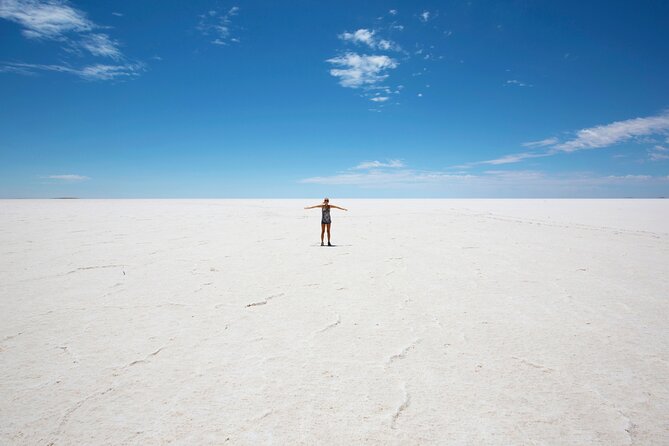
The Flinders Ranges give way to broad saltbush plains as the group heads toward Port Augusta and then north to Lake Hart. This is a day for watching the country change slowly. The horizon opens, vegetation becomes sparse, and the sense of distance grows.
Lake Hart receives about five hours in the schedule, including the drive and stop. Do not expect a packed list of attractions here. The appeal is the quiet, pale salt environment and the chance to see how different the country feels after the mountain ranges.
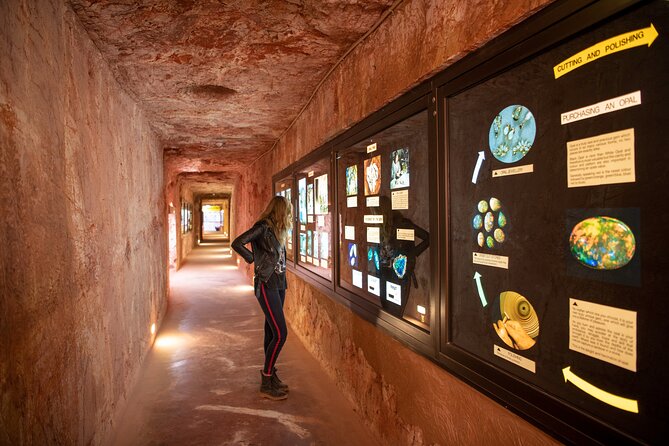
By late afternoon, the trip reaches Coober Pedy, the opal-mining town famous for its underground buildings. At the Old Timers Mine, you learn how opals are formed and walk through original underground workings. This stop adds a human story to the outback. It shows how people adapted to intense desert heat and built a town around mining.
The night at Radeka Downunder is one of the tour’s most unusual features. The rooms are carved into the rock, helping shield them from the desert heat. Your free time in Coober Pedy may include an underground meal or a look around town, though the supplied schedule does not promise a specific restaurant or evening activity.
You have about 19 hours in Coober Pedy, which gives the group a welcome break from constant driving. Still, conditions are basic and distinctive rather than polished. Choose this trip because an underground stay sounds fun, not because you want resort comforts.
A few more options to weigh up in Adelaide
- Barossa Premium Wine Tasting Tour & lunch Departs 7 days a week
★ 5.0 · 1,475 reviews - Adelaide: Barossa Premium Wine Tasting tour & Winery Lunch
★ 4.8 · 1,452 reviews - Kangaroo Island Full Day Experience by Ferry Including Lunch
★ 4.5 · 1,202 reviews - Discover Barossa: 4 Wine Tastings, Gourmet Lunch, and Hidden Gems
★ 5.0 · 1,027 reviews
Day four: the long haul toward Kings Canyon
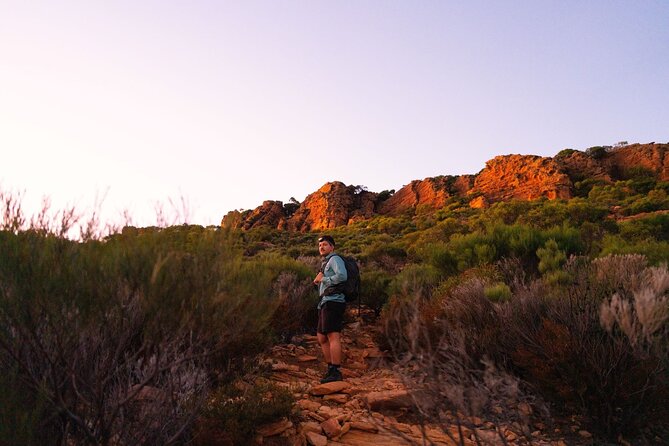
Day four is the route’s endurance test. The bus continues north through red dirt and wide skies, passing the Dingo Fence before reaching Kanku-Breakaways Conservation Park. The fence is a memorable piece of outback infrastructure, while the Breakaways offer strange, colorful rock formations shaped by erosion.
The exact timing for the first part of this day is not specified, but the schedule clearly treats it as a major transfer. You cross from South Australia into the Northern Territory and continue toward Watarrka National Park, home of Kings Canyon. For some people, these long drives are part of the pleasure. For others, they are the hardest part of the tour.
By late afternoon, you reach Kings Creek Station, your desert base for the night. The stop gives you a practical position for the early Kings Canyon walk the next morning. It also means you are not trying to visit the canyon as a rushed day trip from far away.
This is a good point to be honest about the trip’s pace. Seven days from Adelaide to Uluru covers a huge distance. You will see a great deal, but you will not linger everywhere. If you prefer two or three nights in each place, a self-drive itinerary with more time would suit you better.
Day five: Kings Canyon and your first Uluru sunset
The Kings Canyon Rim Walk begins early, and that is a sensible choice in the Red Centre. The 6-kilometer loop takes about three and a half hours and passes towering sandstone cliffs, rounded domes, and wide views across the canyon country.
This walk requires more than a casual stroll. You climb at the beginning, then continue across uneven surfaces. The effort pays off with changing views and a close look at the canyon’s layers. If you have knee, balance, or heat concerns, speak with the guide before setting out.
After lunch, the bus continues to Uluru-Kata Tjuṯa National Park. The 45-minute park visit listed in the schedule is part of a larger afternoon and evening around the Red Centre. By late afternoon, the group reaches Ayers Rock Campground for sunset.
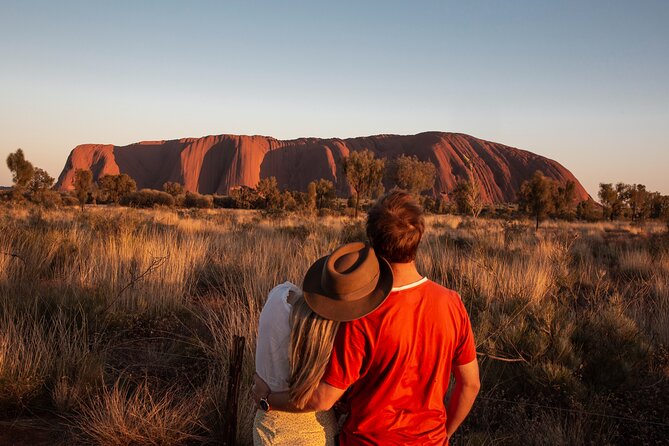
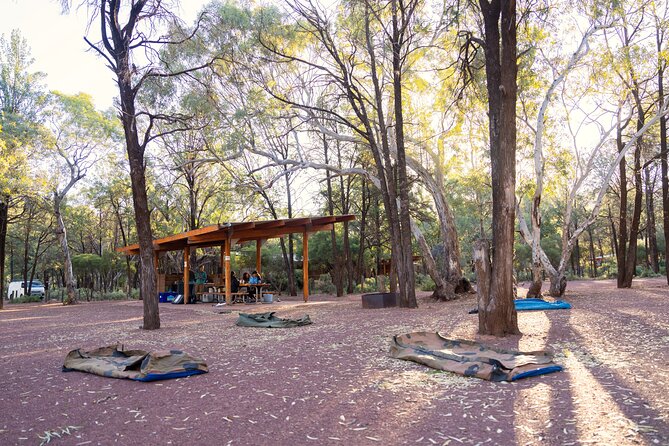
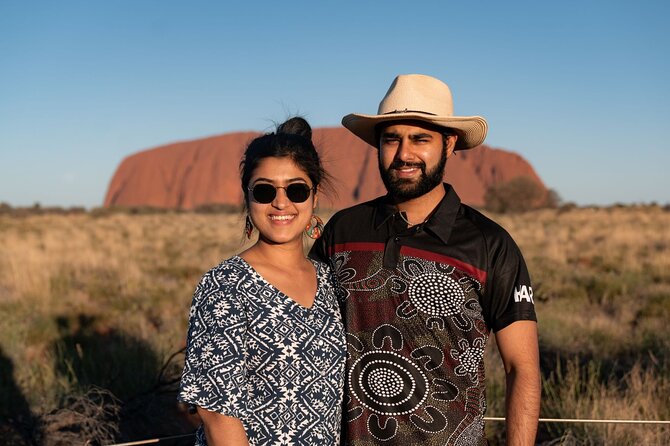
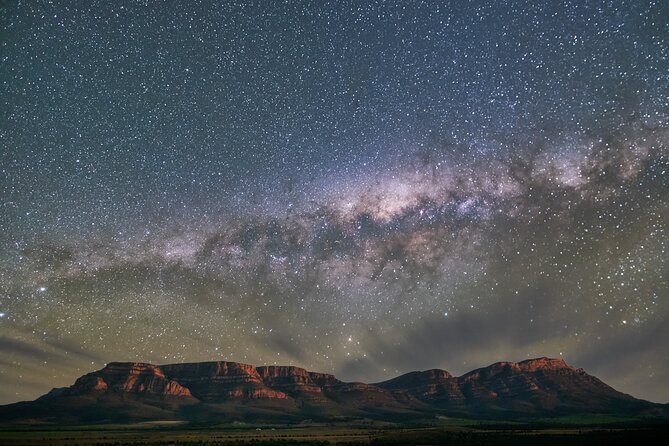
Watching Uluru change color as the sun drops is a major emotional point in the trip. The rock becomes the focus, but the quiet around it matters just as much. After dinner, you sleep in a swag under the stars, a simple bedroll that places you close to the night sky without pretending you are in a hotel.
This night is likely to be one of the most praised parts of the experience. It combines the campfire, the desert air, and the enormous sky in a way an indoor room cannot match. You should also understand the tradeoff: sleeping outdoors is memorable precisely because it is basic.
Day six: Kata Tjuṯa and Anangu culture
The morning walk at Kata Tjuṯa is the 2.6-kilometer Walpa Gorge Walk. Walpa means wind in the local language, and the trail leads between tall red-rock domes. The walk is shorter than the Kings Canyon route, but the enclosed gorge gives it a different character.
Kata Tjuṯa deserves real attention. It is not merely an extra stop on the way to Uluru. The huge domes and narrow walking route create a more sheltered, close-up experience, while the changing light brings out different shades in the rock.
The group then visits the Cultural Centre for about 15 hours in the itinerary block, a timing figure that clearly includes the surrounding camp schedule rather than a literal continuous visit. The important point is that the Cultural Centre gives you time to learn about Aṉangu life and the meaning of the park.
This cultural component helps prevent the Red Centre from becoming only a scenic backdrop. You receive context for the places you have seen and a better understanding of why Uluru and Kata Tjuṯa must be treated with care. The tour’s earlier welcome in Yura Country and this later visit create a useful cultural thread across the week.
The evening includes an optional Outback BBQ at your own cost. It is planned as a social final night, with food, drinks, and shared stories under the desert sky. Since the meal is not included, budget separately for it. The optional Field of Light experience also costs A$50 per person.
Day seven: Uluru at sunrise and the finish at Yulara
The final morning begins early again, this time with sunrise over Uluru. The changing light, long shadows, and gradual color shifts are the reason an early start is worthwhile. You get a quieter view of the monolith before the group moves on to the final activities.
The morning includes about two and a half hours in the national park. The supplied details indicate that you get up close to Uluru, but they do not specify every exact walking route or activity. That is useful to remember when planning your expectations. You should expect a final park experience, but do not assume a particular trail unless the operator confirms it.
The trip ends at Yulara, the service town for the national park. It does not include the transfer bus from Yulara to Alice Springs, so arrange that separately if Alice Springs is your next stop. This is an important practical detail because the tour is not a round trip back to Adelaide.
Camping, meals, and what the price covers
The tour includes six breakfasts and three dinners, along with all listed activities, entrance fees, and national park fees. That makes the $1,108.14 price easier to justify, especially since remote park access and long-distance transport are built into the package.
Not every meal is included. Lunches are not listed, the Outback BBQ is at your own cost, and the Field of Light is an optional A$50 extra. You should keep money aside for these items instead of assuming the package covers every meal and evening activity.
The camping style is central to the experience. You spend one night underground at Radeka Downunder and sleep in a swag under the stars near Uluru. Those are not interchangeable forms of accommodation. Together, they give the trip a strong sense of place, but neither will suit someone who wants a private room every night.
The group limit of 20 helps the social side of the trip. You have enough people for campfire conversation and new friendships, yet the number is not so high that every walk feels like a crowd. A good guide matters greatly here, and the praise for Eli and Brandon suggests that the human side of the tour can shape the whole week.
Who should book this Adelaide to Uluru trip?
I would recommend it to you if you want a single organized route through the outback and prefer not to handle long-distance driving yourself. It suits active visitors who want walking, Aboriginal cultural context, unusual accommodation, and campfire evenings in one package.
It is also a good choice if you are traveling alone and want a built-in group. The 20-person maximum and shared camping format make it easier to meet people, while a storyteller guide helps fill the long road sections with local context.
I would hesitate if you dislike early starts, rougher accommodation, or full driving days. The 5:30 am departure, the 7-kilometer Wangara hike, the 6-kilometer Kings Canyon Rim Walk, and the long fourth day all require energy.
You also need to be comfortable with the tour’s one-way finish. Yulara is the endpoint, and the Alice Springs transfer is not included. Cancellation terms are strict near departure: a full refund requires cancellation at least six full days before the start, while cancellations less than two days ahead receive no refund. Poor weather or failure to meet the minimum group size can lead to a new date, another experience, or a full refund.
Should you book it?
Book this tour if you want variety more than luxury. In one week, you walk through the Flinders Ranges, see Aboriginal rock art, sleep underground in Coober Pedy, tackle Kings Canyon, visit Kata Tjuṯa, and watch both sunset and sunrise at Uluru.
The strongest reason to choose it is the combination of activity and culture. The main drawback is the pace, with long road days and simple camping. If that sounds like part of the adventure rather than a burden, this is a well-planned way to reach the Red Centre from Adelaide.
FAQ
How long is the Adelaide to Uluru tour?
The experience lasts approximately seven days, beginning in Adelaide and ending at Yulara in the Northern Territory.
Where does the tour start?
The listed meeting point is YHA Adelaide Central, 135 Waymouth Street, Adelaide, South Australia 5000. The start time is 5:30 am.
Where does the tour finish?
The tour ends at Yulara, NT 0872, near Uluru-Kata Tjuta National Park.
Is the transfer from Yulara to Alice Springs included?
No. The Yulara to Alice Springs transfer bus ticket is not included. You need to inquire directly about that transfer.
What meals are included?
The tour includes six breakfasts and three dinners. Lunches are not listed as included, and the Outback BBQ on day six is at your own cost.
Is the Field of Light experience included?
No. Field of Light is an optional extra costing A$50 per person.
How fit do I need to be?
You should have a moderate level of physical fitness. The itinerary includes the 7-kilometer Wangara Lookout Hike and the 6-kilometer Kings Canyon Rim Walk, along with the 2.6-kilometer Walpa Gorge Walk.
Just added in Adelaide
- Wild Dolphin Swim Cruise★ 5.0 · 55 reviews
- d’Arenberg Cube / McLaren Vale Regional Tour★ 4.5 · 26 reviews
- Ultimate Adelaide City and Hahndorf Tour★ 4.5 · 45 reviews
- Victor Harbor and Southern Highlights from Adelaide★ 4.0 · 47 reviews
- Victor Harbor and Fleurieu Peninsula Tour★ 4.5 · 145 reviews
- The F Factor: Adelaide food tour★ 5.0 · 89 reviews
- Western Ridge & Valley Floor: 20-Minute Helicopter Flight★ 5.0 · 24 reviews
- Adelaide Twilight Cruise from Glenelg★ 4.5 · 94 reviews
Historical Tours, compared.

Ultimate Melbourne Walking Tour: History, Laneways & Culture
Read our review →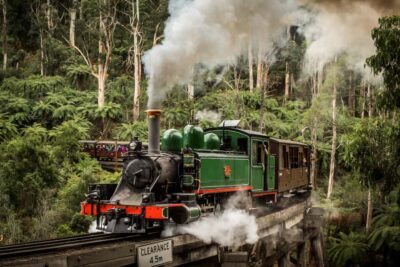
Puffing Billy Railway: Heritage Steam Train Journey
Read our review →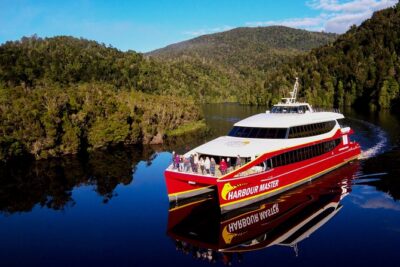
Morning World Heritage Cruise on the Gordon River from Strahan
Read our review →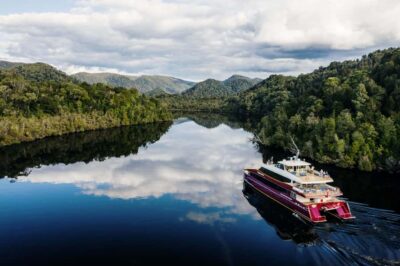
World Heritage Cruise on Gordon River with Lunch
Read our review →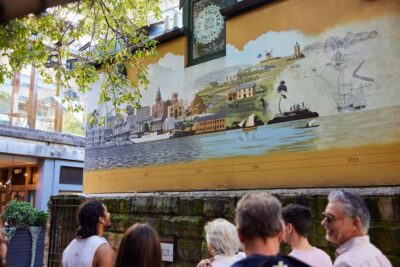
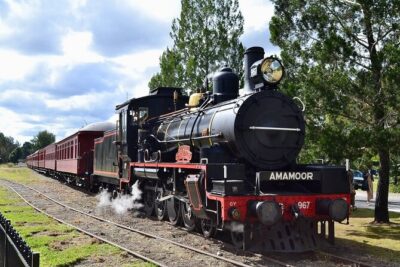
Experience History onboard The Mary Valley Rattler
Read our review →
Snorkel & Dive the Reef: Sustainable, Scientific & Cultural Tour
Read our review →
Derwent River Historic Harbour Cruise From Hobart
Read our review →Browse the lists this tour appears in