
Reviewed · WHALE WATCHING
Whale Watching Cruise from Busselton, Augusta or Dunsborough
Whales can appear within minutes. This family-run cruise gives you a strong chance to see humpbacks in Western Australia, with departures from Augusta, Busselton or Dunsborough depending on the season. I like the purpose-built, walk-around boat and the chance to have a marine biologist onboard, rather than relying only on a short burst of commentary from the skipper.
I also like the relatively low price of $67 and the extra room created by a boat designed for good viewing. The main consideration is the sea: even a stable vessel can move around, and one passenger found the ride rough enough to recommend travel-sickness tablets.
In This Review
- Quick points before you book
- Choosing between Augusta, Busselton and Dunsborough
- What the 2 to 2.5-hour cruise feels like
- The purpose-built boat is a real advantage
- The crew adds more than basic narration
- Whale sightings are strong, but nature sets the terms
- How good is the $67 value?
- Weather, sea motion and what to bring
- Best moments from the water
- Who will enjoy this cruise most?
- Should you book this whale cruise?
- FAQ
- How much does the whale-watching cruise cost?
- How long does the cruise last?
- Where does the cruise depart from?
- When should I choose Augusta?
- What happens if no whales are seen?
- What should I bring?
Quick points before you book
- Seasonal departure points: Augusta is used from mid-May to mid-August for the northward migration, while Busselton and Dunsborough operate from late August as whales head south.
- A boat made for watching: Two levels and a full safe walk-around deck let you change position when whales surface.
- Wildlife beyond humpbacks: You may also see southern right whales, pygmy blue whales, minke whales, dolphins, seals and seabirds.
- Useful onboard support: Tea and coffee are available, marine biologists often join the crew, and anti-nausea wristbands can be purchased if needed.
- A practical safety net: If no whales are seen, you are offered a complimentary repeat trip.
- Good value at $67: The cruise lasts about two hours to 150 minutes, with no hotel transfer included.
Choosing between Augusta, Busselton and Dunsborough
Your departure point matters more than it first appears. These cruises follow the whales’ seasonal movement, so you should choose the port that matches both your route through the southwest and the time of year.
From mid-May through mid-August, Augusta is the main choice. Humpbacks pass through on their northern migration toward Arctic feeding grounds, and the whale-watching area can be very close to the harbour. Some departures have reached whales within a minute of leaving Augusta, though wildlife is never a guaranteed performance.
From late August onward, cruises leave from Busselton or Dunsborough in Geographe Bay. The whales are then heading south toward Antarctica. This period produced some especially strong sightings, including mother-and-calf pairs, breaching humpbacks, dolphins and even pygmy blue whales.
I would choose the port that fits your driving plans rather than crossing the region solely for a particular departure. Augusta, Busselton and Dunsborough are all useful bases for exploring the southwest, and the cruise gives you a good water-based break from wineries, beaches and forest roads.
More Boat Trips in Perth
- From Perth: Rottnest Island Full-Day Bike and Ferry Trip
★ 4.7 · 2,548 reviews - From Perth or Fremantle: Rottnest Island Ferry and Bus Tour
★ 4.6 · 1,246 reviews - Mandurah: Dolphin and Views Cruise
★ 4.6 · 920 reviews
What the 2 to 2.5-hour cruise feels like
Allow roughly two hours, with some trips lasting up to 150 minutes. That is long enough to wait patiently for natural behaviour, but not so long that most people lose interest.
The trip begins with an outward run from the selected harbour. Your skipper and crew search for whale blows, tail flukes, dorsal fins and the smooth marks on the water that can show where a whale has recently surfaced. The boat may reposition several times, so you get more than one viewing angle.
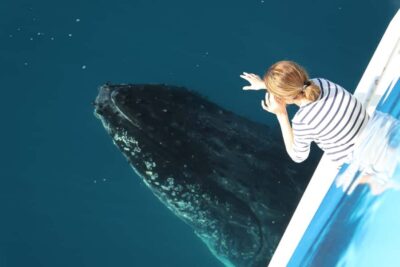
Once whales are found, the pace slows. You may watch a pod travel, rest, roll, slap its tail or approach the boat. Humpbacks sometimes linger near the vessel, a behaviour referred to during one trip as mugging. It can produce remarkably close views, but the crew still has to work with the animals’ movements and follow safe boating practice.
The return journey can include more wildlife. Dolphins, seals and seabirds are possible on any outing, and one trip included a flock of dolphins putting on a lively display. You should treat these sightings as welcome additions, not guaranteed stops on a fixed wildlife checklist.
The purpose-built boat is a real advantage
The vessel is described as purpose-built for whale watching, with two levels and a full safe walk-around area. That arrangement matters because whales rarely appear on cue in one convenient spot.
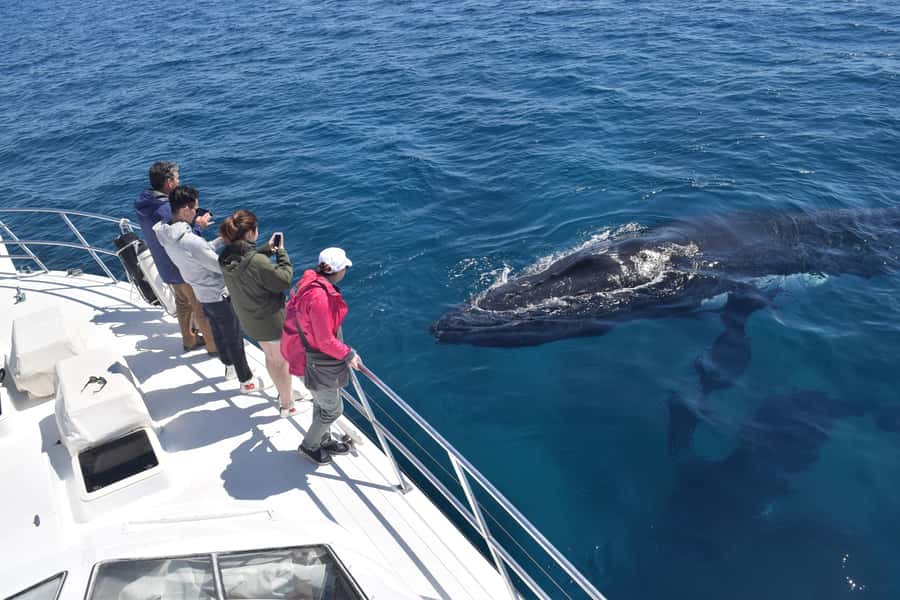
You can move around the lower deck, head toward the front, or climb to the upper level for a wider view. A boat with room to change position is particularly helpful when several whales surface around you. One group had whales in front, behind and beside the boat, while another saw pods spread across the viewing area.
The boat has also been praised for feeling spacious and comfortable, with smaller groups on some departures. That does not mean every sailing will have the same passenger count, but the design aims to give people room to look without everyone crowding one rail.
There is a cabin for children who need a break from the wind or motion. The boat also carries toys for younger children and educational whale books for older ones. That is useful because even an exciting wildlife trip can feel long to a six-year-old during a quiet spell.
The crew adds more than basic narration
The skipper, known as Captain Zip, has more than 15 years of whale-watching experience. That long familiarity with the bay helps when the crew is reading the water and deciding where to go next.
Different departures have featured crew members including Tesh, Jess, Bugsy, Pete and Paul. The strongest part of the commentary is its practical focus: you are shown where to look, told what behaviour means, and given enough background to understand the animals rather than simply point a camera at them.
A marine biologist is onboard on the tours, and marine researchers are often present as well. This can make the trip more rewarding for adults who want to know why a whale is tail-slapping, how a mother and calf travel together, or what the visible marks on the sea mean.
The commentary is not just filler while the boat moves. It gives you a better chance of spotting wildlife and helps turn a few seconds at the surface into a meaningful encounter. Children can also follow the story through the books and the crew’s explanations.
More Whale Watching in Perth
- Dunsborough Whale Watching Eco Tour
★ 5.0 · 345 reviews - Educational Whale Watching Tour from Perth
★ 5.0 · 160 reviews - Whale Watching Busselton
★ 5.0 · 156 reviews - Dunsborough: Whale Watching Tour
★ 4.7 · 111 reviews
Whale sightings are strong, but nature sets the terms
This is a wildlife cruise, not a guaranteed animal show. The operator reports fewer than 10 no-whale tours across 15 years of whale watching, which suggests a strong record, but it does not remove the uncertainty of going to sea.
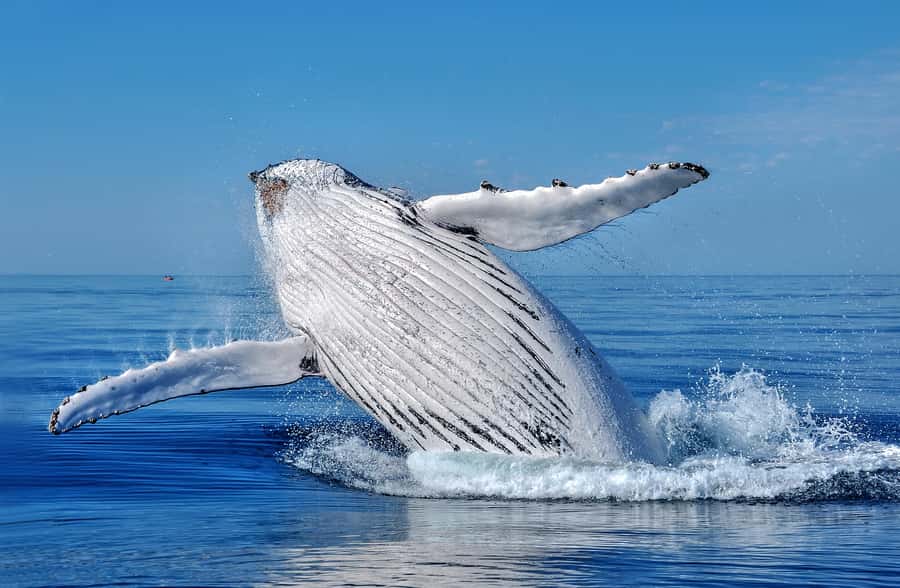
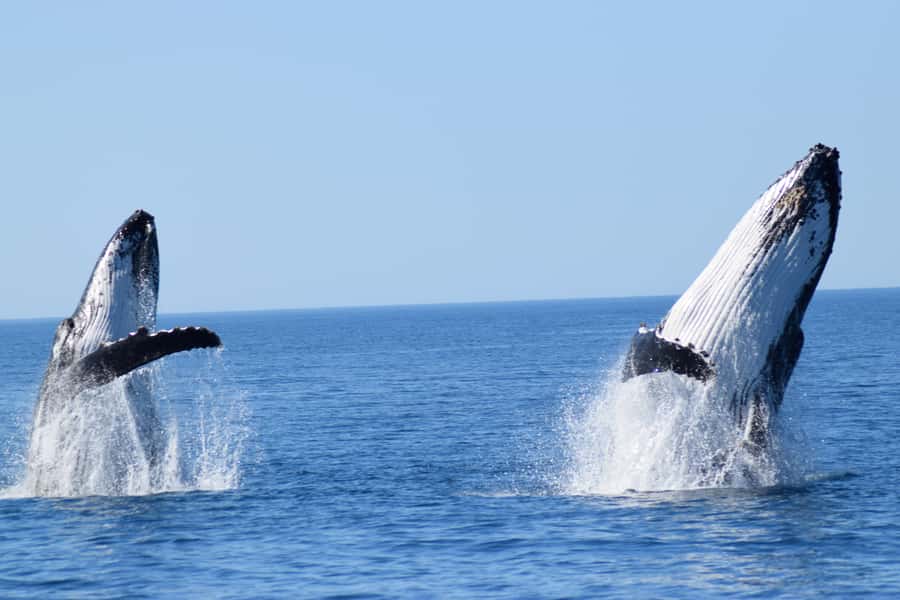
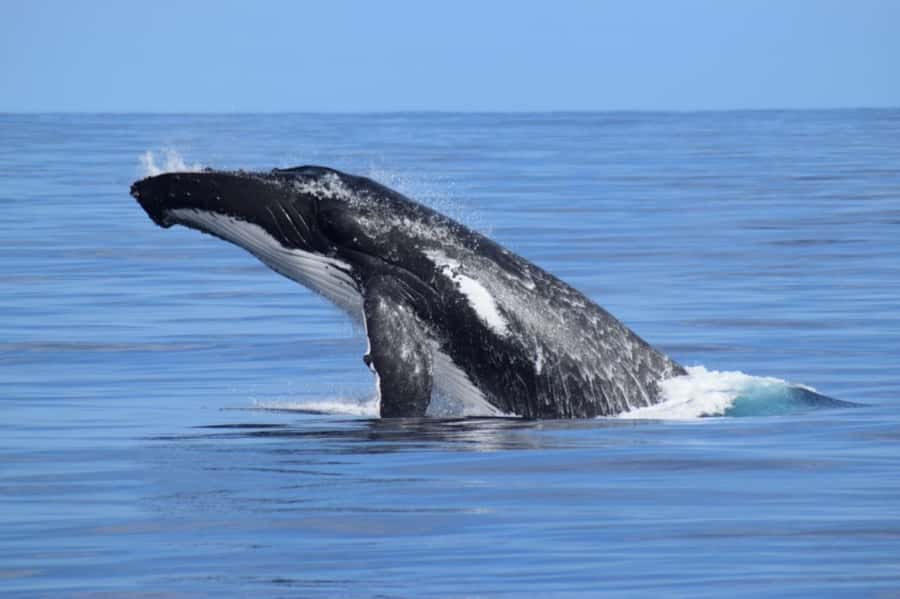
The most common target is the humpback whale. Depending on the time of year, you might see groups travelling south, whales resting in the bay, mothers with calves, tail flicks, breaches or whales surfacing near the boat.
Southern right whales, pygmy blue whales and minke whales are also possible. Sightings have included a southern right whale with her calf, a blue whale and seven blue whales alongside humpbacks. Those are exceptional additions, but they show why keeping your eyes open beyond the first whale is worthwhile.
Dolphins and seabirds are seen regularly enough to form part of the usual wildlife picture, while seals are also possible. Bring a camera, but keep it ready between major sightings. A whale may surface for only a few seconds, and the best moment can be a quiet blow or a calf rolling beside its mother rather than a dramatic breach.
If no whales are seen, you are offered a complimentary repeat tour. That policy cannot replace the time you planned for the outing, but it does reduce the financial risk of an unlucky day.
How good is the $67 value?
At $67 per person, this is priced below many premium wildlife cruises, yet it includes a substantial two-hour to 150-minute outing, an experienced skipper and the chance of marine-biologist commentary.
The value comes from the whole setup. You are not paying simply for transport to open water. You get a vessel designed for viewing, room to move between levels, an experienced crew and the possibility of several species in one trip.
The price is especially attractive for families. Children have space to change position, a cabin for quiet time and books or toys to keep them occupied. A younger child may still find two hours tiring, so the onboard shelter is an important detail rather than a minor extra.
Tea and coffee are available onboard. After an Augusta tour, you also receive 10 percent off at the Colour Patch Cafe, which is a pleasant way to continue the morning, though the discount applies specifically to the Augusta option.
Hotel pickup and drop-off are not included. You need to reach the meeting point yourself, and the exact location can change according to the option booked. Check those details carefully before setting out.
Weather, sea motion and what to bring
Warm clothing is essential. Even when the sun is out, the open water can feel cold, and you may spend much of the trip standing on an exposed viewing deck.
The boat is described as safe and stable, but stable does not mean motionless. One outing was described as rough, and a passenger advised taking travel-sickness tablets if you are in doubt. Anti-nausea wristbands are available onboard for $10, with a stated recommended retail price of $20.
I would bring a warm outer layer, a camera and any personal motion-sickness treatment you normally use. The operator specifically asks you to bring warm clothing and does not allow pets.
Weather also affects the quality of the experience. Calm conditions make it easier to scan the water and keep your camera steady. Rougher water may make the ride less comfortable, although whales can still be seen when conditions are not perfect.
Best moments from the water
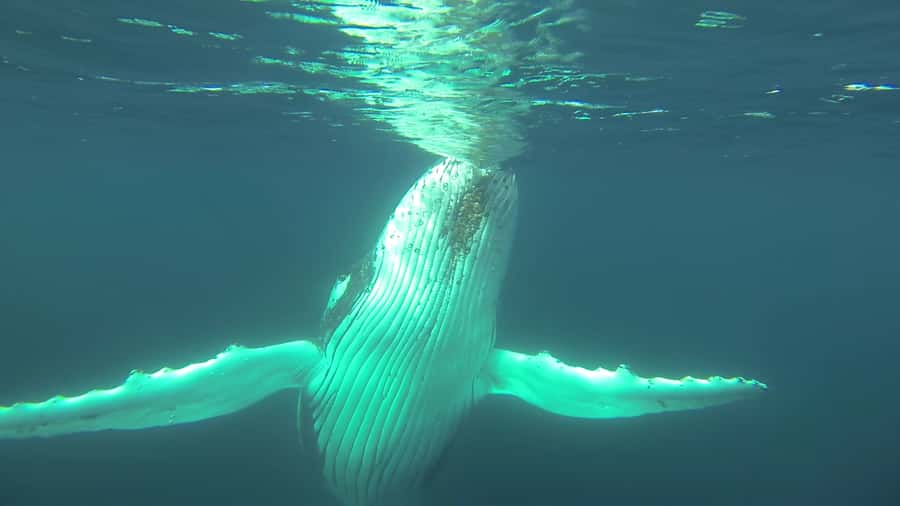
The cruise is at its best when the whales are active or close to the boat. Several outings included multiple pods, breaching humpbacks, tail slaps and whales moving around the vessel.
Mother-and-calf sightings are especially memorable. A calf may be more playful at the surface, while the adult often travels close by. You might also see an escort whale accompanying them, adding another layer to the scene.
Some of the most useful sightings are less dramatic. A skipper pointing out a whale’s footprint on the water can help you understand how the crew tracks animals between surfacings. Once you learn to read those signs, the quiet stretches become part of the hunt rather than dead time.
The best trips have included whales almost continuously, but you should not measure your outing against the most spectacular reports. A day with two humpbacks, clear explanations and a few dolphins can still be an excellent use of two hours.
Who will enjoy this cruise most?
I would recommend it to families, couples, photographers and anyone building a southwest road trip around wildlife. The two-level boat, walk-around viewing areas and children’s materials make it more flexible than a cramped sightseeing vessel.
It is also a good choice for people who want some science with their scenery. The marine biologist and research presence give the trip more substance, and the crew’s explanations help you understand what you see.
You should think twice if you strongly dislike boat motion or need a guaranteed schedule. The cruise may last up to 150 minutes, conditions can be rough, and wildlife does not follow a timetable. Also remember that you arrange your own way to the harbour.
For keen whale watchers, the seasonal port system is useful. You can plan an Augusta trip during the northern migration or choose Busselton or Dunsborough during the southern migration, depending on your wider itinerary.
Should you book this whale cruise?
I would book this cruise if you want a reasonably priced, family-friendly whale trip with a roomy boat and a crew that treats the wildlife seriously. The combination of a purpose-built vessel, a skipper with 15 years of experience, marine-biologist input and a repeat-trip offer in the unlikely event of no whales gives you good value for $67.
Choose the nearest suitable port, dress warmly and prepare for some motion. If you need a perfectly calm ride or a guaranteed breach, no whale cruise can promise that. If you can accept nature’s timing, this is a strong option for seeing humpbacks and possibly dolphins, seals, seabirds, southern right whales or blue whales along Western Australia’s southwest coast.
FAQ
How much does the whale-watching cruise cost?
The cruise costs $67 per person.
How long does the cruise last?
The stated duration is two hours to 150 minutes, depending on the departure and conditions.
Where does the cruise depart from?
Departures are available from Augusta, Busselton or Dunsborough. The meeting point can vary according to the option you book.
When should I choose Augusta?
Augusta operates from mid-May to mid-August, when humpbacks are travelling north. Busselton and Dunsborough operate from late August for whales heading south toward Antarctica.
What happens if no whales are seen?
In the unlikely event that no whales are sighted, you are offered a complimentary repeat tour.
What should I bring?
Bring warm clothing and a camera. Pets are not allowed. Anti-nausea wristbands are available onboard for $10 if needed.
Just added in Perth
- Perth: Optus Stadium Guided Tour★ 4.8 · 375 reviews
- Bunbury: Swim with Dolphins Tour★ 4.4 · 44 reviews
- Swan Valley: Out for the Afternoon Wine Tasting with Lunch★ 4.6 · 34 reviews
- Perth: Full Day Swan Valley Cruise & Wine Tasting With Lunch★ 4.6 · 301 reviews
- From Perth: Swan Valley Winery & Brewery Day Tour With Lunch★ 4.8 · 47 reviews
- Swan Valley Full-Day Winery Experience with Lunch from Perth★ 4.9 · 309 reviews
- Mandurah: Murray River Lunch Cruise★ 4.7 · 138 reviews
- Rottnest Island: Tandem Skydive★ 5.0 · 90 reviews
Whale Watching, compared.
Brisbane Whale Watching Cruise from Redcliffe or Sunshine Coast
Read our review →
Spirit of Gold Coast 2.5-Hour Whale Watching Tour
Read our review →
Browse the lists this tour appears in