Reviewed · MELBOURNE TOURS
The Explorer – Cranbourne Gardens
A short ride, a much bigger garden. The Explorer bus gives you a comfortable way to see Royal Botanic Gardens Cranbourne without walking all 15 hectares of the Australian Garden. I like the clear live commentary and the chance to see key areas such as the Red Sand Garden, Ian Potter Lake, and the Arid Garden in one compact trip. I also like that the ride helps families and visitors with limited mobility get more from their day.
The main consideration is time. At about 25 minutes, this is an introduction rather than a full garden visit. The bus can help you get your bearings, but you will still want time on foot if you hope to follow the winding paths, inspect the planting, and linger beside the water features.
In This Review
- Key points to know before you ride
- Why The Explorer makes sense in a huge garden
- Starting at the Visitor Centre
- Red Sand Garden: an immediate change of tone
- Along the eastern side of the Australian Garden
- Howson Hill and the changing views
- Ian Potter Lake: water in a dry-country garden
- The Arid Garden and Dry River Bed
- Winding back through the Peppermint Garden
- What the commentary adds
- A smart choice for families and limited mobility
- Making the most of a 25-minute ride
- Is $10.76 good value?
- Should you book The Explorer?
- FAQ
- Where does The Explorer at Cranbourne Gardens begin?
- How long does The Explorer ride last?
- What areas can I see during the ride?
- Is commentary included?
- How much does the experience cost?
- Is the ride suitable for visitors with mobility issues?
- Can children ride free?
- What happens if bad weather cancels the ride?
Key points to know before you ride
- The route covers major garden highlights: You pass the Red Sand Garden, Howson Hill, Ian Potter Lake, the Arid Garden, and the Dry River Bed.
- Live commentary comes with the ride: Your driver-guide explains the plants, garden design, cultural meaning, and history as you go.
- It works well for limited mobility: The bus saves energy and lets you see much more than you could on foot alone.
- The ride lasts about 25 minutes: It is short enough to fit into a busy Mornington Peninsula day, including a visit toward Phillip Island.
- Children may ride free during school holidays: The Kids Explorer Bus is designed especially for families, but check the booking details carefully before paying.
- The group is capped at 25 people: That keeps the ride fairly small, though seating and viewing positions may still matter on a busy day.
Why The Explorer makes sense in a huge garden
Cranbourne Gardens is not a small patch of flowers beside a visitor centre. The Australian Garden covers about 37 acres, or 15 hectares, and its paths lead through very different plant settings. A walk here can be a pleasant outing, but it can also take energy and time, especially under a strong Australian sun.
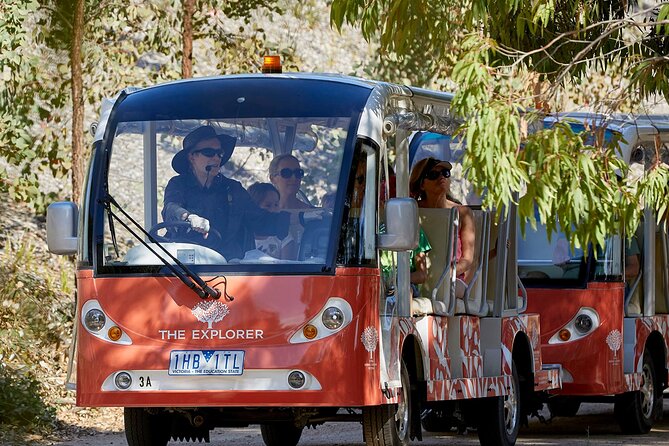
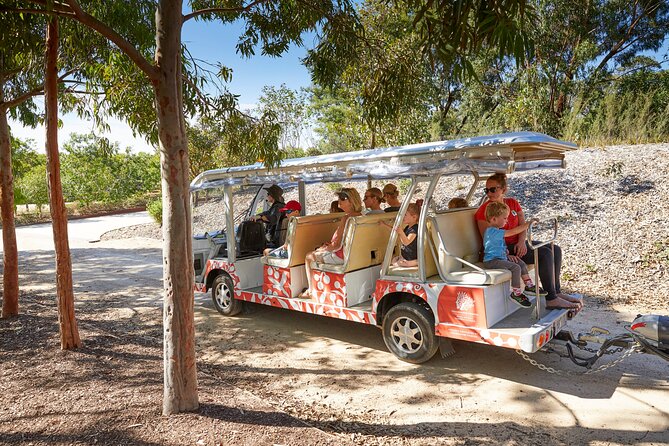
That is where The Explorer earns its place. You sit in an open-air minibus and let the garden come to you. The ride gives you a broad view before you decide which areas deserve a closer look.
I especially like this approach for a first visit. The commentary helps connect separate gardens into one story. Instead of seeing red soil, native plants, a lake, and a dry creek bed as unrelated sights, you hear how they fit into the garden’s presentation of Australian environments.
The bus is also useful if you are traveling with children. A short ride adds movement and variety to a garden visit, and the driver’s humor can keep younger passengers interested. The Kids Explorer Bus during school holidays adds another family-friendly option, with children riding free under that program.
Do check the price shown when you book. The listed cost is $10.76 per person, which is modest for a guided ride of this length. It is particularly good value if walking the full garden would be difficult or if you have limited time before continuing toward Phillip Island. It is less essential if you plan to spend the entire day strolling and prefer to discover every corner at your own pace.
A few more options to weigh up in Mornington Peninsula
- Full-Day Penguins and Wildlife Nature Experience from Melbourne
★ 5.0 · 150 reviews - Peninsula Hot Springs Spa Experience and Express Transfer Shuttle
★ 5.0 · 131 reviews - Cape Woolamai Sightseeing Cruise from San Remo
★ 4.5 · 72 reviews
Starting at the Visitor Centre
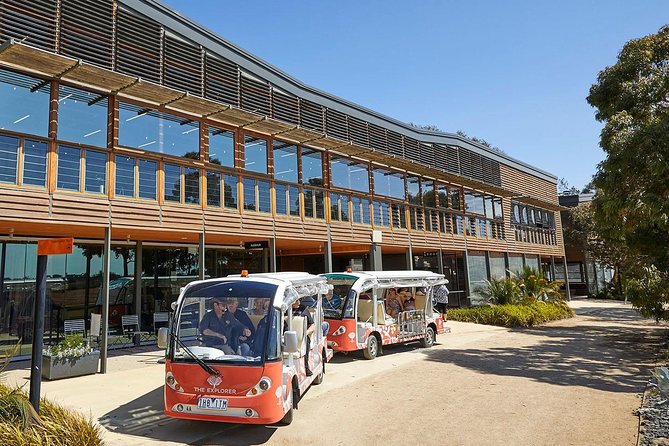
The ride begins at Royal Botanic Gardens Cranbourne, at Ballarto Road and Botanic Drive in Cranbourne, Victoria. The Explorer departs from the Visitor Centre, making the starting point easy to identify once you arrive.
The open-air minibus gives you a better view than a fully enclosed vehicle, while still providing a break from the effort of walking. On a warm day, the moving air helps, although the experience still depends on good weather. If poor weather cancels the ride, you are offered another date or a full refund.
The group limit is 25 people. That is small enough for the driver-guide’s commentary to feel personal, though I would still arrive with enough time to settle in, particularly during school holidays or on a busy weekend.
You should treat the first few minutes as a chance to get oriented. Rather than trying to remember every plant name, listen for the broad ideas: how Australian plants cope with dry conditions, how the garden uses color and texture, and how the different sections present the country’s natural character.
Red Sand Garden: an immediate change of tone
The route begins from the Red Sand Garden, one of the most visually distinctive parts of the Australian Garden. Its red earth gives the ride an immediate sense of place and sets up the contrast between Australian soils, native plants, water, and garden design.
This is a strong opening because it does not feel like a standard ornamental garden. The color of the ground matters as much as the flowers and shrubs. From the bus, you can take in the overall design without stopping at every planting bed.
The commentary adds useful context here. You hear about the garden’s plant choices and the ideas behind the setting, rather than simply passing a collection of attractive beds. For keen gardeners, that explanation is one of the main reasons to choose the ride instead of using the bus only as transport.
You will not get a long stop at every feature. If the Red Sand Garden catches your eye, note it as a place to revisit on foot after the circuit. The bus gives you the overview, while walking lets you study the textures and planting details.
Along the eastern side of the Australian Garden

From the Red Sand Garden, The Explorer travels along the eastern side of the Australian Garden. This part of the route is useful because it shows the scale of the grounds. The ride does not simply shuttle between two points. It gives you a sense of how the garden changes as the vehicle moves through it.
The driver-guide provides live explanations about plants, garden design, cultural significance, and nature. The quality of that commentary matters. A quiet bus ride would still save your legs, but the spoken interpretation turns it into a proper introduction.
I like the balance here. You get information without having to read signs at every stop, and you can keep looking outward while the guide speaks. A good guide also helps you notice details that might otherwise pass quickly, such as the relationship between plant groupings and the dry Australian setting.
The route is not a substitute for a specialist horticultural tour. The visit lasts only 25 minutes, so the commentary has to cover a lot. Still, it gives you enough background to make a later walk more meaningful.
A completely different kind of day out:
- Peninsula Hot Springs and Beach Boxes Day Trip from Melbourne
★ 4.5 · 64 reviews - Mornington Peninsula Sightseeing and Bay Cruise
★ 4.5 · 51 reviews - Mornington Peninsula Self-Guided Bike Tour | Food & Wine Region
★ 5.0 · 44 reviews - Arthurs Seat Eagle: Scenic Gondola Ride
★ 4.7 · 44 reviews
Howson Hill and the changing views
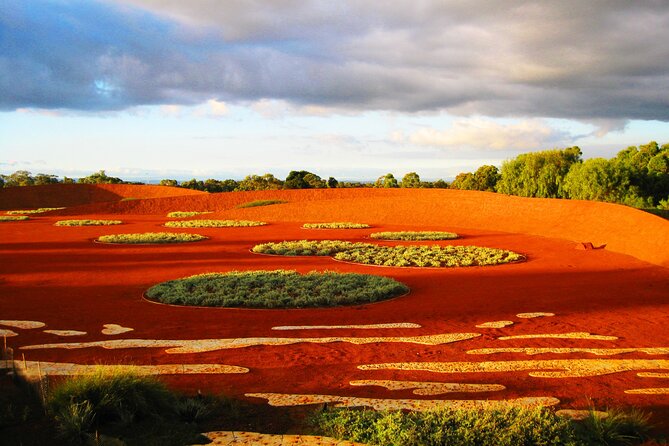
Howson Hill is one of the named highlights along the route. From this part of the garden, the changing elevation helps break up the ride and gives you a different way to read the plantings around you.
Specific viewing details can vary with the season and conditions, so I would not expect the same display every time. The value of passing Howson Hill is the wider sense of the garden’s shape and the way its planted areas relate to one another.
This is also where the bus format helps visitors who cannot comfortably manage slopes or long paths. You can experience the change in setting without having to climb or walk across the full site.
If you are able to walk afterward, Howson Hill is worth remembering as a possible starting point for further exploration. If not, the bus still provides an accessible way to see the area and hear its story.
Ian Potter Lake: water in a dry-country garden
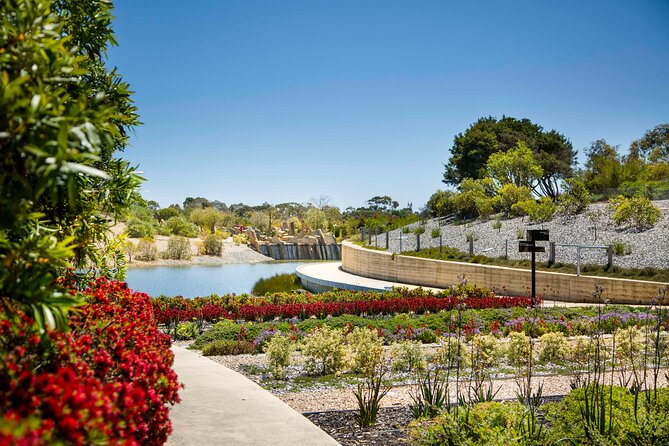
Ian Potter Lake offers a different mood from the red soil and arid planting. Water gives the route a visual pause, and it shows how the garden uses water features within an Australian setting.
The contrast is important. Cranbourne Gardens is not presenting one uniform version of native Australia. Instead, the ride moves between dry gardens, open areas, planted scenes, and water. The changing views keep the 25-minute trip from feeling repetitive.
The lake is also one of the places where you may want to slow down later. From the bus, you get a passing view and the guide’s explanation. On foot, you can spend more time looking at the surrounding planting and the way the water shapes the scene.
Families may appreciate the lake section simply because it changes the pace. Children often respond well to a route with clear visual shifts, especially when the driver adds humor and keeps the commentary lively. A previous ride led by Peter was praised for combining plant knowledge with an entertaining manner, a useful sign for anyone worried that a garden tour might feel too serious.
The Arid Garden and Dry River Bed
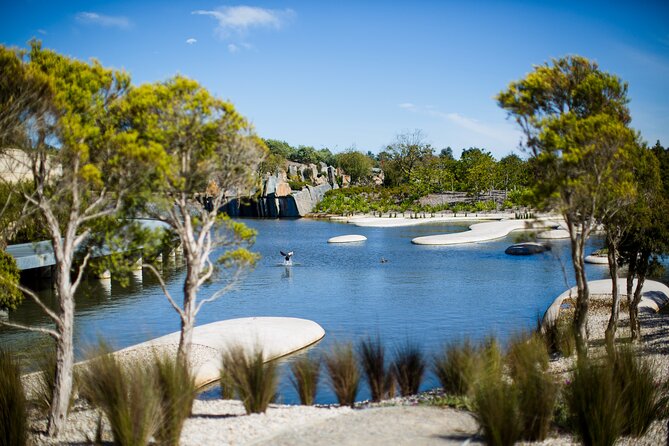
The Arid Garden brings the tour back to plants adapted to dry conditions. This section is especially relevant if you are interested in Australian flora, because it shows how plant selection and garden design can work together to express a harsh climate.
You may notice differences in form, spacing, and color as the bus moves through this part of the route. The guide’s explanations help you understand why these plants belong together and how the garden presents them to the public.
The Dry River Bed adds another strong visual idea. Even without water moving through it, a dry river form can suggest the force of seasonal rain and the way water shapes the land. It gives the tour a sense of natural process rather than just a sequence of planted displays.
These areas are a good example of why the commentary is central to the experience. If you only saw the features from a road, you might enjoy the shapes and colors but miss their wider meaning. The driver-guide connects the garden’s design to nature interpretation and Australian conditions.
Winding back through the Peppermint Garden
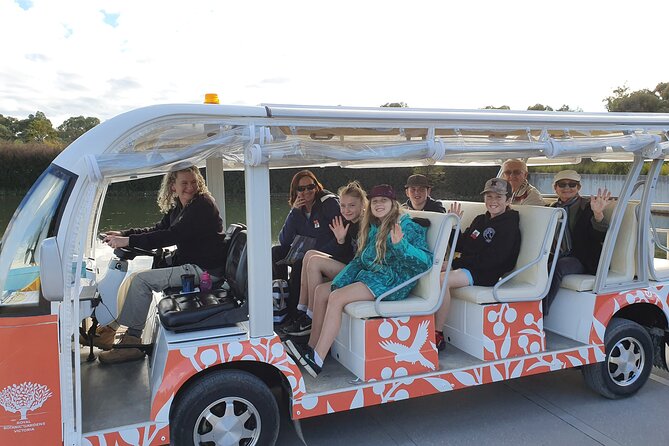
The route winds back through the Peppermint Garden before returning. This final section changes the mood again and gives the ride a satisfying sense of movement rather than a simple out-and-back trip.
The return route is useful for taking in details you may have missed at the beginning. You are now more familiar with the garden’s style, so the commentary may help you connect the Peppermint Garden to the other areas you have already seen.
Because the circuit is short, you should not expect long, separate visits at each named feature. The benefit is coverage. You see a broad slice of the Australian Garden and finish with a clearer idea of where you want to spend your walking time.
What the commentary adds
The guide is not there only to point out plants. The content includes garden history, cultural significance, landscape stories, and nature interpretation. That range gives the experience more depth than a simple sightseeing loop.
I would pay close attention to the delivery as well as the facts. A friendly, funny guide can make a short ride feel lively, particularly for children. The driver-host praised in the feedback, Peter, was remembered for both plant knowledge and a warm manner. That combination is exactly what you want on a tour of this type.
The commentary also helps if you are new to Australian plants. You do not need a horticultural background to follow it, and the information gives you a framework for understanding what you see. Keen gardeners will likely want more time with individual plants, but the ride offers a useful first pass.
The main limit is that the commentary is live, so the exact style and emphasis can depend on the guide on duty. That is normal for a small guided ride. The experience has a human feel, but it may not be identical from one departure to the next.
A smart choice for families and limited mobility
The strongest practical reason to book is access to more of the garden with less physical strain. A ride can make the difference between seeing only the area near the Visitor Centre and reaching the Red Sand Garden, Howson Hill, Ian Potter Lake, the Arid Garden, and the Dry River Bed.
One review described the ride as allowing a mother with mobility issues to see far more than she otherwise could. That is the clearest measure of its value. It is not merely a convenience. For some people, it opens up the full visit.
The experience suits most participants, and service animals are allowed. The tour is also near public transportation, although transportation to and from the attraction is not included. Hotel pickup and drop-off are not included either, so you need to make your own way to Cranbourne Gardens.
For families, the school holiday Kids Explorer Bus deserves special attention. Children ride free during the school holidays on this family-focused service. However, be careful when booking, since a booking charge for children was the source of one unhappy experience. Confirm the child pricing and the correct Kids Explorer option before payment.
Making the most of a 25-minute ride
I would use The Explorer as the first part of a larger visit, not the entire day. The ride gives you a map in your head. Afterward, you can choose whether to walk, return to a favorite section, visit the cafe, or continue your wider Mornington Peninsula outing.
A few simple habits will improve the experience:
- Arrive at the Visitor Centre with enough time to find the departure point.
- Listen for the names of areas you want to revisit on foot.
- Keep the weather in mind, since the ride can be canceled in poor conditions.
- If you have limited mobility, tell your group to treat the bus as the main way to see the garden, not merely a short extra.
- If you are traveling with children during school holidays, check the Kids Explorer pricing before confirming the booking.
The open-air design is pleasant, but it does not remove the need to plan for the weather. The experience is short, so a hot or wet day can affect comfort quickly. On a good-weather day, the moving bus and open view make the garden feel easy to cover.
Is $10.76 good value?
At $10.76 per person, I consider the ride good value for three groups: first-time visitors, families, and anyone who cannot comfortably walk the full garden. You receive a 25-minute circuit, a driver-guide, live commentary, and access to a broad selection of the Australian Garden.
The price is also reasonable if you are fitting Cranbourne Gardens into a larger day. The ride saves time and energy, which matters if you are continuing toward Phillip Island or planning other stops around the Mornington Peninsula.
The value is less clear if you want a slow, quiet garden visit. You will pass features rather than study them, and the ride cannot replace time on the paths. If you already know the gardens well, you may prefer to walk directly to the sections that interest you.
Free cancellation up to 24 hours before the start time adds useful flexibility. Cancellations made later are not refunded, and changes inside that 24-hour window are not accepted. Since good weather is required, keep an eye on the forecast and remember that a weather cancellation brings a choice of another date or a full refund.
Should you book The Explorer?
I would book The Explorer if you are visiting Cranbourne Gardens for the first time, traveling with children, working with limited mobility, or trying to see the garden during a tight schedule. The short circuit gives you a strong overview, and the live commentary makes the ride more than a simple shuttle.
I would skip it only if your main goal is a long, quiet walk and you have plenty of time and energy. For most people, the best plan is both: ride first, then walk the sections that catch your attention. At a modest price, that approach gives you the garden’s broad picture without giving up the pleasure of exploring it slowly.
FAQ
Where does The Explorer at Cranbourne Gardens begin?
The tour begins at the Visitor Centre at Royal Botanic Gardens Cranbourne, at Ballarto Road and Botanic Drive, Cranbourne VIC 3977, Australia.
How long does The Explorer ride last?
The ride lasts approximately 25 minutes.
What areas can I see during the ride?
The route includes the Red Sand Garden, Howson Hill, Ian Potter Lake, the Arid Garden, the Dry River Bed, and the Peppermint Garden.
Is commentary included?
Yes. A driver-guide provides live commentary on board, covering garden history, cultural significance, nature interpretation, plants, and garden stories.
How much does the experience cost?
The listed price is $10.76 per person.
Is the ride suitable for visitors with mobility issues?
Yes. The bus is designed to help visitors see more of the large garden while reducing the amount of walking required. Most people can participate, and service animals are allowed.
Can children ride free?
Children ride free on the Kids Explorer Bus during school holidays. Check the booking details carefully to make sure you select the correct family service and child pricing.
What happens if bad weather cancels the ride?
If poor weather causes a cancellation, you can choose another date or receive a full refund. You can also cancel for a full refund if you do so at least 24 hours before the experience starts.
Just added in Mornington Peninsula
- Phillip Island Sunset Cruise★ 4.5 · 38 reviews
- Mornington Peninsula Self-Guided Bike Tour | Food & Wine Region★ 5.0 · 44 reviews
- Peninsula Hot Springs and Beach Boxes Day Trip from Melbourne★ 4.5 · 64 reviews
- Peninsula Hot Springs Spa Experience and Express Transfer Shuttle★ 5.0 · 131 reviews
- Mornington Peninsula Boutique Wine and Lunch Small Group Tour★ 5.0 · 22 reviews
- From Melbourne: Hop On Hop Off Mornington Peninsula★ 5.0 · 30 reviews
- Full-Day Penguins and Wildlife Nature Experience from Melbourne★ 5.0 · 150 reviews
- Mornington Peninsula Sightseeing and Bay Cruise★ 4.5 · 51 reviews
Melbourne Tours, compared.
Great Ocean Road Small-Group Eco Tour from Melbourne
Read our review →

Laid back, Yarra Valley Wine Tour: Wine, Cider, Gin, Beer + Choc
Read our review →
Great Ocean Road Reverse Itinerary Boutique Tour – Max 11 Guests
Read our review →
Penguin Parade, & Wildlife Encounters Eco Tour from Melbourne
Read our review →
Yarra Valley Wine, Gin, Whisky and Chocolate Tour
Read our review →
Great Ocean Road Tour w/ Deluxe Minibus & Top-Rated Guide
Read our review →