
Reviewed · AQUARIUMS AND ZOOS
Sunshine Coast: SEA LIFE Sunshine Coast Entry Ticket
The ocean comes surprisingly close here. SEA LIFE Sunshine Coast gives you a compact, family-friendly look at Queensland’s marine life, from ghostly jellyfish and graceful seahorses to seals, otters, sharks, and reef fish. I especially like the hands-on Tidal Touchpool and the impressive Ocean Tunnel, two features that turn a standard aquarium visit into something more memorable.
I also like the conservation focus. You learn about local wildlife, fragile marine habitats, and the creatures living in Queensland’s billabongs, not just the animals behind glass. The main drawback is size: you can see the aquarium in about 90 minutes to two hours, and busy periods may make the narrow spaces feel crowded, especially around prams.
In This Review
- Key points to know before you go
- What your $28 admission includes at Mooloolaba
- Start with local conservation and billabong wildlife
- Find the slow-moving stars in the Seahorse Sanctuary
- Get hands-on at the Tidal Touchpool
- Meet the reef community at Pacific Reef
- Walk through the Coastal Wreck zone
- See jellyfish, moray eels, and older forms of life
- Get close to seals, otters, and sharks
- The Ocean Tunnel is worth making time for
- How long to allow, and when the visit works best
- Who will enjoy SEA LIFE Sunshine Coast most
- Booking flexibility and practical planning
- Should you book SEA LIFE Sunshine Coast?
- FAQ
- Where is SEA LIFE Sunshine Coast located?
- How much does admission cost?
- How long does a visit take?
- What does the ticket include?
- Are transportation, food, and drinks included?
- What animals can I see?
- Can I touch any of the animals?
- What time is last admission?
- Can I cancel my booking?
Key points to know before you go
- The Ocean Tunnel is the visual highlight: Walk beneath marine life and get a close view of the aquarium’s larger underwater displays.
- The Tidal Touchpool adds hands-on fun: You can touch sea stars, sea cucumbers, and anemones under supervision.
- The Seahorse Sanctuary rewards a slower look: Seahorses move gently and can be easy to miss if you rush.
- The Coastal Wreck zone adds a fresh reef setting: This newer area shows the small creatures that use Australia’s coastal wrecks and reefs.
- The aquarium works well for a short Sunshine Coast outing: Plan on 90 minutes to two hours, rather than a full-day attraction.
- The $28 admission is strongest for families and marine-life fans: The value depends on how much you enjoy close-up displays and interactive exhibits.
What your $28 admission includes at Mooloolaba
SEA LIFE Sunshine Coast is in Mooloolaba, on Queensland’s Sunshine Coast, about one hour from Brisbane. Your ticket covers entrance to the aquarium, but not transport, food, or drinks.
At $28 per person, this is not priced like a full-day theme park. It is better understood as a focused indoor attraction that fits neatly into a morning or afternoon. I think the price works best when you are already spending time on the Sunshine Coast and want a weather-proof activity, rather than making a long trip solely for a 90-minute visit.
The aquarium is also useful when your group has mixed interests. Children get touch pools, seals, and colorful fish. Adults get conservation displays and a chance to look closely at animals that are hard to spot in the wild. You can move through at your own pace, although crowded periods reduce that freedom.
Your ticket does not include transportation, so you need to arrange your own way to Mooloolaba. The meeting point can vary depending on the booking option, so check the details attached to your selected ticket before setting out.
More entry tickets in Sunshine Coast:
- From Sunshine Coast: Australia Zoo Entry Ticket and Transfer
★ 4.8 · 155 reviews - From Brisbane: Australia Zoo Transfer and Entry Ticket
★ 4.9 · 1,539 reviews - Brisbane: Moreton Island Return Ferry & Adventure Day Pass
★ 4.3 · 1,195 reviews
Start with local conservation and billabong wildlife
The visit is not limited to ocean animals. Early displays introduce the wildlife and conservation work connected with Australia’s Sunshine Coast, including the unusual animals found in billabongs.
This section gives the rest of the aquarium a useful setting. You are not simply looking at fish in tanks. You are also learning how freshwater and coastal environments support different kinds of life, and why those habitats need protection.
The billabong displays include freshwater sawfish, barramundi, and pacu fish. The pacu is related to the piranha, which gives children an easy comparison and makes the display more memorable. Freshwater sawfish are especially interesting because their long, toothed snout looks more like a tool than a normal fish feature.
I would spend a little time here before heading toward the bigger attractions. The conservation message makes more sense when you have seen several different habitats represented in one place. It also keeps the aquarium from feeling like a parade of colorful tanks with no connection between them.
Find the slow-moving stars in the Seahorse Sanctuary
The Seahorse Sanctuary is one of the most delicate areas in the aquarium. Seahorses do not provide the instant drama of a shark or seal. Their appeal comes from their odd shape, careful movement, and the patience required to see them properly.
I suggest slowing down here. Look for the subtle motion of their tails and bodies rather than expecting constant action. Seahorses can be easy to overlook beside brighter fish, but they reward anyone who takes a quiet minute.
This area suits adults and older children who enjoy small details. Very young children may prefer the touch pool or larger marine mammals, so you may want to treat the sanctuary as a short pause rather than the main event.
The exhibit also supports the wider message of the aquarium. Marine conservation is not only about large animals that draw crowds. Small and fragile species matter too, and the sanctuary gives them room to hold your attention.
Get hands-on at the Tidal Touchpool
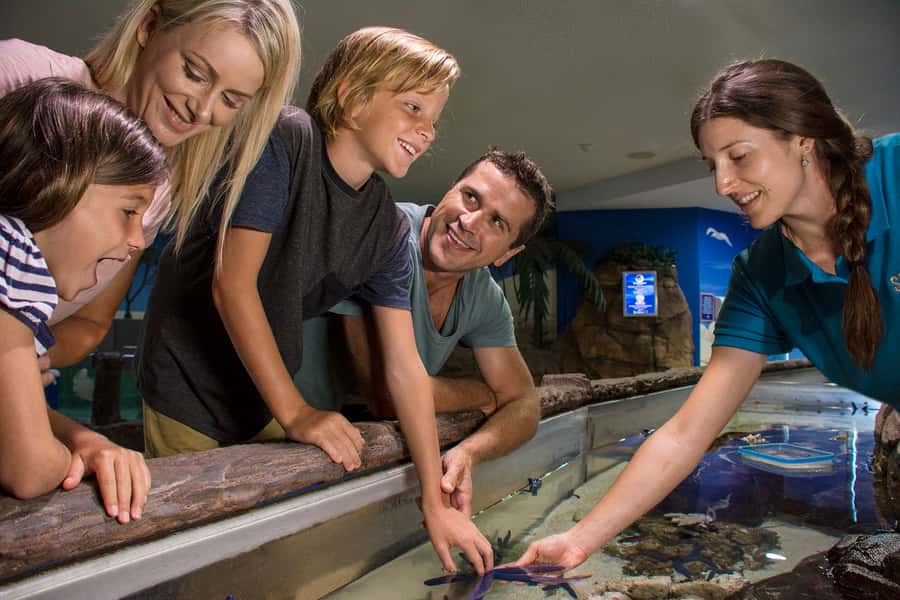
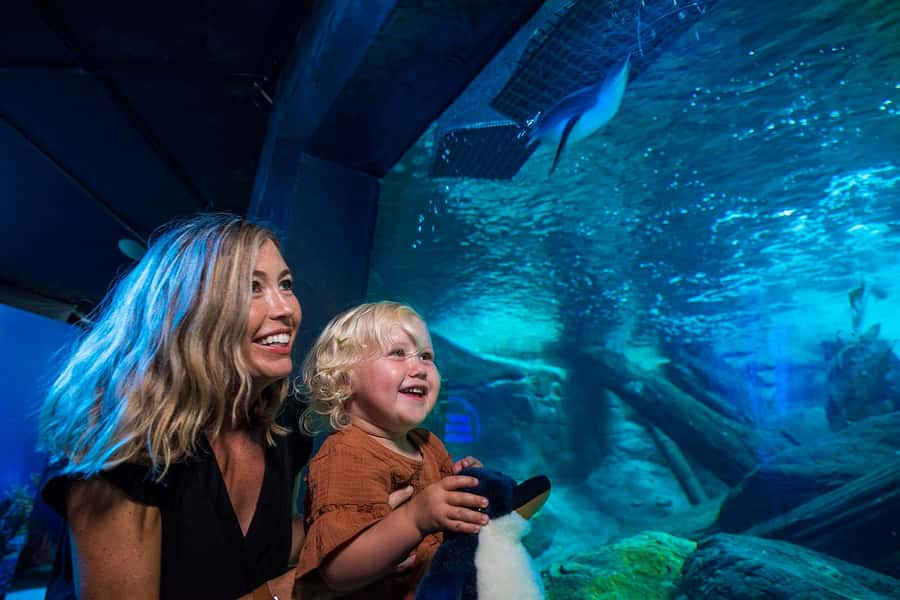
The Tidal Touchpool is one of the best features for children because it changes the visit from looking to feeling. You can touch sea stars, sea cucumbers, and anemones, giving you a direct sense of how different marine animals feel.
You will need to follow the instructions at the pool and handle the animals gently. That is part of the point. The experience teaches respect for living creatures instead of treating them like ordinary objects.
I like this stop because it works for different ages. A child may remember the texture of a sea star long after forgetting the name of a fish. Adults often enjoy it too, especially when the aquarium is busy and a hands-on activity gives your group something specific to do.
The touchpool can become a waiting point when the aquarium is crowded. If several families are gathered around it, be patient and allow others a turn. You will get more from it when you are not rushing to push through.
More Aquariums and Zoos in Sunshine Coast:
- SEA LIFE Sunshine Coast Aquarium Entrance Ticket
★ 4.0 · 146 reviews - Australia Zoo Transfer from Noosa and Sunshine Coast
★ 5.0 · 28 reviews - Blue Mountains Small-Group Tour from Sydney with Scenic World,Sydney Zoo & Ferry
★ 5.0 · 3,709 reviews - Blue Mountains Adventure: Scenic World, Zoo & Koala Photo
★ 4.7 · 2,062 reviews
Meet the reef community at Pacific Reef
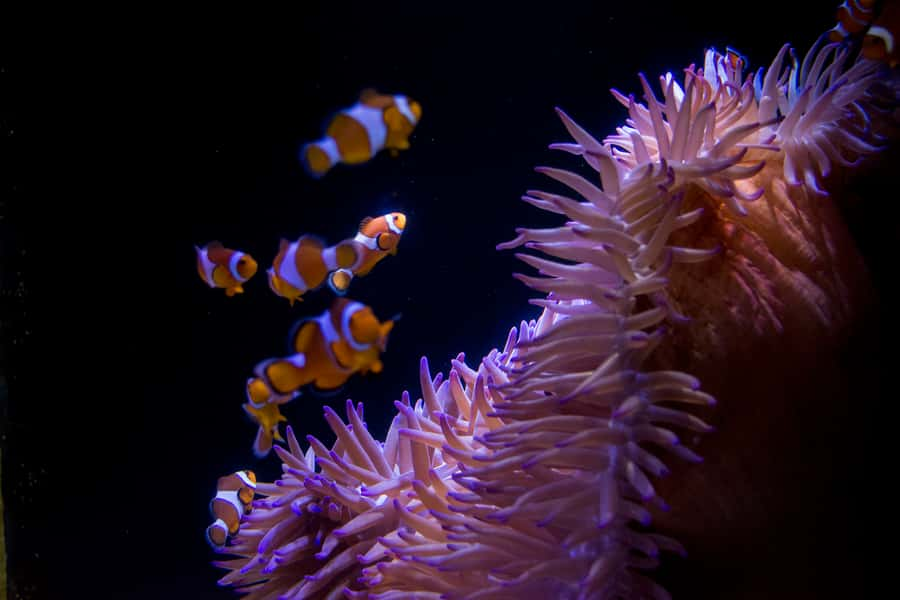
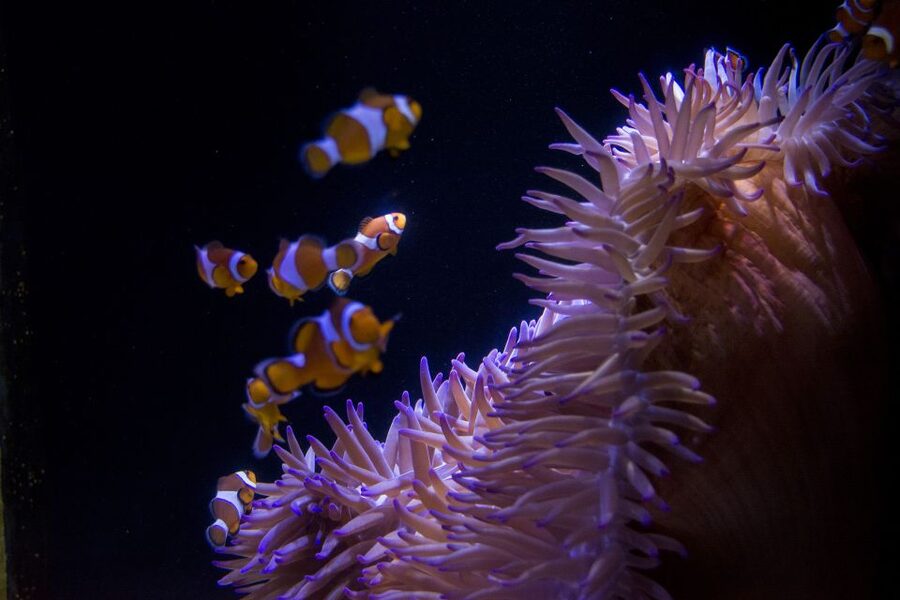
Pacific Reef brings together the classic sights many people expect from a tropical aquarium: coral gardens, clown fish, sea anemones, and other colorful reef fish.
This is the most immediately eye-catching part of the visit. Clown fish are easy for children to recognize, while the anemones provide movement and texture around them. The coral setting helps you see that a reef is not just a collection of individual fish. It is a shared habitat where many species live close together.
The display is also a good place to compare the aquarium’s different styles. The Seahorse Sanctuary is quiet and precise. Pacific Reef is more colorful and energetic. The contrast keeps the visit varied, especially if you are moving through the aquarium with children who have short attention spans.
Take time to look beyond the largest fish. Small reef creatures can be hidden among the coral gardens, and the display rewards a slower scan of the entire tank. If you only stop for the brightest colors, you may miss much of the activity.
Walk through the Coastal Wreck zone
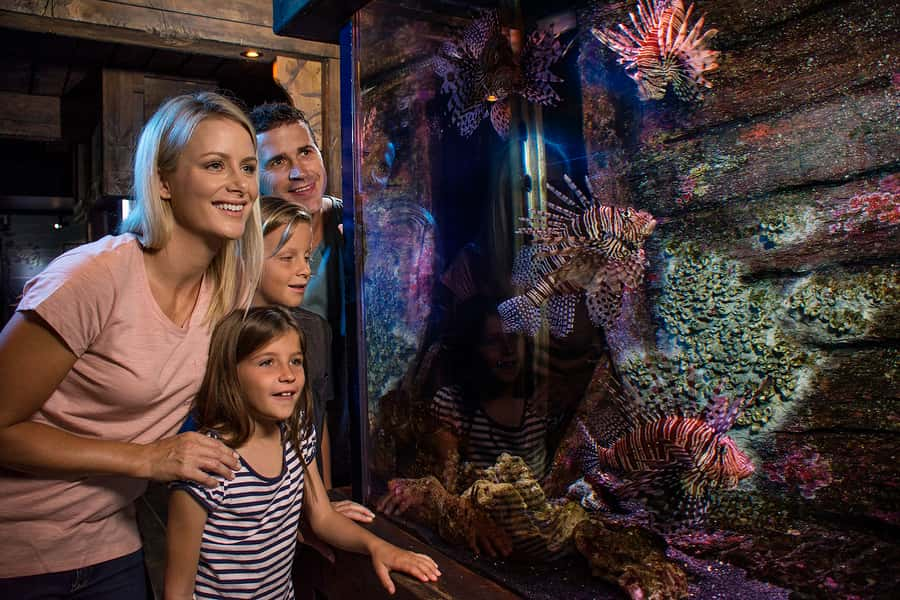
The newer Coastal Wreck zone focuses on the animals that inhabit Australia’s coastal reefs and wreck environments. The wreck setting gives the exhibit a different feel from the open reef displays and helps explain how underwater structures become shelter for marine life.
I find this type of exhibit useful because it shows the importance of habitat. A wreck is not simply a dramatic object on the sea floor. It can provide places for small creatures to hide, feed, and live among the surrounding reef community.
The area is also a good stop for anyone interested in Australia’s coastal waters rather than only tropical reef fish. You get a clearer sense of how local marine environments support many species in close quarters.
Because the zone is described as brand new, its presentation may feel fresher than some older parts of the aquarium. Still, the whole venue is compact, and you should not expect a huge museum-style complex. The strength is the range of habitats packed into a manageable visit.
See jellyfish, moray eels, and older forms of life
Jellyfish Kingdom offers a calmer change of pace. The ghost-like movement of jellyfish is easy to watch for several minutes, especially when their bodies pulse through the water in slow, graceful patterns.
The display also connects these animals to a long stretch of natural history. Jellyfish ancestors have existed for more than 650 million years, giving you a striking reminder that these fragile-looking creatures belong to one of the oldest lines of life on Earth.
This is one of the best sections for a quiet pause. The tanks can be visually soothing, but they also show how much movement can come from animals without fins, fur, or obvious bones. You may find the jellyfish more compelling than expected.
Nearby, moray eels provide the opposite mood. They look fierce, with a strong profile and a habit of appearing from rocky hiding places. You can compare their dramatic appearance with the more peaceful jellyfish displays, which keeps the route interesting.
Get close to seals, otters, and sharks
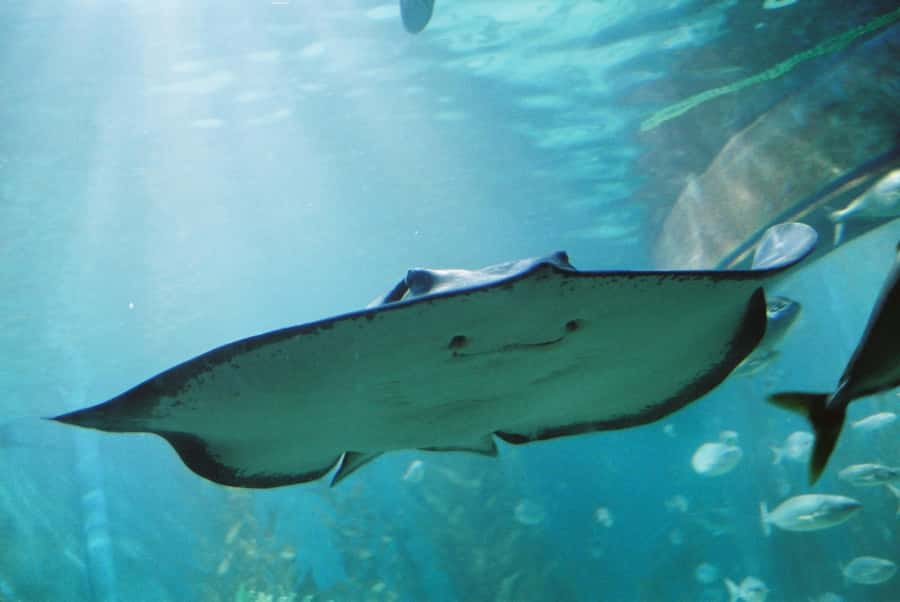
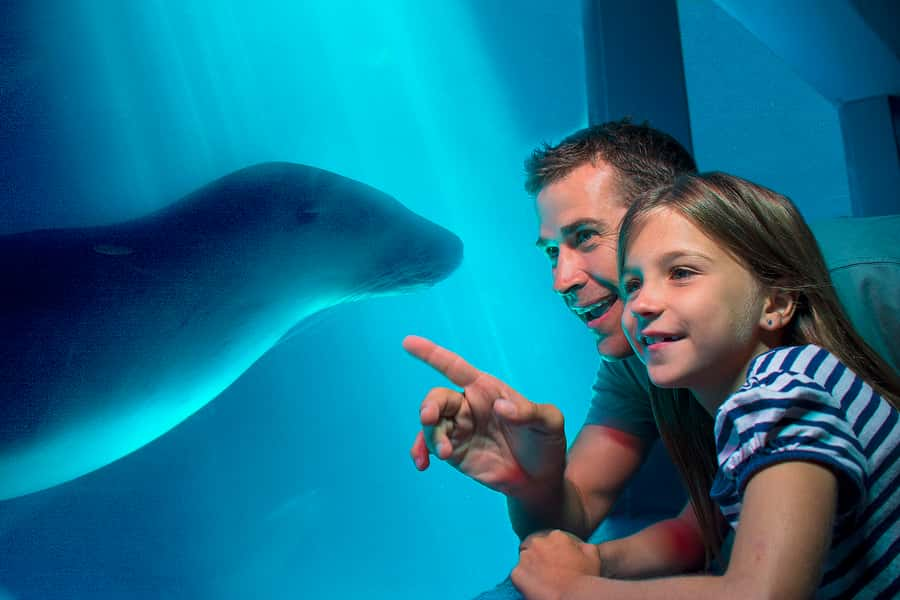
The marine mammal areas provide the biggest crowd appeal. Seals and otters have expressive movements that make them easy to watch, while sharks add a sense of scale and excitement.
A seal show is among the most popular parts of the experience. The exact schedule is not provided with the ticket information, so check the aquarium’s arrangements on the day rather than assuming you can arrive at any time and catch it immediately.
The sharks bring a different kind of interest. Seeing them in an aquarium lets you observe their movement at close range without the difficulty of spotting them in open water. It also helps shift the usual image of sharks as simple threats toward a better understanding of their role as marine animals.
The otters can be a pleasant surprise. They offer plenty of movement and personality, which may appeal to children who lose interest during quieter fish displays. If your group has limited time, I would place the marine mammals and Ocean Tunnel high on your list.
The Ocean Tunnel is worth making time for
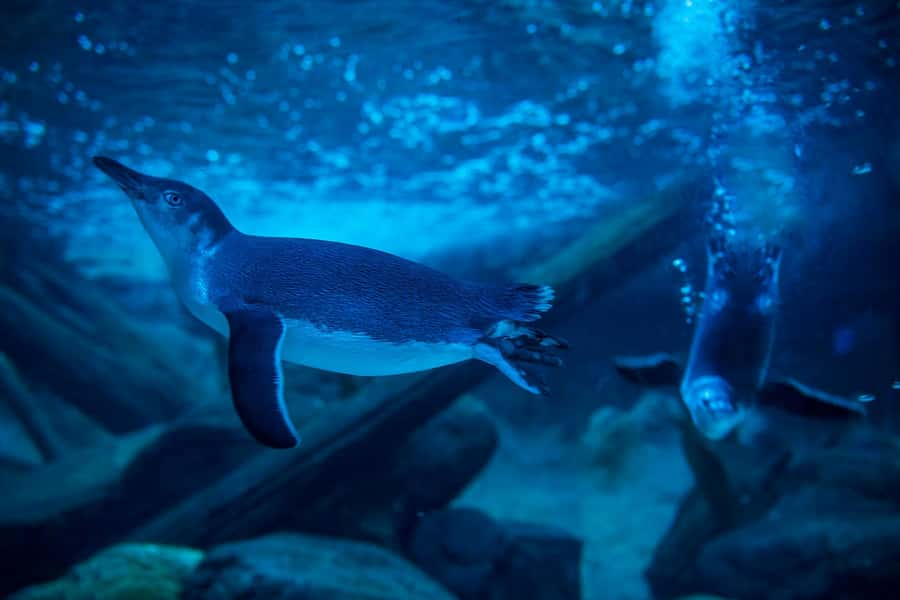
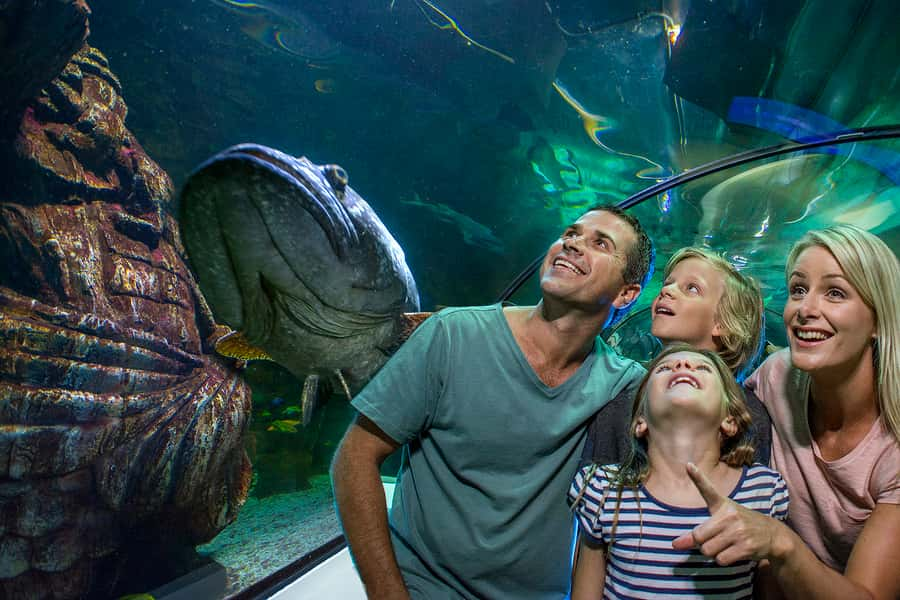
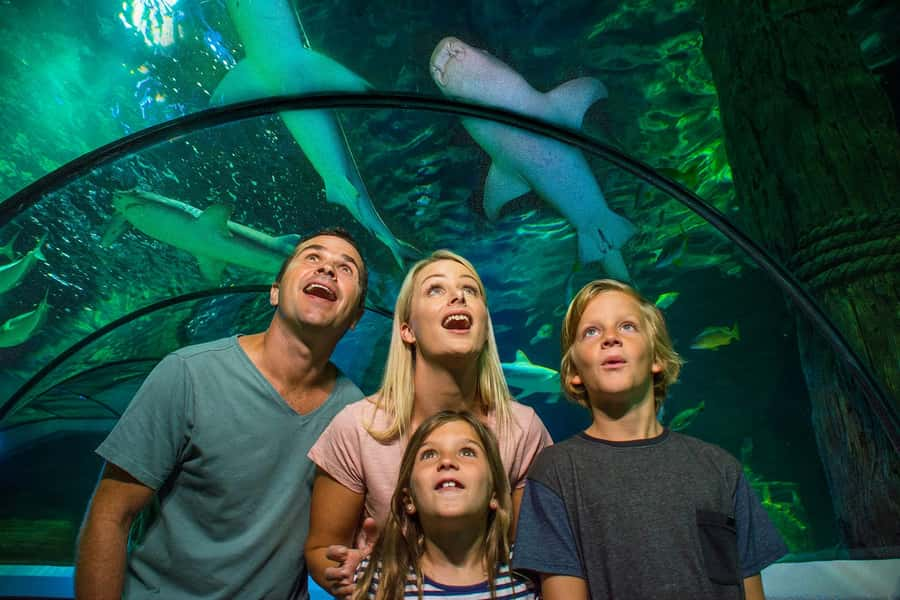
The Ocean Tunnel is the feature I would prioritize if you only have a short visit. Walking through an underwater tunnel changes your view of the tank. Instead of standing in front of marine life, you can look up and around as creatures move through the water above you.
This is where the aquarium feels most cinematic without needing a large footprint. You get a better sense of size and movement, particularly when larger animals pass overhead. It also gives children a clear focal point after the smaller displays.
The tunnel may become crowded, particularly during busy family periods. You might need to wait for a clear view, and prams can make movement harder in tight areas. Try not to rush through the first opening. Stop, look upward, and let the tank’s movement come to you.
The tunnel also works well as a shared moment for a mixed-age group. Adults can enjoy the design and animal behavior, while younger children get the simple thrill of being under the water.
How long to allow, and when the visit works best
The suggested visit time is 90 minutes to two hours. That is enough to see the main areas at a comfortable pace, with extra time if you stop for the touchpool, seal presentation, or longer animal watching.
I would allow closer to two hours if you want to read the conservation displays and pause at the smaller exhibits. If you are mainly interested in the Ocean Tunnel, seals, sharks, and otters, 90 minutes may be enough.
Last admission is at 4:00 p.m. daily. Do not plan to arrive near closing and expect a leisurely route through the aquarium. A late visit can work, but you should arrive with enough time to see the sections that matter most to you.
Crowds are the main timing concern. A verified booking from December described limited room to move freely during an overcrowded visit, particularly with prams. That does not mean every visit will feel cramped, but it is a useful warning. If you can choose your time, a quieter period should make the touchpool and Ocean Tunnel more enjoyable.
Who will enjoy SEA LIFE Sunshine Coast most
I think this aquarium suits families looking for a short activity with several levels of engagement. Younger children can focus on seals, otters, sharks, colorful fish, and hands-on marine animals. Older children can take more from the conservation displays, billabong wildlife, and reef habitats.
It also suits couples and adults who enjoy aquariums but do not want to spend half a day inside one. The jellyfish, seahorses, moray eels, and Ocean Tunnel give you enough variety for a focused visit.
You may want to lower your expectations if you prefer very large aquariums with extensive galleries. One French-language booking review described the aquarium as small and in need of refreshing, while another praised the sea life but found crowding a problem. Those points fit the practical picture: the collection is appealing, but the venue is compact and some areas may feel dated.
The strongest praise has focused on the friendly, helpful staff, the Ocean Tunnel, and the seal show. That combination makes the aquarium a good choice when you want a simple, organized outing rather than an all-day expedition.
Booking flexibility and practical planning
The ticket costs $28 per person. Free cancellation is available up to 24 hours before the visit for a full refund, and you can reserve now and pay later. Those terms help if your Sunshine Coast plans depend on weather or changing family schedules.
Food and drinks are not included, so plan those separately. Transportation is also not included, and the meeting point may vary by booking option.
I would check three things before leaving: your selected meeting details, the arrival time you want, and the last admission time of 4:00 p.m. Those small checks matter more here because the visit is relatively short and the venue can feel crowded at peak times.
Should you book SEA LIFE Sunshine Coast?
Book it if you want a compact marine-life attraction with an excellent Ocean Tunnel, a seal show, hands-on sea creatures, and clear conservation themes. At $28, it offers fair value for families, aquarium fans, and anyone needing a shorter Sunshine Coast activity.
I would think twice if you expect a large aquarium or a full-day attraction. The venue can feel small, and busy periods may limit how freely you move. For most people, though, the combination of seahorses, jellyfish, reef fish, billabong species, seals, otters, sharks, and the Coastal Wreck zone makes this a worthwhile stop, especially when you give yourself the full two hours.
FAQ
Where is SEA LIFE Sunshine Coast located?
SEA LIFE Sunshine Coast is located in Mooloolaba, Queensland, on Australia’s Sunshine Coast. It is approximately one hour from Brisbane.
How much does admission cost?
The listed admission price is $28 per person.
How long does a visit take?
You should allow between 90 minutes and two hours, depending on how long you spend at the animal displays and interactive areas.
What does the ticket include?
The ticket includes entrance to SEA LIFE Sunshine Coast.
Are transportation, food, and drinks included?
No. Transportation, food, and drinks are not included.
What animals can I see?
You can see seals, otters, sharks, moray eels, jellyfish, seahorses, clown fish, sea stars, sea cucumbers, anemones, barramundi, freshwater sawfish, pacu fish, and other marine and freshwater species.
Can I touch any of the animals?
Yes. The Tidal Touchpool allows you to touch sea stars, sea cucumbers, and anemones.
What time is last admission?
Last admission is at 4:00 p.m. daily.
Can I cancel my booking?
Yes. You can cancel up to 24 hours in advance for a full refund. You can also reserve now and pay later, depending on the booking option.
Just added in Sunshine Coast
- Rainbow Beach: Dolphin & Wildlife Ocean Kayak & Beach 4WD Tour★ 5.0 · 59 reviews
- eBike Noosa Sightseeing Tour – New!★ 5.0 · 38 reviews
- Noosa Whale Watching Cruise – Humpback Whale Adventure★ 5.0 · 144 reviews
- Noosa eMtn Bike Tour: Exploring a National Park on Fun MTB Trails★ 5.0 · 61 reviews
- Noosa ocean adventure & Dolphin safari.★ 5.0 · 125 reviews
- Whale Watching Cruise from Mooloolaba★ 5.0 · 120 reviews
- Adventure Whale Watching Tour Mooloolaba★ 4.5 · 25 reviews
- Sunshine Coast Adventure Park TreeTop Challenge★ 4.5 · 25 reviews
Aquariums and Zoos, compared.

Blue Mountains Small-Group Tour from Sydney with Scenic World,Sydney Zoo & Ferry
Read our review →
Blue Mountains Adventure: Scenic World, Zoo & Koala Photo
Read our review →
Blue Mountains, Scenic World, Zoo, & Ferry Ride
Read our review →

Browse the lists this tour appears in