
Reviewed · HISTORICAL TOURS
Salamanca Walk – History Tour
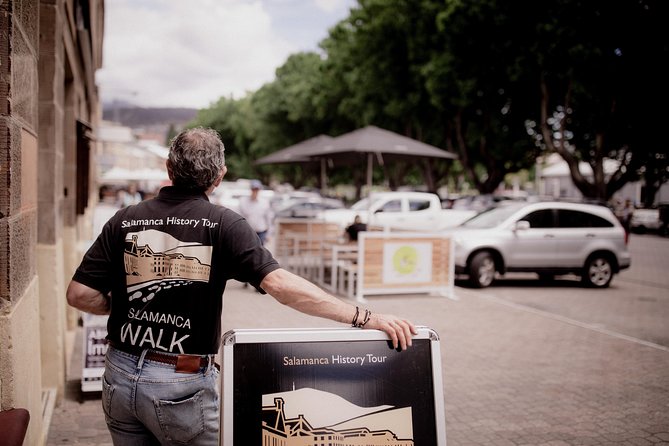
History gives Hobart sharper edges. The Salamanca Walk History Tour links Salamanca and Battery Point through stories of convicts, merchants, clergymen, craftsmen, and free settlers. I like the old photographs and drawings, which let you compare past Hobart with the streets in front of you. I also like the easy pace and small groups, capped at 15 people. The one drawback is the length: two and a half hours without a planned sit-down may feel tiring for some people.
Guide Peter Lutz brings a strong personal interest in Hobart’s past, while guides such as Lydija and Carmen add their own passion and style. You’ll learn about stone quarrying, whaling, convict labour, land reclamation, old homes, gardens, pubs, and modern Hobart. Children under 16 join free, making this a useful family choice.
In This Review
- Key points to know before you book
- Starting at Salamanca Arts Centre
- Salamanca’s old buildings and changing shoreline
- Arthur Circus and Battery Point’s gracious homes
- St. David’s Park and the people behind Hobart
- Peter, Lydija, and Carmen bring different voices
- How difficult is the walk?
- Why the $28.69 price can be good value
- The best time to take this walk
- Who will enjoy it most?
- Booking, cancellation, and practical details
- Should you book the Salamanca Walk History Tour?
- FAQ
- Where does the Salamanca Walk History Tour start?
- Where does the tour finish?
- How long does the tour last?
- How much does the tour cost?
- Are children allowed on the tour?
- How large is the group?
- What areas does the walk visit?
- What are the named stops?
- Are food and drinks included?
- Is cancellation available?
Key points to know before you book

- Old photographs make the past visible: Peter uses pictures, drawings, and maps to show how Salamanca and Battery Point changed over time.
- Two historic areas in one walk: You explore Salamanca’s former industrial and market area, then move through Battery Point’s older residential streets.
- Arthur Circus is a major highlight: The circular park and homes around it offer some of Battery Point’s most appealing architecture.
- Convict history is handled through real lives: The tour looks at workers, settlers, merchants, clergy, and prisoners rather than treating history as a list of dates.
- The pace is gentle but the tour is long: Most people can take part, but there is no stated sit-down break during the approximately 2-hour-30-minute walk.
- A useful first-day activity: Local recommendations about food, pubs, attractions, and Hobart’s present-day character can help you plan the rest of your stay.
Starting at Salamanca Arts Centre
The walk begins at Salamanca Arts Centre, at 77 Salamanca Place. This is a practical starting point because Salamanca is one of Hobart’s most recognizable areas, yet its present-day arts and market atmosphere can hide what came before.
I find a guided start here useful because the buildings are easier to understand once you know their former purpose. The tour introduces the origins of the colony and the work that shaped this part of Hobart. Convict labour helped build the early town, while other residents worked as craftsmen, merchants, clergymen, and free settlers.
The stories do not stop at famous names. You hear about the hard physical work behind the town’s foundations, including quarrying stone and hunting whales. That gives Salamanca more weight than a quick stroll past old façades. You begin to see the area as a working port district, not simply a pleasant place for markets, cafés, and photographs.
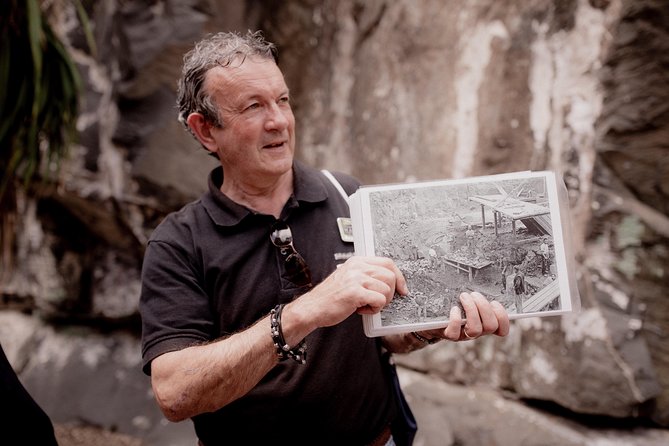
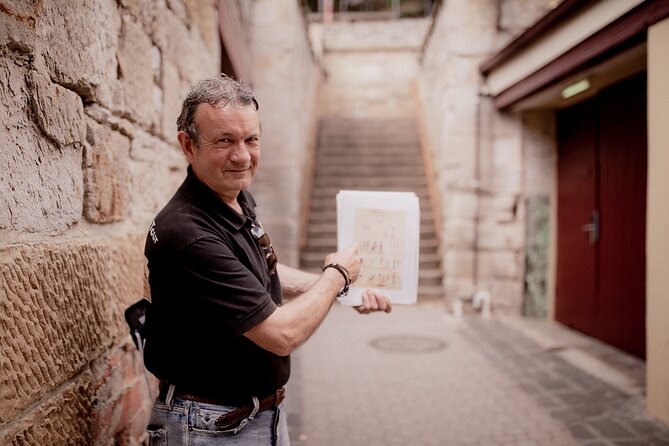
The guide uses historical material during the walk. Old images and drawings are especially helpful here because they show the difference between the earlier settlement and the Salamanca you see today. Several people found this comparison one of the most useful parts of the experience. You are not asked to imagine the past from a bare wall alone. You can look at a picture, then look at the same location in the present.
More history tours in Hobart:
- Derwent River Historic Harbour Cruise From Hobart
★ 4.5 · 570 reviews - Tasman Island Cruises and Port Arthur Historic Site Day Tour from Hobart
★ 5.0 · 477 reviews - Tasman Peninsula Tour, Cruise & Port Arthur Historic Site
★ 4.9 · 339 reviews
Salamanca’s old buildings and changing shoreline
One of the tour’s useful themes is change. The walk explains how the area was altered after settlement, including land reclamation that helped create the Salamanca of today.
That detail matters because Hobart’s waterfront can look settled and permanent. It was not always so. The relationship between the town and the Derwent River changed as land was made and buildings were added. The guide connects these physical changes with the people who lived and worked here.
You also hear about the old buildings around Salamanca Place and the way their uses changed over time. The information is practical rather than purely academic. It helps you understand why the area feels different from Battery Point, even though the two are close together.
I especially like this kind of explanation on a walking tour because it gives you a mental map. Instead of collecting isolated facts, you learn how work, housing, transport, trade, and the river fitted together. The result is a clearer sense of Hobart’s early shape.
The walk also includes present-day information. Peter has been praised for adding suggestions about food, pubs, and attractions, so you may finish with more than historical facts. If you take this tour early in your visit, those recommendations can help you choose where to eat or what to explore next.
Arthur Circus and Battery Point’s gracious homes
The route continues into Battery Point, where the mood changes. Salamanca’s history is tied closely to work and trade, while Battery Point presents a more residential side of old Hobart.
Arthur Circus Park is one of the named stops. The circular green is surrounded by historic homes, creating one of the area’s most distinctive layouts. The tour explains the buildings and the people connected with them, rather than simply pointing out attractive architecture.
This is where the old photographs and drawings become particularly valuable. Details that might seem ordinary at first can take on meaning once the guide explains how the area developed. You may notice the way houses face the park, the age of the buildings, and the marks of later change with a more careful eye.
The tour also includes gardens and a pine tree from America, details that give the walk a more personal scale. These are the small discoveries that can get lost if you explore Battery Point alone without background information.
Battery Point’s elevated position also provides views toward the Derwent River. The walk combines architecture with these outlooks, giving you time to pause and take in the setting. It is not a strenuous route, but you should still expect to be on your feet for much of the morning or afternoon.
St. David’s Park and the people behind Hobart
St. David’s Park is the second named stop. It adds another layer to the story of early Hobart and gives the guide space to connect public gardens, memorials, and settlement history.
The tour’s focus is not limited to officials or prominent builders. You hear about the lives of people who had very different positions in the colony. Craftsmen, clergy, free settlers, merchants, and convicts all appear in the account. That range is important because it shows how the town was made by people with unequal choices and very different daily lives.
The convict story is central, but it is not presented as a single dramatic episode. Instead, it is tied to labour, building, hardship, and the growth of the settlement. The tour explores Hobart’s notorious convict heritage while also showing how other groups contributed to the town.
A First Fleet memorial is another point of interest mentioned during the walk. For anyone with family links to early Australian settlement, this can carry a special meaning. The guide can add context to names and memorials that might otherwise pass unnoticed.
The pace allows for stops and questions. Several participants appreciated the way Peter answered questions from the group and adjusted the conversation when the group’s interests called for it. If you enjoy asking about small details, this is a strength. One caution is that the amount of material can make the time feel full. A 2-hour-30-minute tour gives the guide room to tell a broad story, but not everyone will want that much time without a longer rest.
A few more options to weigh up in Hobart
- Bruny Island Food, Sightseeing, Guided Lighthouse Tour & Lunch
★ 5.0 · 2,989 reviews - Full-Day Guided Bruny Island Tour from Hobart
★ 5.0 · 1,331 reviews - kunanyi/Mt Wellington Explorer Bus- Return Tour (2.5 hours)
★ 5.0 · 1,249 reviews - Hobart: Bruny Island Food, Sightseeing & Lighthouse Day Tour
★ 4.8 · 960 reviews
Peter, Lydija, and Carmen bring different voices

Peter Lutz is the main name associated with this experience, and his approach is built around personal enthusiasm for Hobart. He has been described as friendly, professional, humorous, and passionate about the city’s past.
That combination matters. A walking tour can become dry when every stop turns into a date and a building name. Here, anecdotes and contemporary information help keep the history moving. Peter’s use of laminated photographs and drawings gives the group something concrete to examine, while his relaxed manner makes it easier to ask questions.
Lydija has also led the walk. Her style has been praised for pointing out details that are easy to miss, giving the route a more observant quality. Carmen is another guide, described as passionate about local and Australian history.
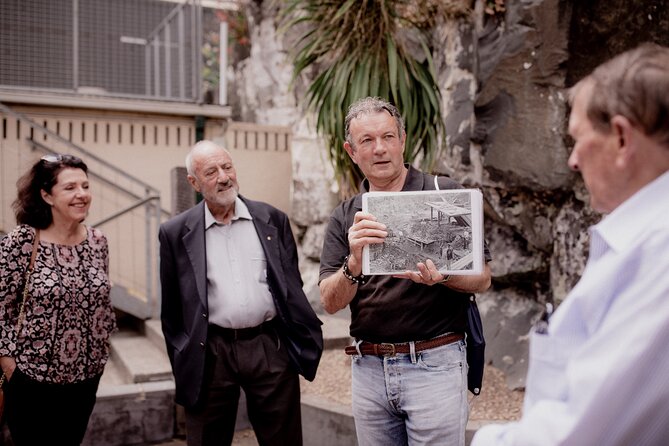
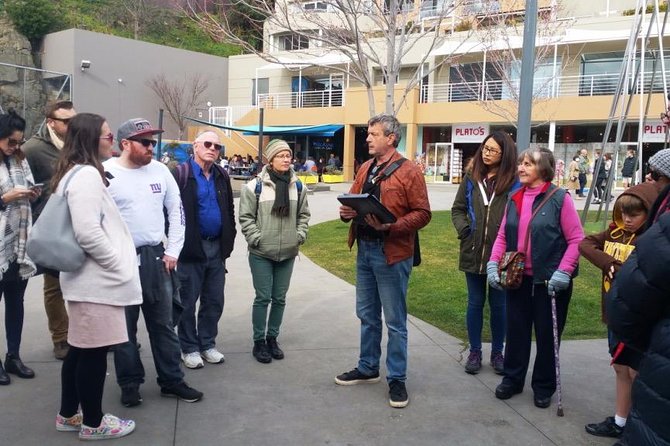
The experience can therefore vary slightly by guide, but the central approach remains clear: a small group, a gently paced route, visual material, and plenty of stories about the people who shaped Hobart. The maximum of 15 people is a real advantage. You are less likely to be lost at the back, and the guide has a better chance of responding to individual questions.
On a particularly quiet date, the group may be very small. That can make the discussion more personal, and the guide may adapt parts of the tour to suit your interests. You should not count on a private tour, but the small-group format creates a more flexible feel than a large city walk.
How difficult is the walk?
The tour is described as physically undemanding, and people of different ages have taken part. Most participants can join, and service animals are allowed. The route is near public transport, which makes the meeting point easier to reach without a car.
Still, not strenuous does not mean short. The activity lasts about two and a half hours, and one participant felt two hours might have been enough. There is no stated sit-down break, so plan for a continuous walking experience with stops to listen and look around.
Wear comfortable shoes and consider the weather before setting out. The supplied details do not specify a particular surface, step count, or accessibility route, so anyone with mobility concerns should confirm those points before booking.
The relaxed pace helps. This is not a fast march between attractions. You stop at parks, houses, memorials, and streets while the guide explains what you are seeing. That makes it suitable for families and for people who prefer a measured introduction to a city.
Why the $28.69 price can be good value
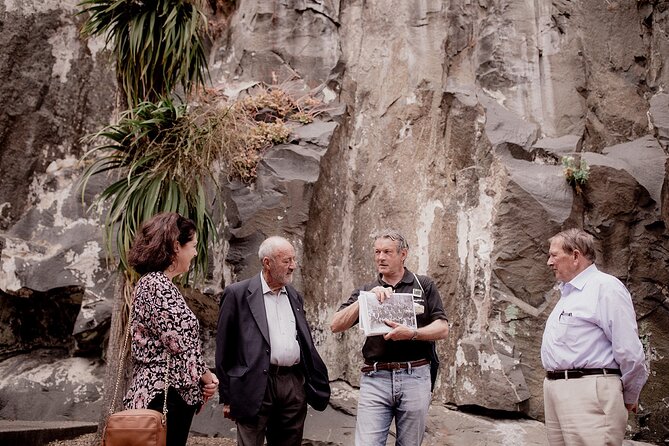
At $28.69 per person, the tour is priced as an affordable way to add context to a Hobart stay. The value comes from the guide’s interpretation, not from paid admissions or food. The experience includes pictures and drawings, but alcohol, food, and other drinks are not included.
I think the price works best if you want more than a self-guided walk. Salamanca and Battery Point are easy to visit on your own, but it is harder to understand land reclamation, early labour, old buildings, and the lives of the people who occupied them without some help.
A small group also improves the value. With a maximum of 15, the guide can point out details and answer questions without the impersonal feel of a large coach excursion. If you are already planning to walk around Salamanca and Battery Point, paying for the stories can turn a pleasant outing into a much more informed one.
Families get especially good value because children under 16 are free. That can make the total cost reasonable for a group with older children who enjoy stories, buildings, and local history.
The best time to take this walk
I would place this tour near the beginning of a Hobart visit. The route gives you a working map of Salamanca and Battery Point, and the local suggestions about food, pubs, and attractions may help shape your later plans.
It also works well after you have seen Salamanca on your own. You may recognize the streets but realize that you missed the reasons they look the way they do. The walk then fills in the gaps.
The tour runs in all seasons according to the supplied comments, including winter, spring, summer, and autumn outings. The experience can feel different in changing weather, but the historical material remains the main attraction.
Leave enough time afterward if you want lunch or more sightseeing. The walk ends back at the meeting point, so you finish where you began at Salamanca Arts Centre. That makes it easy to continue exploring Salamanca, find food, or use nearby public transport.
Who will enjoy it most?
I would recommend this walk to:
- Families looking for a calm activity with free places for children under 16
- First-time visitors who want a clear introduction to Hobart’s older districts
- Repeat visitors who have walked Salamanca before but never understood its earlier uses
- People interested in convict history and the daily work behind early settlement
- Anyone who enjoys old photographs, architecture, memorials, and personal stories
- Visitors who prefer small groups and a guide-led conversation
It may be less suitable if you dislike long walking tours or want plenty of time to sit and explore each building independently. The guide covers a lot in 2 hours and 30 minutes, so the experience favors people who enjoy a steady flow of information.
The walk is also not a food tour. Food and drinks are not included, though the guide may offer local suggestions. Think of it as a history and orientation walk that can help you make better choices later.
Booking, cancellation, and practical details
The tour uses a mobile ticket, and confirmation is provided when you book. It starts at Salamanca Arts Centre, 77 Salamanca Place, Battery Point, Tasmania 7004, and ends at the same meeting point.
Free cancellation is available if you cancel at least 24 hours before the scheduled start time. Cancellations made less than 24 hours in advance are not refunded, and changes within that period are not accepted. Cut-off times use Hobart local time.
The tour requires a minimum number of people to operate. If it is cancelled because that minimum is not reached, you are offered another date or experience, or a full refund.
The group maximum is 15 people. Service animals are allowed, and the experience is near public transport. Most people can participate, but the duration is worth considering before you reserve.
Should you book the Salamanca Walk History Tour?
Book it if you want Hobart’s old streets to make sense. The strongest features are the visual material, the guide’s personal command of local stories, the small group size, and the balance between convict history, architecture, public spaces, and modern Hobart.
I would be especially keen to take it early in a stay, when the advice about food, pubs, and attractions can still be useful. The $28.69 price is fair for a 2-hour-30-minute guided walk, particularly for families with children under 16.
Skip it if you want a short, casual stroll with long breaks. The tour is gentle, but it is not brief. For most visitors interested in Hobart’s beginnings, Salamanca’s changing waterfront, and Battery Point’s old homes, the extra time buys a much clearer picture of the city.
FAQ
Where does the Salamanca Walk History Tour start?
It starts at Salamanca Arts Centre, 77 Salamanca Place, Battery Point, Tasmania 7004, Australia.
Where does the tour finish?
The activity ends back at the meeting point at Salamanca Arts Centre.
How long does the tour last?
The tour lasts approximately 2 hours and 30 minutes.
How much does the tour cost?
The listed price is $28.69 per person.
Are children allowed on the tour?
Yes. The experience is suitable for families, and children under 16 receive free tickets.
How large is the group?
The tour has a maximum of 15 travelers.
What areas does the walk visit?
The walk explores Salamanca and Battery Point in Hobart.
What are the named stops?
The named stops are Arthur Circus Park and St. David’s Park.
Are food and drinks included?
No. Alcoholic beverages, food, and other beverage items are not included.
Is cancellation available?
Yes. You can cancel for a full refund if you cancel at least 24 hours before the experience start time.
Just added in Hobart
- Wineglass Bay and Maria Island Scenic Flight Experience★ 4.7 · 54 reviews
- Wineglass Bay & Freycinet National Park Day Trip from Hobart★ 4.7 · 249 reviews
- nipaluna (Hobart) Highlights Day Tour★ 5.0 · 33 reviews
- kunanyi/Mt Wellington Explorer Bus – One Way Tour★ 5.0 · 63 reviews
- kunanyi/Mt Wellington Tour & Hobart Hop-On Hop-Off Bus★ 5.0 · 275 reviews
- Hobart: Waterfalls, Wilderness & Wildlife – Active Day Tour★ 5.0 · 22 reviews
- Hobart: Wineglass Bay & Freycinet National Park – Active Day Tour★ 4.5 · 142 reviews
- Full-Day Tour to Wineglass Bay from Hobart★ 5.0 · 122 reviews
Historical Tours, compared.

Ultimate Melbourne Walking Tour: History, Laneways & Culture
Read our review →
Puffing Billy Railway: Heritage Steam Train Journey
Read our review →
Morning World Heritage Cruise on the Gordon River from Strahan
Read our review →
World Heritage Cruise on Gordon River with Lunch
Read our review →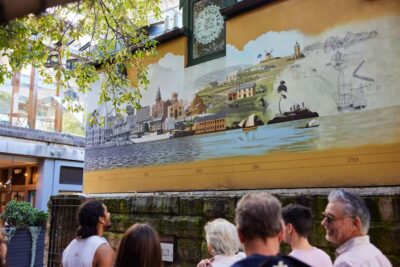

Experience History onboard The Mary Valley Rattler
Read our review →
Snorkel & Dive the Reef: Sustainable, Scientific & Cultural Tour
Read our review →
Derwent River Historic Harbour Cruise From Hobart
Read our review →Browse the lists this tour appears in