
Reviewed · SURF LESSONS
Noosa Heads – 2-Hour Surf Lesson with Expert Instructors
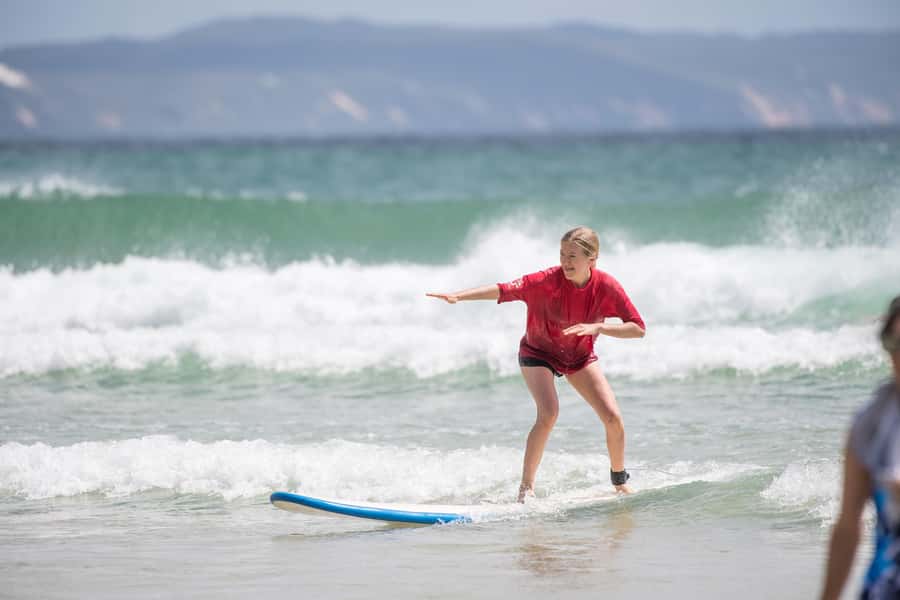
Your first wave may come sooner than expected. This lesson makes learning to surf approachable, with warm water and gentle waves at Noosa Heads Main Beach. I like the careful ocean-safety briefing and the patient, personal coaching from instructors such as James, Oa, Anthony, Mike, and Finn. I also like that the group is limited to seven people, which gives you a better chance of getting useful advice instead of simply taking turns in the water.
The main thing to consider is timing. Noosa is a popular holiday destination, and finding a car space can take at least 30 minutes in the busy season. You also need to bring your own towel, and two hours can feel short if you arrive late or spend too long getting organized.
In This Review
- Key points before you book
- Why Noosa Main Beach works for a first surf lesson
- Meeting the coaches and getting set up
- The first 20 minutes: safety before surfing
- Waist-deep practice and learning to stand
- Catching your first wave at Noosa
- What two hours really gives you
- The value of $57 per person
- Who will enjoy this lesson most
- Practical tips for a smoother morning
- What happens after the final wave
- Should you book Merrick’s Noosa surf lesson?
- FAQ
- Where does the surf lesson meet?
- How long does the activity last?
- What is included in the price?
- What should I bring?
- What age is required to participate?
- How many people are in each group?
- Can I cancel the booking?
Key points before you book
- Protected North facing beach: Noosa Main Beach offers warm water and generally gentle conditions suited to first lessons.
- Former champions on the coaching team: The school is led by a former World and Australian Champion and supported by qualified local coaches.
- Real safety instruction: You learn how to identify rips and currents, not just how to stand on a board.
- Small groups of up to seven: Instructors can give individual tips and adjust their help for different ability levels.
- Soft boards and rash shirts included: The equipment is designed for beginners and removes much of the hassle of getting started.
- A strong first-wave focus: Coaches help push you onto suitable waves and encourage you through the stand-up technique.
Why Noosa Main Beach works for a first surf lesson
Noosa Heads is one of Australia’s best-known surfing areas, but that does not mean you need surfing experience to enjoy this session. The lesson takes place at Main Beach, a North facing stretch with warm water and relatively gentle waves. Those details matter when you are still learning how to balance, paddle, and read the water.
A calm beach does not remove every challenge. You still need to deal with moving water, timing, and the slightly alarming moment when a wave lifts the back of your board. But a protected setting gives you a more forgiving place to learn than a rough, exposed beach.
I like that the lesson includes basic ocean awareness before you start catching waves. You are shown how to spot rips and currents and how to understand the beach around you. That instruction is useful beyond this one activity. It helps you feel less like someone being pushed into the ocean with a large piece of foam and more like someone beginning to understand how the water works.
The location also keeps the experience visually appealing. You are not learning in a pool or an artificial surf facility. You are on Noosa’s actual beach, with the shore close by and the open water in front of you.
More Surf Lessons in Australia:
- Bondi Beach: 2-Hour Surf Lesson Experience for Any Level
★ 4.9 · 935 reviews - Byron Bay: 2-Hour Small Group Surf Lesson
★ 4.8 · 657 reviews - Learn to Surf at Surfers Paradise on the Gold Coast
★ 5.0 · 491 reviews
Meeting the coaches and getting set up
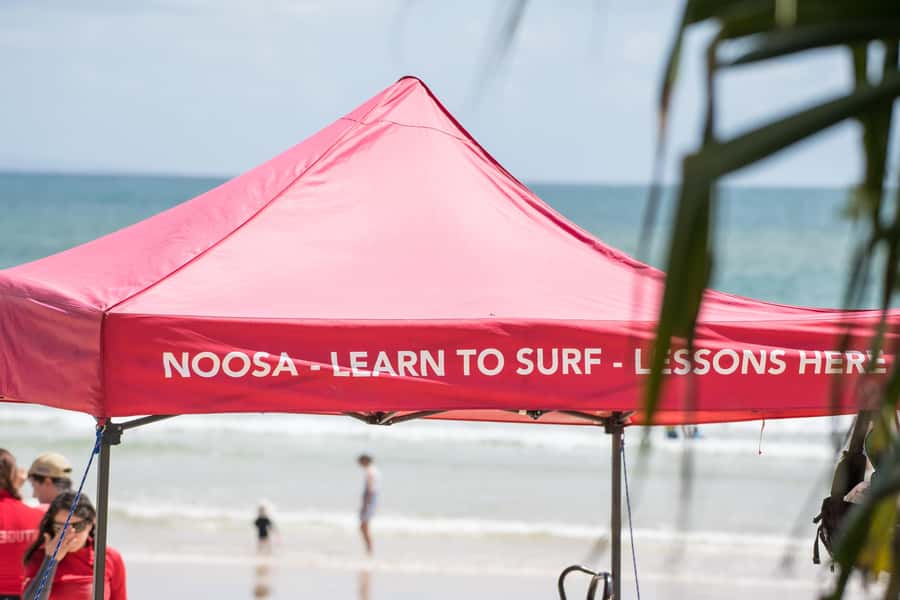
You meet at Merrick’s Noosa Learn to Surf in the car park by the red surf trailer at Beach Access 14 on Claude Batten Drive. Arrive 15 minutes before your lesson begins. In the busy tourist season, allow at least another 30 minutes to secure a car space, since arriving at the stated meeting time may leave you rushing.
After signing in, you receive a soft surfboard and a rash shirt or wetsuit. Sunscreen is included, and there is a lock-up trailer for personal items. The school also provides a shower at the end, which is a small but welcome touch after two hours in salt water.
You need to bring swimwear and a towel. Food and drinks are not included, so plan those separately if you are fitting the lesson between other activities. Alcohol and drugs are not allowed, and participation begins at age seven. The activity is not suitable for pregnant women.
The walk from the meeting point to the beach is along a pathway. Several family groups have found the board manageable for this short walk, though younger children may need a little help carrying equipment. The school supplies the main gear, so you do not have to arrive with a board, wetsuit, or rash vest of your own.
The first 20 minutes: safety before surfing
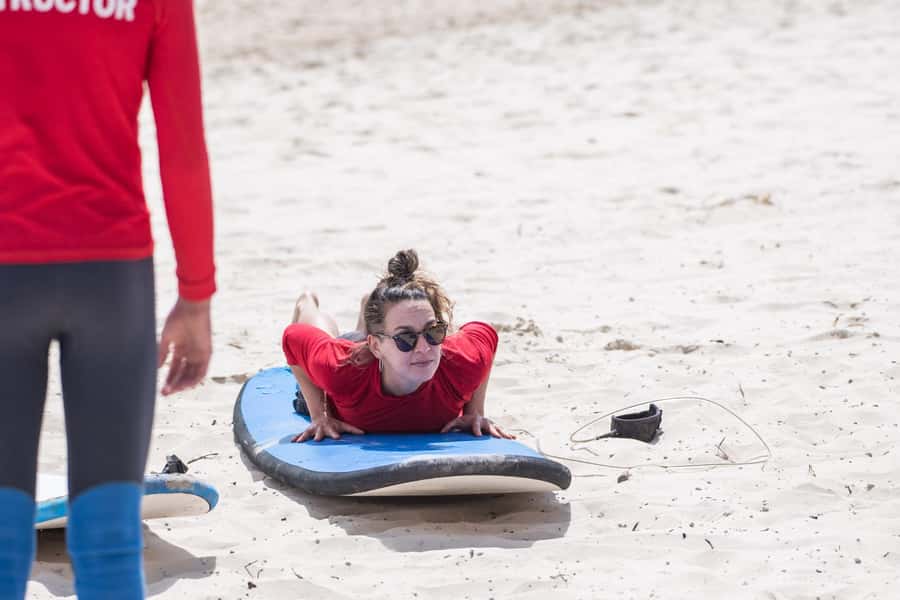
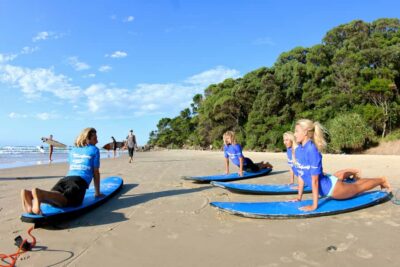
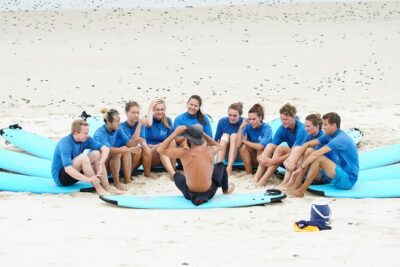
The session starts on the beach with a safety briefing and basic instruction. This is not filler before the fun begins. It gives you the information you need to avoid common beginner mistakes, including where currents may move you and how to recognize a rip.
You also learn the basic parts of the surfing position on land. The coaches explain how to lie on the board, where to place your hands, and how to move your feet when standing. This is where the lesson begins to feel practical. You can ask questions, watch the demonstration, and rehearse the movement without a wave trying to rearrange your plans.
The teaching style appears to be friendly and encouraging rather than stern. James has been praised for creating a relaxed atmosphere, while Anthony is noted for clear instructions and steady encouragement. Oa is often described as calm and patient, and Mike is praised for making children feel safe while keeping the session fun.
Those different teaching styles matter because beginners do not all need the same sort of help. Some people need a simple technical explanation. Others need a coach to slow things down and build confidence. This school seems comfortable doing both.
Waist-deep practice and learning to stand
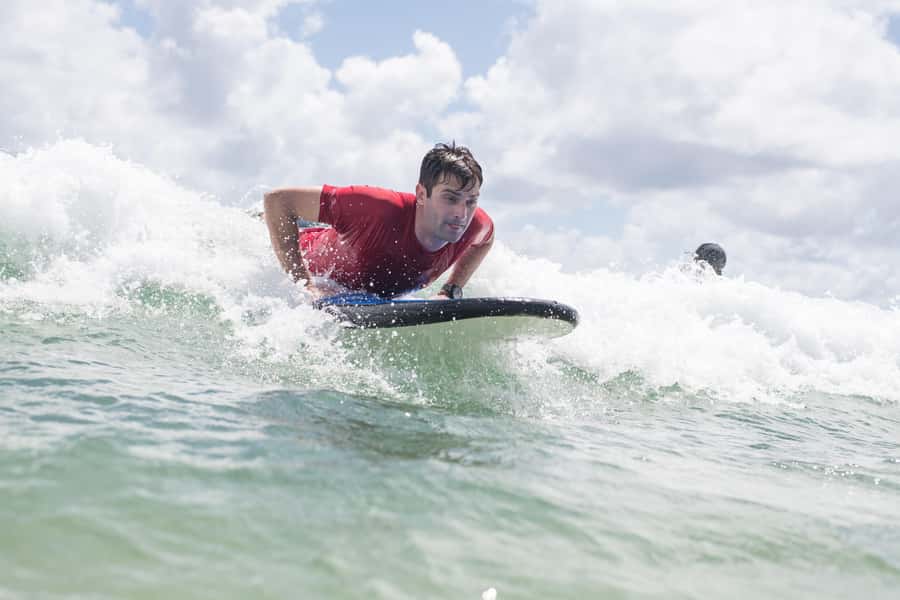
Once the beach briefing is finished, you move into waist-deep water. This is an excellent stage for learning because you can practice handling the board without immediately being sent into larger waves.
The coach helps you catch your first small waves and gives detailed advice on standing up. The key movement is fast but controlled: hands on the board, feet underneath you, then rising into a balanced position. At first, the body tends to move in several directions at once. That is normal. A good instructor keeps the correction simple enough to use on the next attempt.
The school uses soft boards, which are a sensible choice for first-timers. They are stable and less intimidating than hard boards. You still need to pay attention to the board and the people around you, but the equipment is suited to the early stage when falling is part of the lesson.
This is also where the small group size helps. With a maximum of seven participants, you are not lost in a crowd. The exact group may be smaller, and larger bookings can be split between two instructors. One family group of five had two children taking part, and the coach adjusted the teaching to suit the adults and younger surfers.
The ability range can vary. Some people may have surfed before, while others may never have stood on a board. That can create a slight unevenness in the pace, but the coaches are used to giving individual tips. The lesson is intended for beginners and intermediate participants, so do not expect every person to receive identical instruction.
A completely different kind of day out:
- Sydney: Opera House Guided Tour with Entrance Ticket
★ 4.8 · 8,312 reviews - All Inclusive Blue Mountain,Scenic World,Lunch,Koalas,ferry
★ 5.0 · 7,832 reviews - Great Ocean Road Small-Group Eco Tour from Melbourne
★ 5.0 · 6,607 reviews - From Melbourne: Great Ocean Road, 12 Apostles, Wildlife Tour
★ 4.7 · 6,020 reviews
Catching your first wave at Noosa
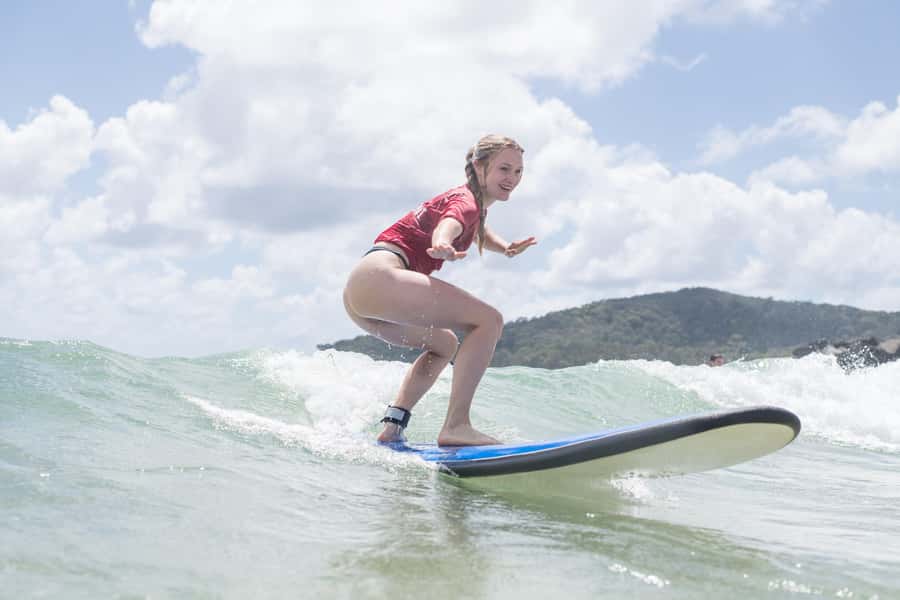
The highlight is the moment the coach helps push you onto a suitable wave. You paddle, the board begins to glide, and then you try the stand-up movement you practiced on shore. Sometimes it works for a few seconds. Sometimes you fall immediately. Both attempts are part of the process.
The instructors continue giving advice while you are in the water. They encourage you to try again and help you understand why a particular attempt worked or failed. This ongoing support is one of the strongest reasons to choose a coached lesson instead of borrowing a board and trying to work it out alone.
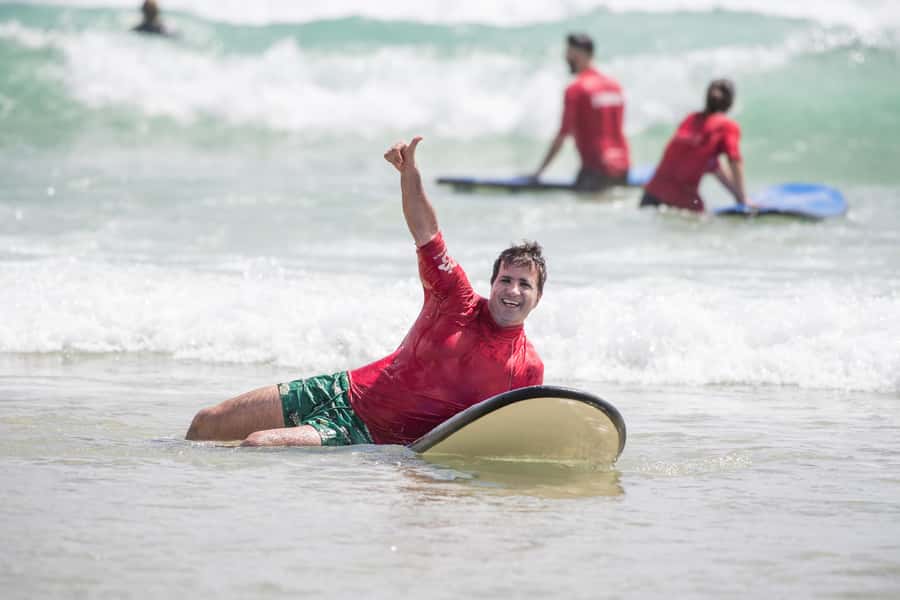
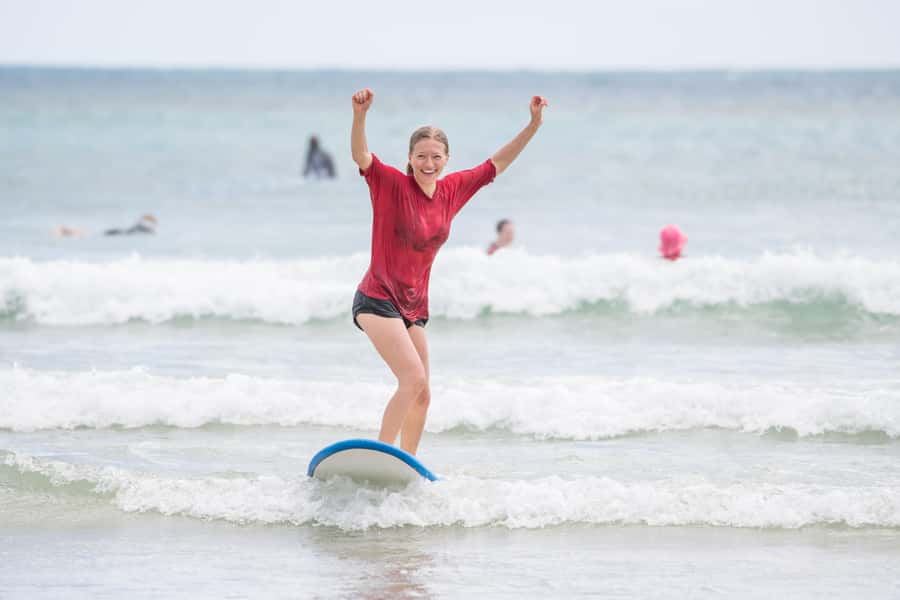
Many participants have managed to stand and ride during their first session. That is not a promise that every person will surf across the beach, since wave conditions, fitness, balance, and timing all play a role. It does show that the lesson is designed around an achievable early success rather than a long technical lecture.
The coaching team receives especially strong praise for patience and encouragement. Anthony has helped complete beginners stand up quickly, while Oa and Mike have been praised for offering personal advice in the water. James is described as making a surprise date feel relaxed and enjoyable, which says something about the social side of the class as well as the instruction.
You may leave with a short ride, a better understanding of wave timing, or simply the confidence to try again. The result depends on the day and on you. The important point is that the coaches keep the session active and supportive.
What two hours really gives you
Two hours is a useful length for a first lesson. It gives you time for the safety briefing, beach instruction, water practice, repeated attempts, and a shower afterward. Several participants have found it long enough to get a solid amount of surf time.
It is not a full surf course. You will not master turning, wave selection, or advanced board control in one session. The aim is to learn the basic position, catch small waves, stand when possible, and gain a feel for what surfing requires.
The water time can feel demanding. Even gentle waves require effort, and repeatedly climbing back onto the board takes energy. If you are traveling with children, the seven-and-up age rule is useful, but younger participants may tire before the session ends. The coaches can help with confidence and technique, but they cannot remove the physical work.
I would treat the two hours as an introduction rather than a complete education. If you enjoy it, you will have a clear idea of whether another lesson is worth booking.
The value of $57 per person
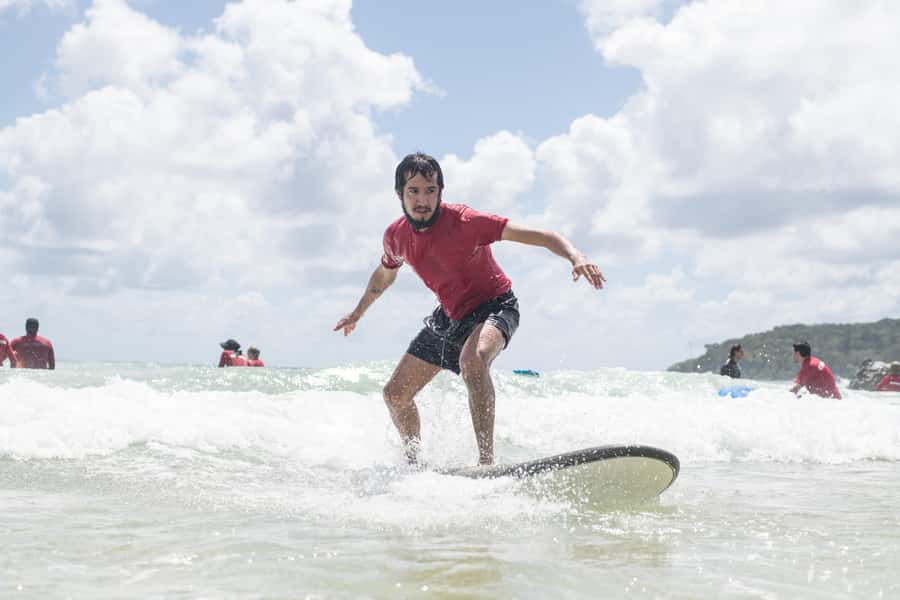
At $57 per person, this is reasonably priced for a two-hour guided activity in one of Queensland’s major beach destinations. The fee includes the board, rash shirt or wetsuit, sunscreen, storage for personal items, shower access, and instruction from fully qualified coaches.
The real value is the coaching. A board rental alone may cost less, but it will not teach you how to identify a rip, position yourself for a wave, or stand with better balance. It also leaves you to handle the frustrating early attempts by yourself.
The small group limit improves the value. You are paying for access to instruction, not just equipment. If the group reaches seven, you should still receive guidance, though a very small group may feel more personal. Larger groups may use two instructors, which helps keep the teaching active.
There are a few extra costs in practical terms. You need your own towel, and you may need to pay for parking depending on local arrangements. Food and drinks are separate. These are minor considerations, but they belong in the day’s budget.
Free cancellation up to 24 hours before the start time and the option to reserve now and pay later also make the booking less rigid. You should still check the available starting times before planning the rest of your day.
Who will enjoy this lesson most
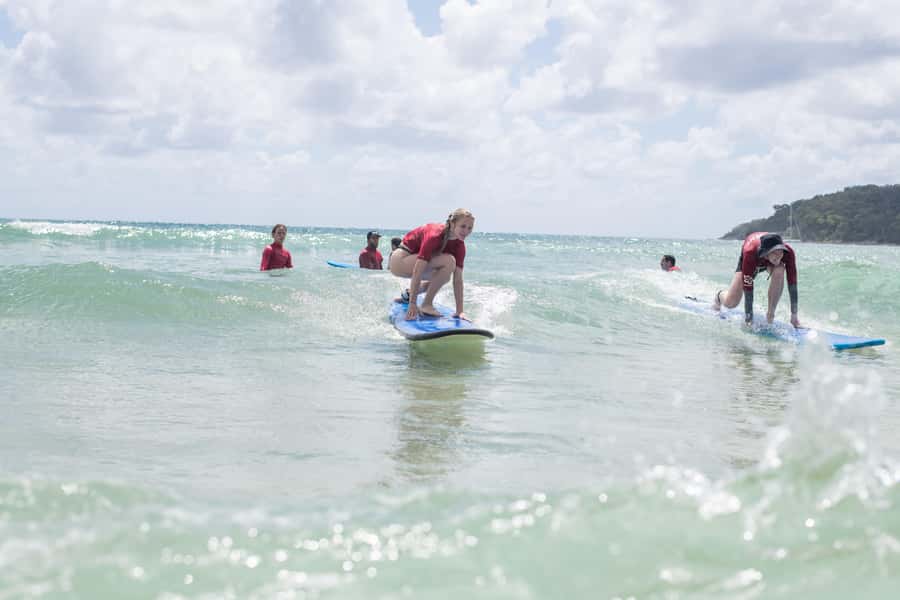
This activity suits first-time surfers who want proper instruction without committing to a full day. It also works well for families with children aged seven and up, couples looking for an active date, and visitors who want a distinctly Noosa experience rather than another sightseeing stop.
It is a good choice if you feel nervous around waves. The safety briefing and waist-deep practice provide a clear progression, and the coaches are used to building confidence. You do not need to arrive athletic or experienced.
Intermediate surfers may find the beginner focus limiting if they already catch waves comfortably. The lesson is better suited to someone still working on the basics, or to a surfer who wants to improve their first standing technique in a friendly group.
The experience is conducted in English. That is important to know if you need instruction in another language. You also need to be comfortable in the water and able to take part in a physical activity for two hours.
Practical tips for a smoother morning
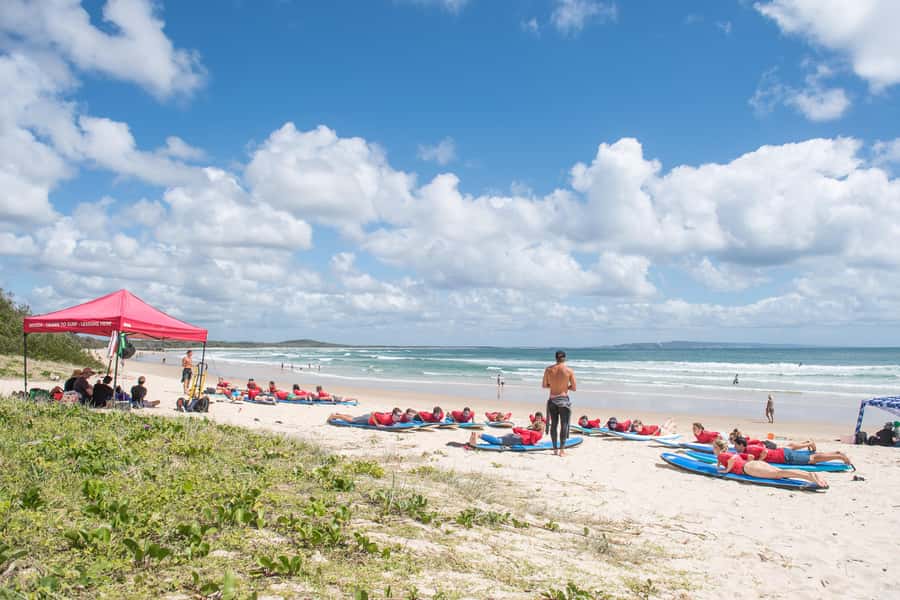
- Arrive 15 minutes early, then allow at least 30 extra minutes for parking during the busy season.
- Wear swimwear under the supplied rash shirt or wetsuit.
- Bring a towel. It is the one easy item to forget.
- Use the sunscreen provided, since you will be outside before and during the lesson.
- Keep valuables to a minimum, even though a lock-up trailer is available.
- Listen closely during the rip and current briefing. That information is as useful as the stand-up technique.
- Expect to fall. The lesson becomes more enjoyable once you stop treating every fall as a failure.
- If you are booking for a family, remember that everyone should be at least seven years old.
What happens after the final wave
The session ends with access to a free shower, allowing you to rinse off before continuing your day in Noosa. That makes the activity easier to fit into a wider itinerary, especially if you plan to eat, shop, or visit another beach afterward.
You may also receive feedback after the lesson. Richard specifically valued the added advice once the surfing ended, and that follow-up can help you remember what to work on next time.
Do not expect a formal certificate or a long classroom wrap-up. The useful outcome is practical: you know more about beach safety, you have practiced the basic pop-up movement, and you have felt a board carry you across a wave.
Should you book Merrick’s Noosa surf lesson?
I would book it if you want a friendly, well-supported first attempt at surfing in a scenic and relatively forgiving setting. The strongest reasons are the qualified local coaches, the small groups, the safety teaching, and the repeated reports of beginners standing up during their first session.
The main cautions are simple. Parking takes planning, the lesson is physical, and two hours will not turn you into a polished surfer. But at $57, with equipment and coaching included, it offers a fair way to test the sport without buying gear or guessing your way through the basics.
For a first-timer, a family with older children, or a couple wanting an unusual Noosa date, this is a sound pick. Arrive early, bring a towel, listen to the safety advice, and be ready to fall a few times before that first satisfying ride.
FAQ
Where does the surf lesson meet?
Meet at the red surf trailer in the car park at Beach Access 14, Claude Batten Drive, Noosa Heads.
How long does the activity last?
The surf lesson lasts two hours.
What is included in the price?
The lesson includes two hours of instruction, a soft surfboard, a rash shirt or wetsuit, sunscreen, a lock-up trailer for personal items, shower access, and guidance from fully qualified coaches.
What should I bring?
Bring swimwear and a towel. Food and drinks are not included.
What age is required to participate?
Participants must be at least seven years old. The activity is not suitable for pregnant women.
How many people are in each group?
Groups are limited to seven participants. Larger bookings may have two instructors.
Can I cancel the booking?
You can cancel up to 24 hours before the lesson for a full refund. You can also reserve a place and pay later.
Just added in Australia
- 1hour Scenic Flight Heart Reef, Whitehaven Beach, Hill Inlet, GBR★ 5.0 · 134 reviews
- Fly Raft Package: Whitehaven Beach, Snorkel and Scenic Flight★ 5.0 · 316 reviews
- All-Inclusive Waterfall Explorer Day Trip from Airlie Beach★ 4.5 · 253 reviews
- Airlie Coastal Beach Adventures – Dingo Beach & Cape Gloucester★ 5.0 · 27 reviews
- Airlie Beach Glass Bottom Boat Tour★ 4.5 · 329 reviews
- Bowen Beaches Discovery-Top of the Whitsundays★ 5.0 · 40 reviews
- Airlie Waterfalls & Rainforest Bushwalk Eco Adventure★ 5.0 · 23 reviews
- British Defender 3D2N Whitsunday Snorkelling Sailing Adventure★ 5.0 · 30 reviews
Surf Lessons, compared.
Bondi Beach: 2-Hour Surf Lesson Experience for Any Level
Read our review →
Learn to Surf at Surfers Paradise on the Gold Coast
Read our review →
Browse the lists this tour appears in