
Reviewed · NATIONAL PARKS
Hobart: Maria Island National Park Active Full-Day Tour
Maria Island rewards slow travel. This 10-hour trip pairs wombat spotting with two excellent cliff walks, a preserved convict settlement, and quiet beaches far from Hobart. I especially like the small-group format and the way the guides connect wildlife, geology, and colonial history as you walk.
I also like that the $152 price includes the national park fee, ferry, transport, guide, and guided walks. The main catch is simple: this is an active day with about 10 kilometres of walking over unpaved ground, so it is not a good fit if you need a gentle sightseeing outing.
The early departure matters. In summer, you meet at 6:40am for a 6:45am departure. In winter, the day starts at 7:55am for an 8:00am departure, with a more flexible plan for shorter daylight hours. Guides such as Heather, Trevor, Lucas, Ben, Nick, and Hannah have all been praised for wildlife spotting, clear explanations, and keeping the group relaxed.
In This Review
- Key points to know before you book
- Why Maria Island feels different from Hobart
- The early Hobart start is part of the deal
- The bus and ferry connection
- Darlington brings the past into focus
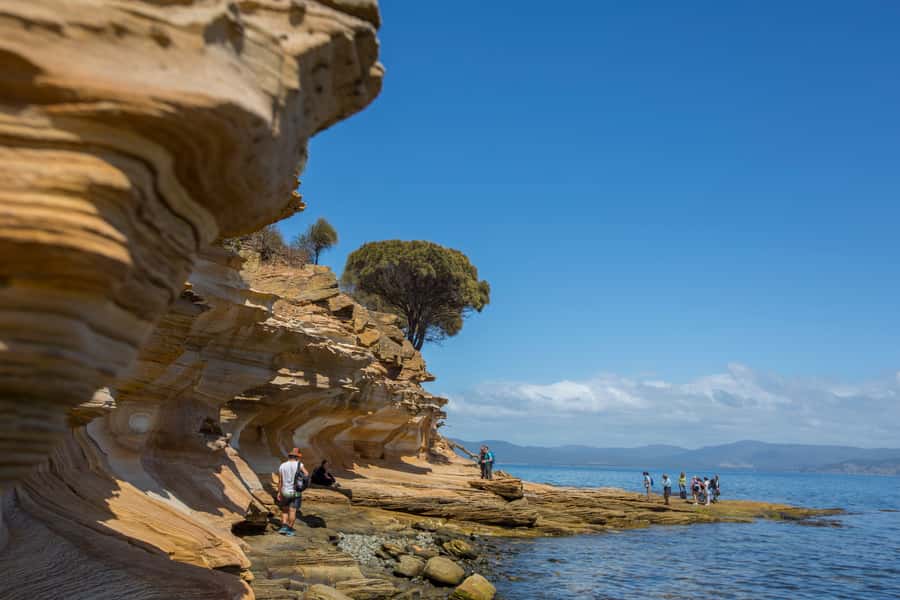
- Painted Cliffs are the visual highlight
- Fossil Cliffs show a much older Maria Island
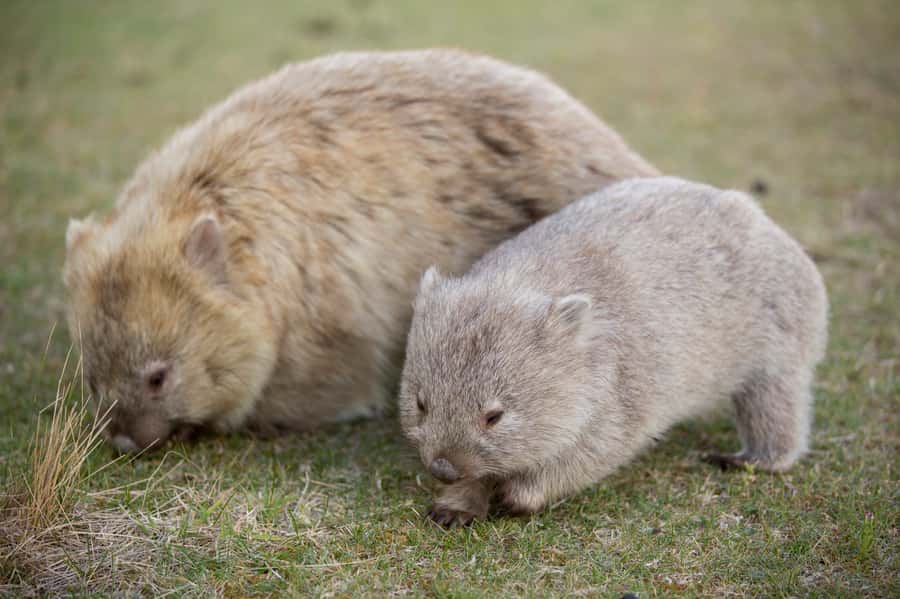
- Wildlife is the biggest reason to go
- How hard is the 10-kilometre walking program?
- Food, water, and what you should pack
- Does $152 represent good value?
- Which guide style suits this experience?
- The main drawbacks to consider
- Should you book the Maria Island day tour?
- FAQ
- How long is the Maria Island tour from Hobart?
- Where does the tour meet in Hobart?
- What time does the tour depart in summer?
- What time does the tour depart in winter?
- How long is the ferry ride to Maria Island?
- How much walking is involved?
- Are meals and drinks included?
- What wildlife might I see?
- Is the tour suitable for children?
- Is the tour suitable for wheelchair users?
- What does the $152 price include?
- Can I bring luggage?
- Can I cancel for a full refund?
Key points to know before you book
- Wombat country: You have a strong chance to see wombats, wallabies, kangaroos, pademelons, Cape Barren geese, and other wildlife, though sightings are never guaranteed.
- Two 4.5-kilometre walks: The Painted Cliffs and Fossil Cliffs routes are mostly easy, but include small hills, uneven ground, beaches, and exposed sections.
- A rare convict site: Darlington is a remarkably preserved former convict settlement and part of a UNESCO World Heritage site.
- No lunch included: Bring all food, snacks, and drinks. One past participant specifically wished for lunch or supplied water.
- Small groups help: A compact group makes wildlife stops easier and gives the guide room to adjust the pace.
- Strict departure times: The ferry connection means the bus cannot wait for late arrivals.
Why Maria Island feels different from Hobart
Maria Island is only about an hour from Hobart by road, followed by a 30-minute ferry ride, but it feels much farther away. There are no vehicles on the island, and that changes the mood immediately. You hear less traffic, walk at a human pace, and share the tracks with animals rather than cars.
That quiet is a major part of the appeal. The island is not simply a collection of scenic stops. It gives you time to notice small things: a wombat grazing near the path, a bird moving through the treetops, fossils exposed in the rock, or old buildings still holding their shape after decades of use.
The ferry crossing is short and straightforward. The bus journey also adds a pleasant rural opening to the day, with views of Tasmanian pasture, sheep, lambs, greenery, and waterways. It is useful to think of the transport as part of the outing rather than dead time.
The overall rating is 4.8 from 166 reviews, and the praise is notably consistent around the guides, wildlife encounters, and sense of place. That does not remove the practical limits, especially the long day and the amount of walking, but it does suggest the experience delivers what it promises.
More Day Trips in Australia:
- From Sydney: Blue Mountains Full-Day Trip
★ 4.5 · 4,471 reviews - K’gari (Fraser Island) All Inclusive Day Tour
★ 5.0 · 3,477 reviews - Blue Mountains Day Trip from Sydney Including Scenic World
★ 4.5 · 2,420 reviews
The early Hobart start is part of the deal
Your meeting point is the Tasmanian Travel and Information Centre at 20 Davey Street in Hobart. You should arrive at least five minutes early, because the bus leaves promptly and cannot wait for late passengers.
From October through April, the meeting time is 6:40am and departure is at 6:45am. This early start helps the group make full use of the long summer daylight and complete the planned walking program.
From May through September, you meet at 7:55am and leave at 8:00am. The winter version is more flexible, with the guide adjusting the day to the shorter daylight hours, weather, and group pace. In both seasons, you return to the same Hobart location at about 5:00pm.
There is no parking at the meeting point, so plan to arrive by another method. You also cannot bring luggage or large bags. A small daypack is the right choice for water, food, warm layers, sunscreen, and personal items.
The bus and ferry connection
The road transfer takes about an hour. It is a useful chance to settle in before the walking starts, and the countryside outside Hobart gives you a pleasant introduction to eastern Tasmania.
The ferry takes about 30 minutes. Once you reach Maria Island, the day becomes primarily pedestrian. There are no vehicles to shuttle you between sights, so the walking distance is real and should be treated as a central part of the experience, not a minor add-on.
This is also where the small-group design earns its keep. A guide can explain the day, point out wildlife, and make sensible adjustments without the feel of a large coach excursion. Small groups of six have felt especially personal, according to one recent booking, almost like a private outing.
Darlington brings the past into focus
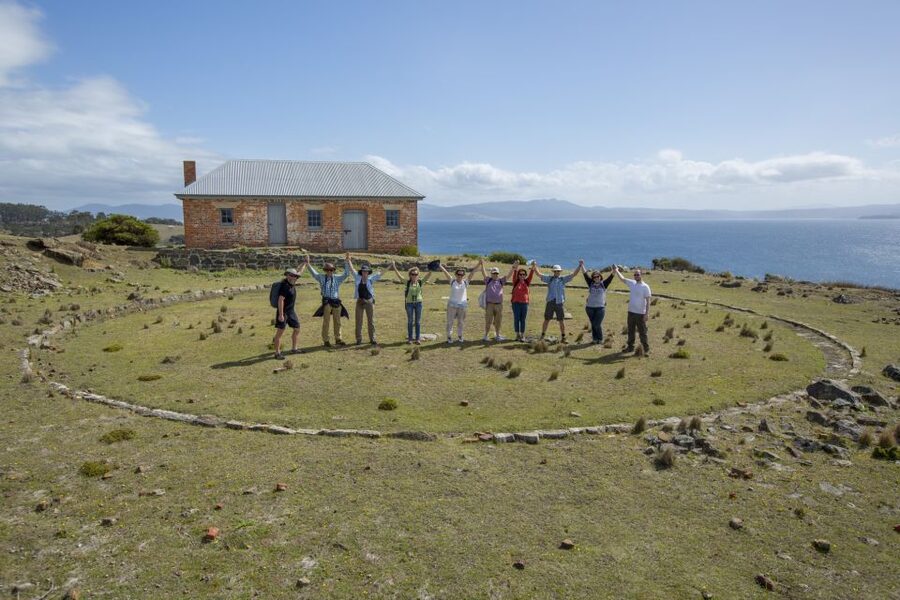
Darlington is the first major cultural stop. It is a preserved probation station from Tasmania’s convict era and part of the UNESCO World Heritage Australian Convict Sites.
The value here comes from the setting. You are not looking at a distant historical marker or a museum display disconnected from its surroundings. The buildings sit within the island community that once supported the settlement, making the past easier to picture.
Your guide provides interpretation during the walk, adding context about the buildings and the people connected with them. Guides including Trevor, Lucas, Nick, and Ben have been singled out for telling stories clearly and answering questions across both Maria Island and Tasmania.
If you are mainly coming for wildlife, Darlington gives the day welcome balance. If you are mainly interested in history, the island’s walking routes and natural setting prevent the experience from becoming a conventional heritage tour.
More national park trips in Australia:
- Litchfield National Park and Jumping Crocodile Cruise
★ 5.0 · 2,119 reviews - Grampians National Park Small-Group Eco Tour from Melbourne
★ 5.0 · 761 reviews - From Port Arthur: Tasman Island Wilderness Cruise
★ 4.9 · 704 reviews - Sydney: Blue Mountains National Park Tour with River Cruise
★ 4.6 · 701 reviews
Painted Cliffs are the visual highlight
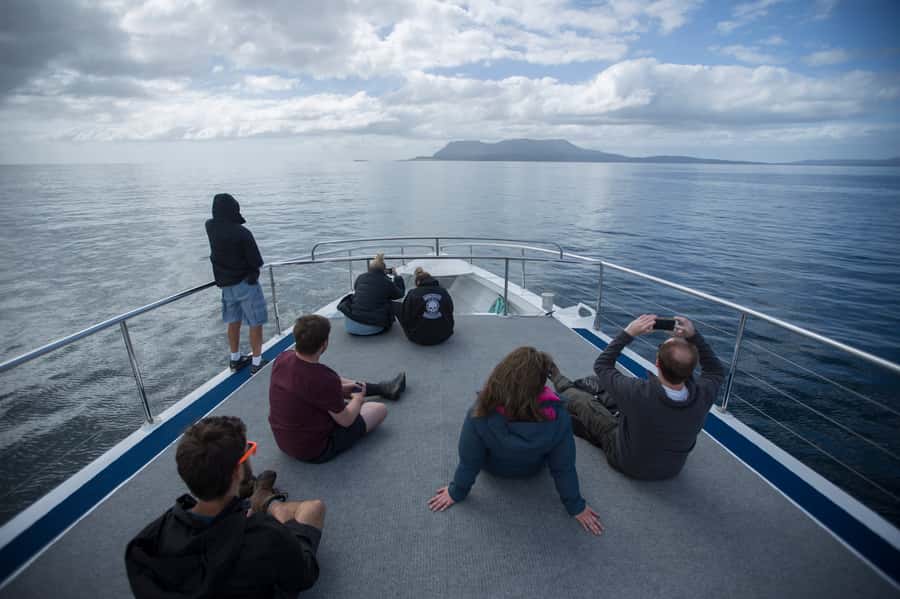
The walk to the Painted Cliffs covers about 4.5 kilometres round trip. It is described as easy overall, though you should still expect unsealed tracks, some small inclines, and outdoor conditions that can change with the weather.
The cliffs are famous for their bands of colour and unusual sandstone shapes. The patterns are best appreciated close up, where you can see how wind, water, and time have shaped the rock. The setting also gives you good opportunities for photographs, especially when the sea is clear and bright.
A key practical point is timing. The Painted Cliffs are affected by the tide, so access may depend on conditions. The supplied information does not promise a particular tide schedule, which means your guide will manage the timing as part of the day’s plan.
This walk is also a good place to slow down. You may find rockpools, beach space, and coastal views along the way. Bring a hat and sunscreen, and keep your phone or camera ready, since wildlife and scenery can appear between the main stops.
Fossil Cliffs show a much older Maria Island
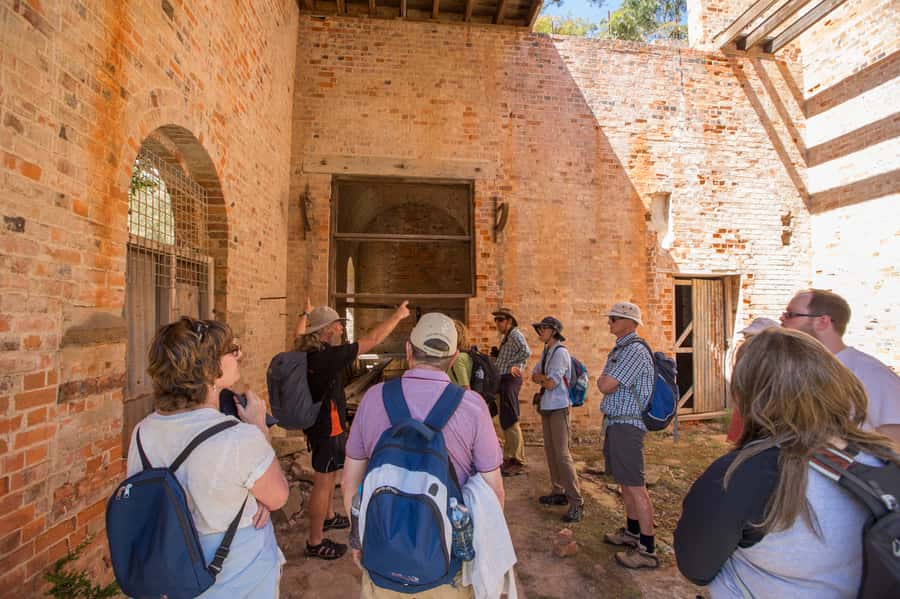
The Fossil Cliffs walk adds another 4.5 kilometres, taking you across the western side of the island. Here the interest is geological rather than painted or built. The exposed fossils are around 300 million years old, giving you a direct look at a much earlier chapter of the island’s story.
The route crosses windswept hills and cliff edges. Several people found the two walks mostly easy, with only small hills, but the full day still totals about 10 kilometres. The combination of distance, uneven ground, wind, and changing weather can make the outing tiring even if no single section is technically difficult.
I like this pairing because the walks feel different. Painted Cliffs offers colour and sculpted sandstone. Fossil Cliffs gives you exposed evidence of ancient life. Together, they make geology something you can see under your feet rather than a lecture you need to remember later.
The Fossil Cliffs section may feel less dramatic to some people than the Painted Cliffs. One person felt the second part of the tour was less spectacular and would have preferred more free time on the beaches. That is a fair point if your priority is swimming, relaxing, or sitting beside the water. The tour is designed to cover the island’s major sights, not to provide a long beach break.
Wildlife is the biggest reason to go
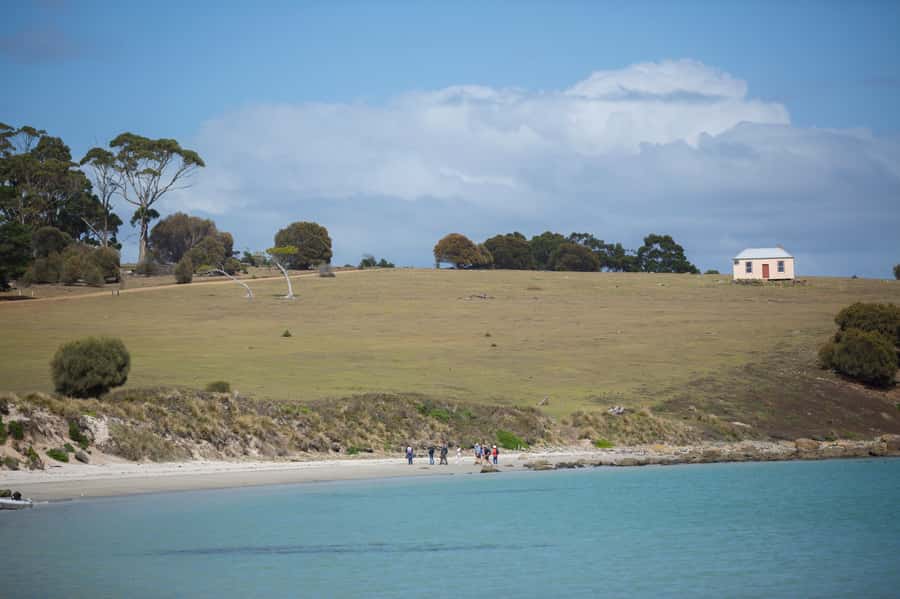
Maria Island’s wildlife is the day’s great reward. Wombats are the stars, and several guides have helped groups find them at close range. Recent outings have included sightings of two, three, or even four wombats, along with kangaroos, wallabies, pademelons, bandicoots, and Cape Barren geese.
Tasmanian Devils are also listed among the island’s wildlife, but you should not treat any particular animal sighting as guaranteed. Even wombats may not appear on your day. One outing saw wallabies and kangaroos but no wombats, while another group had several excellent encounters despite wind.
The guide makes a real difference here. Ben has been praised for continuing to look for wombats in difficult weather, and several guides have been noted for spotting animals that you might otherwise walk past. Good wildlife viewing depends on patience, quiet, and respectful distance, not simply luck.
You should also look beyond the obvious animals. The day’s instructions encourage you to watch rockpools, treetops, and bush tracks. The island rewards attention, so avoid treating the walks as a race from one headline stop to the next.
How hard is the 10-kilometre walking program?
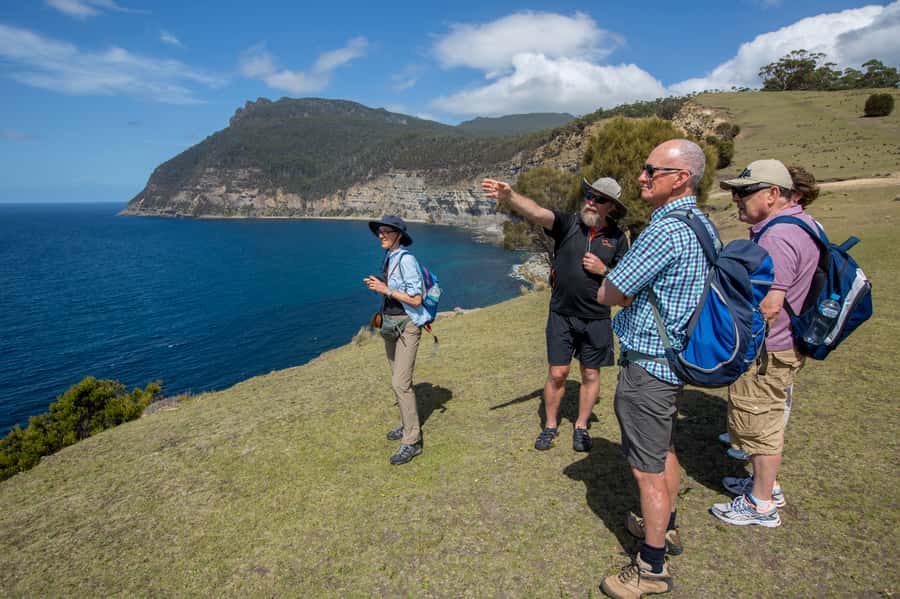
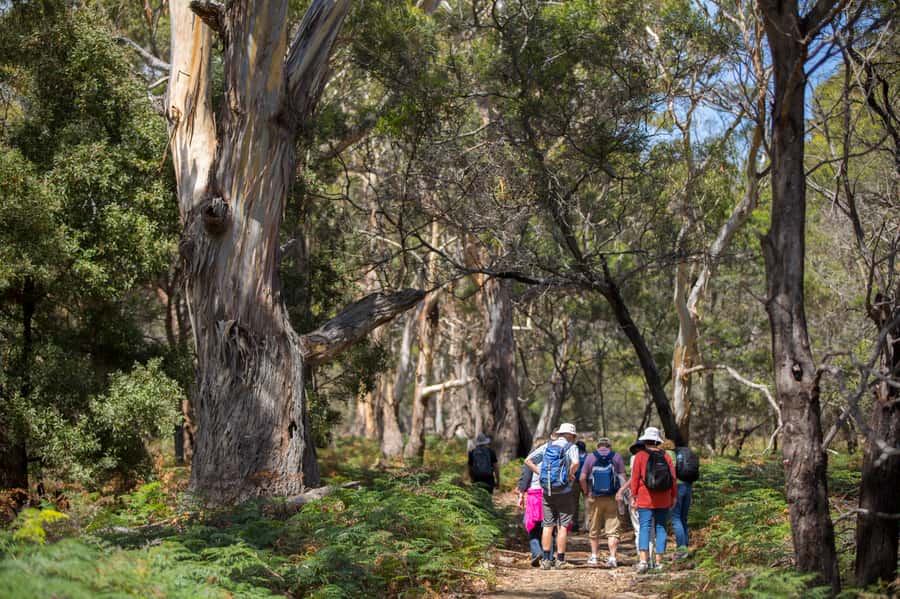
The tour requires good mobility and a moderate level of fitness. You will walk roughly 10 kilometres across varied, unpaved terrain, with hills, beaches, cliffs, and outdoor paths included in the day.
Several people said the walking felt achievable and not overly difficult. One group completed more than 10 kilometres without finding it exhausting, while another person in their late sixties felt the day left too little time for a proper lunch and rest. Both points are useful: the routes are manageable for many active adults, but the length still matters.
Wear closed-toe shoes with good comfort. Bring a daypack rather than a large bag, and pack layers because Tasmanian weather can shift quickly. A jacket, hat, sunscreen, water, comfortable clothes, and weather-ready outdoor clothing are all sensible.
The tour is not suitable for children under eight, wheelchair users, or people with mobility impairments. Families with older children should consider stamina, not just the minimum age. The ferry and bus are easy parts of the day; the island walking is where the physical demand comes in.
Food, water, and what you should pack
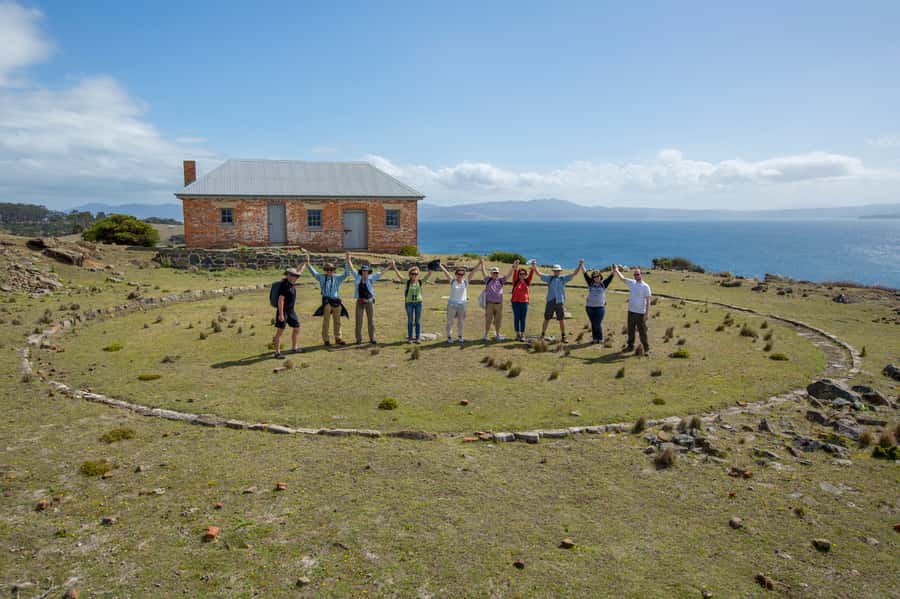
Meals and drinks are not included. You need to bring your own lunch, snacks, and enough water for a full day outdoors.
This is one of the clearest weaknesses in the package. One person specifically suggested that the operator provide a light lunch or at least water, noting that carrying a large supply is inconvenient. You should take that comment seriously and pack thoughtfully, using a refillable bottle and a compact lunch.
Your daypack should contain:
- Water and a reusable bottle
- Lunch and snacks
- Sunscreen and a hat
- A warm jacket or extra layers
- Comfortable outdoor clothing
- Closed-toe walking shoes
- Weather protection suited to the forecast
Do not bring luggage or a large bag. The tour is built around walking, ferry travel, and a small vehicle, so bulky belongings will only get in the way.
Does $152 represent good value?
At $152 per person, the price is reasonable for a full-day guided trip from Hobart. The fee covers return bus transport, both ferry tickets, the national park fee, a small-group experience, a live English-speaking guide, guided walks, and interpretation.
The ferry and park costs alone would make a self-organized visit more expensive than the headline price suggests, especially once you add transport from Hobart. You also avoid the work of coordinating the early departure, ferry connection, walking sequence, and return timing.
The value is strongest if you want to see several sides of Maria Island in one day. You get wildlife, Darlington, Painted Cliffs, Fossil Cliffs, and scenic walking without needing to arrange each element yourself.
The value is weaker if you want free time above all else. The day has a planned walking program, and the ferry schedule limits flexibility. You also pay for a guide-led experience, so independent hikers who already know Maria Island may prefer to make their own arrangements.
Which guide style suits this experience?
The best guides on this tour do more than point out animals. They explain plants, wildlife, geology, convict history, and Tasmania in a way that fits the surroundings.
Heather has been praised as both a careful driver and an engaging guide, with a talent for finding animals. Trevor has been described as a strong storyteller who looks after the group. Lucas is noted for a calm manner, clear explanations, and respect for the environment.
Nick has been praised for sharing interesting stories while managing the time well. Ben has received particular credit for his plant and animal knowledge and for encouraging responsible behaviour around wildlife. Hannah has also been described as friendly and helpful.
The guide-led approach is a real benefit if you want to understand what you are seeing. It also helps when the weather or group pace requires a change. The tradeoff is that you follow the day’s shared rhythm rather than setting every stop yourself.
The main drawbacks to consider
This is a strong outing, but it is not effortless.
The early summer departure can be hard if you are not staying near central Hobart. The bus cannot wait, and the ferry timetable leaves little room for lateness.
The walking program may feel long, especially if wind, rain, or warm sun arrives. You need to carry your own lunch and drinks, and there is no promise of an extended beach stop.
Wildlife is likely to be a highlight, but animals remain wild. You may see several wombats, or none. The guides improve your chances, but they cannot schedule nature.
Finally, the second cliff walk may feel less immediately exciting than the first. If your ideal day is mostly sitting on a beach, this tour may pack in too much walking and too little downtime.
Should you book the Maria Island day tour?
I would book this tour if you want a full day outdoors and like the idea of combining wildlife, geology, coastal views, and convict history. It is particularly well suited to active adults, nature photographers, families with children aged eight and older who can manage the distance, and visitors with limited time in Tasmania.
I would choose another plan if you have restricted mobility, dislike unpaved paths, need a long lunch break, or want a slow beach day. Also skip it if you cannot manage the early summer meeting time or carry your own food and water.
For the best chance of enjoying it, arrive early, wear proper shoes, pack layers, and accept that Maria Island sets the pace. The reward is a rare day where wombats wander near historic buildings, fossils sit in exposed cliffs, and the absence of cars lets the island feel wonderfully unhurried.
FAQ
How long is the Maria Island tour from Hobart?
The tour lasts about 10 hours and returns to the Tasmanian Travel and Information Centre at around 5:00pm.
Where does the tour meet in Hobart?
The meeting point is the Tasmanian Travel and Information Centre at 20 Davey Street, Hobart.
What time does the tour depart in summer?
From October 1 through April 30, you meet at 6:40am and depart promptly at 6:45am.
What time does the tour depart in winter?
From May 1 through September 30, you meet at 7:55am and depart promptly at 8:00am.
How long is the ferry ride to Maria Island?
The ferry ride takes about 30 minutes each way.
How much walking is involved?
You should prepare for approximately 10 kilometres of walking over varied, unpaved terrain.
Are meals and drinks included?
No. You need to bring your own food and drinks, including lunch and water.
What wildlife might I see?
Possible sightings include wombats, wallabies, kangaroos, pademelons, bandicoots, Cape Barren geese, Tasmanian Devils, and other birds and animals. Sightings are not guaranteed.
Is the tour suitable for children?
The minimum age is eight years. Children should also be comfortable with a full day outdoors and about 10 kilometres of walking.
Is the tour suitable for wheelchair users?
No. The tour is not suitable for wheelchair users or people with mobility impairments.
What does the $152 price include?
The price includes the national park fee, return ferry tickets, transport, a small-group experience, an English-speaking guide, guided walks, and interpretation.
Can I bring luggage?
No. Large bags and luggage are not allowed. A small daypack is recommended.
Can I cancel for a full refund?
Yes. You can cancel up to two days in advance for a full refund.
Just added in Australia
- 1hour Scenic Flight Heart Reef, Whitehaven Beach, Hill Inlet, GBR★ 5.0 · 134 reviews
- Fly Raft Package: Whitehaven Beach, Snorkel and Scenic Flight★ 5.0 · 316 reviews
- Airlie Coastal Beach Adventures – Dingo Beach & Cape Gloucester★ 5.0 · 27 reviews
- Airlie Beach Glass Bottom Boat Tour★ 4.5 · 329 reviews
- All-Inclusive Waterfall Explorer Day Trip from Airlie Beach★ 4.5 · 253 reviews
- Bowen Beaches Discovery-Top of the Whitsundays★ 5.0 · 40 reviews
- Airlie Waterfalls & Rainforest Bushwalk Eco Adventure★ 5.0 · 23 reviews
- British Defender 3D2N Whitsunday Snorkelling Sailing Adventure★ 5.0 · 30 reviews
National Parks, compared.
Litchfield National Park and Jumping Crocodile Cruise
Read our review →
Grampians National Park Small-Group Eco Tour from Melbourne
Read our review →
Blue Mountains National Park Tour with River Cruise
Read our review →
From Hobart/Adventure Bay: Bruny Island Wilderness Cruise
Read our review →
Port Arthur Full-day Guided Tour with Harbour Cruise and Tasman National Park
Read our review →
Grampians National Park Small-Group Eco Day Tour
Read our review →
Bruny Island Wilderness Coast Eco Cruise with Lunch
Read our review →Browse the lists this tour appears in