
Reviewed · HISTORICAL TOURS
Hobart Historic Walking Tour
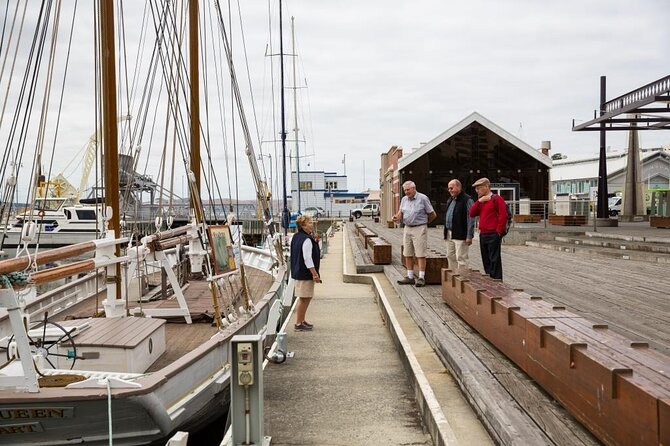
History is best read on foot. This 90-minute walk gives you a compact introduction to Hobart’s colonial buildings, convict past, early government, and the people who shaped the city. It begins at the Tasmanian Travel & Information Centre on Davey Street and finishes at Salamanca Place, making it a useful first outing in Hobart.
I like the small maximum group of 12, which should make it easier to hear the guide and ask questions. I also like the focus on real buildings, old maps, monuments, and local stories rather than a quick list of dates. The main drawback is that the route covers less ground than some people expect, and one piece of feedback noted that commentary can be hard to hear if the guide is facing a building instead of the group.
In This Review
- Key points at a glance
- What this Hobart walk actually offers
- Beginning at Davey Street
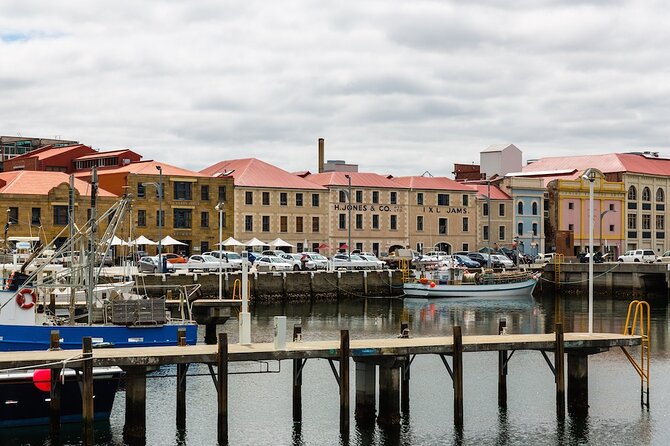
- Reading Hobart through its sandstone buildings
- St David’s Park and the city’s memorials
- Colonial government, convicts, and early characters
- Finishing at Salamanca Place
- Is $27.26 good value?
- Who should book this tour?
- Timing, weather, and cancellation rules
- My verdict: a useful first walk in Hobart
- FAQ
- How long is the Hobart Historic Walking Tour?
- What time does the tour start?
- Where does the tour begin?
- Where does the tour finish?
- How much does the tour cost?
- What is included in the tour?
- Are food and drinks included?
- Is hotel pickup and drop-off provided?
- How many people can join the tour?
- Can I cancel for a full refund?
Key points at a glance
- A compact 90-minute introduction: You get a quick grounding in Hobart’s early settlement, colonial government, buildings, and key characters.
- Small groups up to 12 people: The size suits anyone who wants a more personal walk and a chance to ask questions.
- Starts near Davey Street and ends at Salamanca Place: The route helps you get your bearings in central Hobart.
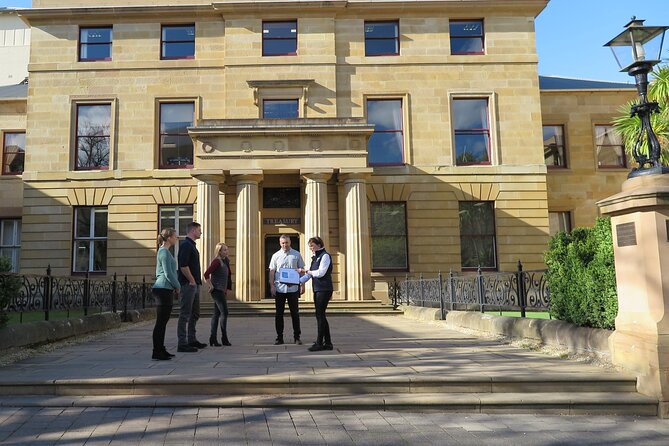
- Sandstone buildings take center stage: You will hear how heritage buildings were used and why they matter.
- St David’s Park adds a thoughtful stop: The monuments and memorial wall include old headstones reused in the park.
- A useful history lesson with a gap: The tour covers colonial and convict stories, but it does not appear to discuss Hobart’s original Aboriginal inhabitants.
What this Hobart walk actually offers
This is not a long city hike or a tour built around a large number of attractions. It is a short, guided introduction to central Hobart, designed to help you understand what you are seeing after the walk ends.
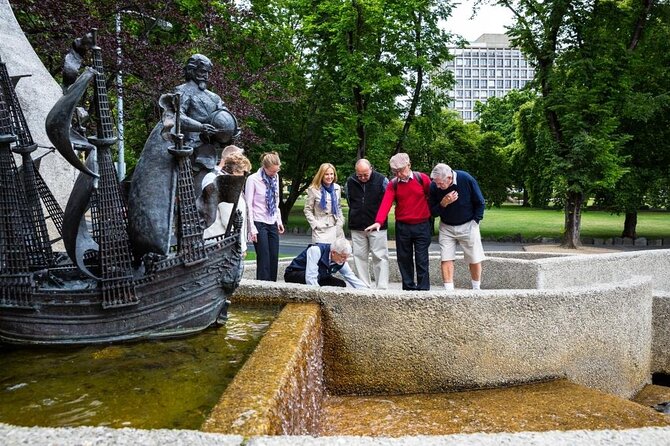
The route focuses on the early settlement, heritage-listed buildings, colonial government, convict history, and the people involved in Hobart’s first years. You will stop at buildings and public spaces while the guide explains how they were used and why they mattered.
That approach works well in Hobart. The city center has many old sandstone buildings, but their age alone does not tell you much. A good guide adds the missing layer: who occupied the building, what role it played, and how early Hobart was governed.
The tour also gives you a practical orientation. Starting at the Tasmanian Travel & Information Centre and ending at Salamanca Place means you finish near one of Hobart’s best-known central areas. I would schedule it early in your stay, then use what you learn to explore the city on your own.
More Walking Tours in Tasmania
- Maria Island Cruise and Guided Walk Day Tour with Lunch and Drinks
★ 5.0 · 617 reviews - Hobart History, People & Places – 2 hour city walk
★ 5.0 · 224 reviews - Old Hobart Pub Walking Tour
★ 4.5 · 91 reviews
Beginning at Davey Street
The meeting point is the Tasmanian Travel & Information Centre at 20 Davey Street. The advertised start time is 2:00 pm, so you should arrive with enough time to find the center and meet the guide without rushing.
The opening section provides context for the rest of the walk. You should expect an introduction to Hobart’s past and an explanation of how the historic center fits into the city today.
This is a good moment to listen for the main themes of the tour. Hobart’s story here is built around colonial settlement, government, convicts, public buildings, and the early characters connected with them. The tour is most useful when you treat the buildings as evidence of those larger stories, not just as attractive old facades.
The small-group format matters from the first stop. With no more than 12 people, the guide can usually keep the group together without turning every explanation into a speech for a crowd. Several guides, including Sara, Christine, Brendan, Maggie, Di, Diane, Dave, and Bill, have been praised for clear explanations, humor, patience, and the ability to answer questions.
Guide quality will always vary from one departure to another, but the repeated strength here is the human delivery. Diane has been described as passionate and entertaining, while Bill was praised for keeping an easy pace and answering questions. Sara’s humor and historical detail also received warm approval.
Reading Hobart through its sandstone buildings
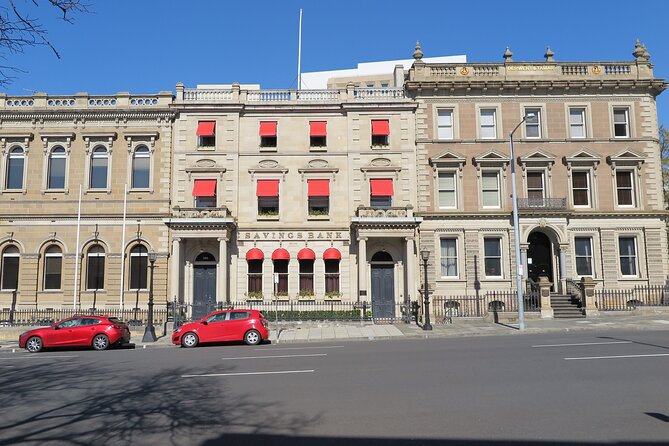
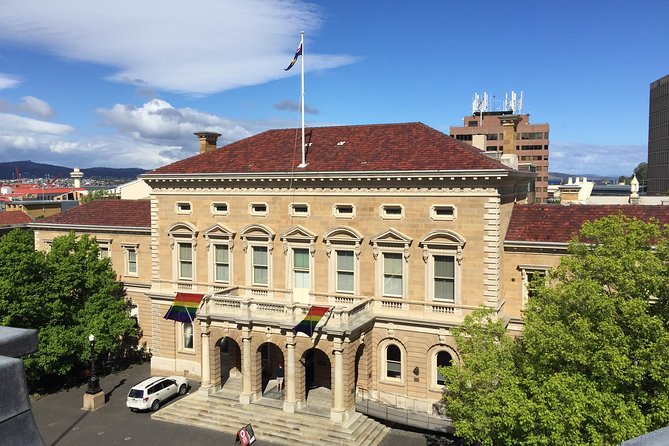
The architecture is one of the strongest reasons to book this walk. You will see heritage-listed buildings and hear about their former uses, rather than simply passing them while taking photographs.
Several accounts describe the sandstone architecture as a highlight. That makes sense for first-time visitors because the old buildings are easier to appreciate when you know what you are looking at. The tour can point out details you might otherwise walk past, then connect them to Hobart’s early civic and social life.
You may also enter two older buildings during the route. The available information does not identify them by name, so I would not book this expecting a fixed interior sightseeing program. Still, the chance to step inside gives the walk some variety and helps you compare the public face of Hobart with its older interiors.
One practical concern is sound. At least one person found it difficult to catch all the commentary when the guide spoke toward a building rather than facing the group. Stay close enough to the guide to hear clearly, and do not hesitate to ask for a repeat if street noise or group position gets in the way.
The walk is also described as being at a sensible pace. That is useful if you prefer time to look up at facades, take photographs, or pause before moving on. It may feel slow if you want to cover a wide area, but the point is understanding the places you visit, not collecting as many stops as possible.
St David’s Park and the city’s memorials
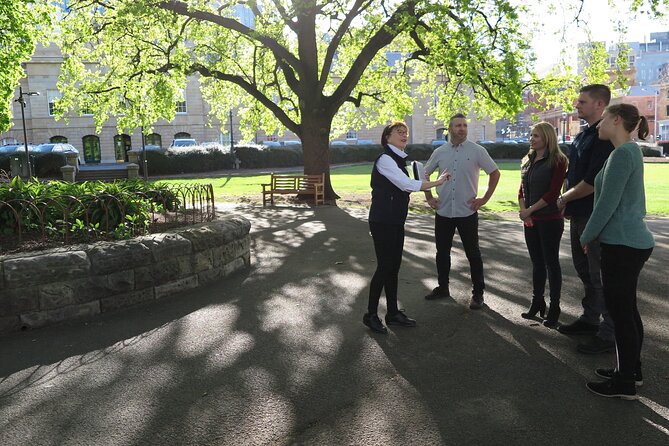
St David’s Park provides one of the more distinctive moments on the route. Here, you learn about the monuments and a memorial wall made using old headstones.
That detail gives the park a different feel from a standard green space. The stones connect the present-day city with earlier residents and burial practices, while the monuments show how Hobart chose to remember people and events.
For me, this is the sort of stop that makes a walking tour worthwhile. You can visit a park independently, but you may not notice the significance of the memorial wall or understand why the stones were used there. The guide turns a quiet public space into part of Hobart’s story.
It is also a good photography stop, although the value is not only visual. The park helps show how the city’s older layers have been moved, preserved, and presented in a modern setting.
More Walking Tours in Hobart:
- Grand Hobart Walking Tour
★ 5.0 · 28 reviews - Sydney Opera House Official Guided Walking Tour
★ 4.5 · 3,770 reviews - Sydney The Rocks Guided Walking Tour
★ 5.0 · 1,546 reviews - Ultimate Melbourne Walking Tour: History, Laneways & Culture
★ 5.0 · 1,451 reviews
Colonial government, convicts, and early characters
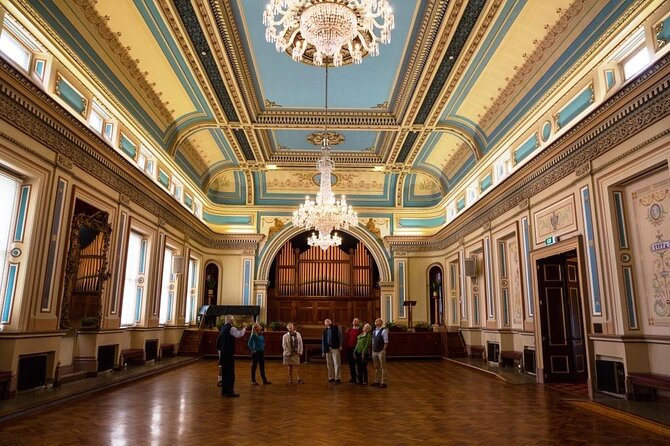
The main subject is Hobart’s colonial past. The guide explains early government and the issues that influenced the city’s development, along with stories of convicts and other important early characters.
The strongest comments about the walk focus on how much information fits into a small area. You will not need to cross the whole city to encounter major themes. Buildings, public spaces, and monuments become prompts for stories about power, settlement, work, punishment, and civic life.
This is particularly useful if you enjoy history but do not want a lecture. The guides use stories, maps, pictures, and building details to make the past easier to follow. Di, for example, has used maps and images during the walk, while other guides have been praised for making early Hobart feel more immediate and understandable.
The convict material is an important part of the tour, but you should expect it to sit within a wider colonial story. The emphasis is on Hobart’s early development and the people and institutions connected with it, not on a single prison site or one famous convict tale.
There is also an important limitation. One participant specifically pointed out that the tour did not acknowledge the original inhabitants of Hobart. That is a serious historical omission, not a minor detail. If you want a fuller account of Tasmania’s past, you should pair this walk with another experience that addresses Aboriginal history and the impact of settlement.
Finishing at Salamanca Place
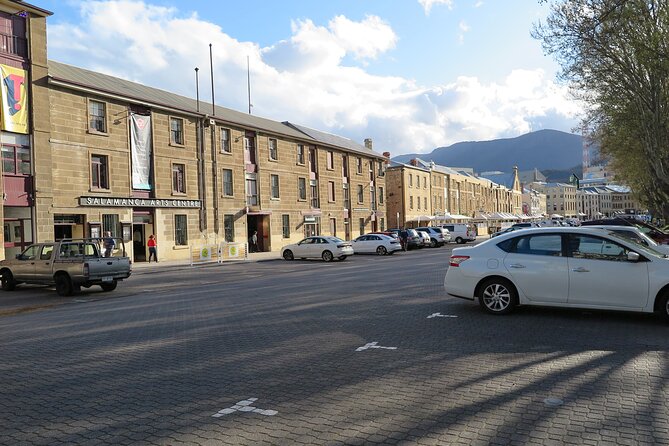
The walk ends at Salamanca Place. This is a practical finish because you can continue exploring the area after the guide leaves, or simply stop for a break.
The end point also helps you connect the historic center with one of Hobart’s best-known gathering places. You will have a clearer sense of where the older buildings sit in relation to the rest of central Hobart.
The tour does not include food or drinks, and there is no hotel pickup or drop-off. That is not a problem for most people because the experience is built as a central walking tour, but you should plan your own transport to Davey Street and your own stop afterward.
If you are arriving by public transport, the meeting point is near public transportation. The mobile ticket also makes entry simple, as confirmation is provided at booking and your ticket is available on your phone.
Is $27.26 good value?
At $27.26 per person, this is reasonably priced for a 90-minute guided city walk, especially if you are new to Hobart. You are paying for local interpretation, not admission to a major attraction, transport, food, or a full-day excursion.
The value comes from what you notice afterward. If the guide helps you understand several buildings, recognize the importance of St David’s Park, and place Hobart’s early government and convict stories in context, the walk can improve the rest of your time in the city.
It is less suitable if you measure value by distance covered or the number of interiors visited. One person expected a longer route, and that is worth taking seriously. This is a focused central walk, not a broad tour of every historic corner of Hobart.
The strongest case for the price is that it gives first-time visitors a foundation in a short period. The 2:00 pm start also leaves your morning free, while the Salamanca Place finish gives you somewhere useful to continue your afternoon.
Who should book this tour?
I would recommend it most strongly to first-time visitors, history buffs, architecture fans, and anyone who likes to understand a city before exploring it independently.
It also suits people who prefer an easy pace. The route is only about 90 minutes, and most people can participate. Children must be accompanied by an adult, and service animals are allowed.
The tour may not suit you if you want a long walk, a detailed treatment of Aboriginal history, or a tour built mainly around interiors. It is also less appealing if you already know central Hobart well and are looking for a wider trip through the region.
For visitors with hearing concerns, position yourself near the guide and ask the guide to face the group when speaking. One person noted that this affected how much they could hear, while another praised the guide for accommodating a partially sighted member of the group. Those details suggest that communication needs can be handled well, but it is sensible to speak up early.
Timing, weather, and cancellation rules
The experience requires good weather. If poor weather forces a cancellation, you will be offered another date or a full refund.
You can cancel for a full refund if you do so at least 24 hours before the 2:00 pm start time. Cancellations or changes made less than 24 hours before the start are not refunded or accepted.
The tour also requires a minimum number of participants. If that minimum is not reached, you will be offered another date or experience, or a full refund.
These rules make it worth checking the forecast and your schedule before booking. The small-group limit is 12, but the tour may not operate without enough people.
My verdict: a useful first walk in Hobart
Book this tour if you want a short, well-paced introduction to Hobart’s colonial buildings, early government, convict past, and notable characters. The small group, central route, friendly guides, and detailed building stories give it real value at $27.26.
I would book it near the beginning of a Hobart stay, then return to Salamanca Place or revisit the buildings that caught your attention. Just keep your expectations in line: the route is compact, and the tour does not provide a complete account of Tasmania’s past.
For a first look at central Hobart, this is a sensible choice. For a fuller historical picture, pair it with a separate experience focused on the island’s original inhabitants and Aboriginal history.
FAQ
How long is the Hobart Historic Walking Tour?
The tour lasts approximately 90 minutes.
What time does the tour start?
The tour starts at 2:00 pm.
Where does the tour begin?
It begins at the Tasmanian Travel & Information Centre, 20 Davey Street, Hobart, Tasmania 7000.
Where does the tour finish?
The walk ends at Salamanca Place, Hobart.
How much does the tour cost?
The listed price is $27.26 per person.
What is included in the tour?
A local guide and a small-group tour are included.
Are food and drinks included?
No. Food and drinks are not included.
Is hotel pickup and drop-off provided?
No. Hotel pickup and drop-off are not included.
How many people can join the tour?
The tour has a maximum of 12 participants.
Can I cancel for a full refund?
Yes. You can receive a full refund if you cancel at least 24 hours before the experience start time. If poor weather or an insufficient number of participants causes the operator to cancel, you will be offered another date or experience, or a full refund.
More History Tours in Hobart
- Derwent River Historic Harbour Cruise From Hobart
★ 4.5 · 570 reviews - Tasman Island Cruises and Port Arthur Historic Site Day Tour from Hobart
★ 5.0 · 477 reviews - Tasman Peninsula Tour, Cruise & Port Arthur Historic Site
★ 4.9 · 339 reviews - Hobart: Historic Lunch Cruise
★ 4.6 · 271 reviews
Just added in Hobart
- Wineglass Bay and Maria Island Scenic Flight Experience★ 4.7 · 54 reviews
- Wineglass Bay & Freycinet National Park Day Trip from Hobart★ 4.7 · 249 reviews
- nipaluna (Hobart) Highlights Day Tour★ 5.0 · 33 reviews
- kunanyi/Mt Wellington Explorer Bus – One Way Tour★ 5.0 · 63 reviews
- kunanyi/Mt Wellington Tour & Hobart Hop-On Hop-Off Bus★ 5.0 · 275 reviews
- Full-Day Tour to Wineglass Bay from Hobart★ 5.0 · 122 reviews
- Hobart: Waterfalls, Wilderness & Wildlife – Active Day Tour★ 5.0 · 22 reviews
- Hobart: Wineglass Bay & Freycinet National Park – Active Day Tour★ 4.5 · 142 reviews
Historical Tours, compared.

Ultimate Melbourne Walking Tour: History, Laneways & Culture
Read our review →
Puffing Billy Railway: Heritage Steam Train Journey
Read our review →
Morning World Heritage Cruise on the Gordon River from Strahan
Read our review →
World Heritage Cruise on Gordon River with Lunch
Read our review →

Experience History onboard The Mary Valley Rattler
Read our review →
Snorkel & Dive the Reef: Sustainable, Scientific & Cultural Tour
Read our review →
Derwent River Historic Harbour Cruise From Hobart
Read our review →Browse the lists this tour appears in