
Reviewed · WILDLIFE TOURS
Cradle Mountain: After Dark Tasmanian Devil Feeding Tour
The night brings out their wild side. At Devils@Cradle, I like the close feeding views and the way guides connect every growl and snarl to real conservation work. I also like that the $26 price includes sanctuary entry, parking, and a full 90-minute tour. The catch is simple: Cradle Mountain gets cold and wet after sunset, and the outdoor format can feel tough in rain or wind.
This is not just a quick animal display. You first explore the sanctuary at your own pace, then join a keeper for feeding time with Tasmanian devils, spotted-tail quolls, and eastern quolls. Guides such as Prue, Renee, and Kay have been praised for making the talk lively as well as informative, but you should bring warm layers and allow for standing outside.
In This Review
- Key things to know before booking
- Why this after-dark tour works so well
- Start with your own walk around Devils@Cradle
- The viewing deck gives you the basic story
- Follow the keeper into the enclosures
- Expect close views, but not a hands-on encounter
- Environmentally sensitive lighting keeps the focus on behavior
- Cold, rain, and wind are the real drawbacks
- The guides make the $26 worthwhile
- Who should book this Cradle Mountain activity?
- Booking flexibility and timing
- Should you book the After Dark Tasmanian Devil Feeding Tour?
- FAQ
- How long does the After Dark Tasmanian Devil Feeding Tour last?
- How much does the tour cost?
- What animals can I see?
- Is the tour held outdoors?
- Should I bring warm clothing?
- Can I cancel or pay later?
Key things to know before booking
- Feeding time is the main event: Watch Tasmanian devils tear into food and become much more active after dark.
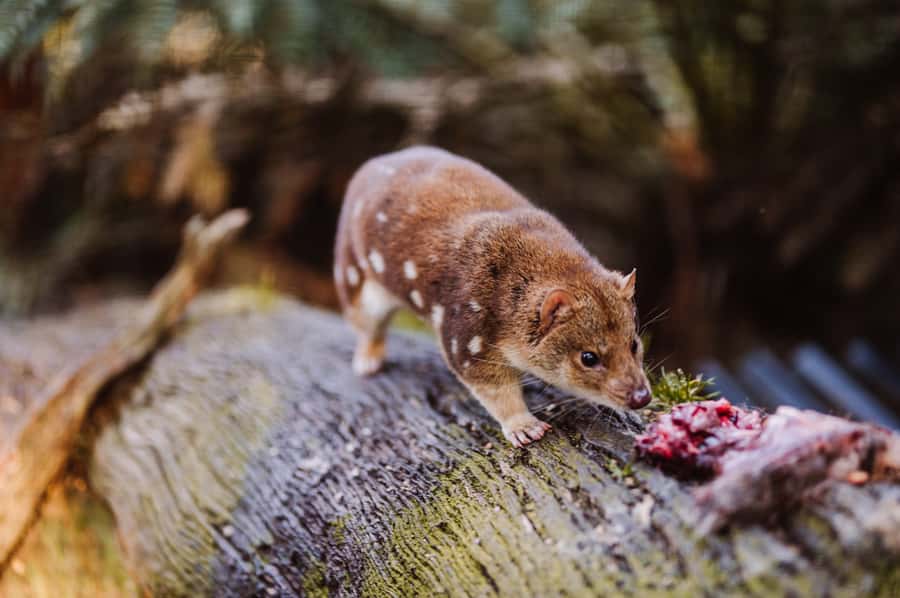
- Three threatened carnivorous marsupials appear: The tour includes Tasmanian devils, spotted-tail quolls, and eastern quolls.
- Your $26 ticket covers a lot: Sanctuary admission, the 90-minute guided feeding tour, and free onsite parking are included.
- The guides add real value: Keepers explain behavior, biology, threats, and the sanctuary’s breeding and conservation work.
- Arrive early for the self-guided visit: About 30 to 45 minutes before the tour gives you time to walk around first.
- Pack for mountain weather: Rain, wind, snow, and falling temperatures can affect comfort, even in warmer months.
Why this after-dark tour works so well
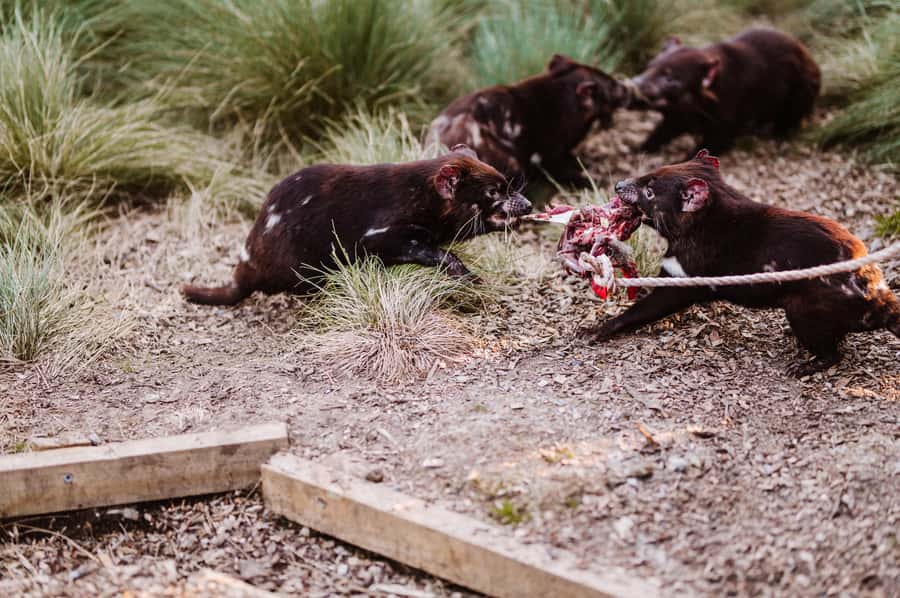
Tasmanian devils are nocturnal, so an evening visit gives you a better chance to see their natural energy than a quiet daytime stop. As feeding time approaches, the animals become active, noisy, and intensely focused on food. That ferocious behavior is exactly what makes the experience memorable.
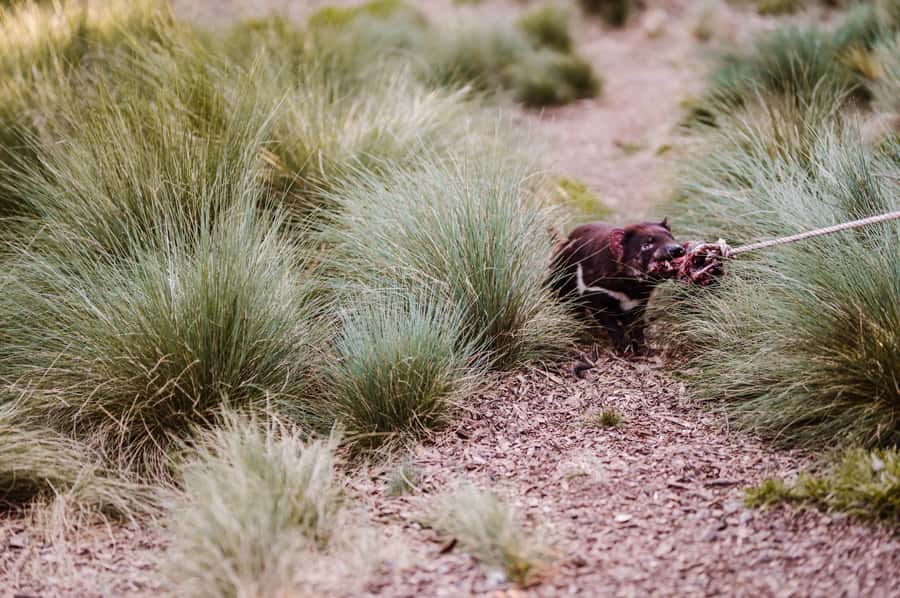
I like the contrast between the cute appearance of a devil and the force it shows at mealtime. Watching one work through a wallaby leg is not polished wildlife theatre. It is raw, practical feeding behavior, and the guide explains what you are seeing rather than leaving you with a quick photo opportunity.
The setting also matters. Devils@Cradle sits at the entrance to Cradle Mountain National Park, beside one of Tasmania’s best-known wilderness areas. The tour is a useful addition to a Cradle Mountain stay because it gives you a close look at animals that can be difficult to see in the wild.
For $26, I consider the value strong. You receive entry to the sanctuary, time to explore on your own, a live English-speaking guide, the feeding program, and parking. Food and drinks are not included, and there is no hotel pickup, but the price remains modest for a 90-minute evening activity.
More Wildlife Tours in Australia:
- All Inclusive Blue Mountain,Scenic World,Lunch,Koalas,ferry
★ 5.0 · 7,832 reviews - From Melbourne: Great Ocean Road, 12 Apostles, Wildlife Tour
★ 4.7 · 6,020 reviews - Penguin Parade, & Wildlife Encounters Eco Tour from Melbourne
★ 5.0 · 3,774 reviews
Start with your own walk around Devils@Cradle
You go to the entry gate at Devils@Cradle, where free onsite parking is available. The ticket includes sanctuary admission, so you do not need to treat the guided session as a separate paid add-on.
You can explore the sanctuary independently before the feeding tour starts. I would arrive 30 to 45 minutes early if your schedule allows. That gives you time to see the animals in a calmer setting, get familiar with the viewing areas, and avoid spending the entire evening focused on the clock.
One useful point from the practical feedback is that you do not need to arrive far too early. About 10 minutes may be enough if you only want to join the formal session, since the self-guided visit can also be enjoyed around the feeding program. Still, I prefer the earlier arrival because the sanctuary entry is already included.
The pre-tour visit helps you understand the difference between daytime and nighttime behavior. You may see devils resting or moving quietly at first, then watch their energy shift once food arrives. The sanctuary also houses wombats, spotted-tail quolls, and eastern quolls, so the visit is not limited to one species.
The viewing deck gives you the basic story
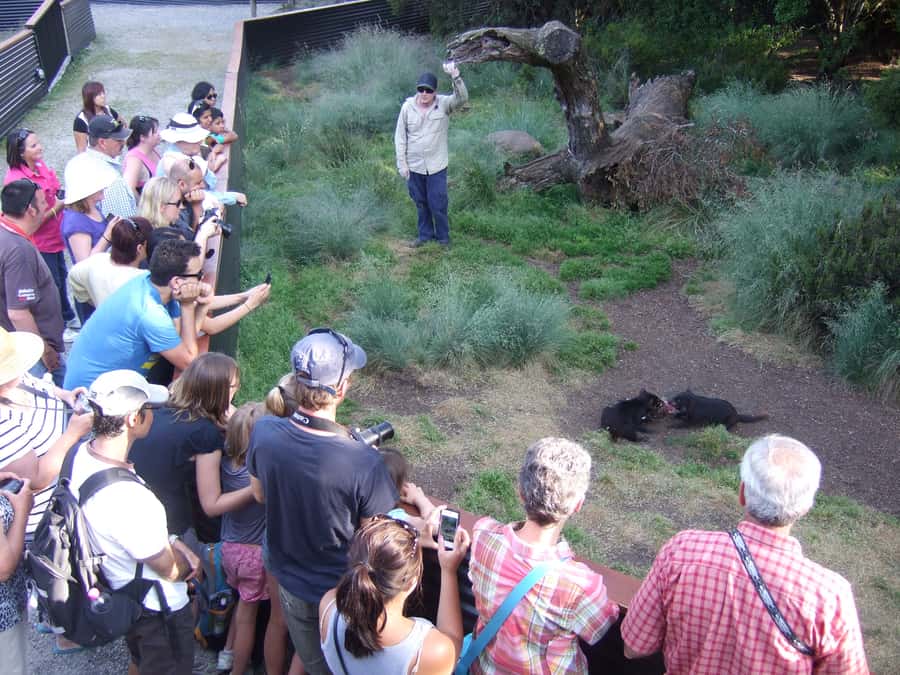
The formal tour begins on the main wildlife viewing deck with a short introduction to the three species managed at the sanctuary. This opening gives you the names and basic context before the group moves outside.
Tasmania’s three largest carnivorous marsupials are represented here, and each faces threats in the wild. The guide explains their biology, behavior, and the pressures affecting their future. The conservation message does not feel tacked on, because it is tied directly to the animals in front of you.
This is where the quality of the keeper matters. Guides have been praised for clear explanations, good humor, and a strong personal connection with the animals. Prue was singled out for her passion and command of the subject, while Renee was remembered for her warm interaction with the devils. Another guide, Kay, was praised for a polished presentation that combined strong content with an entertaining delivery.
You should stay close enough to hear the guide clearly. One useful tip is to avoid drifting to the back of the group if you are especially interested in the explanations. The animals attract attention, but the biology and conservation information are a big part of what you are paying for.
Follow the keeper into the enclosures
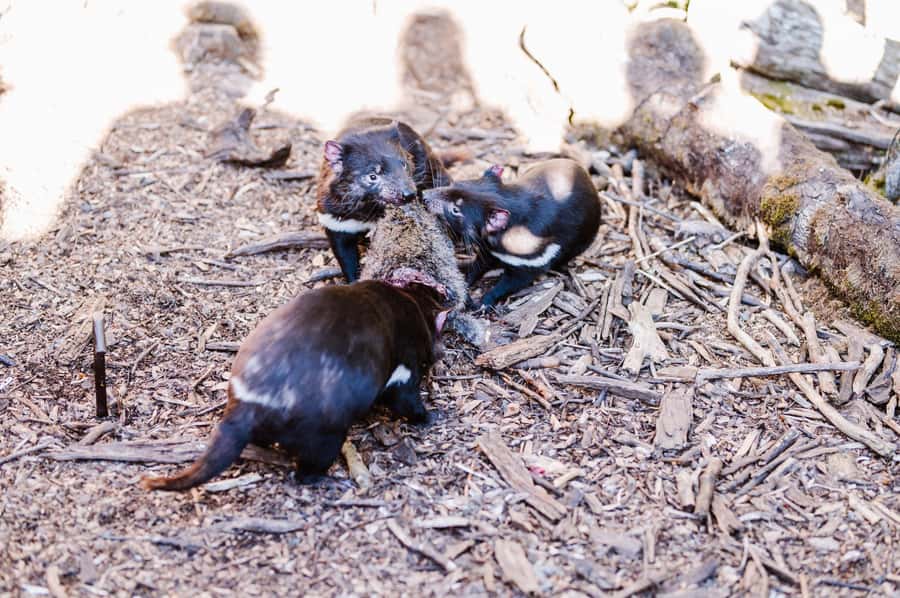
After the introduction, the larger part of the experience is a guided walk through the sanctuary. Your zookeeper guide enters several enclosures and feeds the animals while talking about their behavior.
This is the part that gives the tour its special access. You are not simply looking at a devil through glass and reading a sign. You see the keeper work with the animals at close range, and you watch how the devils behave around food and one another.
The feeding itself can be graphic. A wallaby leg may be pulled apart with impressive force, and the devils can look far less cuddly once the meal begins. That is not a flaw if you want an honest look at a carnivorous marsupial. If you are sensitive to animal feeding displays, this is worth considering before you book.
The guide uses the action to explain social interactions and feeding habits. You may hear vocalizations, see competition around food, and notice how quickly the animals shift from stillness to full activity. The point is not just to watch a meal. It is to understand why nighttime is the right time to see these animals behaving at their most natural within the sanctuary setting.
There are also chances to see both quoll species being fed. The spotted-tail quoll and eastern quoll are closely related to the Tasmanian devil, but seeing them side by side helps you appreciate that they are distinct animals, not simply smaller versions of a devil.
More Sunset Tours in Australia:
- Pinnacles Desert: Sunset BBQ & Stargazing Tour +Sandboarding
★ 4.8 · 1,555 reviews - Sydney Harbour Sunset Dinner Cruise from Darling Harbour
★ 4.0 · 1,122 reviews - Great Ocean Road Full-Day Sunset Eco Tour from Melbourne
★ 5.0 · 1,085 reviews - Pinnacles Desert Sunset Dinner and Stargazing Tour
★ 5.0 · 1,034 reviews
Expect close views, but not a hands-on encounter
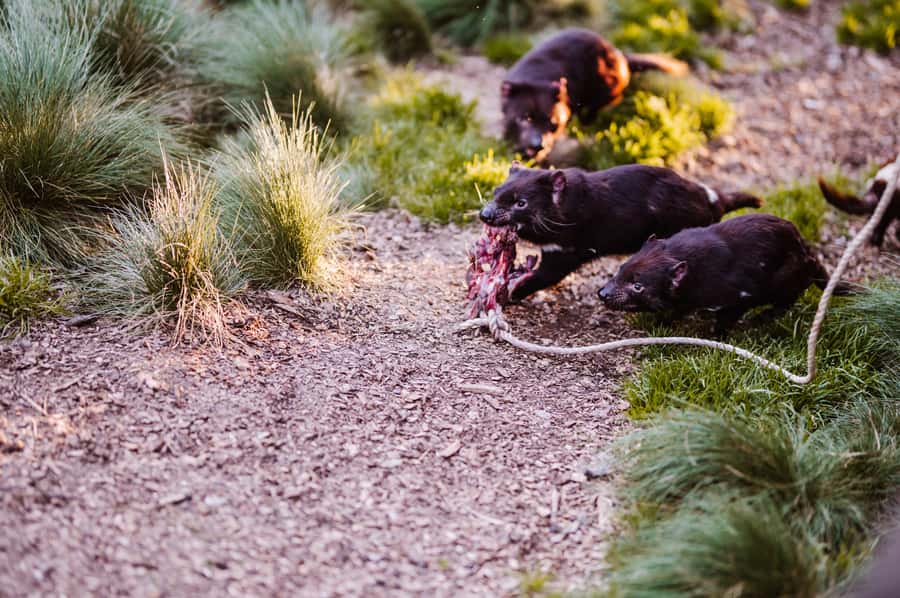
The wording close-up can create the wrong picture. You are near the animals and may see the keeper interact with them at very close range, but this is still a managed wildlife sanctuary experience.
The focus is observation. You watch the animals feed, move, and respond to the keeper while staying with the group. Some especially memorable moments have included a devil trying to climb into a keeper’s lap, and a wombat named Pancake appearing during the evening visit.
Those moments cannot be guaranteed, so I would not book expecting one particular animal to perform. The reliable part is the access to feeding behavior and the chance to ask questions. Guides are happy to discuss the animals, their biology, threats, and conservation.
Photography is likely to be tempting, but after-dark conditions can make it difficult. Devils move quickly, and environmentally sensitive lighting is used rather than bright illumination. I would bring a phone or camera if you like taking pictures, but I would give the guide and the animals your attention first.
Environmentally sensitive lighting keeps the focus on behavior
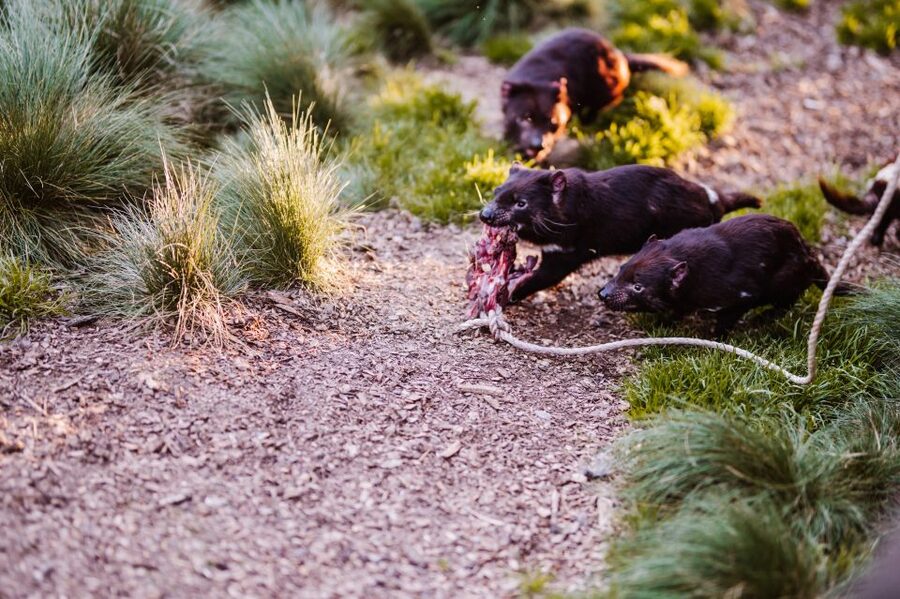
The sanctuary uses low-impact lighting to accommodate the devils’ nocturnal habits. That choice means the experience is not brightly lit like a daytime zoo display.
For you, this creates both a benefit and a limitation. The benefit is that the animals are seen during their active period without turning the enclosure into a floodlit stage. The limitation is that visibility and photography may not be perfect, especially when rain or darkness adds another layer of difficulty.
I like this trade-off. The evening atmosphere feels connected to the animals’ routine, and the guide’s commentary becomes more important. You are encouraged to watch how the devils interact rather than simply look for a perfect photograph.
The darkness also changes your sense of the animals. A quiet devil can suddenly make a sharp noise or rush toward food, which gives the feeding session a bit of theatre without needing artificial drama.
Cold, rain, and wind are the real drawbacks
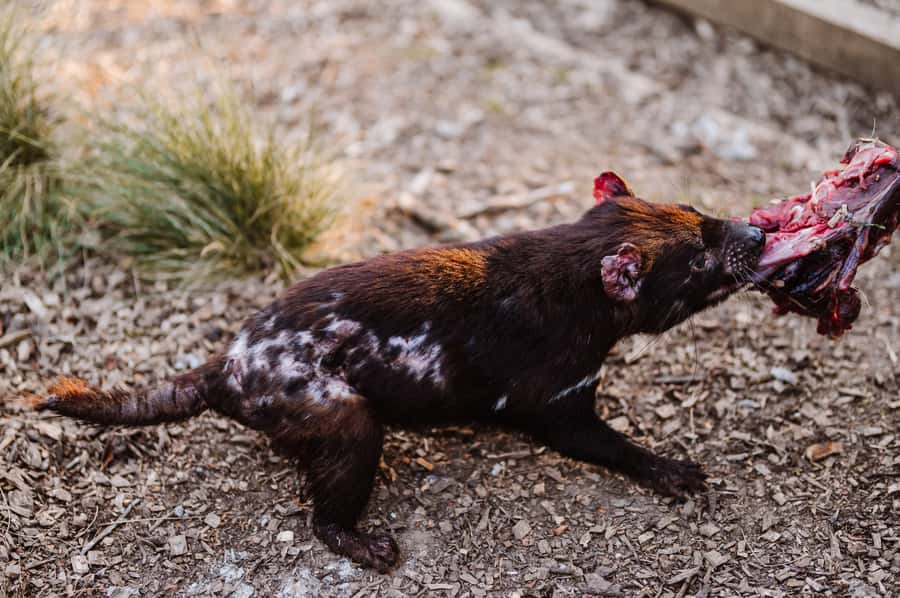
The main weakness is weather. Several people have found the tour very cold, and one person left early because the wind was cutting through their clothes and their accommodation was 25 kilometres away. Rain has also affected the experience, with guides continuing to speak outside during drizzle and heavier showers.
Cradle Mountain weather can change quickly, so I would dress for a colder evening than the forecast suggests. Wear warm layers, a rainproof outer layer, and shoes suited to an outdoor walk. A hat and gloves may be useful in the cooler months. Even in summer, the temperature can fall once the sun is gone.
This is not a tour where you spend the whole 90 minutes in a warm indoor room. You walk outside within the sanctuary and spend time watching feeding at the enclosures. If you are comfortable in cold weather, the conditions add atmosphere. If you dislike standing in rain, the forecast should influence your booking decision.
A wet evening does not necessarily ruin the activity. Guides have kept presentations going in drizzle, and the devils remain active. Still, the experience is more enjoyable when you can concentrate on the animals rather than your numb fingers.
The guides make the $26 worthwhile
The strongest part of this experience is the keeper commentary. The best guides do more than recite facts. They explain what the animals are doing at the moment, answer questions, and make the conservation work feel personal.
The tone is generally both educational and light. You may learn about biology and breeding programs, then hear a funny observation about a particular animal. That balance works well for families, adults, and anyone who wants more than a quick wildlife photo.
The conservation focus also gives the admission fee a clear purpose. Devils@Cradle is a sanctuary with breeding and conservation efforts for threatened Tasmanian carnivorous marsupials. You leave with a better idea of the challenges facing these species, rather than simply a collection of cute animal memories.
I would especially recommend the tour if you have not seen a Tasmanian devil before. For some people, this is the only reliable devil sighting of their Tasmania trip. The guided format helps you notice details you might miss during a self-guided walk.
Who should book this Cradle Mountain activity?
I think this tour suits:
- Families with older children: The animals are engaging, the feeding is dramatic, and the guide keeps the science accessible.
- Wildlife fans: You see three carnivorous marsupial species and learn about behavior, biology, and conservation.
- First-time visitors to Tasmania: It offers a close look at an animal strongly linked with the state.
- Visitors staying near Cradle Mountain: The location makes it an easy evening addition to a national park visit.
- People who prefer guided learning: The keeper commentary adds much more than a basic sanctuary admission.
It may be less suitable if you need a fully indoor activity, dislike animal feeding scenes, or cannot comfortably stand and walk outside for much of 90 minutes. The activity is wheelchair accessible, but the supplied details do not describe every surface or enclosure route, so you may want to confirm any specific mobility needs in advance.
The tour is in English with a live guide. There is no hotel transfer, so you need to make your own way to Devils@Cradle and go to the entry gate.
Booking flexibility and timing
The duration is 90 minutes, with starting times based on availability. The booking terms allow free cancellation up to 24 hours before the activity for a full refund, and you can reserve now and pay later.
That flexibility helps in a place where weather can change quickly. I would still check the forecast and your evening plans before committing, especially if you are driving a long distance afterward.
The sanctuary entry is part of the experience, not just a bonus. You can use the time before the tour to see the animals at your own pace, then let the keeper lead you through the feeding session. If your schedule is tight, arrive close to the start time. If you want the fullest value, arrive earlier and explore first.
Should you book the After Dark Tasmanian Devil Feeding Tour?
Yes, if you are visiting Cradle Mountain and want a well-priced wildlife activity with real conservation content. The $26 cost is fair because it includes entry, parking, a guided walk, and a full feeding session with three significant Tasmanian species.
The biggest reason to book is the combination of close animal viewing and excellent keeper-led explanation. The devils are active, noisy, and surprisingly powerful at mealtime, while the quolls add another useful layer to the visit.
Just treat the weather as part of the deal. Bring serious warm clothing, accept that the lighting will be subdued, and expect an outdoor tour rather than a comfortable indoor show. If you do that, this is one of the more worthwhile ways to spend an evening near Cradle Mountain.
FAQ
How long does the After Dark Tasmanian Devil Feeding Tour last?
The guided experience lasts 90 minutes. You can also visit Devils@Cradle independently before the tour begins because sanctuary entry is included.
How much does the tour cost?
The listed price is $26 per person. This includes sanctuary admission, the feeding tour, a guide, and free onsite parking.
What animals can I see?
The sanctuary manages Tasmanian devils, spotted-tail quolls, and eastern quolls. Wombats may also be seen during the sanctuary visit, including an animal named Pancake.
Is the tour held outdoors?
Yes. After a short introduction on the main wildlife viewing deck, the tour continues as a guided walk outside within the sanctuary and includes feeding at several enclosures.
Should I bring warm clothing?
Yes. Temperatures can drop after dark, and rain, wind, or even snow may occur. Warm layers and rain protection are strongly advisable.
Can I cancel or pay later?
You can cancel up to 24 hours in advance for a full refund. The activity also offers reserve now and pay later booking, subject to the available booking terms.
Just added in Australia
- 1hour Scenic Flight Heart Reef, Whitehaven Beach, Hill Inlet, GBR★ 5.0 · 134 reviews
- Fly Raft Package: Whitehaven Beach, Snorkel and Scenic Flight★ 5.0 · 316 reviews
- Airlie Beach Glass Bottom Boat Tour★ 4.5 · 329 reviews
- All-Inclusive Waterfall Explorer Day Trip from Airlie Beach★ 4.5 · 253 reviews
- Airlie Coastal Beach Adventures – Dingo Beach & Cape Gloucester★ 5.0 · 27 reviews
- Bowen Beaches Discovery-Top of the Whitsundays★ 5.0 · 40 reviews
- Airlie Waterfalls & Rainforest Bushwalk Eco Adventure★ 5.0 · 23 reviews
- British Defender 3D2N Whitsunday Snorkelling Sailing Adventure★ 5.0 · 30 reviews
Wildlife Tours, compared.
All Inclusive Blue Mountain,Scenic World,Lunch,Koalas,ferry
Read our review →
Penguin Parade, & Wildlife Encounters Eco Tour from Melbourne
Read our review →
Blue Mountain Small Group Scenic World, Wildlife, Waterfall
Read our review →
Melbourne Great Ocean Rd Reverse Tour London Bridge Wildlife
Read our review →
Litchfield National Park and Jumping Crocodile Cruise
Read our review →
Blue Mountains Adventure: Scenic World, Zoo & Koala Photo
Read our review →
Browse the lists this tour appears in