
Reviewed · WILDLIFE TOURS
After Dark Tasmanian Devil Feeding Tour at Cradle Mountain
Tasmanian Devils get loud after sunset. At Devils@Cradle, this short evening tour lets you watch these fierce little marsupials feed while a keeper explains their behavior, biology, and fight for survival. I like the close viewing and the chance to see Tasmanian Devils and quolls active at feeding time. I also like that admission is included, so you can arrive early and explore the sanctuary before the guided walk begins. The main drawback is the cold, especially in winter, and a larger group can make it harder to get close to every enclosure.
The tour begins at 5:30 pm at Devils@Cradle, inside Cradle Mountain-Lake St. Clair National Park. You make your own way there, then join a local guide for a brief introduction and a walk through the sanctuary. The advertised experience lasts about 1 hour and 15 minutes, while the main feeding activity is described as about one hour.
This is not a hands-on animal encounter. You remain outside the enclosures while the keeper goes in to feed the animals. That keeps the experience respectful and safe, but it also means your view can depend on where you stand and how many people gather around each enclosure.
In This Review
- Key points before you book
- Why an after-dark visit works so well
- Starting at Devils@Cradle before sunset
- The opening talk and the three species
- Walking through the sanctuary after dark
- Seeing the Tasmanian Devils feed
- The quolls are more than a bonus
- Conservation is the heart of the experience
- Is $30.48 good value?
- How to prepare for a cold evening
- Who will enjoy this tour most?
- Should you book the after-dark feeding tour?
- FAQ
- Where does the after-dark Tasmanian Devil tour begin?
- What time does the tour start?
- How long does the experience last?
- Is admission to Devils@Cradle included?
- Can I arrive before the tour begins?
- Is transportation provided?
- Is parking available?
- Are children allowed on the tour?
- Does the tour operate in bad weather?
- Can I take photographs?
- How many people can join the tour?
- Is walking involved?
Key points before you book
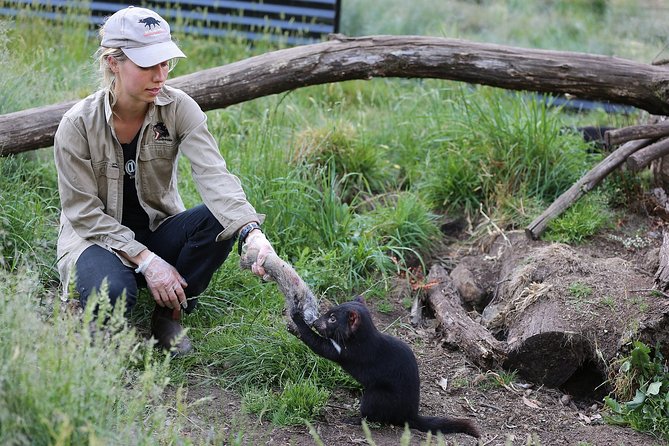
- Feeding time brings the Devils to life: You can hear their sharp calls, watch their ears turn red when they become agitated, and see how feeding differs between Devils and quolls.
- The keeper does the real heavy lifting: The best part is the live explanation of behavior, threats, breeding, and conservation while the animals are active.
- Arrive 30 to 45 minutes early: You can walk through the sanctuary on your own before the evening tour starts, which makes the $30.48 price better value.
- Dress for an alpine evening: Cold, rain, and uneven surfaces are all possible. Several warm layers and waterproof clothing are sensible, especially in winter.
- Quolls are an excellent extra: The tour is named for Devils, but the spotted-tailed and eastern quolls add a second layer of interest.
- The group may reach 45 people: That is manageable for a guided talk, but you may not have a front-row view at every enclosure.
Why an after-dark visit works so well
Tasmanian Devils are nocturnal, so the evening timing matters. During the day, you may see animals resting or tucked into a quiet corner. Feeding time gives you a much better chance of seeing movement, interaction, and the physical traits that make these animals so memorable.
The feeding session also gives the keeper something real to explain. Instead of hearing a general talk beside an empty enclosure, you can connect the information to what is happening in front of you. You might hear a Devil vocalize, see it react to another animal, or watch the keeper describe how its behavior fits into the wider story of Tasmanian wildlife.
The lighting is designed to be environmentally sensitive. That means the sanctuary can show you the animals without turning the evening into a bright, noisy spectacle. It is a small detail, but it matters. The point is to observe the animals in a way that respects their routine.
More Wildlife Tours in Australia:
- All Inclusive Blue Mountain,Scenic World,Lunch,Koalas,ferry
★ 5.0 · 7,832 reviews - From Melbourne: Great Ocean Road, 12 Apostles, Wildlife Tour
★ 4.7 · 6,020 reviews - Penguin Parade, & Wildlife Encounters Eco Tour from Melbourne
★ 5.0 · 3,774 reviews
Starting at Devils@Cradle before sunset
You can arrive before the 5:30 pm start and walk through the sanctuary on your own. I strongly recommend using this option. Arriving 30 to 45 minutes early gives you time to see the enclosures at a calmer point in the day and to get familiar with the site before the group gathers.
This early visit also helps you understand the difference between an animal waiting for food and an animal that has just been fed. One of the most useful tips from the experience is to see the animals before the feeding starts. The change in energy can be striking.
Admission is included in the tour price, so this early visit adds value without another ticket charge. At $30.48 per person, the experience is not just a one-hour evening talk. You can treat it as a longer stop at the sanctuary, with independent viewing first and keeper-led interpretation afterward.
The meeting point is Devils@Cradle, 3950 Cradle Mountain Road, Cradle Mountain, Tasmania 7306. There is free onsite parking, but transportation to the attraction is not provided. You need to arrange your own way to the reception area.
The opening talk and the three species
The guided portion begins on the main viewing deck with a short introduction to the three species managed at the sanctuary. The focus is not only on Tasmanian Devils. You also learn about the quolls, including the spotted-tailed and eastern quolls that are part of the sanctuary’s breeding and conservation work.
This opening helps put the animals in context. The Devils may attract the most attention, but the quolls are closely related and add an interesting comparison. Their feeding methods and behavior are different, so watching both gives you more than a single-animal presentation.
The guides are a major strength here. Sarah, Rory, Pru, and other keepers have been praised for their warmth, clear explanations, and strong connection with the animals. Rory is known for explaining the animals in detail, while Pru’s passion for the sanctuary comes through in her presentation. The specific keeper on your visit can vary, but the experience depends heavily on the person leading it.
One useful caution: one account found the guide spoke quickly at times, making parts of the talk harder to follow. If you have trouble hearing, stand near the guide when possible and ask questions during the pauses. The keepers are there to answer them, and the format allows time for discussion.
Walking through the sanctuary after dark
After the introduction, you follow the guide outside through the sanctuary. There is some walking over uneven surfaces, so comfortable shoes are a good idea. The tour operates in all weather conditions, and Cradle Mountain evenings can be cold, wet, or both.
The walk is not a long hike, but the setting can make it feel more atmospheric than a standard daytime animal presentation. You move from enclosure to enclosure as the keeper explains what you are seeing. The group stays outside while the keeper enters each enclosure to provide food.
That arrangement gives you an honest look at the work involved in caring for these animals. Feeding is not simply dropping food into a pen and moving on. The keeper can point out how different animals respond, how their behavior changes, and why the staff manage them in particular ways.
Photography is welcome. Still, the low light and group setting may make clear pictures difficult. Bring your camera if you like, but do not let it distract you from the sounds and movement around the enclosure. The red flare of an agitated Devil’s ears is the sort of detail you may miss while staring at a screen.
More Sunset Tours in Australia:
- Pinnacles Desert: Sunset BBQ & Stargazing Tour +Sandboarding
★ 4.8 · 1,555 reviews - Sydney Harbour Sunset Dinner Cruise from Darling Harbour
★ 4.0 · 1,122 reviews - Great Ocean Road Full-Day Sunset Eco Tour from Melbourne
★ 5.0 · 1,085 reviews - Pinnacles Desert Sunset Dinner and Stargazing Tour
★ 5.0 · 1,034 reviews
Seeing the Tasmanian Devils feed
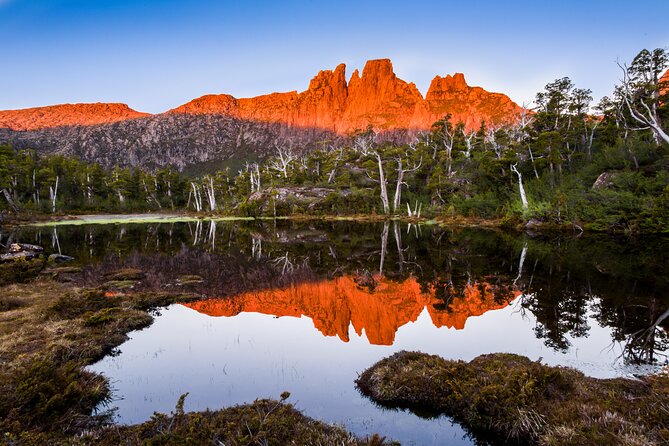
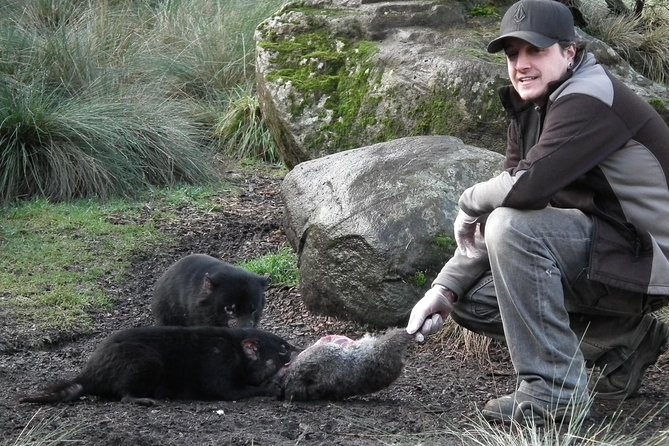
The Devils are the main event, and feeding time gives you a close view without turning the animals into performers. You can watch the keeper work inside the enclosure and listen as the animals respond.
The most memorable part for many people is the contrast between the Devil’s shy nature and its fierce reputation. A Devil can appear small and cautious, then become intense when food or another animal enters the picture. The keeper’s explanation helps make sense of the growls, calls, body language, and sudden changes in mood.
You may also hear the animals before you see them clearly. Their vocal sounds are part of the experience, especially once several animals are active. Seeing them feed in person makes the conservation message more immediate. This is an animal that many people know only as a cartoon character or a symbol of Tasmania, yet the tour shows its real behavior and its vulnerability.
The viewing setup is not perfect for everyone. With a maximum of 45 people, the group can feel crowded around the most popular enclosures. One person found it difficult to get close at times because too many people were gathered near the animals. If seeing every feeding moment from the front matters to you, arrive early, stay alert as the group moves, and choose a position where you can hear as well as see.
The quolls are more than a bonus
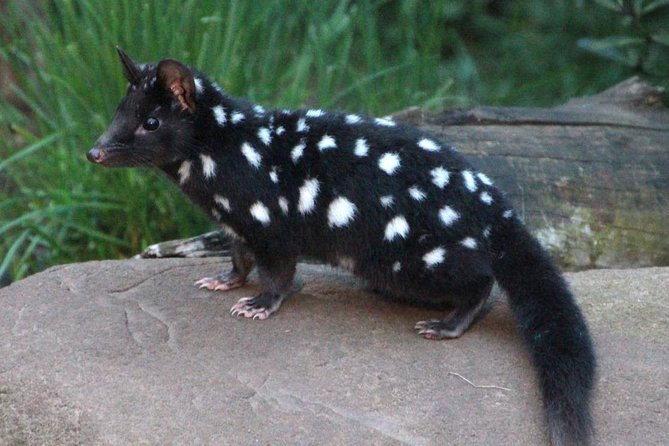
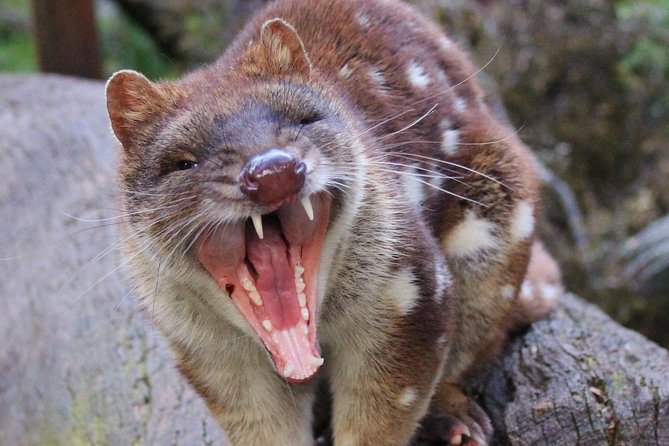
The quolls often surprise people. These spotted marsupials are smaller and less famous than Devils, but their feeding behavior is just as interesting. The keeper explains how each animal eats and reacts, giving you a useful comparison rather than a repeat of the Devil presentation.
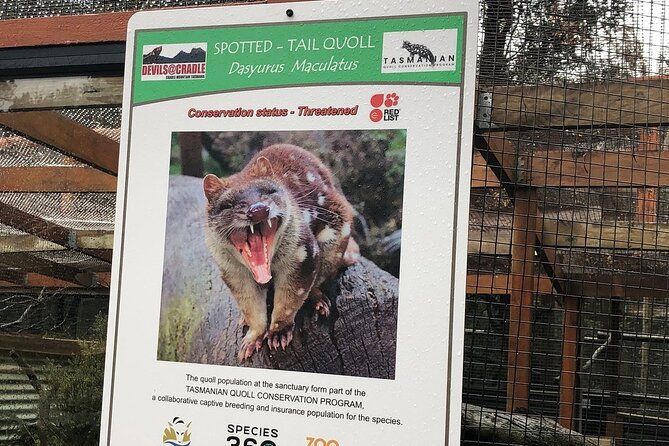
The spotted-tailed quoll receives particular attention, and the sanctuary is also involved in building a breeding population for quolls. That conservation work gives the tour a wider purpose. You are not only watching animals in enclosures. You are learning how a specialist facility helps support species facing pressure in the wild.
The quolls also soften the mood of the evening. Devils can be noisy and fierce. Quolls are often described as cute, but the keeper’s talk shows that they are active predators with their own habits and needs. I like this balance because it keeps the tour from becoming a single-animal novelty stop.
Conservation is the heart of the experience
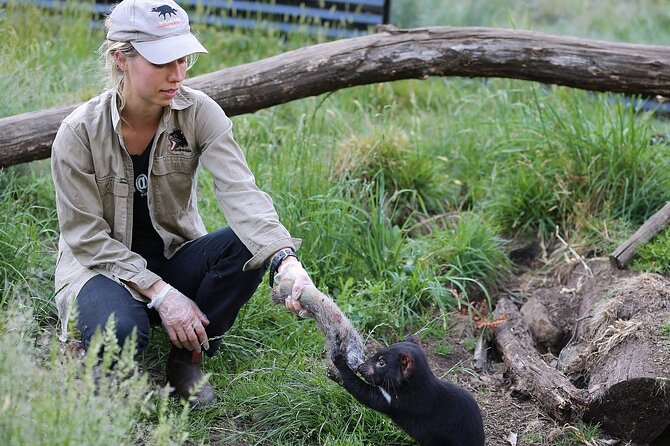
The most valuable part of the tour is the explanation of why these animals need help. The keepers discuss threats facing Tasmanian Devils, the work involved in maintaining healthy populations, and the importance of breeding programs for both Devils and quolls.
You do not need a background in wildlife science to follow the talk. The information is delivered beside the animals, with plenty of chances to ask questions. That makes the conservation message easier to grasp than a collection of signs viewed alone.
The tour can also change your impression of the Devils. Their reputation is built around aggression and noise, but watching them closely reveals more complicated behavior. You may leave with a better sense of them as shy, social, vulnerable animals rather than simply fierce scavengers.
The sanctuary’s large, well-kept enclosures add to that impression. You are not looking at animals in cramped display spaces. The setting is arranged for observation and care, with enough room for the keeper to work and the animals to move.
Is $30.48 good value?
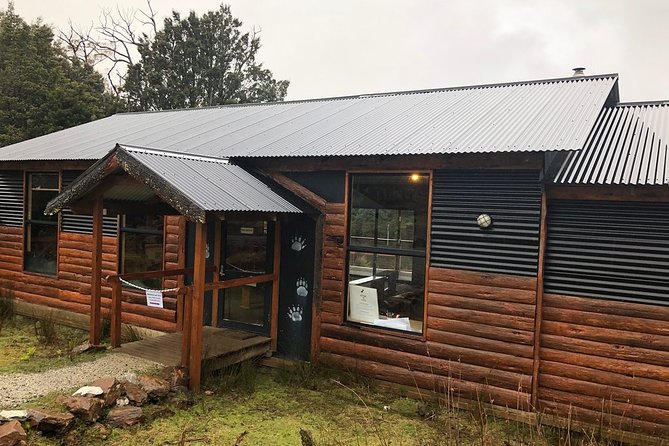
At $30.48 per person, I consider this good value if you use the included admission properly. Arrive early, explore the sanctuary on your own, then take the feeding tour. That gives you independent viewing plus a guided program, all for one price.
The guide is another reason the cost works. You are paying for access, but also for live interpretation from staff who work directly with the animals. The keeper can answer questions, explain individual behavior, and show you details you might miss alone.
The value is weaker if you arrive just before 5:30 pm and leave as soon as the guided hour ends. The tour itself is fairly short, and a group of up to 45 people may limit your view at busy enclosures. Still, for animal lovers, families, and anyone interested in conservation, the price is reasonable.
Children must be accompanied by an adult. Most people can take part, and service animals are allowed. The walking is limited but includes some uneven surfaces.
How to prepare for a cold evening
Treat this as an outdoor activity, not a warm indoor show. Several people found the evening extremely cold, especially during winter. The sanctuary sits in an alpine area, so bring layers, a warm outer jacket, and waterproof clothing if rain is possible.
A practical checklist:
- Wear sturdy, comfortable shoes.
- Bring several warm layers rather than one heavy item.
- Pack waterproof clothing for rain.
- Arrive 30 to 45 minutes early.
- Keep your camera ready, but expect low-light conditions.
- Listen for the animals as well as watching them.
- Ask questions if the guide moves or speaks too quickly.
The tour operates in all weather conditions. That can be a plus if your schedule is tight, but it also means you should not count on a mild evening. Good clothing will make a bigger difference here than any fancy camera.
Who will enjoy this tour most?
I would choose this experience if you care about wildlife, want a short evening activity near Cradle Mountain, or prefer learning from keepers rather than simply walking through animal enclosures alone.
It suits families because the feeding gives children something immediate to watch, while the explanations add substance. Children may especially enjoy seeing the Devils eat, but adults should be ready to help them stay warm and remain with the group.
It is also a good match for visitors who want a conservation-focused activity. The sanctuary’s work with Tasmanian Devils, spotted-tailed quolls, and eastern quolls gives the tour more weight than a simple animal viewing session.
You may want to reconsider it if you dislike cold weather, need guaranteed close access at every enclosure, or have difficulty walking over uneven surfaces. The group size can affect your view, and the experience is outdoors from start to finish.
Should you book the after-dark feeding tour?
I would book it, especially if you can arrive early and dress properly. The combination of keeper-led feeding, active nocturnal animals, quolls, and conservation information makes this one of the more worthwhile short activities around Cradle Mountain.
Book it for the animals, not for a polished show. The experience is strongest when you listen to the Devils, watch their behavior, and let the keeper explain what is happening. If you do that, the cold and occasional crowding are manageable trade-offs for a rare look at Tasmanian wildlife after dark.
FAQ
Where does the after-dark Tasmanian Devil tour begin?
It begins at Devils@Cradle, 3950 Cradle Mountain Road, Cradle Mountain, Tasmania 7306, Australia.
What time does the tour start?
The tour starts at 5:30 pm.
How long does the experience last?
The experience lasts approximately 1 hour and 15 minutes. The main activity is also described as lasting about one hour.
Is admission to Devils@Cradle included?
Yes. Admission to the sanctuary is included in the tour price.
Can I arrive before the tour begins?
Yes. You can arrive early and explore the sanctuary on your own before the guided tour starts. Arriving 30 to 45 minutes early is a useful plan.
Is transportation provided?
No. You need to make your own way to Devils@Cradle. Hotel pickup and drop-off are not included.
Is parking available?
Yes. Free onsite parking is included.
Are children allowed on the tour?
Yes, but children must be accompanied by an adult.
Does the tour operate in bad weather?
Yes. The tour operates in all weather conditions, so you should dress appropriately for cold or wet conditions.
Can I take photographs?
Yes. Photography is welcome, though the evening setting and low light may make clear photographs harder to capture.
How many people can join the tour?
The activity can have a maximum of 45 people.
Is walking involved?
Yes. There is a guided walk around the sanctuary, including some uneven surfaces.
Just added in Australia
- Yarra Valley: Hot Air Balloon Flight & Buffet Breakfast★ 4.8 · 41 reviews
- Yeppoon: Great Keppel Island Luxury Sail & Snorkel Day Tour★ 4.7 · 71 reviews
- Yarra Valley: Winery Tour with Lunch at Yering Station★ 5.0 · 143 reviews
- Wirrina Cove: Coastal Sightseeing Boat Tour with Seal Colony★ 4.7 · 23 reviews
- Yarra Valley Foodies Tour with Chandon and Kangaroo Safari!★ 4.9 · 304 reviews
- Yarra River: 1.5-Hour Scenic Sunset Public Cruise★ 4.3 · 57 reviews
- Brisbane: Sirromet Winery Tour with Tasting & 2-Course Lunch★ 4.7 · 71 reviews
- Sydney: Wildlife, Waterfalls and Wine Small Group Tour★ 5.0 · 251 reviews
Wildlife Tours, compared.
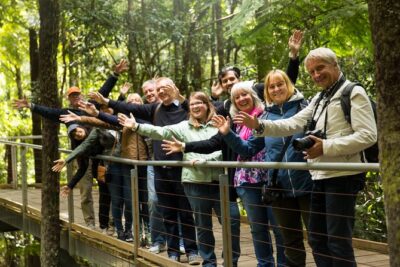
All Inclusive Blue Mountain,Scenic World,Lunch,Koalas,ferry
Read our review →
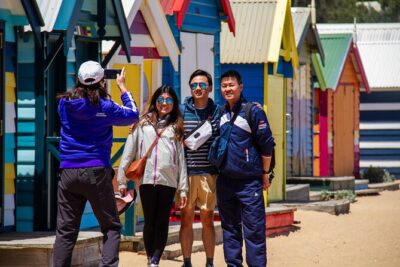
Penguin Parade, & Wildlife Encounters Eco Tour from Melbourne
Read our review →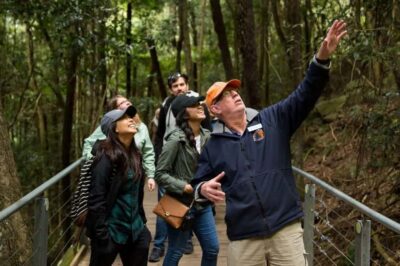
Blue Mountain Small Group Scenic World, Wildlife, Waterfall
Read our review →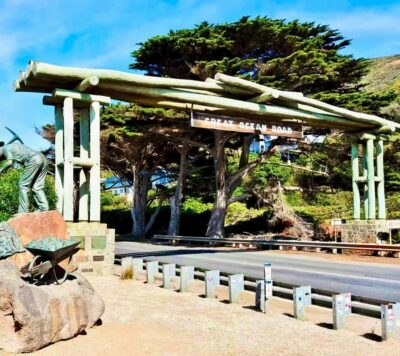
Melbourne Great Ocean Rd Reverse Tour London Bridge Wildlife
Read our review →
Litchfield National Park and Jumping Crocodile Cruise
Read our review →
Blue Mountains Adventure: Scenic World, Zoo & Koala Photo
Read our review →
Browse the lists this tour appears in