
Reviewed · DOLPHIN WATCHING
Adelaide: Dolphin Sanctuary Eco Kayaking Tour
Dolphins are only part of the story. This three-hour paddle through Adelaide’s Dolphin Sanctuary takes you into 10,000-year-old mangrove creeks, past tidal flats, saltmarsh, birdlife, and old shipwrecks. I like the calm pace and the care taken around wild dolphins, with guides such as Alex, Paddy, Fiona, and Liam offering useful help to first-time kayakers.
I also like the value: at $55 per person, your kayak, life jacket, marine biologist guide, drinking water, and waterproof bag are included. The main caution is simple: dolphins are wild, and wind, tides, and weather can change the route. You may see a mother and calf at close range, or no dolphins at all.
In This Review
- Key points to know before you paddle
- Port Adelaide is the launch point
- A short briefing makes kayaking less intimidating
- The old mangroves give the tour its character
- Dolphin watching is quiet and deliberately respectful
- Shipwrecks add a human story to the wetland
- Guides shape the quality of the outing
- How hard is three hours on the water?
- Weather, tides, and insects matter more than you might expect
- Is $55 a fair price?
- Who should book this Adelaide kayak tour?
- Should you book the Dolphin Sanctuary Eco Kayaking Tour?
- FAQ
- Where does the kayaking tour start?
- How long does the tour last?
- Is previous kayaking experience required?
- Are dolphin sightings guaranteed?
- Is the shipwreck section guaranteed?
- What is included in the price?
- What should I bring?
- Can children join the tour?
Key points to know before you paddle
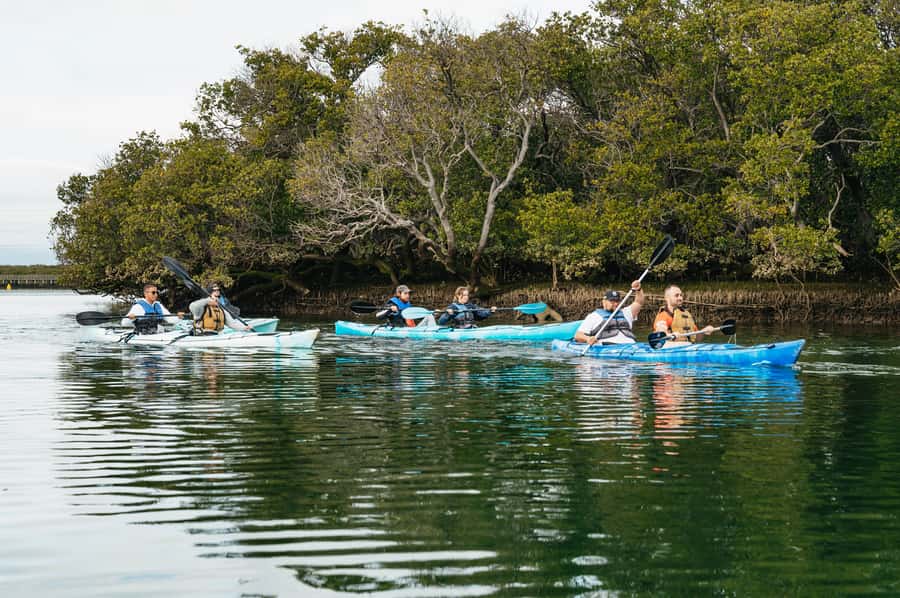
- Mangrove creeks are the real star: Narrow waterways reveal a fragile nursery for fish, birds, and other marine life.
- Dolphin sightings are possible, not promised: The guides do not use bait or sounds to draw animals closer.
- Beginners are welcome: A 15-minute safety briefing and kayak practice make the outing manageable for people with little experience.
- Shipwreck access depends on conditions: Strong wind or changing tides can prevent the group from reaching the wreck area.
- Three hours feels purposeful: The tour allows time for open water, mangroves, wildlife watching, and local history without becoming an all-day commitment.
- Pack mosquito repellent: Several people found it useful around the mangroves, along with a hat and biodegradable sunscreen.
Port Adelaide is the launch point
Meet at Angas Inlet Boat Club, Lot 204 Garden Island Road, Port Adelaide SA 5015. You need to arrange your own transport because hotel pickup is not included. One participant noted needing a taxi or private car, while another received a helpful drop-off at Port Adelaide station after the tour, but you should not count on that as a standard service.
Allow enough time to find the boat club and get ready without rushing. Food and drinks are not included, though water is available for refilling your bottle. There is no advertised toilet stop during the three-hour outing, so plan accordingly before getting on the water.
The setting is practical rather than polished. This is a working coastal area, not a resort-style departure point, and that suits the experience. You are heading into an active marine environment where tides, wind, mud, birds, and old boats matter more than fancy facilities.
More Kayaking Tours in Adelaide
- Dolphin Sanctuary Kayak Tour Adelaide
★ 4.5 · 355 reviews - Adelaide Dolphin Sanctuary and Ships Graveyard Kayak Tour
★ 5.0 · 275 reviews - Dolphin Sanctuary and Ships Graveyard Kayak Tour
★ 4.7 · 143 reviews
A short briefing makes kayaking less intimidating
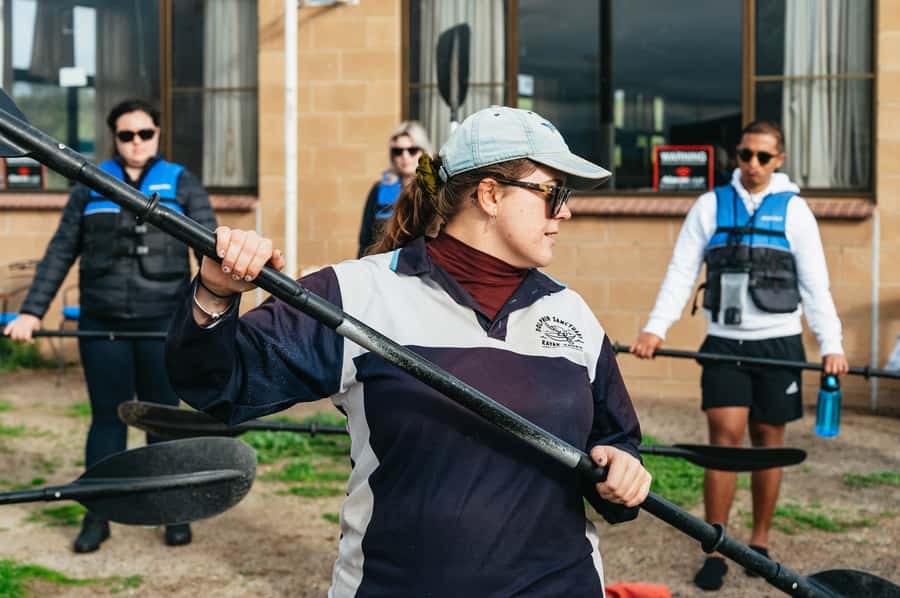
The tour begins with about 15 minutes of safety instruction. You receive a kayak and life jacket, then learn the basic paddling technique and how to handle the boat. That introduction matters, especially if you have never kayaked before or are worried about tipping over.
The guides are used to helping mixed groups. Alex, Marc, Liam, Mark, and Paddy are among the guides praised for giving clear instructions and helping people who struggled with their technique. The group does not race, and the pace is adjusted so beginners can keep up.
You still need to paddle. This is not a sightseeing cruise where you sit back and let an engine do the work. The effort is generally manageable, but three hours on the water can feel tiring if you are not used to repeated paddling. One experienced participant suggested separating stronger paddlers from beginners, since less confident people can slow the group. That is a fair point, although the slower rhythm also helps you notice wildlife.
Children must be at least 10 years old. Those aged 10 to 15 must share a double kayak with a parent or another adult, and they must be able to paddle. The tour is not suitable for children under 10, wheelchair users, or people with mobility impairments.
The old mangroves give the tour its character
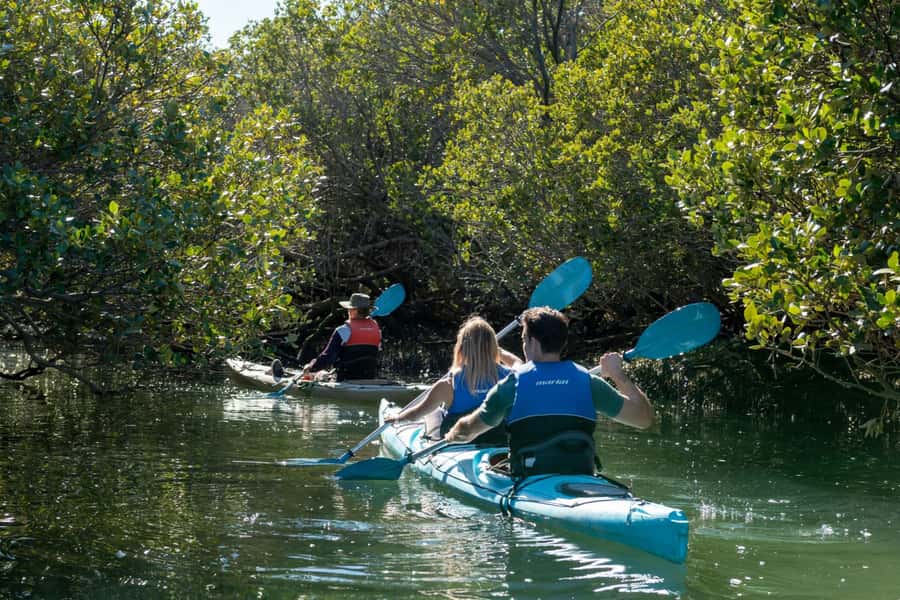
After the briefing, you paddle into the Adelaide Dolphin Sanctuary, beginning with mangrove-lined creeks described as around 10,000 years old. These waterways are shaped by tides and provide feeding areas for dolphins because they connect seagrass, saltmarsh, tidal flats, and creeks.
The mangroves are low and close to the water in places. That creates a very different feeling from open-water kayaking. You move under and beside the trees, with muddy banks and narrow channels framing the route. Several people found this section more memorable than the dolphin sightings, which makes sense: the mangroves are always there, even when the animals stay away.
Your guide explains how the creeks function as a breeding area for local fish and points out birds and other signs of life. This is where the marine biologist guide adds real value. You are not simply paddling through attractive scenery. You begin to understand why this muddy, tidal habitat supports so much life.
The water may be shallow. Conditions change with the tide, and one account described briefly grounding the kayak at low tide before getting out to move toward deeper water. That is not necessarily a problem, but it shows why the route cannot be treated like a fixed sightseeing track.
Bring a waterproof camera if you want photographs, but protect your phone carefully. The supplied waterproof bag is useful for keeping small items dry and making it easier to take pictures along the way.
Dolphin watching is quiet and deliberately respectful
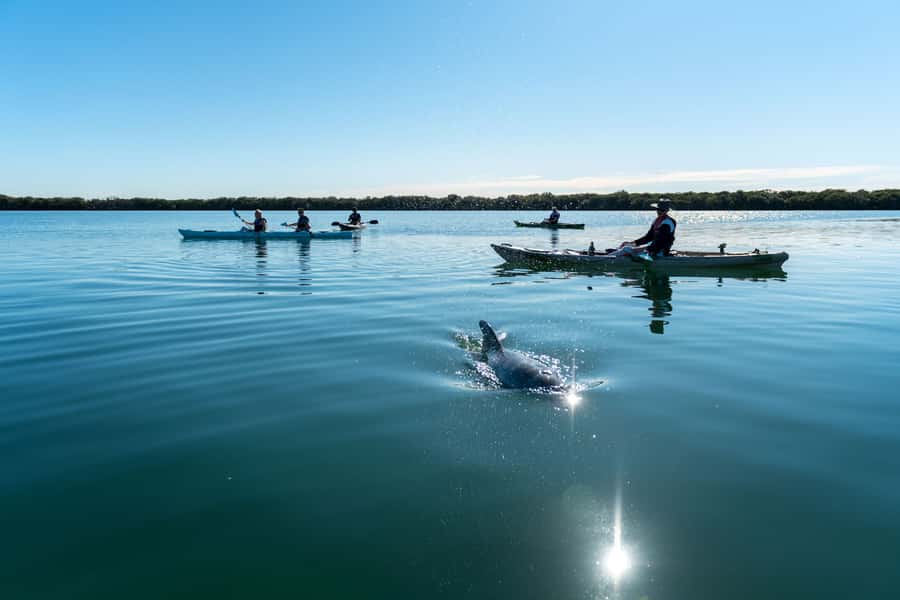
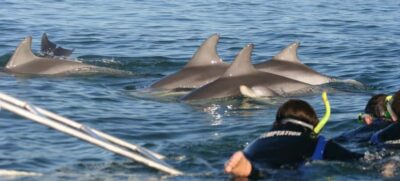
The sanctuary’s dolphins use the area as a natural feeding ground. You might see them early in the trip, later near the creeks, or not at all. Sightings have included individual animals, groups, and mothers with calves, with some dolphins passing close to kayaks and others remaining farther away.
The best moments are often quiet ones. Guides may ask everyone to stop paddling and keep still when dolphins approach, especially when a mother and calf are nearby. That gives the animals room and reduces the chance that a noisy group will change their behavior.
I appreciate that the tour does not rely on bait or sound to attract dolphins. You are watching wild animals on their terms, which means the experience can be less predictable than a captive-animal encounter. One person completed the tour without seeing any wildlife and still found the kayaking worthwhile, while another saw no dolphins but enjoyed the mangroves and birdlife.
That is the right way to judge this outing. If you need a guaranteed close dolphin encounter, this is the wrong activity. If you like the idea of being outside in a functioning wetland and hope dolphins appear, the uncertainty is part of the deal.
The timing of sightings varies sharply. Some groups saw dolphins within five to 15 minutes. Others caught only a brief glimpse, and some saw nothing. Weather, tides, animal movement, and the behavior of other groups all play a part. The guides can help you watch carefully, but they cannot produce a dolphin on command.
A completely different kind of day out:
- Barossa Premium Wine Tasting Tour & lunch Departs 7 days a week
★ 5.0 · 1,475 reviews - Adelaide: Barossa Premium Wine Tasting tour & Winery Lunch
★ 4.8 · 1,452 reviews - Kangaroo Island Full Day Experience by Ferry Including Lunch
★ 4.5 · 1,202 reviews - Discover Barossa: 4 Wine Tastings, Gourmet Lunch, and Hidden Gems
★ 5.0 · 1,027 reviews
Shipwrecks add a human story to the wetland
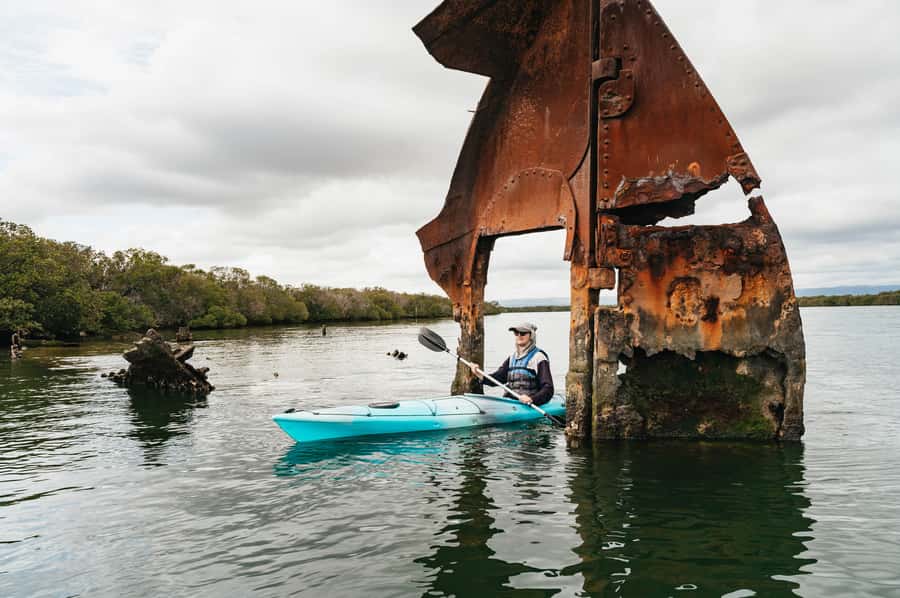
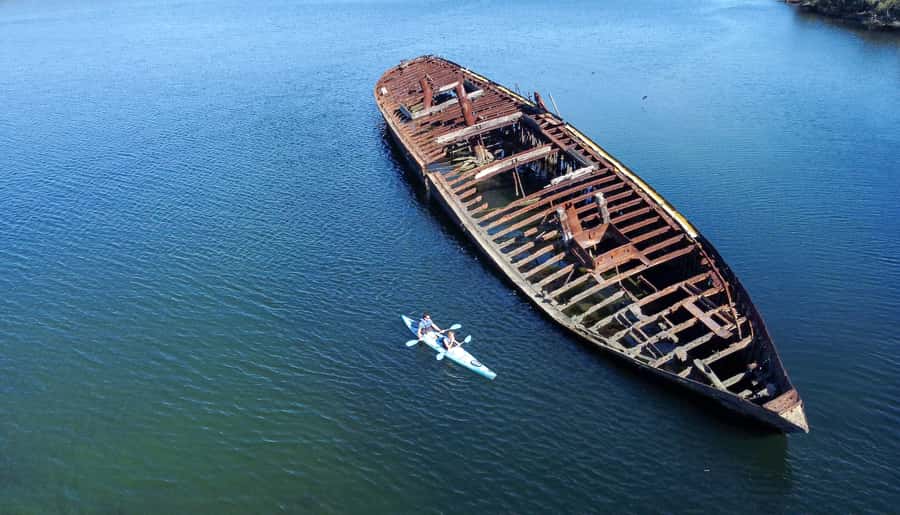
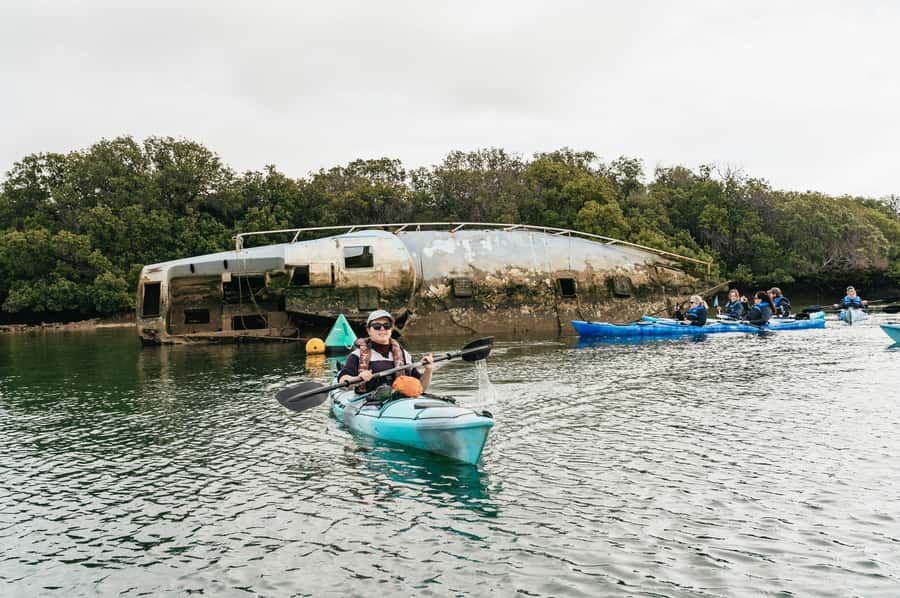
The route may also take you near abandoned shipwrecks from an earlier era. These old vessels give the sanctuary a second layer of interest. You are not only looking at birds and mangroves; you are also seeing reminders of Port Adelaide’s working maritime past.
The wreck section is not guaranteed. Wind can make the open-water route uncomfortable or unsafe, and tides may affect access. One group reached several wrecks and dolphins, while another could not complete the full route on a windy day. A repeat visit on calmer water allowed that participant to reach the wreck area, though dolphins still did not appear.
That example says a lot about the tour. A calm day improves your odds of covering more ground, but it does not guarantee wildlife. The guide may shorten or adjust the route to keep the group safe, and that is a sensible trade-off.
You may also see an unusual rustic artwork or boat-related object standing in the water. Details depend on the route and conditions, so do not expect a precise checklist of wrecks. Think of this part as an atmospheric history lesson delivered from a kayak.
Guides shape the quality of the outing
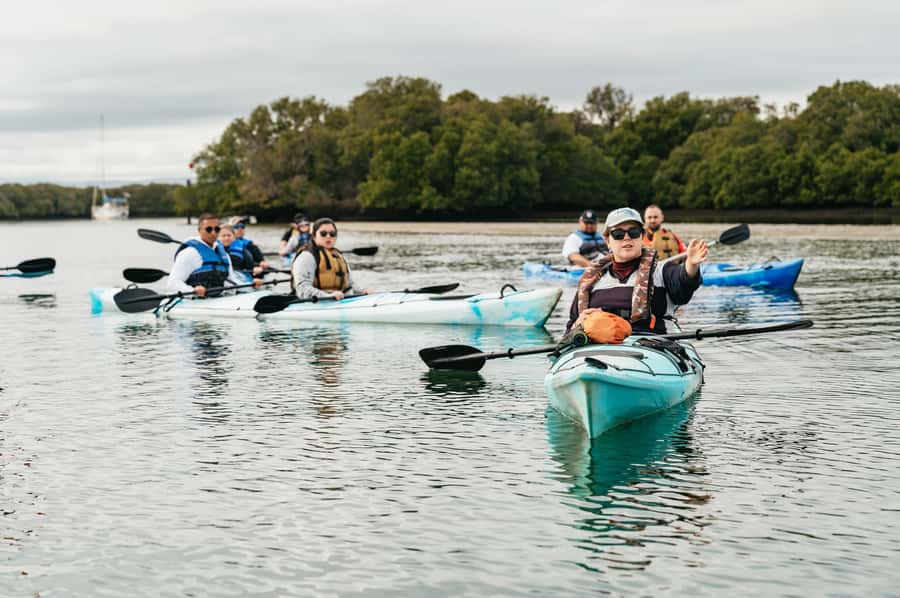
The guide is central to this experience. You are relying on that person for safety, paddling instruction, route decisions, animal etiquette, and interpretation of the mangroves and wrecks.
The strongest feedback has gone to guides who combine clear teaching with an easy manner. Alex has been praised for explaining dolphins, mangroves, local history, and even traditional Dreamtime stories. Paddy has been noted for setting a comfortable pace and choosing sensible places to stop. Fiona, Liam, Marc, Mark, Kendall, Brayden, Hannah, Sarah, Lewis, Sam, Phoenix, and others have also been singled out for patience, friendliness, or strong local information.
That range of names suggests a consistent team rather than one exceptional guide carrying the whole experience. Still, communication can be a minor issue in a spread-out kayak group. One person suggested using speakers so everyone could hear every explanation. If you are at the back, paddle closer when the guide stops to talk.
The guides also seem willing to help when things go wrong. A capsized pair received immediate assistance and a warm jacket on a cooler day. That does not mean capsizing is common, but it is worth remembering that kayaking carries some basic risk. Follow the briefing, wear the life jacket, and tell the guide if you are struggling.
How hard is three hours on the water?
You do not need prior kayaking experience, and many first-timers found the instruction reassuring. The pace is described as relaxed, with regular stops for information and wildlife watching. Several people were surprised that the three hours passed quickly.
Fitness still matters. You will paddle for much of the tour, and wind can make the return trip harder. One participant called it peaceful but noted that it could become more demanding if you choose to paddle hard. Another completed it comfortably despite being 66 and having two prosthetic hips, helped by a careful guide and an appropriate pace.
Your comfort may depend on the kayak arrangement. Children aged 10 to 15 must share with an adult, and inexperienced paddlers may take longer to steer or turn. If you are joining with a mixed-ability group, expect the outing to move at the speed of the least confident paddlers.
The kayaks are considered stable by several participants, with one person describing minimal chance of falling in. Still, water conditions vary, and one group did capsize early. Wear clothes that can handle getting wet, even if the normal outing is dry.
Weather, tides, and insects matter more than you might expect
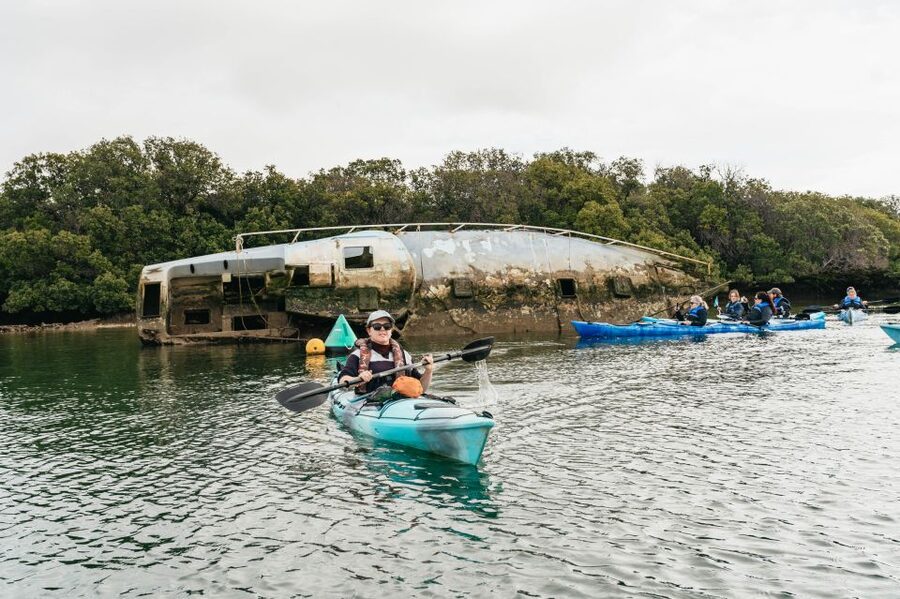
The tour may be canceled if weather conditions are unsuitable. Wind affects safety, comfort, and access to the shipwrecks. A calm day with flat water makes paddling easier and may allow a longer route, while a windy day can restrict the itinerary.
Tides also shape the experience. Narrow creeks may be easier or harder to navigate depending on water levels. At low tide, you may encounter very shallow sections or need to help move a kayak. This is part of the sanctuary’s character, but it can surprise people expecting a smooth route from start to finish.
The sun can be strong on open water. Bring a sun hat, biodegradable sunscreen, and drinking water. You should also pack food if you need a snack because food is not provided.
Mosquito repellent is one of the most useful practical additions. Several people specifically advised applying it before entering the mangrove area. Take a waterproof camera if you have one, and use the supplied waterproof bag for your phone or other small belongings.
Is $55 a fair price?
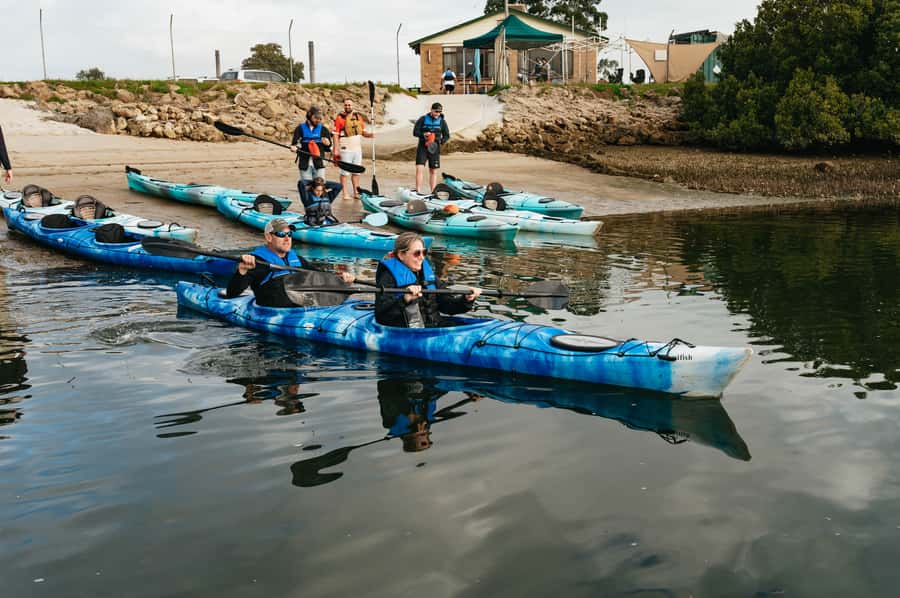
At $55 per person, this is a good-value half-day activity. You receive the kayak, life jacket, guide, marine biologist commentary, refill water, and waterproof bag. You also get access to a place that is difficult to understand from shore, with the added possibility of dolphins and shipwrecks.
The value is strongest if you would enjoy the kayaking even without dolphins. You are paying for time in a protected coastal ecosystem, instruction, equipment, and local interpretation. The price would feel less worthwhile if dolphins are your only reason for booking and you would be disappointed by an animal-free outing.
Compared with arranging your own kayak rental, a guided tour removes much of the guesswork. You do not need to know the creeks, judge the tide, or decide how close to approach wildlife. The guide also gives the trip meaning by explaining the fish nursery, birdlife, mangroves, wrecks, and dolphin behavior.
The free cancellation policy allows you to cancel up to 24 hours ahead for a full refund. You can also reserve now and pay later, which helps if your Adelaide schedule is still shifting. Check the available start times when booking, since the exact departure time is not fixed in the supplied details.
Who should book this Adelaide kayak tour?
I would recommend it to first-time kayakers, couples, families with older children, and anyone who prefers wildlife encounters without a captive-animal setting. It also suits people who enjoy natural history, coastal ecology, and quiet outdoor activities more than high-speed adventure.
It is especially good for visitors who want something different from Adelaide’s city sights. Port Adelaide’s industrial and maritime setting gives way to narrow mangrove creeks, shallow tidal water, birds, and the chance to see dolphins in their own habitat.
You should think twice if you have limited mobility, cannot paddle, or dislike getting wet. You should also reconsider if you need a guaranteed dolphin sighting, a guaranteed shipwreck route, or a toilet stop during the three hours.
Should you book the Dolphin Sanctuary Eco Kayaking Tour?
Book it if you see dolphins as a welcome bonus rather than the entire point. The most dependable part is the gentle paddle through old mangroves, where the guide helps you understand a coastal system that is easy to overlook.
The strongest reasons to go are the calm pace, supportive instruction, respectful wildlife rules, and fair $55 price. Pick a day with favorable weather if your schedule allows, apply mosquito repellent, bring a hat and water, and arrive ready to paddle.
If conditions cooperate, you may finish with dolphins beside your kayak and wrecks ahead of you. If they do not, you still get a peaceful, informative trip through one of Adelaide’s most unusual waterways.
FAQ
Where does the kayaking tour start?
The tour starts at Angas Inlet Boat Club, Lot 204 Garden Island Road, Port Adelaide SA 5015.
How long does the tour last?
The full experience lasts three hours, including the initial safety briefing and kayaking in the Adelaide Dolphin Sanctuary.
Is previous kayaking experience required?
No. Equipment is provided, and the tour begins with demonstrations and basic instruction. You must still be able to paddle.
Are dolphin sightings guaranteed?
No. Dolphins are wild animals, and sightings depend on their behavior, weather, tides, and other conditions.
Is the shipwreck section guaranteed?
No. Strong wind, tides, and other conditions may prevent the group from paddling near the shipwrecks.
What is included in the price?
The price includes a guided tour with a marine biologist, kayak, life jacket, refill water, and a waterproof bag.
What should I bring?
Bring a sun hat, food and drinks, a waterproof camera if desired, and biodegradable sunscreen. Mosquito repellent is also a useful choice for the mangrove section.
Can children join the tour?
Children must be at least 10 years old. Children aged 10 to 15 must share a double kayak with a parent or another adult and must be able to paddle.
More Dolphin Watching from Adelaide
- Adelaide: 4-Hour Swimming with Dolphins Experience
★ 4.7 · 439 reviews - Port Adelaide: Dolphin and Ships Graveyard Cruise
★ 4.5 · 375 reviews - Adelaide: 4-Hour Guaranteed Wild Dolphin Watching Cruise
★ 4.8 · 349 reviews - 90 Minute Port River Dolphin & Ships Graveyard Cruise
★ 4.5 · 321 reviews
Just added in Adelaide
- Wild Dolphin Swim Cruise★ 5.0 · 55 reviews
- d’Arenberg Cube / McLaren Vale Regional Tour★ 4.5 · 26 reviews
- Ultimate Adelaide City and Hahndorf Tour★ 4.5 · 45 reviews
- Victor Harbor and Southern Highlights from Adelaide★ 4.0 · 47 reviews
- Victor Harbor and Fleurieu Peninsula Tour★ 4.5 · 145 reviews
- The F Factor: Adelaide food tour★ 5.0 · 89 reviews
- Western Ridge & Valley Floor: 20-Minute Helicopter Flight★ 5.0 · 24 reviews
- Adelaide Twilight Cruise from Glenelg★ 4.5 · 94 reviews
Dolphin Watching, compared.
Moreton Island: Dolphin & Tangalooma Wrecks Snorkel Cruise
Read our review →
Jervis Bay Day Trip with Dolphins, Roos & Beach Time
Read our review →
Browse the lists this tour appears in